The moment that inspired Leila to create less waste

“We generate enough trash to fill Qualcomm Stadium each year…”

The words spoken by my Conservation Science and Policy professor sent an unsettling feeling straight to the pit of my stomach. That is an insane amount of trash. Buried right here in the City? No way. Yet, there I was sitting in a desk learning about waste management policies and how they impact our environment. I learned that the Miramar Landfill is San Diego’s only active landfill. San Diego’s trash is buried in a site that opened in 1959 and is projected to close between 2020 – 2025! That got me thinking. Where will the trash go? How does that much even exist here in the City? Enough to fill Qualcomm? Is recycling not enough to reduce landfill input?

Miramar Landfill KPBS
photo credit: KPBS; Katie Orr

 All of these questions echoed in my head when I found myself sitting in a bus on a field trip, in the middle of the current open “pit” at the Miramar Landfill. There I was in a crater of trash, an eyesore of waste piled multiple feet high. The view unearthed the ugly truth that waste is a huge issue that is usually out of site, out of mind. Sitting in the middle of the trash I had the same unsettling feeling and I felt compelled to act.

bench
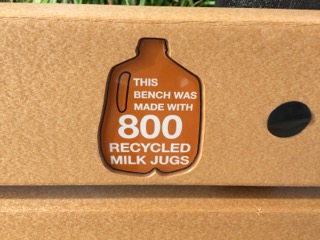
Toothbrushes made from recycled yogurt cups and benches constructed out of milk jugs serve as proof that we can do more with our resources.

From that day on I decided to embrace the zero waste lifestyle. I started by reflecting on the trash I produced and looking into organizations that were helping to combat the waste issues in San Diego. Research led me to stumble upon I Love A Clean San Diego. I was inspired by the cleanups and the passion for sustainability the organization embodied. I became more impressed when I found WasteFreeSD.org and how it is a resource for residents like me who want to divert their waste in an environmentally friendly manner.

WhatToRecycleMagnet
Start with the basics!

I feel fortunate to now be a part of the team! Assisting the Call Center allows me to direct residents to proper disposal facilities, help keep hazardous waste out of the landfill, and provide repair and reuse options to those who are also waste conscious. My journey with zero waste all started with the pit, both literally and figuratively. Think back to a time that really impacted you, maybe you acted on it, maybe you didn’t but the impact it had is still just as important. Grasp that feeling; it can change your life and the planet’s.

c2b16 mountain view park (200)
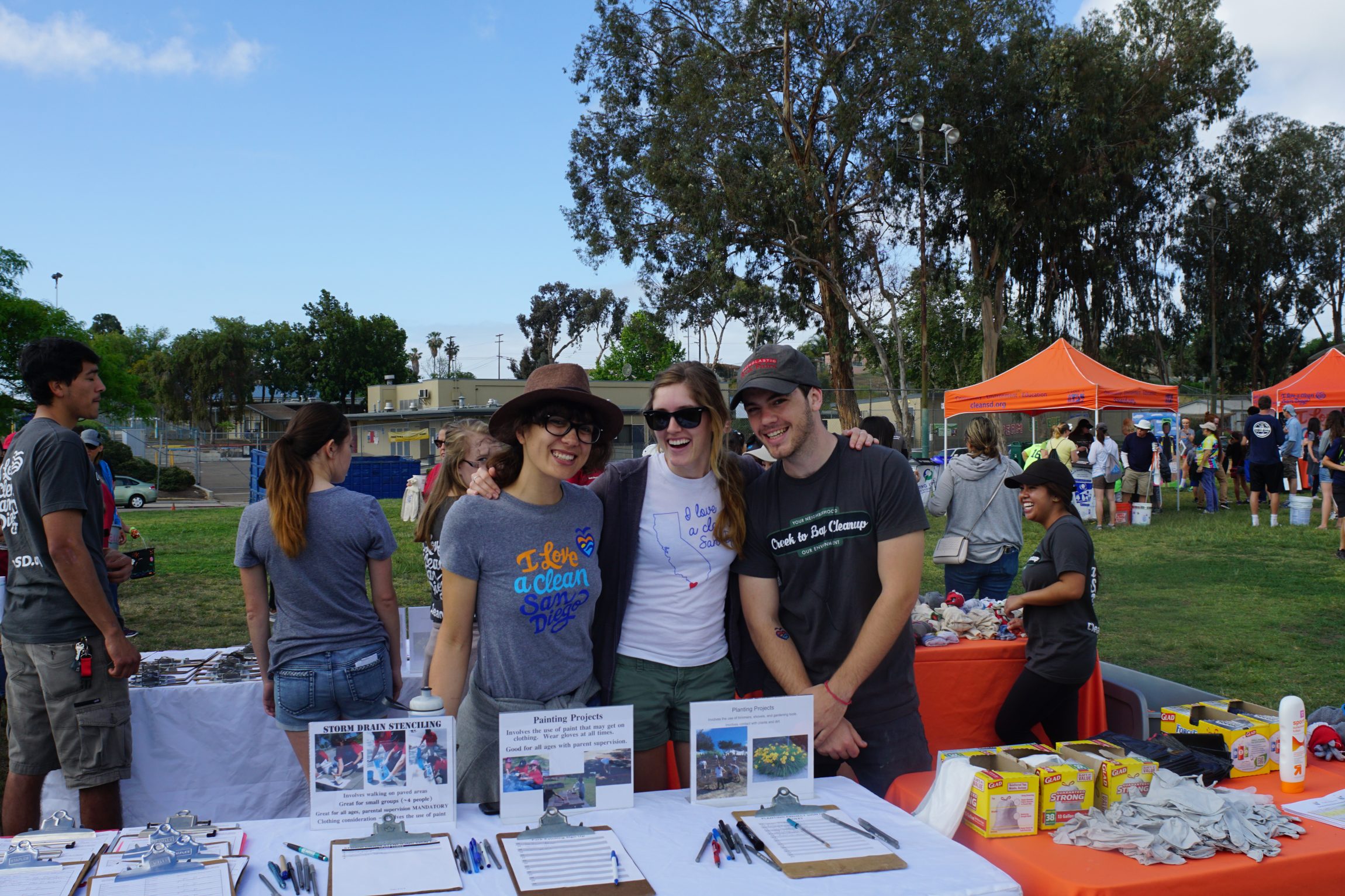
Leila (far left) and two of our interns checking out cleanup supplies at our annual Creek to Bay Cleanup!

Visit CleanSD.org to learn how you can get involved in making a lasting impact on our environment!

Food Waste: Impact beyond the Plate

Hi, I’m Shannon and as one of the marketing interns for ILACSD I am excited to have the opportunity to explore the effects of food waste. My interest in food deserts and the lack of healthy food options in America led me to investigate how food waste affects our community and ways we can prevent it all together.

When I think about wasted food I imagine feeling guilty about leaving those last pieces of broccoli on my plate after dinner, however, food waste is much more serious than wasting a few good veggies. Food waste refers to the massive quantity of quality food that is wasted annually instead of being given to those in need. According to the National Resources Defense Council, “Forty percent of the food produced in the United States never gets eaten.” So what does food waste really do?

Food Waste Inforgraphic #1
Source: www.sustainableamerica.org

Don’t worry there are ways to fight back against food waste!

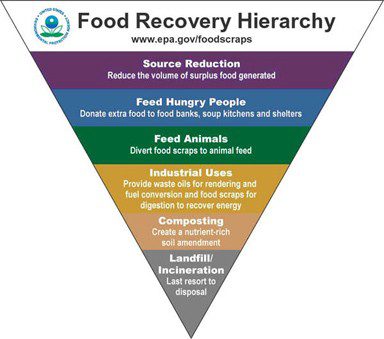
The San Diego Department of Public Works has some great solutions to help you minimize food waste in the future. They rely upon the Environmental Protection Agency’s food recovery strategy to most efficiently and cost-effectively reduce San Diego’s food waste. Based on this hierarchy, San Diego’s DPW established a food waste system based on 3 simple steps: Reduce, Donate and Compost.

Food Recovery Hierarchy

To best implement waste reduction in our personal lives, the DPW suggests re-considering portion sizes, limiting the number of menu items you order when you go out to eat and planning all the week’s meals so your grocery list only consists of what you need to make those meals. According to the DPW, it is important to be conscious of the volume of food you eat in comparison to the volume of food you waste.

Infographic about food waste
source: www.campuskitchens.org

Donating leftover food is another great way to reduce food waste! There are a lot of local organizations that lead San Diego’s effort to feed hungry San Diegans. Check out Feeding America and San Diego Food Bank for local options to donate your leftover quality food. Reducing food waste also means giving those without the means to feed themselves the food they need to survive.

CV_AfterSchool_compost (4)
Kids think composting is fun too!

The final step is using spoiled and leftover food for composting in your own backyard or neighborhood! Check out our previous blogs on composting to see how easy and fun it really is.

It’s important to remember that food waste is a serious national issue so let’s work together to help make San Diego even better than it already is and improve the lives of thousands in the process!


Successful Zero Waste Plans IRL

Sam2016 - 131x172Today’s blog comes from our Contracts Manager, Sam, who has been attending several meetings related to San Diego’s Zero Waste Plan, including food recovery and organics recycling. The idea of zero waste can seem daunting or too far-fetched. Read on to learn about other cities that have successfully implemented zero waste practices IRL (in real life) and what San Diegans can do to help reach these waste diversion goals.
As we all know, “Zero Waste” is a hot button word around environmental circles these days. By its definition, Zero Waste is a commitment to diverting at least 90% of all waste away from landfills, and utilizing other means of proper disposal. But what does it look like in practice? How far along are we? What are the challenges? We will take a look at three California cities to see!

Zero Waste Home - Jan 2016 (21)
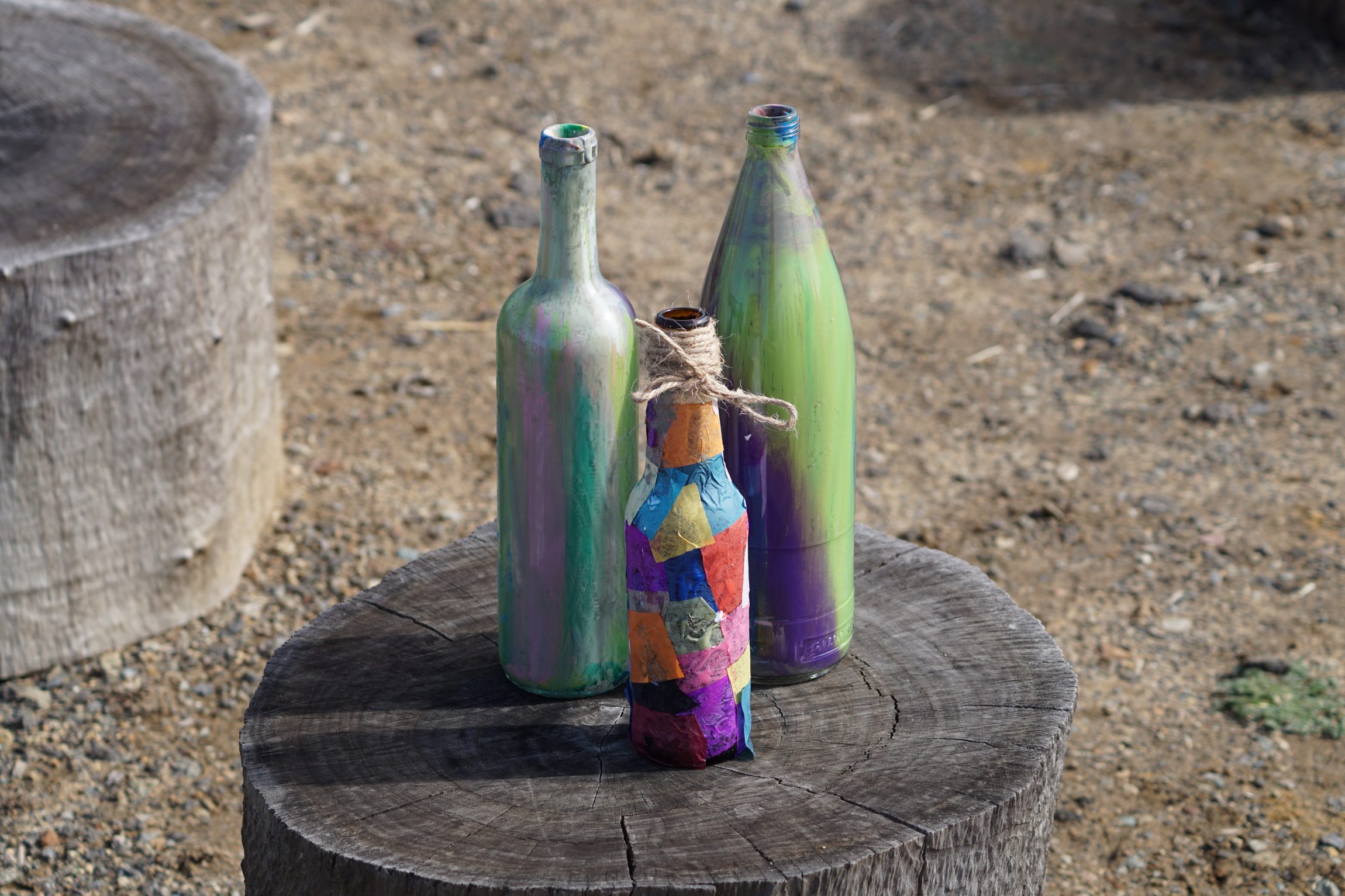
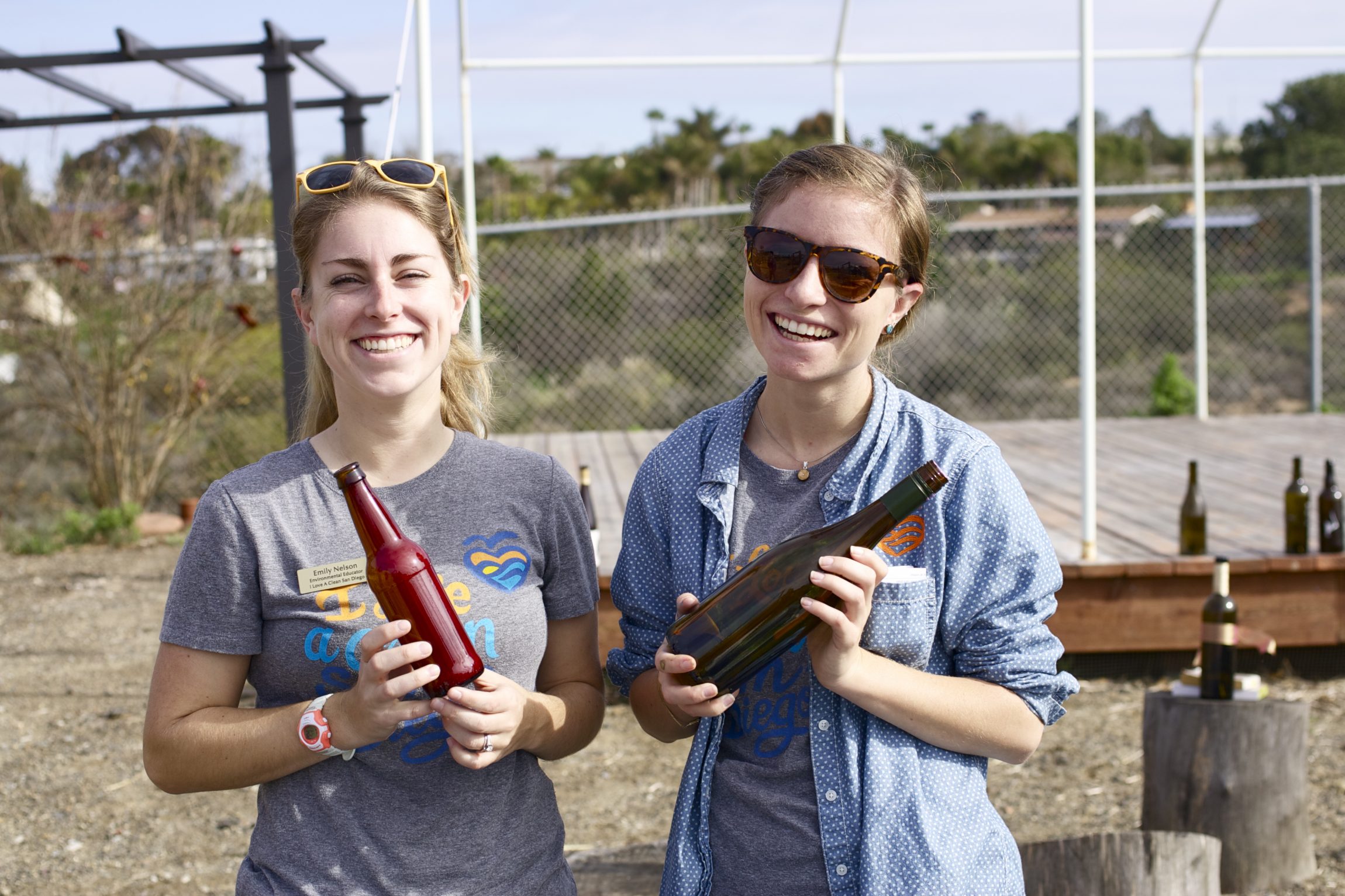
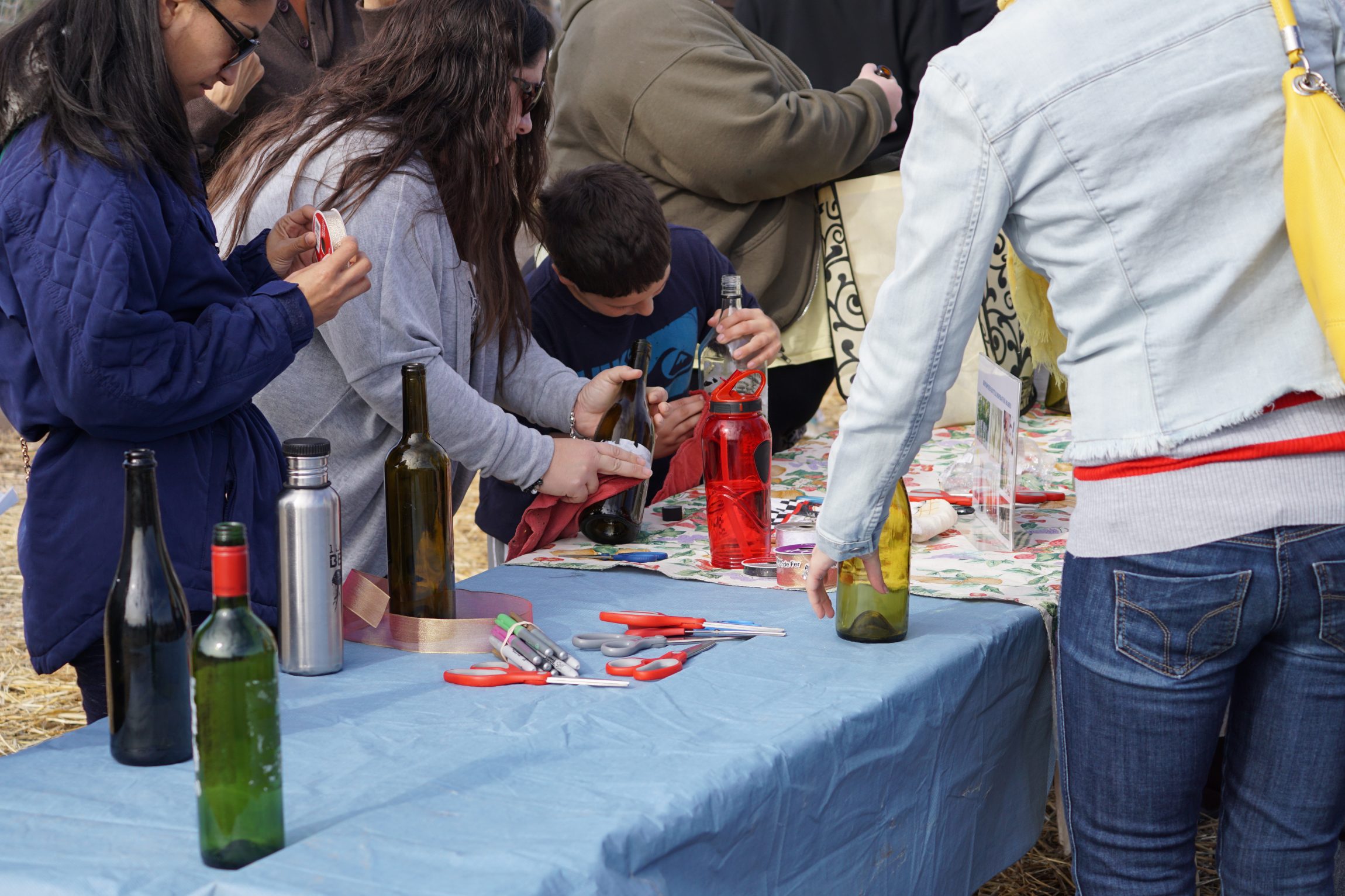
Repurpose tip: extend the life of common items like glass bottles and jars by transforming them into home decor!

Let’s start with the current big kid on the block in all environmental programs, San Francisco. San Francisco has been among the leading pioneers in the nation for environmental programs, and zero waste is no exception. As a part of their commitment to 90% waste diversion by 2020, San Francisco has implemented composting and green waste recycling pickups at businesses and residences. Along with convenient disposal, San Francisco has also invested in providing the public with educational resources about reducing food waste, consumer and producer responsibility, and the list goes on! When other cities in the U.S. look to a city to replicate good behaviors, San Francisco is a wonderful place to start.

Next, let’s look at Los Angeles. Currently hovering around 75% diversion of waste away from landfills, Los Angeles’s goal is to to achieve a lofty 97% waste diversion by 2030 through SWIRP, which is an acronym for Solid Waste Integrated Resources Plan. LA’s infrastructure will soon follow in the footsteps of San Francisco to ensure that greater tonnages of green waste (yard clippings, food scraps, etc.) and compost can be properly disposed of instead of winding up in a landfill. Along with San Francisco, LA believes educational outreach for both food waste reduction and proper recycling techniques are critical to their long term goals. Looking to achieve 87% diversion by 2020, Los Angeles has made a firm commitment to realizing their ultimate “zero waste” initiative by 2030.

CV_AfterSchool_compost (17)
Practice makes habits! Students practice sorting paper, cans, and food scraps into pretend trash, compost and recycling bins.

Last, but certainly not least, our wonderful home of San Diego. The macro-level goal is to achieve virtually 100% waste diversion by 2040, with yearly increments designed to test the progress. Along with LA, San Diego is playing catch up to San Francisco in regards to the infrastructure required to divert large quantities of green waste. Working with the State recycling agency, CalRecycle, as well as haulers and constituents to ensure the County meets its goals will be required if they hope to reach their goals:

  • 75% by 2020,
  • 90% by 2035
  • “zero” waste by 2040

In order to achieve this, the County will need to divert an additional 332,000 tons to offset the current 67% diversion rate. They hope to do this by encouraging haulers to divert more away from landfills, educate San Diegans, and of course divert more green waste away from landfills. Click here to learn more about San Diego’s Zero Waste plan. 

Sustainable-Living-Series-Summit-flyerIt’s exciting times! Zero Waste is no longer just a dream, but it is now a successful process! And with the process, we can see the evolution towards greener, healthier, and more beautiful communities. I Love A Clean San Diego is doing its part by revamping our comprehensive recycling database, WasteFreeSD.org, to include zero waste tips and tricks to fit any lifestyle.  You can always give us a call at 1-877-R1-EARTH to have any of your recycling questions answered as well.

If you’re looking for a more hands-on approach, our education team hosts community workshops designed to give you real life solutions like choosing reusables, how to shop in bulk, etc. Our next workshop, the Zero Waste Summit, will take place on Saturday, June 11th at Ocean Knoll Farms in Encinitas. Let us know you’re coming by registering ahead of time – Here’s to Zero Waste!

Tips for a Green Graduation

c2b16 mountain view park (278)
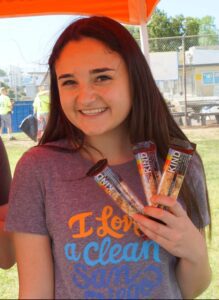
Hannah at one of ILACSD’s events

Hi my name is Hannah and I am currently one of the Outreach Interns at I Love A Clean San Diego! I am graduating this May from San Diego State University with a Bachelor’s Degree in Sustainability.  My love for the environment started in high school after taking a course in environmental science, which led me to my major. I am always trying to find ways to be more sustainable, including my upcoming college graduation.

Graduation season is quickly approaching. From kindergarten to college, there will be millions of students all over the globe walking across a stage to receive their diploma.  Here are 4 ways to be sustainable this graduation season and have a green graduation!

  1. Send evites to your friends and family to attend your graduation ceremony or party rather than paper announcements! You will not only be saving the planet, but also saving money. The online alternative to invitations is affordable, easy, and environmentally friendly! Websites such as Paperless Post, Greenvelope, and Punch Bowl all offer free or low cost alternatives.

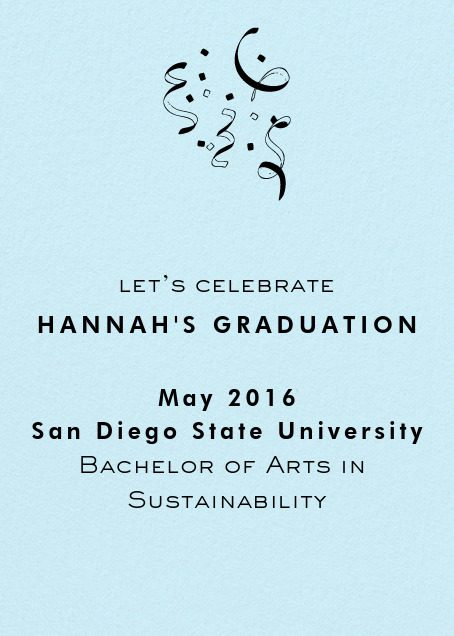
    grad invitation
    Created on Paperlesspost.com
  1. Rent or recycle your graduation gown! There are more than 5 million high school and college graduates every year each purchasing a graduation gown they will probably never wear again and could end up in a landfill, if it is not recycled. Greener Grads is a website that provides low cost cap, gown, and tassel rentals. If you have already graduated or purchased your gown, don’t fret, Greener Grads will recycle it for you after you are done.

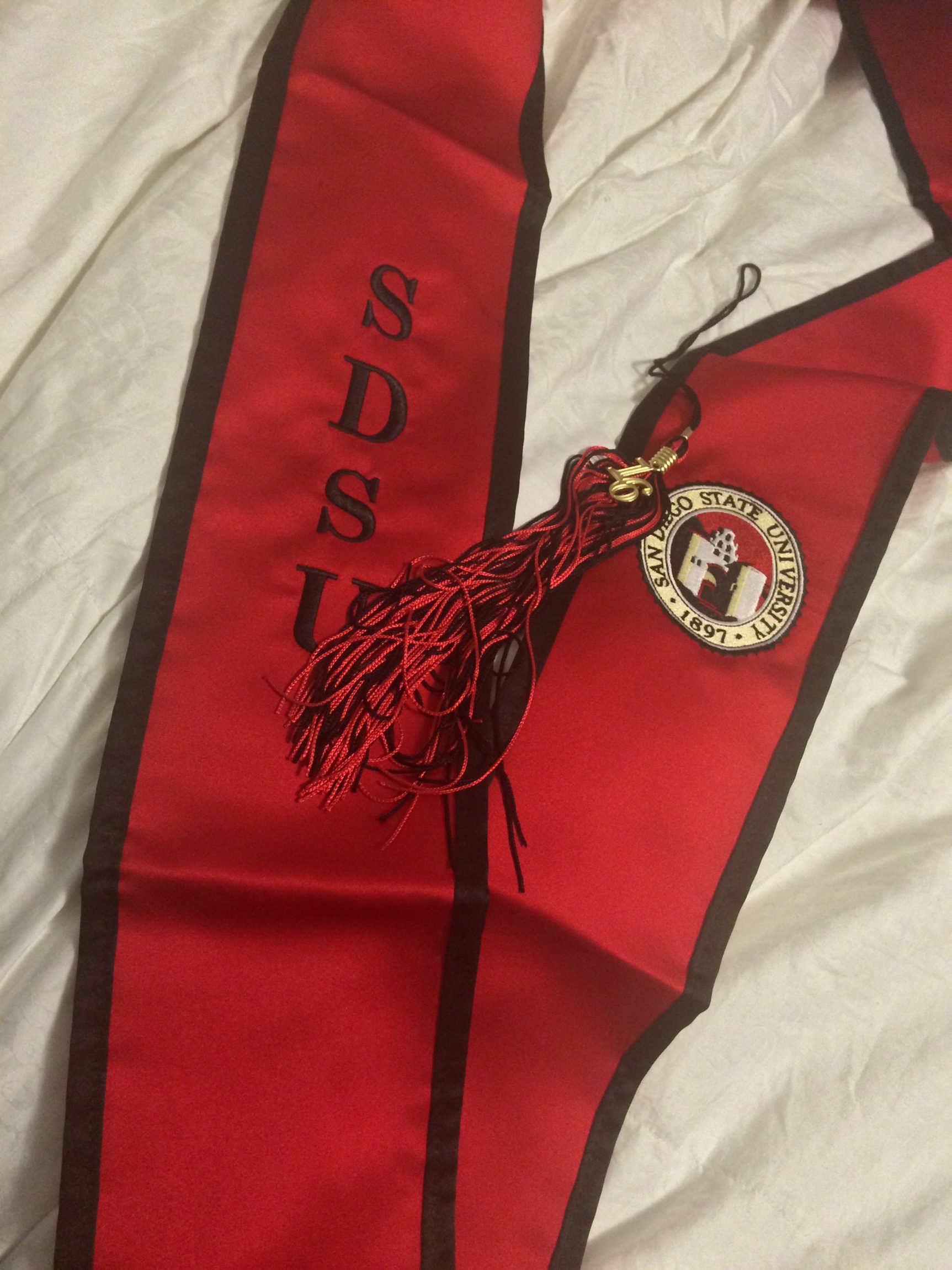
SDSU gown

  1. Arrange a carpool for your guests attending your graduation or encourage them to take public transportation. Not only will there be tons of traffic getting to and from the ceremony, but they will be making a positive impact on the environment.   Since SDSU has a trolley stop right on campus, my family is staying at a hotel in close proximity to a trolley stop for my graduation this May for a quick, sustainable, and hassle free journey.
trolley SDSU
photo credit: http://arweb.sdsu.edu/es/virtualtour/transit.html
  1. Encourage your friends and family to refrain from showering you with balloons and candy leis at your graduation ceremony, and let them know their attendance is more than enough! We are currently facing a helium shortage, you know the stuff that we fill balloons with, and studies suggest supplies could be depleted before the middle of the century. Helium is a non-renewable resource, so once it’s gone it’s gone. Another popular graduation ceremony gift are candy leis, but candy wrappers are made from mixed materials that can be very difficult to recycle.

We’ll that’s it! If you’re graduating this spring or if you know someone who is, take these tips with you as you celebrate this incredible milestone with our environment in mind. For more sustainable ideas for other occasions, follow I Love A Clean San Diego on Pinterest!

Graduation meme

Zero Waste 101

What is zero waste? First, let’s define what zero waste is to better understand how it affects you and what it means for our communities.

Zero waste is the process of eliminating reusable or repairable materials from ending up in the landfill. Zero waste encourages manufacturers, municipalities, and consumers to evaluate current consumption patterns and minimize single-use items. In order to divert materials from the landfill we must share the responsibility of producing and consuming sustainable products while limiting our use of disposable items.

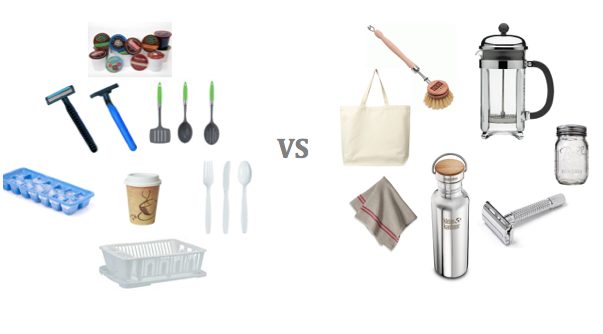
Zero Waste Alternatives

Now that we know what zero waste means, let’s explore why this practice impacts San Diegans. Currently, the Miramar Landfill is composed of reusable substances; yes that is right REUSABLE substances. The top 3 reusable substances in our landfill are:

Organics (food scraps, yard waste) 39%

Construction and Demolition (building materials) 25%

Paper 17%

When we choose to send these items to the landfill, large amounts of methane gas are released which pose serious public and environmental health concerns. On the positive side,  all of this can either be recycled, reused or composted, which means, we can do something about it! ZW blog landfill

In response to the amount of reusable materials in the landfill (or should we say landFULL) the City of San Diego adopted a zero waste plan to focus on reusing rather than disposing items. Currently, the City of San Diego diversion rate has been consistent around 67%. Here is an outline of upcoming benchmarks for the city’s waste diversion plan:

  • 75%  by 2020
  • 90%  2035
  • 100% diversion rate by 2040.

The plan’s primary focus is on organics diversion. There are several resources available to help you reduce food waste through planning and composting. Learn more at by reading about some of our past food waste blogs and WasteFreeSD.org!

Even I Love A Clean San Diego’s Recycling and Household Hazardous Waste database is getting a zero waste makeover! Stay tuned for the redesign release of WasteFreeSD.org this summer! The new database will include a easy to use search bar that will help you find convenient ways to divert waste from the landfill!

Zero Waste Home Decor

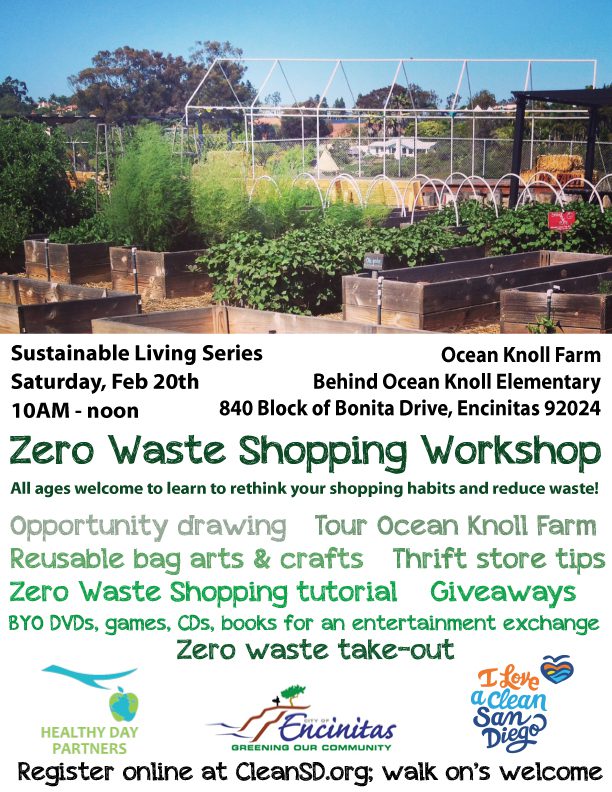
Grace- 131x172Today’s blog comes from Grace, one of our Education Specialists! If you want to create less waste in 2016 get started today with one of our tried and true zero waste crafts! If you like what you find here, be sure to come to our next free workshop this Saturday, February 20th to learn first-hand from our educators like Grace! 
The average person in San Diego County makes 1,825 pounds of trash in just one year – that’s 5 pounds a day! This abundance of trash can have a variety of consequences, including filling up our landfills and harming animals if this trash makes its way into our environment. In an effort to inspire San Diegans to kick-start a zero waste lifestyle, I Love A Clean San Diego has incorporated the following DIY repurposing projects into our Sustainable Living Series workshops. Repurposing projects not only save items from the landfill, but also reduce the amount of new resources that need to be purchased by upcycling the resources we already have.

10.7.15 - SLS (22)
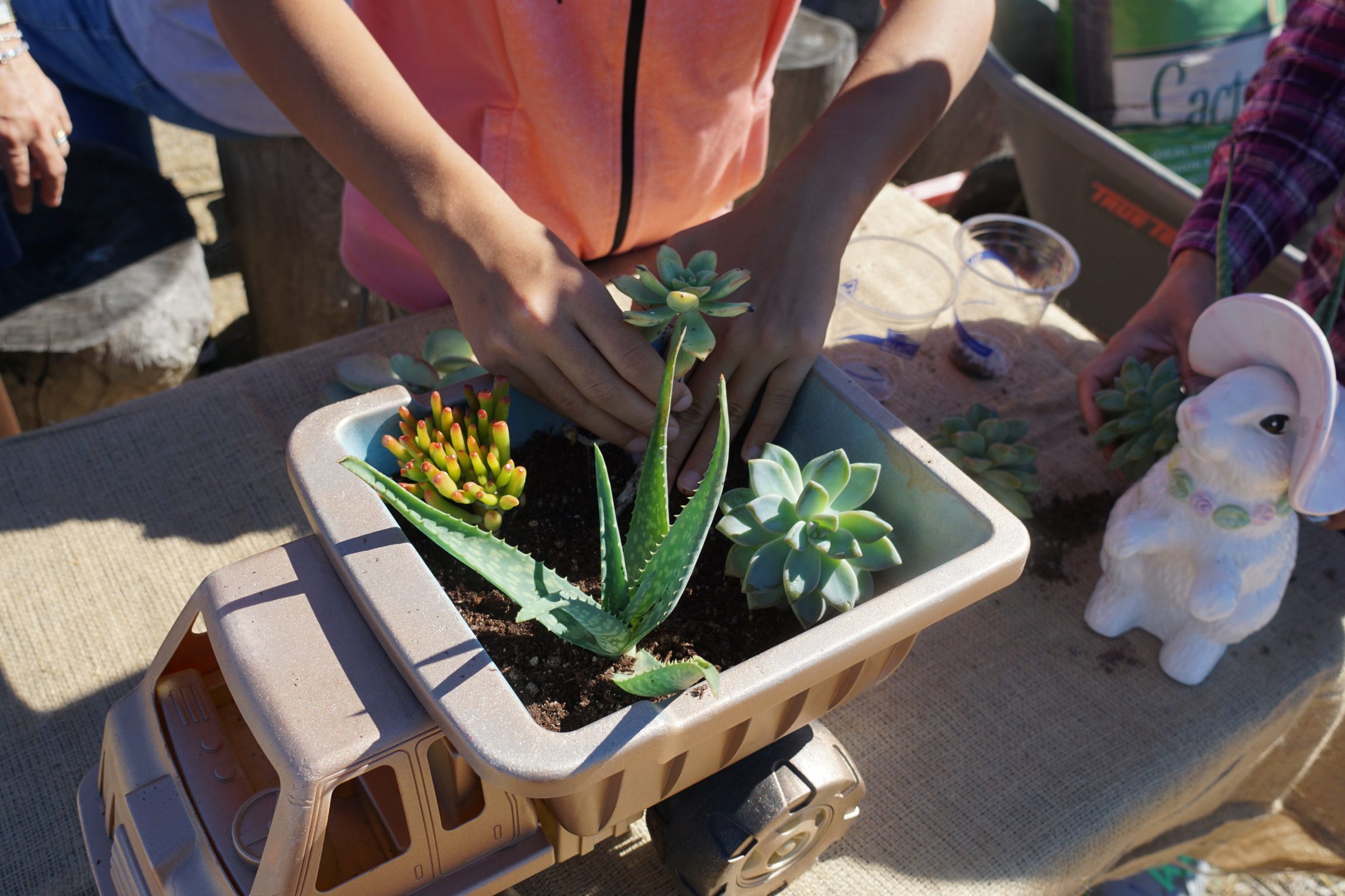
Toy trucks, shoes, tea cups, you name it! Any common item can be transformed into a succulent planter with a little creativity.

Planting succulents in repurposed containers: This project utilizes drought resistant succulents that are perfect for our dry Southern California climate. Your succulent “pot” can be anything from an antique tea cup to a shoe.

Supplies:

  • Repurposed container
  • Drill (optional)
  • Charcoal (optional)
  • Rocks
  • Succulents
  • Soil
10.7.15 - SLS (40)
Who knew a gravy boat could be transformed into such a beautiful planter?

Instructions:

  1. Select your repurposed container.
  2. Some drainage in the container is preferred. If possible drill a hole in the bottom of the container. A diamond drill bit may be needed depending on the material OR cover the bottom of the container with a thin layer of charcoal to absorb excess water.
  3. Add a layer of river rocks at the bottom of the container.
  4. Fill container ¾ with soil.
  5. Arrange succulents to your liking.
    • For indoor arrangements, widely space plants in the same container for maximum exposure to sunlight.
  6. Once complete, give your succulents a soak with a spray bottle.
Zero Waste Home - Jan 2016 (40)
Finished pieces from our Zero Waste Home Workshop.


Repurposing glass bottles:
This project takes your empty glass bottles from one party and upcycles them into decorations for your next! Any sized bottle can be transformed into a vase or centerpiece.

Supplies:

  • Glass beverage bottles
  • Goo Gone
  • Paint or Spray Paint
  • Twine

Zero Waste Home - Jan 2016 (85)Instructions:

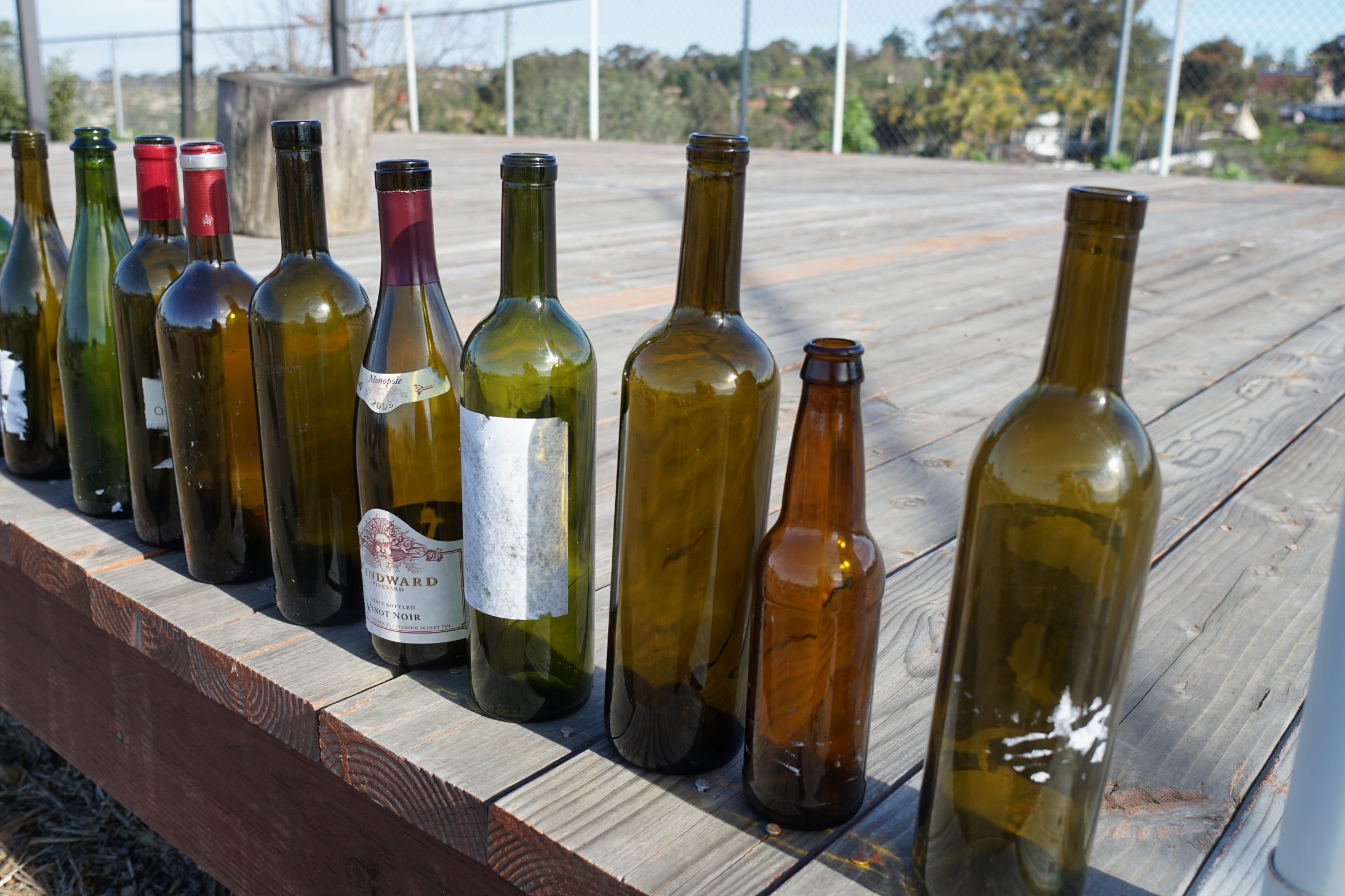
  1. Remove labels and clean residual glue from bottles with Goo Gone.
  2. Swirl the inside of the bottle with paint OR Spray paint the outside of the bottle.
  3. Wrap selected areas of the bottle in twine.
  4. Variations can include using newspaper, old book pages, metallic markers, tissue paper and ribbon.

Try your hand at a DIY project at our next Zero Waste workshop! Register for our Zero Waste Shopping workshop on February 20th at Ocean Knoll Farm.

Zero-Waste-Living-Workshop---Feb-2016

Moriah bridges love for craft beer & the environment

Mo brewing beerToday’s blog comes from our Community Program Coordinator, Moriah as she shares her love for San Diego craft beer and our environment!
I am known as the resident beer nerd at I Love a Clean San Diego.  After working at a local brewery for about a year and brewing at home, it’s safe to say I know a thing or two about beer.  One thing I didn’t know, however, was how connected my love of beer was to my love for the environment.  In a city like San Diego, it’s not surprising that our local breweries value our environment as much as they value their craft.

Ways SD breweries minimize waste

Water conservation is a big issue for everyone in California, and that includes craft breweries.  The industry average in California ranges from 3.5 to 6 gallons of water for every gallon of beer produced.  Breweries in San Diego are leading the way in reducing the amount of water needed for their production.  Local breweries are becoming increasingly water-wise.  According to the California Craft Brewers Association, Ballast Point has reduced its water use by more than 24 percent, and Stone Brewing Company recycles more than 62 percent of its water daily.

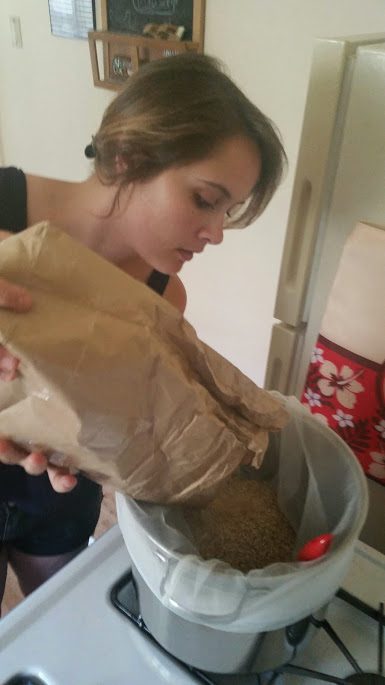
One of the biggest ways that local breweries reduce waste is by using their spent grain in creative ways.  Spent grain is the grain left over after the brewing process.  Instead of throwing this used grain in the landfill, most of San Diego’s breweries donate it to local farms, where it can be used as livestock feed.  Stone Brewing Company even uses it as a mulching tool in their garden.  Some of their spent grain goes towards locally made soaps and dog treats as well!

Hop farm
Hop farm picture is Jordan Brownwood tending hops at Nopalito Farm & Hopyard. Photo credit:  slowfoodurbansandiego.org

San Diego is known for its hop-heavy beers, but did you know that farms right here in San Diego County grow one of beer’s most important ingredients? Nopalito Farms is a local, family-run organic hopyard and orchard in North County San Diego.  Since water conservation is always an issue in Southern California, Nopalito Farms has adopted sustainable farming practices like drip irrigation and mulching, and they work to maximize the rain that they get in Valley Center.

Imbibe with the earth in mind!

  • Bring a growler with you next time you pick up beer. Instead of cans or glass bottles that will end up in your blue bin, get a reusable growler and take it to the closest brewery.  Get fresh, draft beer straight from the source! Be sure to check with the brewery first to see if they have any specific growler policies.
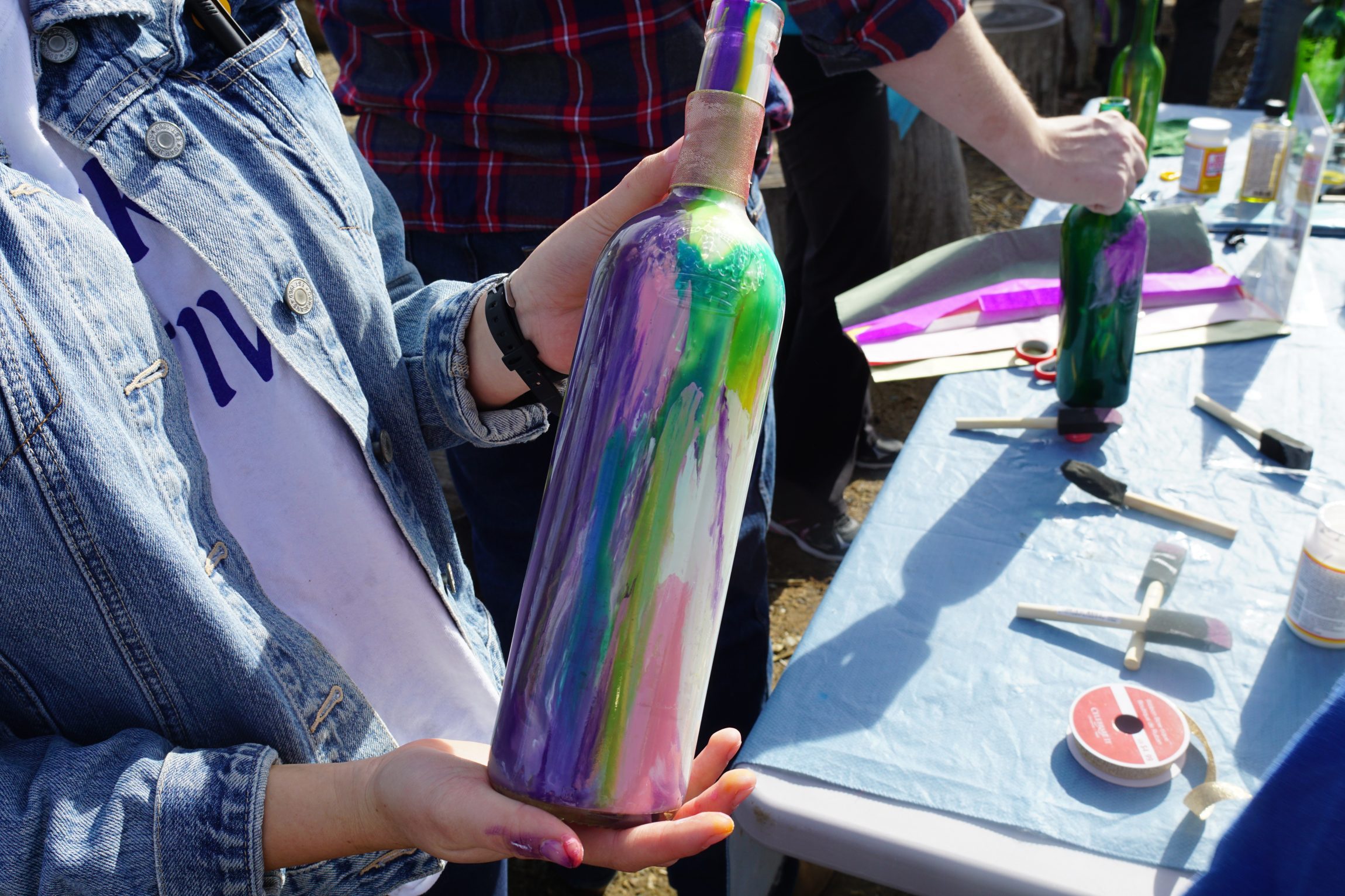
  • Reuse old beer or wine bottles to make decorations for your house. At our recent Sustainable Living Workshop that focuses on a zero waste home, our educators taught attendees how to reuse their old bottles and turn them into fashionable home decorations.

    Zero Waste Home - Jan 2016 (29)
    One example of a  repurposed wine bottle from our Zero Waste Home Workshop.

Volunteer at Cupid’s Cleanup!

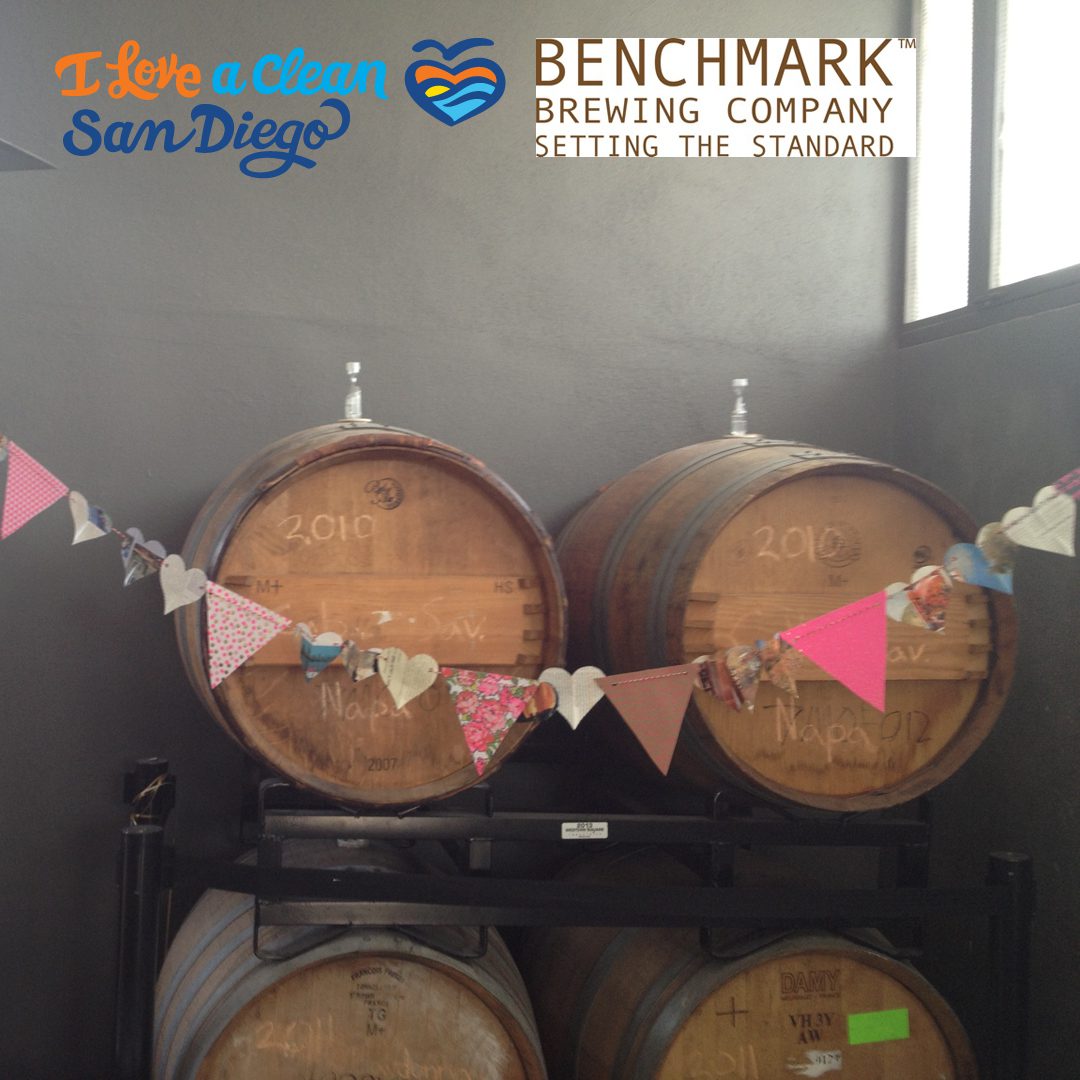
If all of this beer talk has you thirsty, you can join us and Benchmark Brewing Company on Saturday, February 13th from 10am-12pm for a cleanup of the San Diego River! Why not switch up the typical dinner and a movie Valentine’s Day date and help us clean up the San Diego River instead. Then, if this blog has inspired you to try some local San Diego suds, you can join us afterward for a Valentine’s Day-themed mixer hosted by Benchmark Brewing Company! Families, sweethearts, kids, and singles are all welcome.

Register here! Help us spread the word by joining the Facebook event and sharing the cleanup with your friends and family. 

cupids instagram

Get to know Sam!

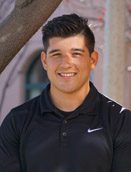
Today, we’d like to introduce I Love A Clean San Diego’s Contract Manager, Sam! Sam hit the ground running when he first joined our team in October. Now that he is more settled in his role, we’d like to take this opportunity for all of you to get to know him better. Read on to learn about Sam’s journey to ILACSD!

Sam DeCapua, I Love A Clean San Diego’s Contract Manager (right)

Q: What brought you to I Love A Clean San Diego?

Before coming to ILACSD, I really enjoyed politics, but since there was such a wide array of issues that needed to be addressed, I realized that this is my chance to hone in on a topic I could really contribute to.

There are so many problems which affect us all in the environmental sphere, so I felt I had a great opportunity to make a positive change in my new-found home (San Diego) and I could work towards something I was passionate about: curbing food waste, educating others on the importance of the world around them. The great office culture that exists at I Love A Clean San Diego is a plus, too.

IMG_1259Q: What environmental topic are you most passionate about?
Although I think they are all important, I think food waste is a BIG one. It is a stark reminder that we have this abundance of food, which if channeled properly, could be a large step forward in effectively ENDING hunger in the United States. What a change that would be! Not only that, but food waste creates methane, which is 25 times more dangerous than CO2 emissions, when disposed at landfills. I’m also very intrigued by the Zero Waste initiatives showing up around the country. I love that California has been so aggressive to reduce the waste we create. It’s a great goal to pursue, and I’m really looking forward to contributing to the implementation of those lofty goals.

Q: What is your most recent environmental goal?
Since joining I Love A Clean San Diego, I’ve seen what a noticeable difference the smallest habits and actions taken daily can make. Therefore, I’ve tried to reduce buying excess packaging which creates unnecessary trash, as well as making sure I plan my portions for food to avoid wasting valuable food by either spoilage or excess. Packing lunches goes a long way in saving the environment and your wallet!IMG_1513

Q: “When I’m not at a the office or a cleanup you can find me…”

I love going to the gym, it is a big part of my life. Additionally, I love doing outdoorsy stuff, and I really want to get into surfing soon! Apart from all of that, I really love reading and watching Netflix. I’m also getting into the local restaurants and breweries, and as a big burrito and beer fan San Diego has definitely exceeded my expectations!

Sustainable gift wrap solutions

Whether you’re looking for more creative and sustainable ways to wrap your gifts this year or you’ve simply ran out of wrapping paper, Ani, I Love A Clean San Diego’s Recycling Programs Manager, is here with a couple of quick, eco-friendly gift wrap solutions!

Did you know that food waste, shopping bags, wrapping paper, and ribbons all contribute to an additional 1 million tons of waste to our landfills? Here is a quick gift wrapping guide to limit the amount of waste that ends up in our landfills after the holiday season (and beyond):

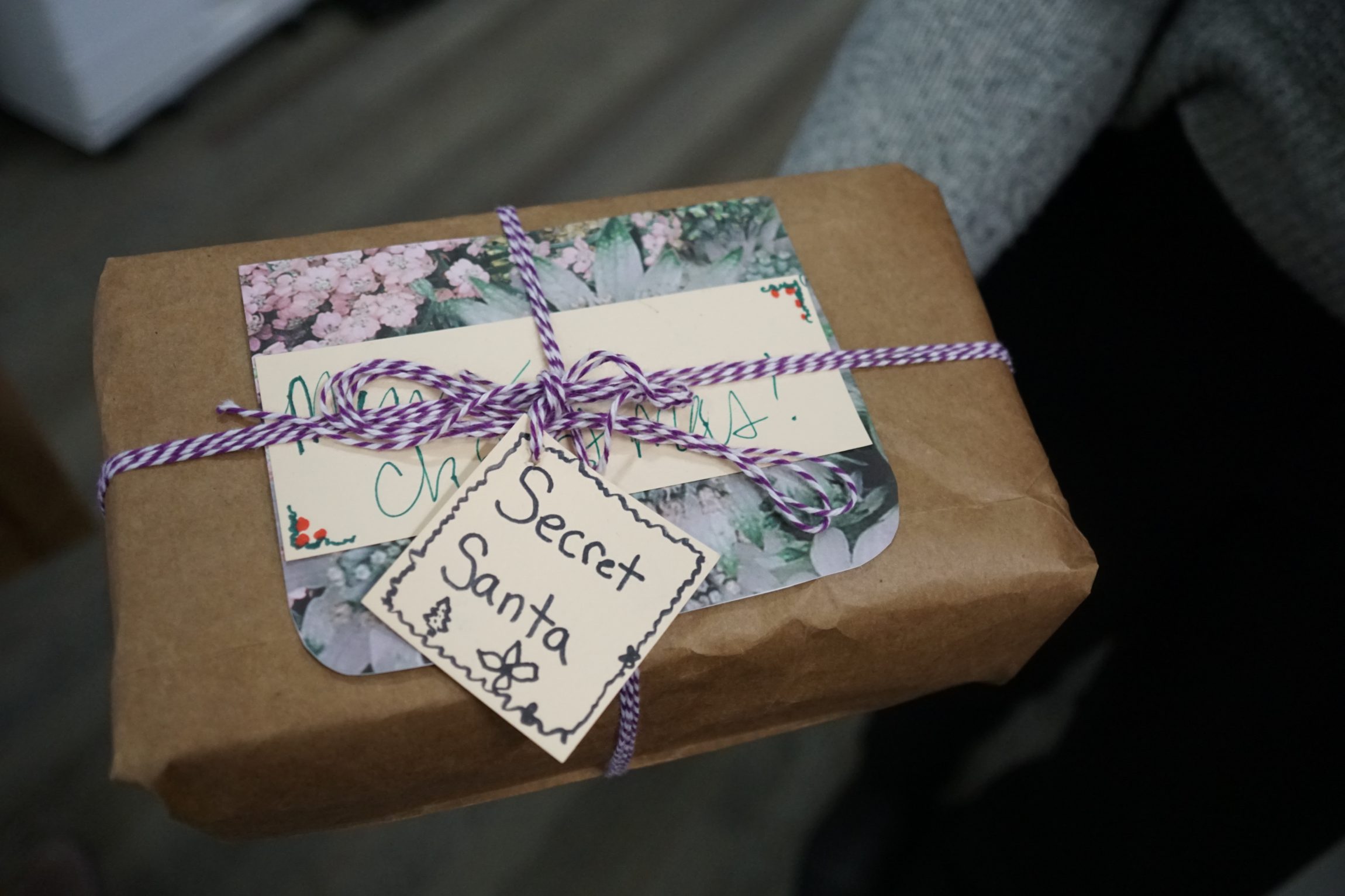
Start early.  I reuse boxes from my online shopping, food packaging, tissue paper, gift bags and bubble wrap year round to avoid having to buy any additional gift wrapping materials; and it saves me some money as well!

Secret Santa 12.16 (8)
Community Programs Coordinator, Moriah, reused a paper grocery bag to wrap her gift and it looks great!

Consider wrapping gifts in fabric or newspaper. Unfortunately, festive wrapping paper usually ends up in the recycling bin and is often difficult to reuse. Give the gift of beautiful fabric or simply dig through your recycling bin to find paper to cover a gift.  I guarantee your gift will stand out from the rest!


Furoshiki is a type of traditional Japanese wrapping cloth


Skip the ribbon, skip the bow! These items are difficult to reuse and uncommon to keep. Check out Emily’s gift below!

Secret Santa 12.16 (9)
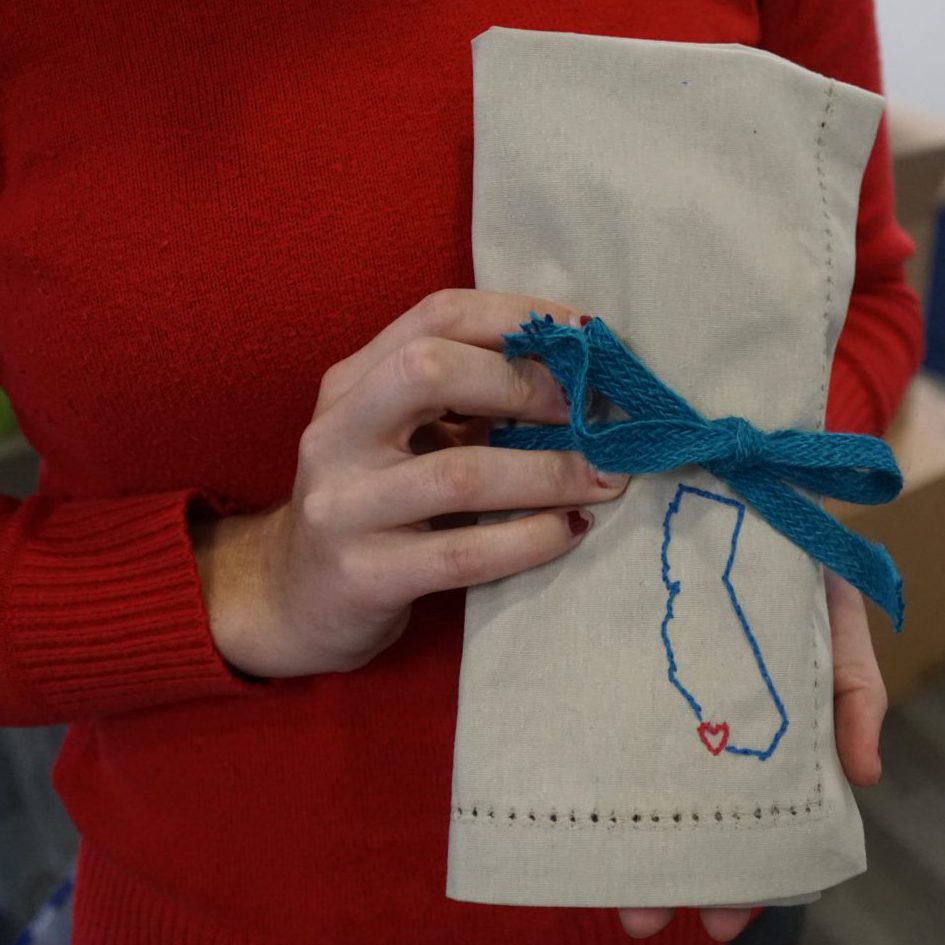
Education Manager, Emily, wrapped chocolates in a personalized reusable napkin.

All in all, try to hold on to gift wrapping items or opt out of using items that are hard to reuse and you’ll be on the path to creating less waste in no time! For recycling options, check out our one-stop database, www.WasteFreeSD.org

Happy Holidays from the ILACSD staff! Be sure to follow us on Facebook, Twitter, Instagram and Pinterest for other creative zero waste ideas!


ILACSD Debuts Zero Waste Workshops

Emily_team15
Emily Nelson, Education Manager

Thanks to the generous support of the City of Encinitas and Healthy Day Partners, I Love A Clean San Diego is currently providing free adult workshops as part of our Sustainable Living Series. After a successful kick-off in November, we’re looking forward to our upcoming workshops in January and February. Read on to learn more!

As a San Diego native, I’ve always taken pride in how our community members rally together during a time of need. Most recently, San Diegans responded impressively to our drought crisis. Between June and August of this year, San Diego county residents decreased their water usage by 27%. We’ve all worked together to take shorter showers and limit our irrigation frequency, but is there more we could be doing?

10.7.15 - SLS (33)At our first Sustainable Living Series workshop – What to Know about H2O – I Love A Clean San Diego staff set out to tackle that very question. After reviewing the history of water in San Diego, participants rolled up their sleeves and dug into our repurposed planter activity. Using items salvaged from Goodwill as pots, we planted succulents, saving water and saving items from the landfill in one fell swoop.

Following a tour of the Ocean Knoll Farm, the site of the Sustainable Living Series workshops, our educators discussed the benefits of selecting native plants as part of your outdoor landscape design. We demonstrated water-wise irrigation options, exploring the benefits of backyard rain barrels and detailing the process of installing a Laundry to Landscape greywater system. Our youngest participants got to “bling their bucket” with reminders of how to conserve water in their home.

Thanks to generous donations from Walter Andersen Nursery in Point Loma and Home Depot in Encinitas, we raffled off a rain barrel and 10 native plants, among other items. Everyone walked away with something to set them on the path to living more a more sustainable life.

[youtube https://www.youtube.com/watch?v=ce0_SXGPUvk]

Join us for our upcoming zero waste workshops: Zero Waste Home on Saturday January 9th and Zero Waste Lifestyle on February 20th, offered at no cost to you!  

Zero-Waste-Home-Workshop
Click the image to register!

Visit www.cleansd.org/e_community.php for more information and to register.