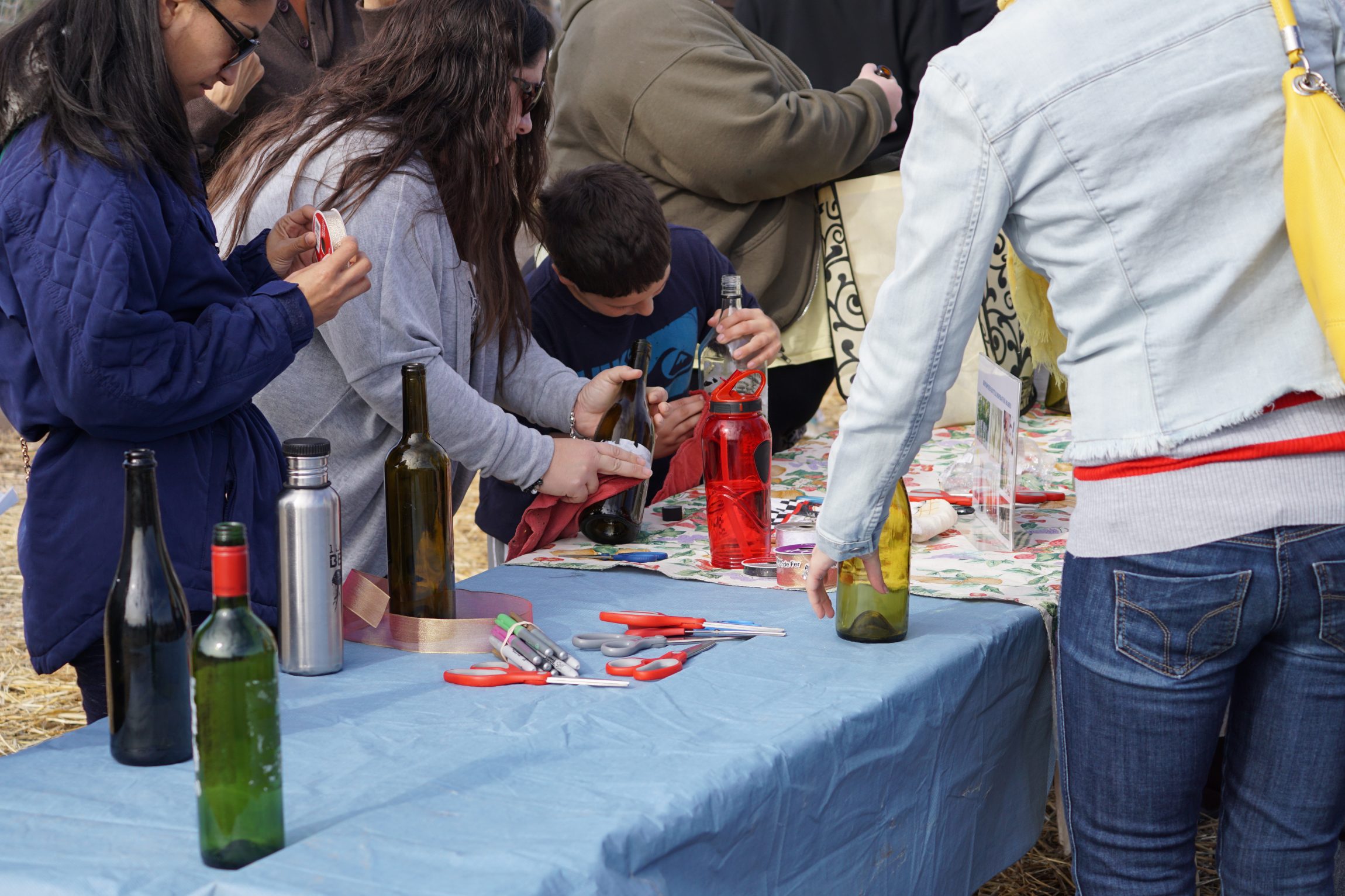
Join ILACSD as we team up with the City of Vista to bring you Save Your Scraps, an interactive workshop focused on zero waste and organics! Come learn what it means to live a zero waste life and more specifically, how to keep organic waste out of the landfill by shopping smart, storing food properly, and composting your scraps! Join us for this fun, informative workshop and participate in one of the hands-on activities including a ‘make and take’ project and an eco-friendly kids’ craft.
Make and Take: Vermicomposting Bins (compost with worms) while supplies last. Eco-Friendly Kids’ (or Adult) Craft: Decorate Produce Bags Raffle Prizes: Bamboo Food Scrap Bin and mini Zero Waste Kit (Stasher bag and reusable straw)
In addition, can bring in gently used items you were planning to donate and participate in the Swap ‘n’ Shop! Participants can exchange or donate those items by giving them a second life and keeping them out of the landfill. Some example items that have been brought to past workshops include clothes, nail polish, stereos, pet supplies, books, CD’s, picture frames, kitchenware, Halloween costumes, etc.
Open your Instagram account and click on the explore page, it won’t take too long for most of us to find images of vibrant, crunchy, creamy, steamy, buttered, drizzled, crystalized, smoky, aged, boiled, briny, cheesy, absolutely delightful images of what is on their plate! These days, foodie culture dominates social feeds. The farm to table movement is bigger than ever. We have never been so in tune and in love with what we are eating until now.
Documenting meals for online followers is a normal habit for foodies.
So with that, let’s imagine you just spent all afternoon preparing a pie for dinner guests. You’re are so pleased with the steaming, flaky pie that sits on the counter in front of you. It’s so aromatic and intense that you can recognize each type of fruit in the medley that is making your senses come alive! You cut it into 10 slices, making sure each one is piled high with perfectly candied pastry dough. You are almost ready to serve it to your guests, but before you even unveil it at the dinner table, before you even leave the kitchen, you scrape 4 pieces of pie directly into the garbage. It hits the trash can with a miserable thud, the amber colored gelatin is sliding down the plastic bag and the slices look more like your cat’s food than a guest-worthy dessert. While this might seem like an insane thing to do, it is a realistic picture of the amount of food being wasted in our society.
Sorry, what was I talking about? I am only thinking about pie now…
In the United States, 40% of food goes uneaten. The average Californian throws away 24 pounds of food a month.How can it be that in a time when we are so infatuated with our food, that we are wasting so much? Food waste occurs at many levels – at the farm, at the store, in our fridges, and off our plates. Farmers who grow produce that is considered too ugly, too small, too large, too uneven, or a little colorless are pushed out of the marketplace due to the retailer’s demand for consistency. Food is also lost in transportation. Food spoils in the store and in our refrigerators, but it’s not just food we are discarding without a second thought. We are squandering all of the resources that go into the production and distribution of food! Nationally, 80% of our water, 10% of our energy, and 40% of our land is utilized to grow our food. Despite all of the resources we put into the production of food, it is the leading material in our landfills! In the Miramar Landfill, 40% of the total waste is organic material that could have been mulched, composted, fed to animals, or in some cases, fed to people.
Realizing all of your food doesn’t have to be picture perfect is an easy way to prevent food from going to waste.
Our food systems are not perfect, but together each and every one of us can take a stand against food waste. Even small adjustments to our behavior can create impactful change! Here are a few simple suggestions to help you get started or continue your food waste prevention:
Shop Smart
Be prepared: create a shopping list with menus in mind to avoid impulse buys
Set a time frame: this gives you less time to buy things not on your prepared list
Know what you need: keep stock of what you have at home, note items as they run out to help create your shopping list
Be realistic: if you live alone or only need one carrot for a recipe, don’t buy a whole bag
Bulk is better: buying in bulk requires a little forethought and planning but is definitely worth it
Cut your costs: if you crunch the numbers, bulk purchases typically cost less per unit
Sensible Storage to Slow Spoiling
Practice first in, first out habits: move older products to the front of the fridge and stock unopened newer items in the back
Monitor what you throw away: throwing away half a loaf every week? Start freezing it.
Dates, not deadlines: know that expiration, best by, sell by, and use by dates, are not an exact science but merely manufacture suggestions
Leave a little room: don’t overcrowd your fridge, the air needs to circulate
Figure out your fridge’s compartments: your fridge has a crisper for a reason and the fridge door is warmer than the shelves
If you don’t know, ask: utilize the Alexa Save the Food skill to ask where and how you should store your items while unpacking groceries (like storing your asparagus cilantro, celery, carrots in water to make them last longer)
Creative Cooking
Use it up nights: designate one evening a week to focus on using up open items in your fridge
No tops or stems left behind: use every part of the produce you can – broccoli stems, beet tops, carrot tops, leave the skin on cucumbers, blend your smoothie with strawberry leaves on
Wilted doesn’t have to mean wasted: use your food up, wilted veggies can go into a stir-fry or soup, bruised fruit can be added to a smoothie or applesauce, old cheese rinds can make soups, juice pulp can be utilized numerous ways (bread, guacamole, power bites bars)
Serving, Snacking, and Sensing Satiation
Avoid over ordering: if you’re often ordering too much food, try splitting a meal with a friend or ordering smaller portions when out
Know your limit: don’t feel guilty if you don’t clean your plate as long as you save and store whatever is remaining
Leftovers tonight means lunch tomorrow: take your leftovers home or save anything you cooked but couldn’t finish (don’t forget your reusable containers for leftovers)
Smaller plate, smaller portions: we often over serve ourselves because the plate has room – a smaller plate can help you decrease the amount you dish up
Join ILACSD as we team up with the City of Encinitas to bring you another Zero Waste Workshop! On Saturday, May 5, 2018, we will be hosting the Zero Waste 101: On the Go Workshop from 10:00 AM – 12:00 PM at the EUSD Farm Lab located at 441 Quail Gardens Road, Encinitas, CA 92024. The event is completely FREE and open to the public. This is the final installment of a three-part series on sustainable living!
Come by and learn how to set yourself up for zero waste success while on the go! Visit educational booths, participate in one of the hands-on activities, and bring in gently used items you were planning to donate and participate in the Swap ‘n’ Shop! Swap ‘n’ Shop participants can exchange or donate those items giving them a second life and keeping them out of the landfill. Make sure to stick around for our raffle where you have the opportunity to win sustainable prizes that will help with your zero waste journey!
Get registered today to reserve your spot! We hope to see you there!
Join ILACSD as we team up with the City of Encinitas to bring you another Zero Waste Workshop! On Saturday, March 3, 2018, we will be hosting the Zero Waste 101: Organics Workshop from 10:00 AM – 12:00 PM at the EUSD Farm Lab located at 441 Quail Gardens Road, Encinitas, CA 92024. The event is completely FREE and open to the public. This is the second installment of a three-part zero waste series.
Learn how to keep organics out of the landfill by shopping smart, storing food properly, and composting your food scraps. This workshop will also cover water conservation tools, such as ocean-friendly gardens and laundry-to-landscape systems. Participate in one of the hands-on activities that will be available for all ages, including a kids craft and a make-and-take vermicomposting bin! Bring in gently used items you were planning to donate and participate in the Swap ‘n’ Shop! Swap ‘n’ Shop participants can exchange or donate those items giving them a second life and keeping them out of the landfill. Make sure to stick around for our raffle where you have the opportunity to win sustainable prizes that will help with your zero waste journey!
At the end of the workshop, 25 participants will have the opportunity to create and take home a fully-functioning vermicomposting bin (composting with worms). Please indicate your interest on the registration form. Participants will be added on a first come, first serve basis. Due to supply restrictions, we are limited to 25 participants. Please limit one per household.
Get registered today to reserve your spot! We hope to see you there!
At I Love A Clean San Diego, we work to lead and inspire our community to actively conserve and enhance the environment so that our children can enjoy this beautiful region for future generations to come. That’s why we believe in engaging with local schools to instill in them environmental values and habits at an early age.
Did you know that the average elementary school student drinks 133 servings of milk or juice per year? For the average elementary school, that means students consume approximately 75,000 carton beverages per year – that means more than 6 billion cartons are consumed in schools every year!
With carton recycling now available in over 60% of the country, including San Diego, we want to spread the word that you can recycle your cartons and help everyone improve their recycling habits.
Congratulations to Teirrasanta and Cherokee Point Elementary schools for leading by example. Take a look at the great work they’ve already done:
Tierrasanta Elementary won the San Diego Unified School District’s Most-Improved Recycling Award for 2016-17 by boosting their recycling diversion from 10% to 25% (by weight) over the course of just one school year. Through increased classroom recycling efforts as well as lunchtime recycling of cartons, lunch trays, and other recyclables, Tierrasanta students were able to reduce trash service, dramatically improve recycling rates, and save the school money.
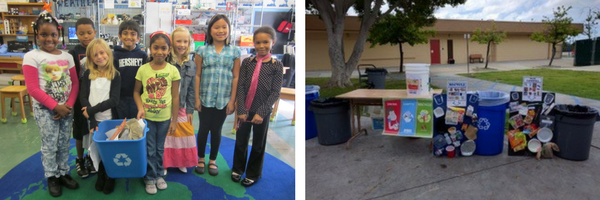
Tierrasanta students use a helpful recycling station set up to stay mindful of what goes where when lunchtime ends!
Diverting 95% of all lunchtime waste is an extraordinary feat, and that’s exactly what Cherokee Point Elementary of San Diego Unified School District accomplished last school year. Students and staff joined together to ensure liquids, cartons, lunch trays, and food scraps were kept out of the trash and out of our landfills. The school’s Green Team students encouraged other students to properly sort their waste and take on litter pickup to keep campus clean.
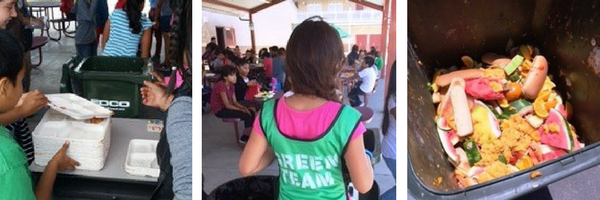
Cherokee Point Elementary’s Green Team helped students sort their garbage leading to a 95% diversion of lunchtime waste!
School recycling programs not only encourage children to learn about the importance of recycling, but they also enable communities to recover large quantities of valuable materials, like beverage cartons. To start or enhance carton recycling efforts at your or your child’s school in San Diego, visit cartonopportunities.org. Our partner, Carton Council, has created materials specifically to help parents, teachers, and administrators get started.
When it comes to going zero waste, composting often seems to be one the most intimidating step to take. Yes, composting definitely requires more time up front compared to swapping out single-use items for reusable options, but the process is not nearly as time consuming or scary as you might imagine. To help ease any fears that might still have you feeling hesitant, some of the ILACSD team is giving you a look into their own experiences with composting for the first time!
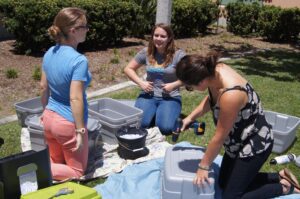
Emily showing Lauren and Moriah how to make their own vermicomposting bin!
But let’s get started with a review of some basics when it comes to composting. Composting is the process of converting food scraps and yard waste into compost, an organic, nutrient-rich alternative to fertilizer in your garden or your potted plants. According to the Center for Sustainable Energy’s Equinox Project, organic waste makes up one-third of the waste in San Diego’s landfills. By composting, we can divert organic waste from landfills where it can release methane, a potent greenhouse gas.
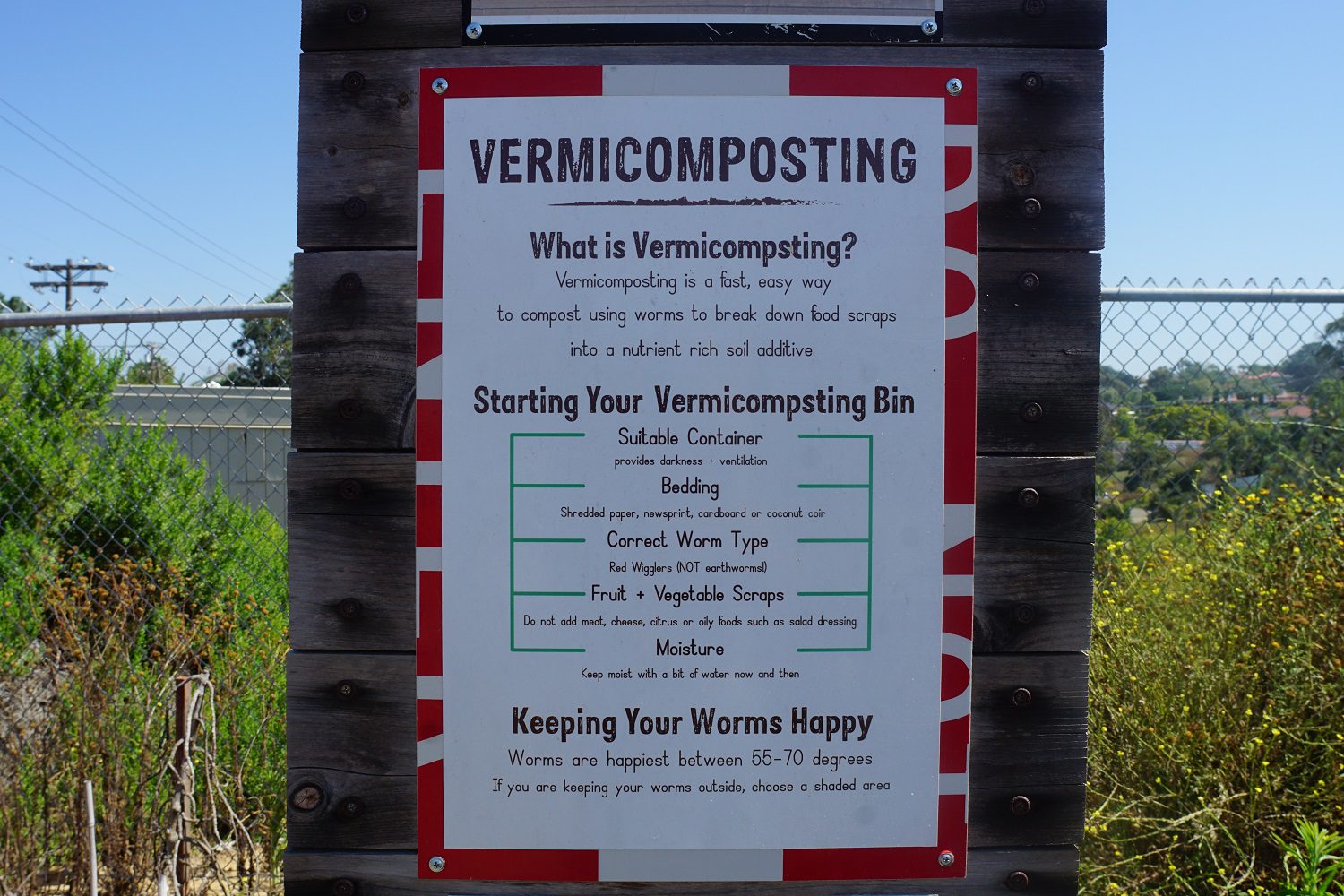
In the I Love A Clean San Diego office, we have multiple team members who collect food waste to be brought back to their composting bins. This past June, Moriah and Lauren made their vermicomposting bins and began their own composting journeys! With a few simple tools, we enjoyed time in the sun making the bins and learning all the details of vermicomposting!
Both Moriah and Lauren have been using their vermicomposting bins about a month now. With that experience under their belt, we checked back in to see how the process has been going. Lauren explained, “I have to say it’s intimidating to have another thing to take care of in my household, but the simplicity and beauty of this natural process are what astonishes me the most, day after day.” Moriah shared how having Emily – our Education Manager and composting expert – in our office as a resource impacted her experience:
“Having Emily as a resource has been super helpful. She has even responded to Snapchats I’ve sent to her of the bin to let me know if it looks like it is healthy and thriving. Emily’s help and the resources in our office have led to a pretty healthy bin. The worms are breeding and eating everything much quicker than I expected!”
Worms for the vermicomposting bins!
With a flourishing, healthy bin, Moriah has been able to show off her composting skills with her friends and family. By passing along her knowledge and story, she is creating a community she can be a resource for when it comes to vermicomposting.
“Whenever I have people over, I get to be the “worm girl,” showing off the bin and talking about how easy it has been to set up. They are always amazed that it doesn’t smell, that it’s small, and by all the things the worms eat. When we hosted a 4th of July party, people had fun (I think) digging in the bin to give the worms their watermelon rinds. Friends have even given me their rotten vegetables to put in the bin, saving those from going to the landfill.”
Composting does not have to be the unbeatable zero waste giant some imagine it to be. Finding your community, ask questions, and just taking the first step is really all it takes! So why wait? Start your own composting journey today!
Hi, I’m Shannon and as one of the marketing interns for ILACSD I am excited to have the opportunity to explore the effects of food waste. My interest in food deserts and the lack of healthy food options in America led me to investigate how food waste affects our community and ways we can prevent it all together.
When I think about wasted food I imagine feeling guilty about leaving those last pieces of broccoli on my plate after dinner, however, food waste is much more serious than wasting a few good veggies. Food waste refers to the massive quantity of quality food that is wasted annually instead of being given to those in need. According to the National Resources Defense Council, “Forty percent of the food produced in the United States never gets eaten.” So what does food waste really do?
Don’t worry there are ways to fight back against food waste!
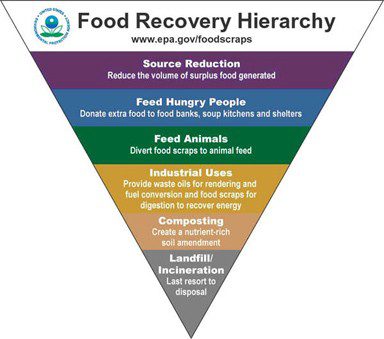
The San Diego Department of Public Works has some great solutions to help you minimize food waste in the future. They rely upon the Environmental Protection Agency’s food recovery strategyto most efficiently and cost-effectively reduce San Diego’s food waste. Based on this hierarchy, San Diego’s DPW established a food waste system based on 3 simple steps: Reduce, Donate and Compost.
Food Recovery Hierarchy
To best implement waste reduction in our personal lives, the DPW suggests re-considering portion sizes, limiting the number of menu items you order when you go out to eat and planning all the week’s meals so your grocery list only consists of what you need to make those meals. According to the DPW, it is important to be conscious of the volume of food you eat in comparison to the volume of food you waste.
Donating leftover food is another great way to reduce food waste! There are a lot of local organizations that lead San Diego’s effort to feed hungry San Diegans. Check out Feeding America and San Diego Food Bank for local options to donate your leftover quality food. Reducing food waste also means giving those without the means to feed themselves the food they need to survive.
Kids think composting is fun too!
The final step is using spoiled and leftover food for composting in your own backyard or neighborhood! Check out our previous blogs on composting to see how easy and fun it really is.
It’s important to remember that food waste is a serious national issue so let’s work together to help make San Diego even better than it already is and improve the lives of thousands in the process!
Today’s blog comes from our Contracts Manager, Sam, who has been attending several meetings related to San Diego’s Zero Waste Plan, including food recovery and organics recycling. The idea of zero waste can seem daunting or too far-fetched. Read on to learn about other cities that have successfully implemented zero waste practices IRL (in real life) and what San Diegans can do to help reach these waste diversion goals.
As we all know, “Zero Waste” is a hot button word around environmental circles these days. By its definition, Zero Waste is a commitment to diverting at least 90% of all waste away from landfills, and utilizing other means of proper disposal. But what does it look like in practice? How far along are we? What are the challenges? We will take a look at three California cities to see!
Repurpose tip: extend the life of common items like glass bottles and jars by transforming them into home decor!
Let’s start with the current big kid on the block in all environmental programs, San Francisco. San Francisco has been among the leading pioneers in the nation for environmental programs, and zero waste is no exception. As a part of their commitment to 90% waste diversion by 2020, San Francisco has implemented composting and green waste recycling pickups at businesses and residences. Along with convenient disposal, San Francisco has also invested in providing the public with educational resources about reducing food waste, consumer and producer responsibility, and the list goes on! When other cities in the U.S. look to a city to replicate good behaviors, San Francisco is a wonderful place to start.
Next, let’s look at Los Angeles. Currently hovering around 75% diversion of waste away from landfills, Los Angeles’s goal is to to achieve a lofty 97% waste diversion by 2030 through SWIRP, which is an acronym for Solid Waste Integrated Resources Plan. LA’s infrastructure will soon follow in the footsteps of San Francisco to ensure that greater tonnages of green waste (yard clippings, food scraps, etc.) and compost can be properly disposed of instead of winding up in a landfill. Along with San Francisco, LA believes educational outreach for both food waste reduction and proper recycling techniques are critical to their long term goals. Looking to achieve 87% diversion by 2020, Los Angeles has made a firm commitment to realizing their ultimate “zero waste” initiative by 2030.
Practice makes habits! Students practice sorting paper, cans, and food scraps into pretend trash, compost and recycling bins.
Last, but certainly not least, our wonderful home of San Diego. The macro-level goal is to achieve virtually 100% waste diversion by 2040, with yearly increments designed to test the progress. Along with LA, San Diego is playing catch up to San Francisco in regards to the infrastructure required to divert large quantities of green waste. Working with the State recycling agency, CalRecycle, as well as haulers and constituents to ensure the County meets its goals will be required if they hope to reach their goals:
75% by 2020,
90% by 2035
“zero” waste by 2040
In order to achieve this, the County will need to divert an additional 332,000 tons to offset the current 67% diversion rate. They hope to do this by encouraging haulers to divert more away from landfills, educate San Diegans, and of course divert more green waste away from landfills.Click here to learn more about San Diego’s Zero Waste plan.
It’s exciting times! Zero Waste is no longer just a dream, but it is now a successful process! And with the process, we can see the evolution towards greener, healthier, and more beautiful communities. I Love A Clean San Diego is doing its part by revamping our comprehensive recycling database, WasteFreeSD.org, to include zero waste tips and tricks to fit any lifestyle. You can always give us a call at 1-877-R1-EARTH to have any of your recycling questions answered as well.
If you’re looking for a more hands-on approach, our education team hosts community workshops designed to give you real life solutions like choosing reusables, how to shop in bulk, etc. Our next workshop, the Zero Waste Summit, will take place on Saturday, June 11th at Ocean Knoll Farms in Encinitas. Let us know you’re coming by registering ahead of time – Here’s to Zero Waste!
What is zero waste? First, let’s define what zero waste is to better understand how it affects you and what it means for our communities.
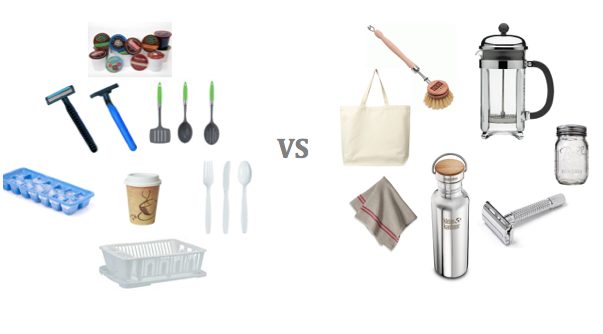
Zero waste is the process of eliminating reusable or repairable materials from ending up in the landfill. Zero waste encourages manufacturers, municipalities, and consumers to evaluate current consumption patterns and minimize single-use items. In order to divert materials from the landfill we must share the responsibility of producing and consuming sustainable products while limiting our use of disposable items.
Now that we know what zero waste means, let’s explore why this practice impacts San Diegans. Currently, the Miramar Landfill is composed of reusable substances; yes that is right REUSABLE substances. The top 3 reusable substances in our landfill are:
Organics (food scraps, yard waste) 39%
Construction and Demolition (building materials) 25%
Paper 17%
When we choose to send these items to the landfill, large amounts of methane gas are released which pose serious public and environmental health concerns. On the positive side, all of this can either be recycled, reused or composted, which means, we can do something about it!
In response to the amount of reusable materials in the landfill (or should we say landFULL) the City of San Diego adopted a zero waste plan to focus on reusing rather than disposing items. Currently, the City of San Diego diversion rate has been consistent around 67%. Here is an outline of upcoming benchmarks for the city’s waste diversion plan:
75% by 2020
90% 2035
100% diversion rate by 2040.
The plan’s primary focus is on organics diversion. There are several resources available to help you reduce food waste through planning and composting. Learn more at by reading about some of our past food waste blogs and WasteFreeSD.org!
Even I Love A Clean San Diego’s Recycling and Household Hazardous Waste database is getting a zero waste makeover! Stay tuned for the redesign release of WasteFreeSD.org this summer! The new database will include a easy to use search bar that will help you find convenient ways to divert waste from the landfill!
Today’s blog comes from our Environmental Educator, Emily! Emily spends most of her time traveling to different schools around San Diego County and teaching students about different ways they can help protect their local environment. Now, schools all around the county are starting to implement more efforts to be green. One shining example of this is the Green Team from Standley Middle School in University City. Today’s blog highlights the inspiring efforts of these students and their advisor. Read on to celebrate their successes and gain ideas for starting a Green Team at a school near you!
Their journey begins in 2013, when Shelley Rannikko and her colleague took a group of students to Yosemite National Park. This trip inspired the students to become eagerly engaged as environmental stewards. As Shelley recalls, “the ten hour road trip was the perfect place to brainstorm about how we could spread the word of recycling at school through a club called ‘Green Team’.”
In the short time since its inception, the Green Team has made a significant impact on their campus. Here’s a look at how the club is structured, and what they’ve been able to accomplish:
Mission: The purpose of our team is to educate the students and families of Standley Middle School about the importance of recycling and how to accomplish it. The team is in its second year and maintains over 35 members, with more wanting to join every day! They meet during Academic Prep.
Member Responsibilities: Students are given chores that change weekly. Chores include:
Bin Placement – bins provided through an Educate! grant
Bin Return
Garbage Ghosts – using trash pickers, they pull recyclables out of campus trash cans and place them in the recycling bins
Radical Rinsers – rinse recyclables, like plastic bowls, lids, and milk cartons
Green Team Ambassadors – pass out Green Team Bucks to students using the recycling bins
Recycling Engineers – take cleaned items to the recycling dumpster
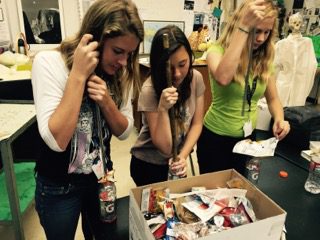
Bottle Brick Makers – pack Gatorade bottles with non-recyclable items; bricks will be used to construct a bench on campus,
These students are packing bottle bricks, which will ultimately become a bench at their school! Great example of reuse and waste diversion!
Recycling: Since its start in 2013, the Green Team has recycled:
STANDLEY’S STATS ON RECYCLING
Item
Pieces or Pounds
Juice Pouches
3370
Go Go Squeezes
474
Chip Bags
2000+
Milk/Juice Cartons
150*
Plastic Bowls, Plastic Containers
200+*
Cans and Bottles
300+ pounds
*Collection started last week
Through the TerraCycling program, the students are able to recycle more than the average blue bin. GoGo Squeezes and Juice Pouches are sent to TerraCycle, where the company pays for shipping and gives money back to non-profit organizations or to a charity of your choice from their website. Check your waste hauler’s requirements, or look into innovative programs like this one!
Getting Others Involved: The Green Team has implemented a loyalty recycler card program to encourage students to recycle. Additionally, Green Team Ambassadors walk the quad during lunch, giving out Green Team Bucks for placing recyclables in the appropriate bins. For every six stamps or Green Team Bucks, students can earn an otter pop!
The Green Team creates videos that are shown school-wide during the Principal’s Chat. These videos promote fundraisers, the loyalty recycler card program, membership in the club, and explain what can be recycled on campus. Even Principal Bill Pearson got involved by researching how to reduce paper fliers and informational posters. His solution? Turn existing bulletin boards into chalkboards! A combination of exterior flat paint and unsanded tile grout made this possible, and it brings a bit of character to the quad.
Looking Ahead: In addition to the bottle brick bench, the Green Team hopes to combine efforts with the Garden Club to create worm bins and start composting at their school.
If you’re interested in learning more, feel free to contact Shelley Rannikko, the Green Team Advisor, at (619) 920-2183 or srannikko@sandi.net.












 Today’s blog comes from our Contracts Manager, Sam, who has been attending several meetings related to San Diego’s Zero Waste Plan, including food recovery and organics recycling. The idea of zero waste can seem daunting or too far-fetched. Read on to learn about other cities that have successfully implemented zero waste practices IRL (in real life) and what San Diegans can do to help reach these waste diversion goals.