Zero Waste 101

What is zero waste? First, let’s define what zero waste is to better understand how it affects you and what it means for our communities.

Zero waste is the process of eliminating reusable or repairable materials from ending up in the landfill. Zero waste encourages manufacturers, municipalities, and consumers to evaluate current consumption patterns and minimize single-use items. In order to divert materials from the landfill we must share the responsibility of producing and consuming sustainable products while limiting our use of disposable items.
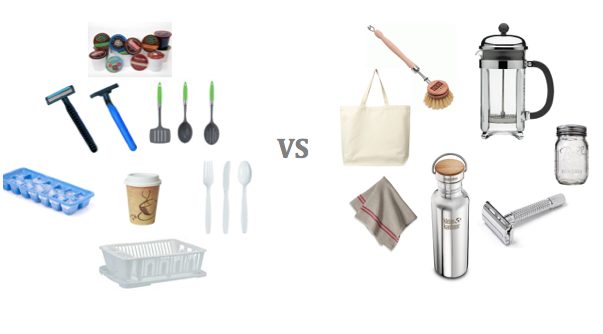
Zero Waste Alternatives

Now that we know what zero waste means, let’s explore why this practice impacts San Diegans. Currently, the Miramar Landfill is composed of reusable substances; yes that is right REUSABLE substances. The top 3 reusable substances in our landfill are:

Organics (food scraps, yard waste) 39%

Construction and Demolition (building materials) 25%

Paper 17%

When we choose to send these items to the landfill, large amounts of methane gas are released which pose serious public and environmental health concerns. On the positive side,  all of this can either be recycled, reused or composted, which means, we can do something about it! ZW blog landfill

In response to the amount of reusable materials in the landfill (or should we say landFULL) the City of San Diego adopted a zero waste plan to focus on reusing rather than disposing items. Currently, the City of San Diego diversion rate has been consistent around 67%. Here is an outline of upcoming benchmarks for the city’s waste diversion plan:

  • 75%  by 2020
  • 90%  2035
  • 100% diversion rate by 2040.

The plan’s primary focus is on organics diversion. There are several resources available to help you reduce food waste through planning and composting. Learn more at by reading about some of our past food waste blogs and WasteFreeSD.org!

Even I Love A Clean San Diego’s Recycling and Household Hazardous Waste database is getting a zero waste makeover! Stay tuned for the redesign release of WasteFreeSD.org this summer! The new database will include a easy to use search bar that will help you find convenient ways to divert waste from the landfill!

Hundreds attend kickoff event at Dixon Lake

Here at I Love A Clean San Diego, we like to make it as easy as possible for people to volunteer with us. That’s why we love our Adopt-A-Beach and Adopt-A-Canyon programs—people can schedule beach or canyon cleanups any day of the year, and we provide all of the cleanup supplies for free.

Thanks to a grant from the Escondido Charitable Foundation, we are now able to bring this program to two sites in Escondido—Dixon Lake and Kit Carson Park. These are the first adoptable sites in inland North County, and we’re thrilled to have this program as an option for people who live far from the nearest adoptable beach.

This past weekend, we hosted a kickoff event to officially launch the program. We invited volunteers to join us at Dixon Lake in northeastern Escondido.

And we sure did kick off this program with a bang! A grand total of 402 volunteers collected 348 pounds of trash and recycling from around the lake and nearby Daley Ranch hiking trails. Here’s a recap of how the event unfolded.

DSC01019

Our volunteers listen attentively to the kickoff and safety talk from Lexi, our Development Manager. She covered topics like how trash travels through the community, why cleanups are important, and local recycling rules. She also talked about how to get involved with the newly launched Adopt-A-Canyon program in Escondido. Some of these volunteers have already signed up online and scheduled their next Escondido cleanups!

DSC01039

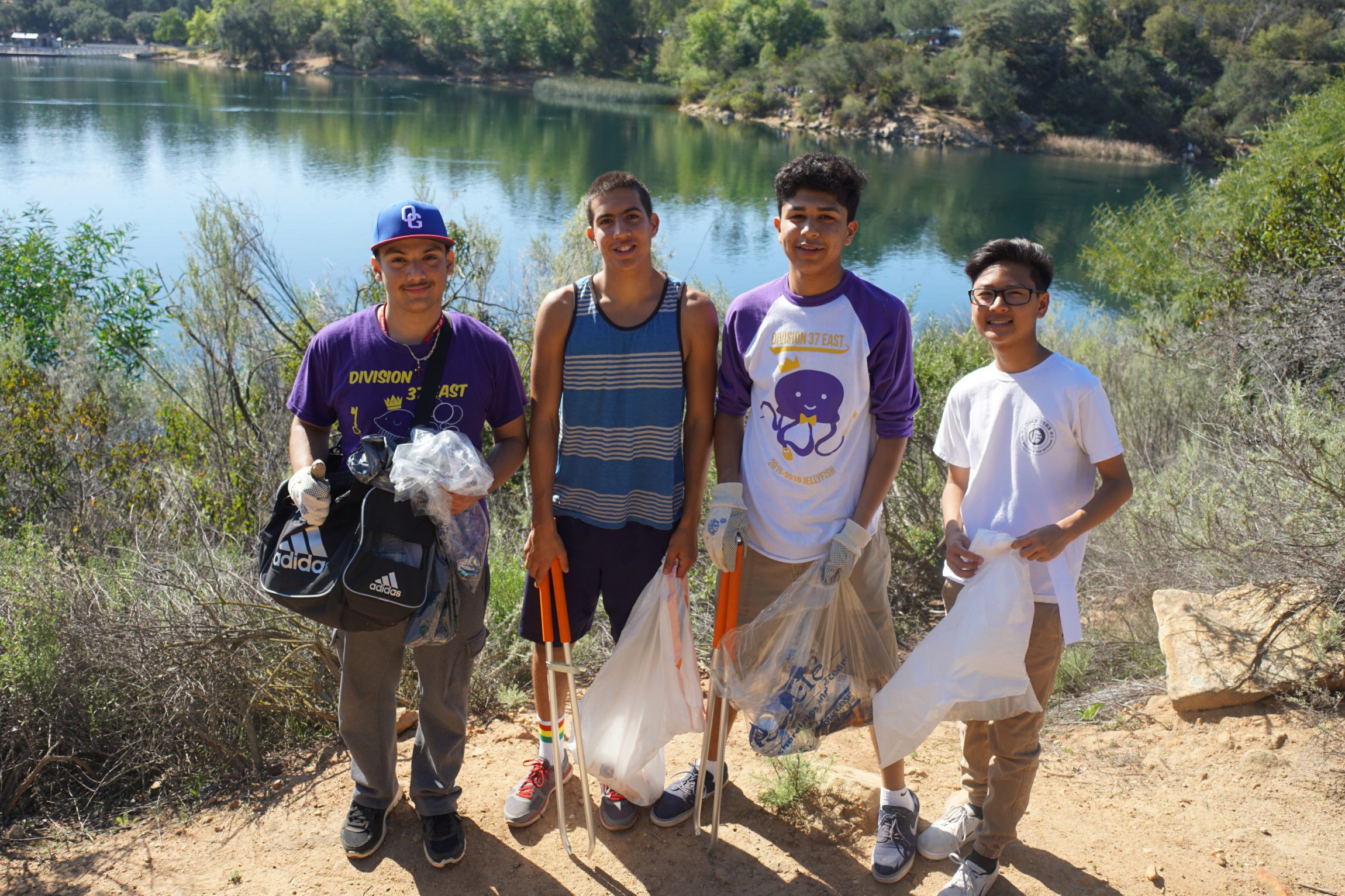
A team from the Division 37 East Key Club paused for a photo in front of scenic Dixon Lake. Throughout the morning, lake visitors thanked our volunteers for helping to keep the park clean and litter-free!

DSC01048

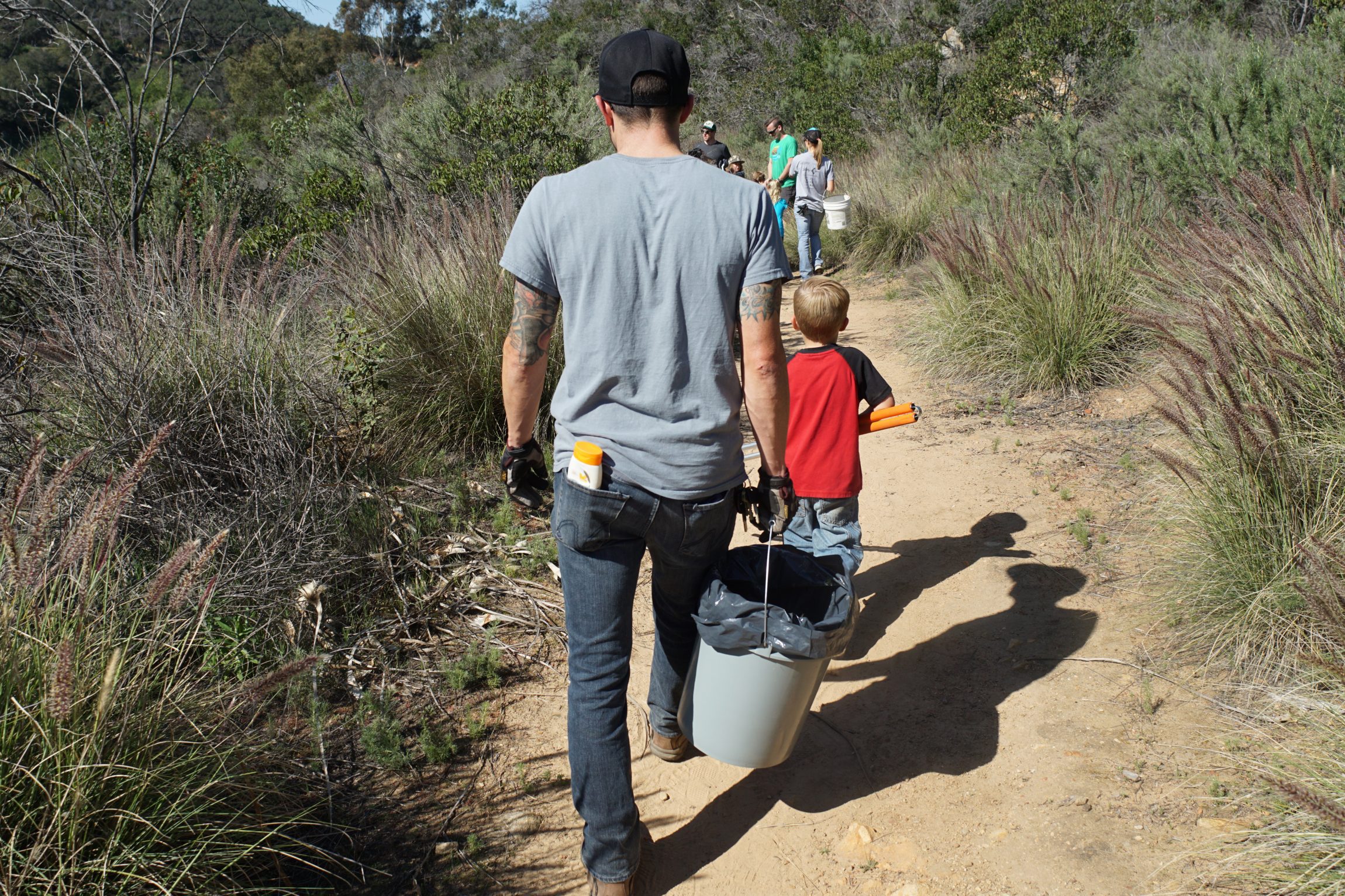
Miles of trails run along the lake, so our volunteers were able to spread out and cover a lot of ground. Here, a team from North Coast Church walked along one of the lake trails hunting for litter with our trash grabber and bucket in hand!

IMG_2923
You never know what you’ll find at our cleanup events! This young volunteer wins our Most Unusual Item prize for finding this full bottle of sparkling cider. Here’s to you!

DSC01061
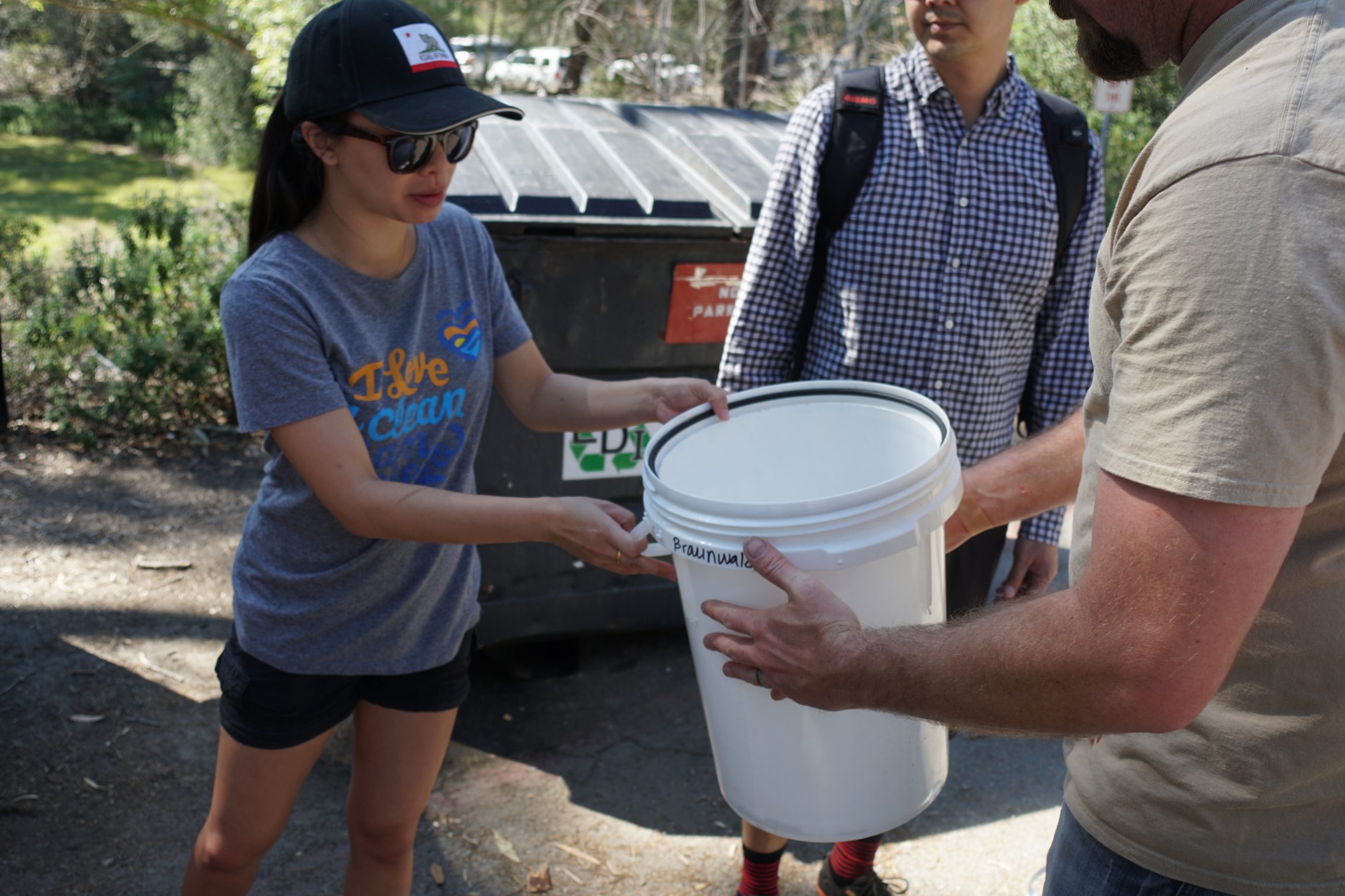
We weigh all of the trash and recycling collected at our cleanups as a way of measuring our impact and accomplishments. When volunteers use their own buckets instead of single-use plastic bags, we simply subtract the weight of the empty bucket to determine the weight of the trash. The buckets get emptied right into the dumpster—no single-use plastics needed!

DSC01077
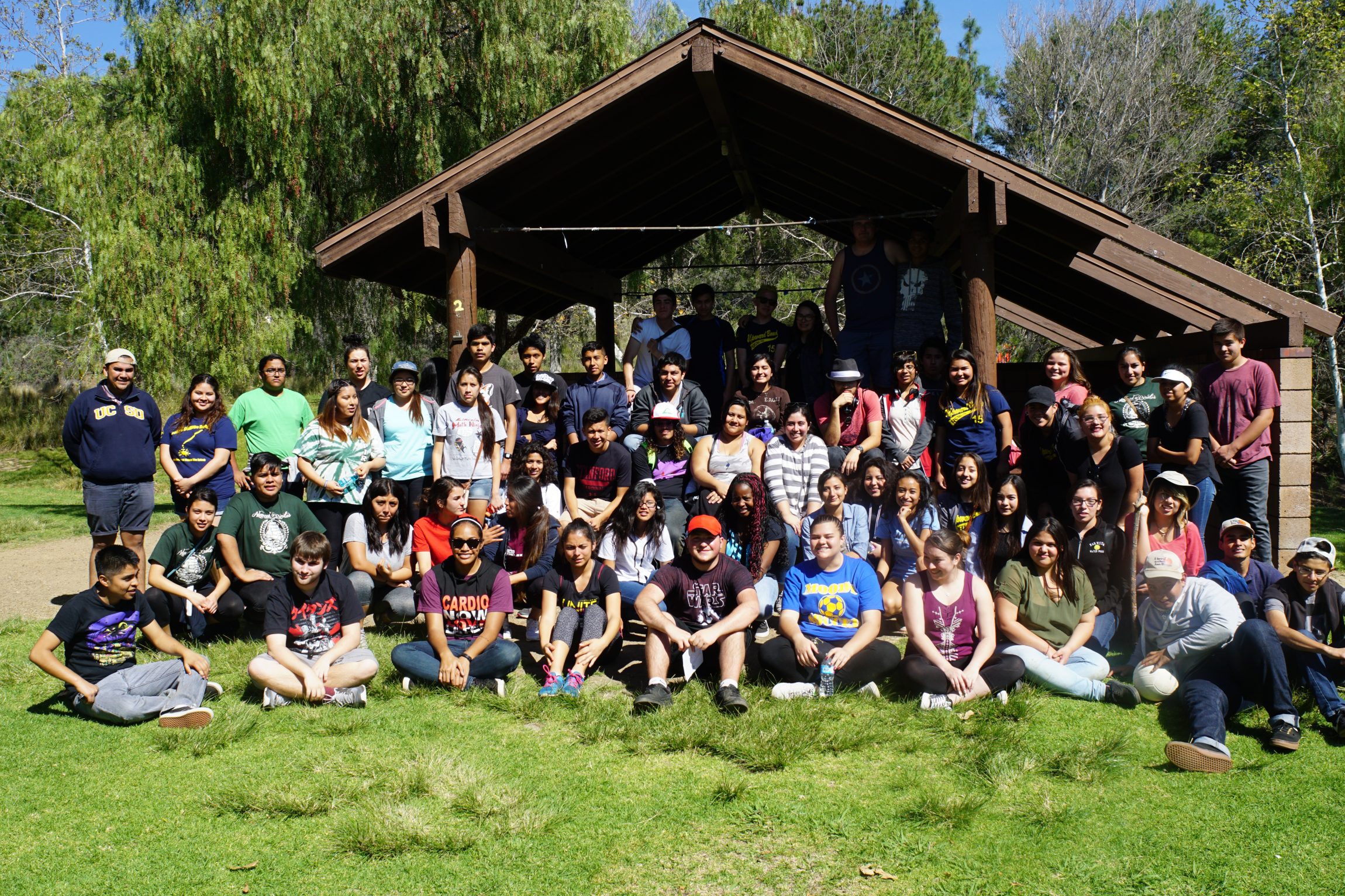
A big thanks to this massive volunteer team from UCSD’s Upward Bound program. We love working with big groups like this one to get a lot accomplished at our events. These young students were a huge help!

Interested in adopting one of these sites? Visit www.AdoptSD.org to learn more and to schedule your own cleanups. We can provide a free educational presentation to kick off your first cleanup, and if you complete three cleanups over the course of a year, you can apply to have your group’s name posted on a sign on site.

We’ll be back at Dixon Lake, as well as at four other Escondido sites, for our big countywide event, the Creek to Bay Cleanup, on Saturday, April 23rd from 9AM-12PM. Registration opens April 1st at CreektoBay.org!

C2B16-Road-Sign-Graphic

Zero Waste Home Decor

Grace- 131x172Today’s blog comes from Grace, one of our Education Specialists! If you want to create less waste in 2016 get started today with one of our tried and true zero waste crafts! If you like what you find here, be sure to come to our next free workshop this Saturday, February 20th to learn first-hand from our educators like Grace! 
The average person in San Diego County makes 1,825 pounds of trash in just one year – that’s 5 pounds a day! This abundance of trash can have a variety of consequences, including filling up our landfills and harming animals if this trash makes its way into our environment. In an effort to inspire San Diegans to kick-start a zero waste lifestyle, I Love A Clean San Diego has incorporated the following DIY repurposing projects into our Sustainable Living Series workshops. Repurposing projects not only save items from the landfill, but also reduce the amount of new resources that need to be purchased by upcycling the resources we already have.

10.7.15 - SLS (22)
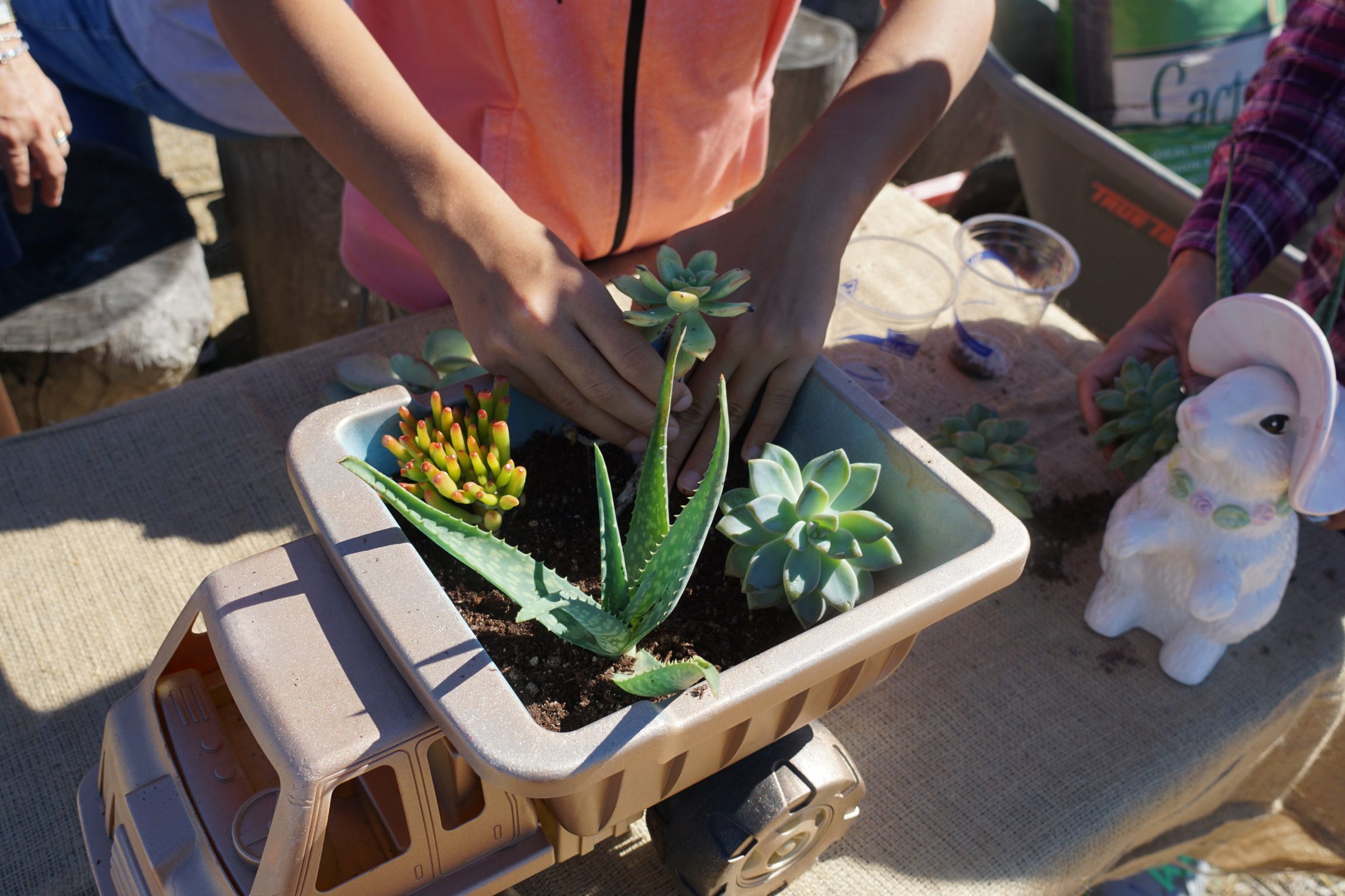
Toy trucks, shoes, tea cups, you name it! Any common item can be transformed into a succulent planter with a little creativity.

Planting succulents in repurposed containers: This project utilizes drought resistant succulents that are perfect for our dry Southern California climate. Your succulent “pot” can be anything from an antique tea cup to a shoe.

Supplies:

  • Repurposed container
  • Drill (optional)
  • Charcoal (optional)
  • Rocks
  • Succulents
  • Soil
10.7.15 - SLS (40)
Who knew a gravy boat could be transformed into such a beautiful planter?

Instructions:

  1. Select your repurposed container.
  2. Some drainage in the container is preferred. If possible drill a hole in the bottom of the container. A diamond drill bit may be needed depending on the material OR cover the bottom of the container with a thin layer of charcoal to absorb excess water.
  3. Add a layer of river rocks at the bottom of the container.
  4. Fill container ¾ with soil.
  5. Arrange succulents to your liking.
    • For indoor arrangements, widely space plants in the same container for maximum exposure to sunlight.
  6. Once complete, give your succulents a soak with a spray bottle.
Zero Waste Home - Jan 2016 (40)
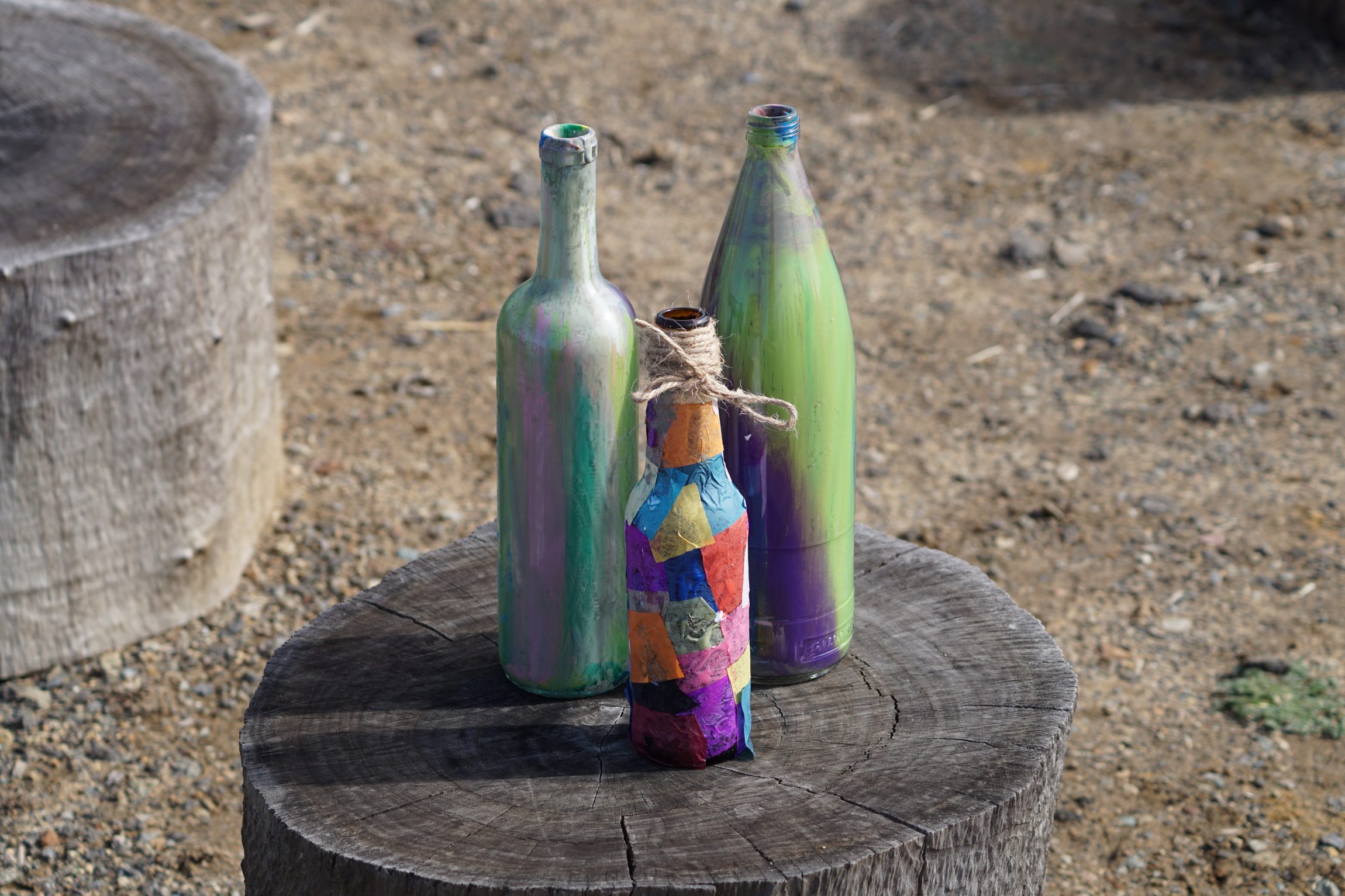
Finished pieces from our Zero Waste Home Workshop.


Repurposing glass bottles:
This project takes your empty glass bottles from one party and upcycles them into decorations for your next! Any sized bottle can be transformed into a vase or centerpiece.

Supplies:

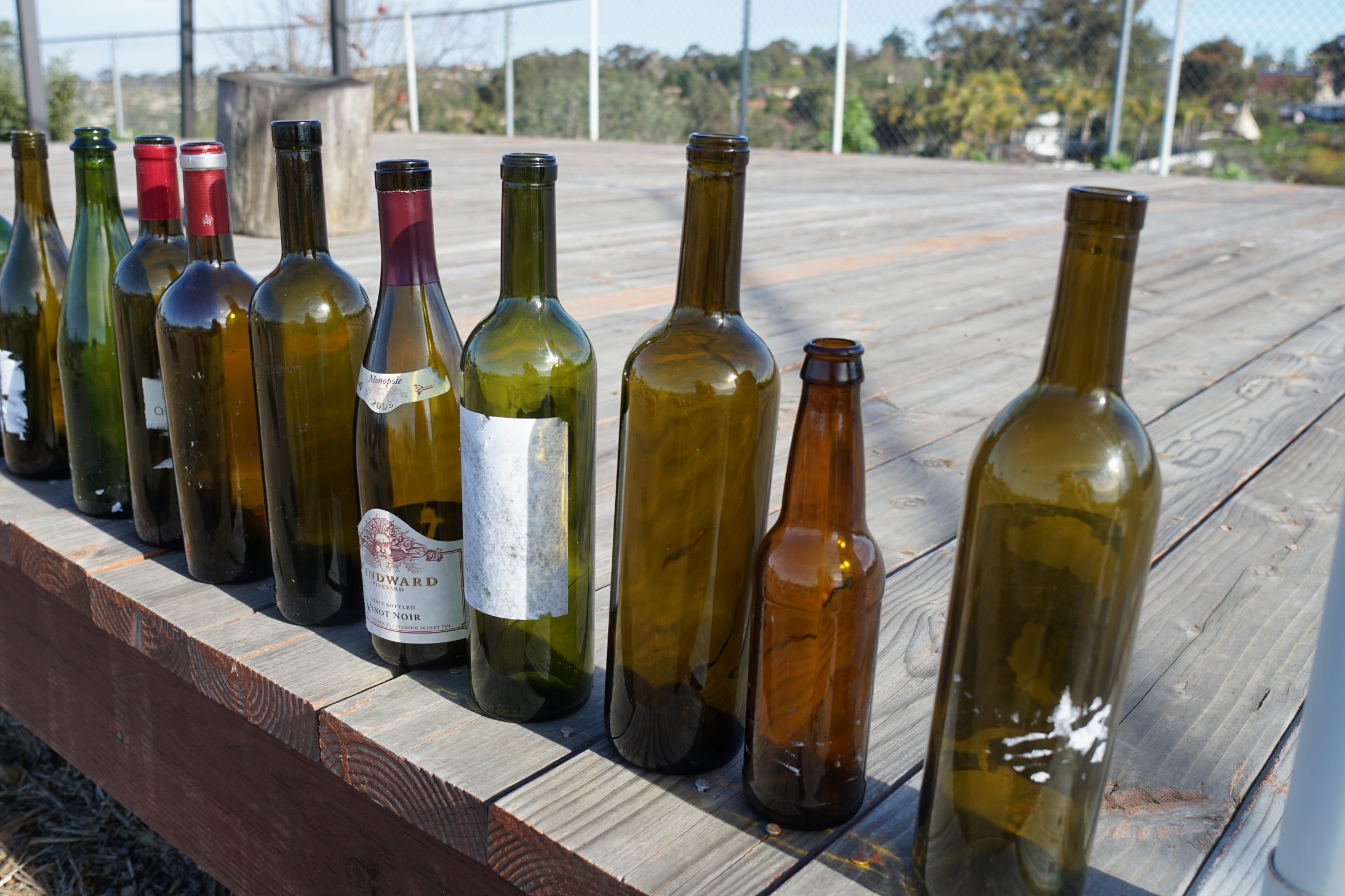
  • Glass beverage bottles
  • Goo Gone
  • Paint or Spray Paint
  • Twine

Zero Waste Home - Jan 2016 (85)Instructions:

  1. Remove labels and clean residual glue from bottles with Goo Gone.
  2. Swirl the inside of the bottle with paint OR Spray paint the outside of the bottle.
  3. Wrap selected areas of the bottle in twine.
  4. Variations can include using newspaper, old book pages, metallic markers, tissue paper and ribbon.

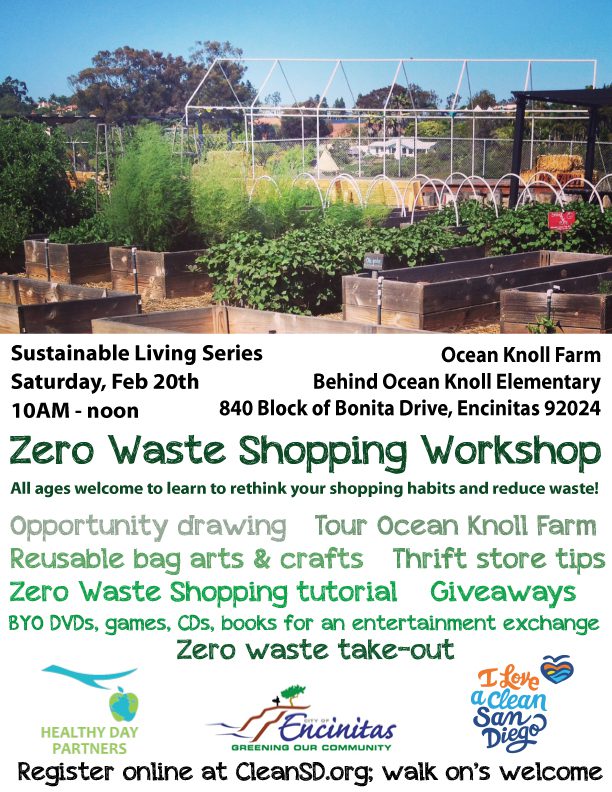
Try your hand at a DIY project at our next Zero Waste workshop! Register for our Zero Waste Shopping workshop on February 20th at Ocean Knoll Farm.

Zero-Waste-Living-Workshop---Feb-2016

Moriah bridges love for craft beer & the environment

Mo brewing beerToday’s blog comes from our Community Program Coordinator, Moriah as she shares her love for San Diego craft beer and our environment!
I am known as the resident beer nerd at I Love a Clean San Diego.  After working at a local brewery for about a year and brewing at home, it’s safe to say I know a thing or two about beer.  One thing I didn’t know, however, was how connected my love of beer was to my love for the environment.  In a city like San Diego, it’s not surprising that our local breweries value our environment as much as they value their craft.

Ways SD breweries minimize waste

Water conservation is a big issue for everyone in California, and that includes craft breweries.  The industry average in California ranges from 3.5 to 6 gallons of water for every gallon of beer produced.  Breweries in San Diego are leading the way in reducing the amount of water needed for their production.  Local breweries are becoming increasingly water-wise.  According to the California Craft Brewers Association, Ballast Point has reduced its water use by more than 24 percent, and Stone Brewing Company recycles more than 62 percent of its water daily.

One of the biggest ways that local breweries reduce waste is by using their spent grain in creative ways.  Spent grain is the grain left over after the brewing process.  Instead of throwing this used grain in the landfill, most of San Diego’s breweries donate it to local farms, where it can be used as livestock feed.  Stone Brewing Company even uses it as a mulching tool in their garden.  Some of their spent grain goes towards locally made soaps and dog treats as well!

Hop farm
Hop farm picture is Jordan Brownwood tending hops at Nopalito Farm & Hopyard. Photo credit:  slowfoodurbansandiego.org

San Diego is known for its hop-heavy beers, but did you know that farms right here in San Diego County grow one of beer’s most important ingredients? Nopalito Farms is a local, family-run organic hopyard and orchard in North County San Diego.  Since water conservation is always an issue in Southern California, Nopalito Farms has adopted sustainable farming practices like drip irrigation and mulching, and they work to maximize the rain that they get in Valley Center.

Imbibe with the earth in mind!

  • Bring a growler with you next time you pick up beer. Instead of cans or glass bottles that will end up in your blue bin, get a reusable growler and take it to the closest brewery.  Get fresh, draft beer straight from the source! Be sure to check with the brewery first to see if they have any specific growler policies.
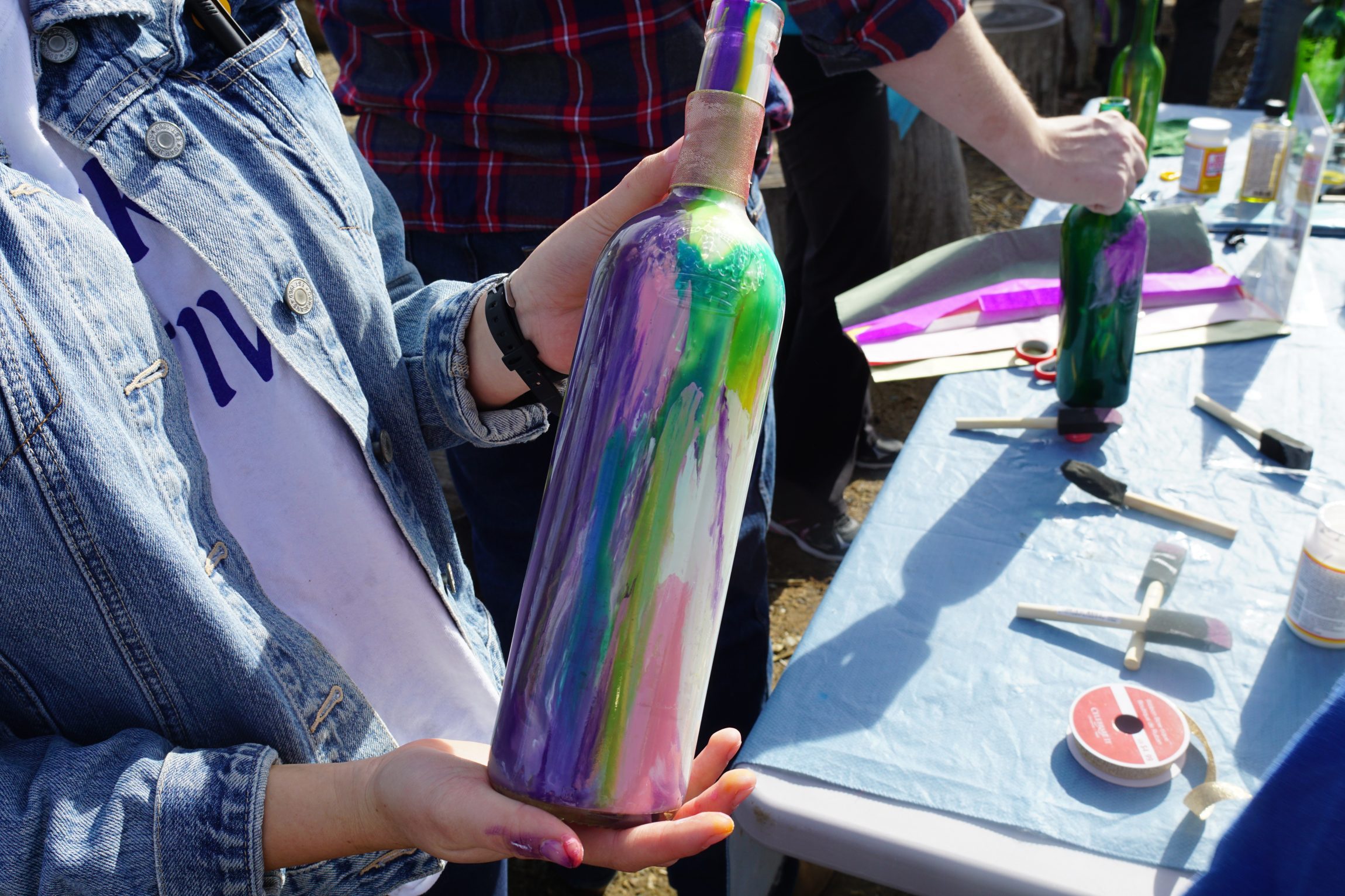
  • Reuse old beer or wine bottles to make decorations for your house. At our recent Sustainable Living Workshop that focuses on a zero waste home, our educators taught attendees how to reuse their old bottles and turn them into fashionable home decorations.

    Zero Waste Home - Jan 2016 (29)
    One example of a  repurposed wine bottle from our Zero Waste Home Workshop.

Volunteer at Cupid’s Cleanup!

If all of this beer talk has you thirsty, you can join us and Benchmark Brewing Company on Saturday, February 13th from 10am-12pm for a cleanup of the San Diego River! Why not switch up the typical dinner and a movie Valentine’s Day date and help us clean up the San Diego River instead. Then, if this blog has inspired you to try some local San Diego suds, you can join us afterward for a Valentine’s Day-themed mixer hosted by Benchmark Brewing Company! Families, sweethearts, kids, and singles are all welcome.

Register here! Help us spread the word by joining the Facebook event and sharing the cleanup with your friends and family. 

cupids instagram

Meet Becca – Our newest educator!

Becca-131x172Hello Everyone! My name is Becca and I’m the newest Education Specialist for I Love A Clean San Diego!
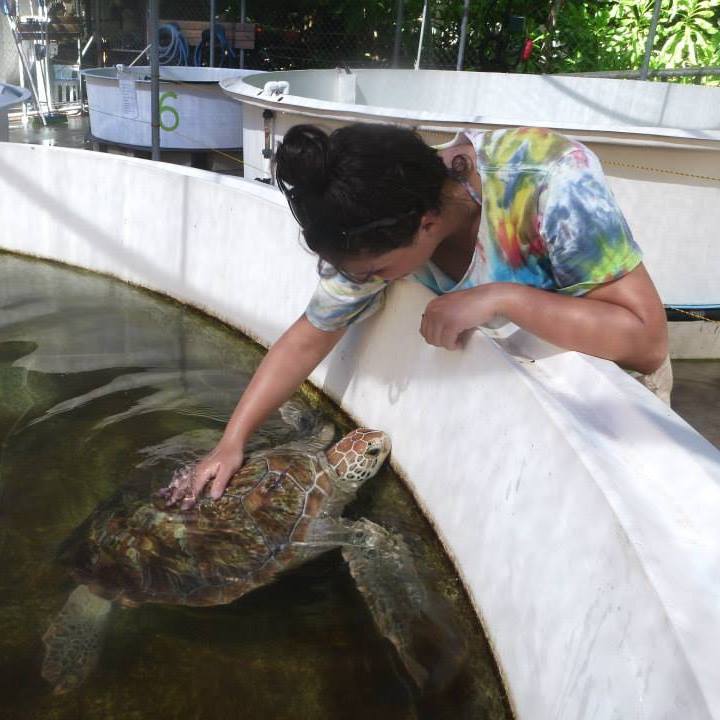
I have been involved in teaching students all ages about the environment since college when I discovered that my passion could easily translate to a career. The appeal for working as an Education Specialist for I Love A Clean San Diego is multifaceted, but one of the most important aspects I appreciate is how we focus on helping students understand their individual power. Students may not be able to drive or vote, but they can make a difference and improve their environment with their individual actions. For example, students have power over choosing whether or not to pick up their pet’s waste. This is a very simple task that takes minimal time and has huge benefits. Who knew kids had that power?

Becca's-first-presentation
Becca’s first presentation as an ILACSD Education Specialist!

That explains why I Love A Clean San Diego (ILACSD) is great, but why do I do this work in general? I believe in empowering students. Every person can make a difference through their choices and that when they feel connected to their environment, they are more likely to make choices that support conservation and protection efforts. When students engage with their environment, it benefits the students’ development as future citizens of the world.

I also love the ocean. Whenever my family vacationed when I was little, it was to visit the beach. I have seen a variety of coastal systems now and have both the scientific and anthropogenic understanding of coastal ecosystems. This being said, there is also an aspect beyond the science. There is the element of emotion behind my connection to the ocean. The ocean is a powerful, incredible, yet calming presence. When students make that connection with the ocean for the first time, it is always an awe-inspiring experience for me.

12079991_2563852741250_8910089781427291076_o
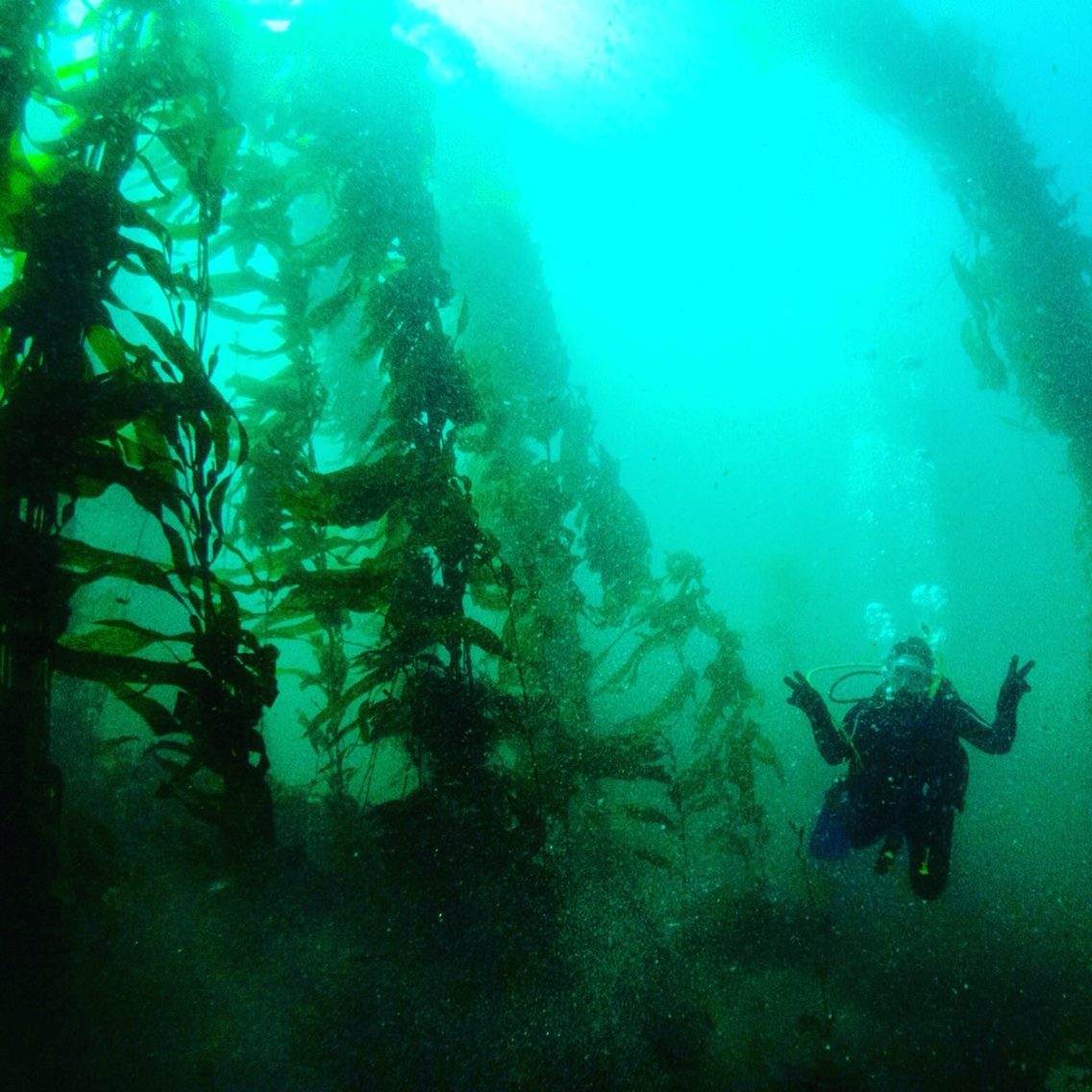
Becca exploring the depths of the ocean.

ILACSD takes on a challenge that many others may shy away from – we introduce the students to the bigger picture of how undesirable items travel from land to our beloved ocean. This is a new challenge for me is to help students that might not regularly visit the ocean to understand how their everyday actions greatly impact such a giant body of water as the Pacific Ocean. It is an important lesson with great value and hopefully is a model for other programs to learn how to introduce such a big concept of interconnectivity to students of all ages.1505657_2123297407642_5278649911434705247_n

If you’d like to have our educators visit your classroom, please contact our Education Manager, Emily! 

What’s that Smell? Ani’s Compost Journey

Several members of the ILACSD team compost food scraps at home. While our previous compost blogs have focused on vermicompost, composting organic material with the help of worms, it is isn’t the only option for those with limited space. Ani, our Recycling Programs Manager, recently added a small, easy to turn, worm-free compost bin to her home to make the most of her food scraps. Read on to learn more about her compost journey and one of the trials she faced early on – smelly compost.  

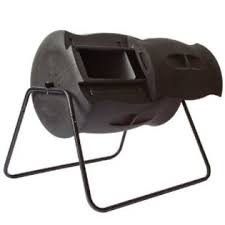
MILACSD holiday party 2015 (41)y journey with compost started about a year ago when my boyfriend and I decided that we wanted to invest in a compost bin for our food scraps. The first step was determining what type of bin I needed that would best suit my schedule and needs. It is important to note that every compost pile and bin is different, for example, I chose to purchase a compost tumbler to limit the time it takes to manually turn the contents in the pile with a shovel. This might not be the case in every household though. My compost bin instantly mixes when I spin it, which is convenient for me and needless to say that it takes less than a minute to turn.
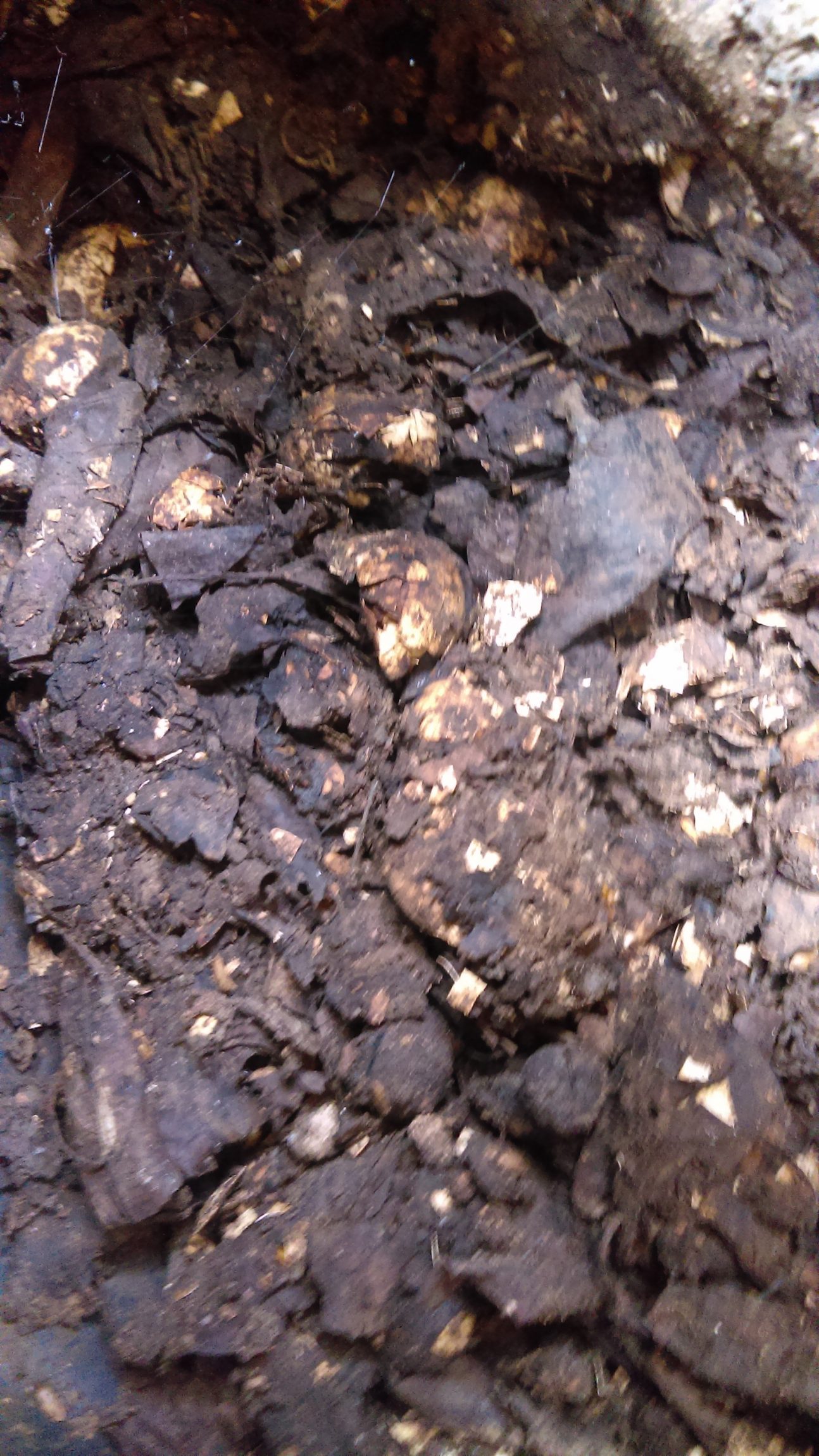
Compost Pile
An look inside Ani’s compost bin showcasing a healthy balance of greens and browns.

When I started collecting food scraps for the bin, I found myself with an overly stinky compost pile. I had missed an important component of composting practices…keeping the ratio of nitrogen to carbon just right. This balance between nitrogen and carbon is key to having a successful compost pile. Carbon-rich materials like leaves, mulch, wood chips and nut shells are referred to as “browns” and nitrogen-rich materials like food scraps are referred to as “greens.” I was so excited to have a place to store my food scraps, or my “greens,” that I neglected my “browns” contribution to the compost bin. To offset the smell, I placed shredded newspaper in the pile as my “browns” because of the lack of “browns” in my backyard.

Composting is definitely a work of art with an environmental twist. Maintaining that balance between “greens” and “browns” is a small component of it and this was just one issue that required some research on my part. It’s safe to say that my experience with composting has been an interesting and informative one.

Compost Bin
Here’s an example of what Ani’s bin looks like – compact and easy to turn.

Remember that every compost pile is different and may require several changes to the formula before it starts to look (and smell) like its processing your organic materials correctly.

Stay tuned for my follow-up blog where I will share my best practices for pest control!

If you’re looking for more composting resources, check out our one-stop recycling database, WasteFreeSD.org!


Record Breaking Turn-out for Tsuanami Sweepers Cleanup

SONY DSC
Volunteers picking up litter before it is swept away by the tide. We are passion in action.

San Diego’s Tsunami Sweepers were at it again last weekend for our first cleanup of 2016! I Love A Clean San Diego has been named the first responder in San Diego to assist in the cleanup of debris from the 2011 Japanese tsunami that is expected to wash up on California’s shores in 2016.

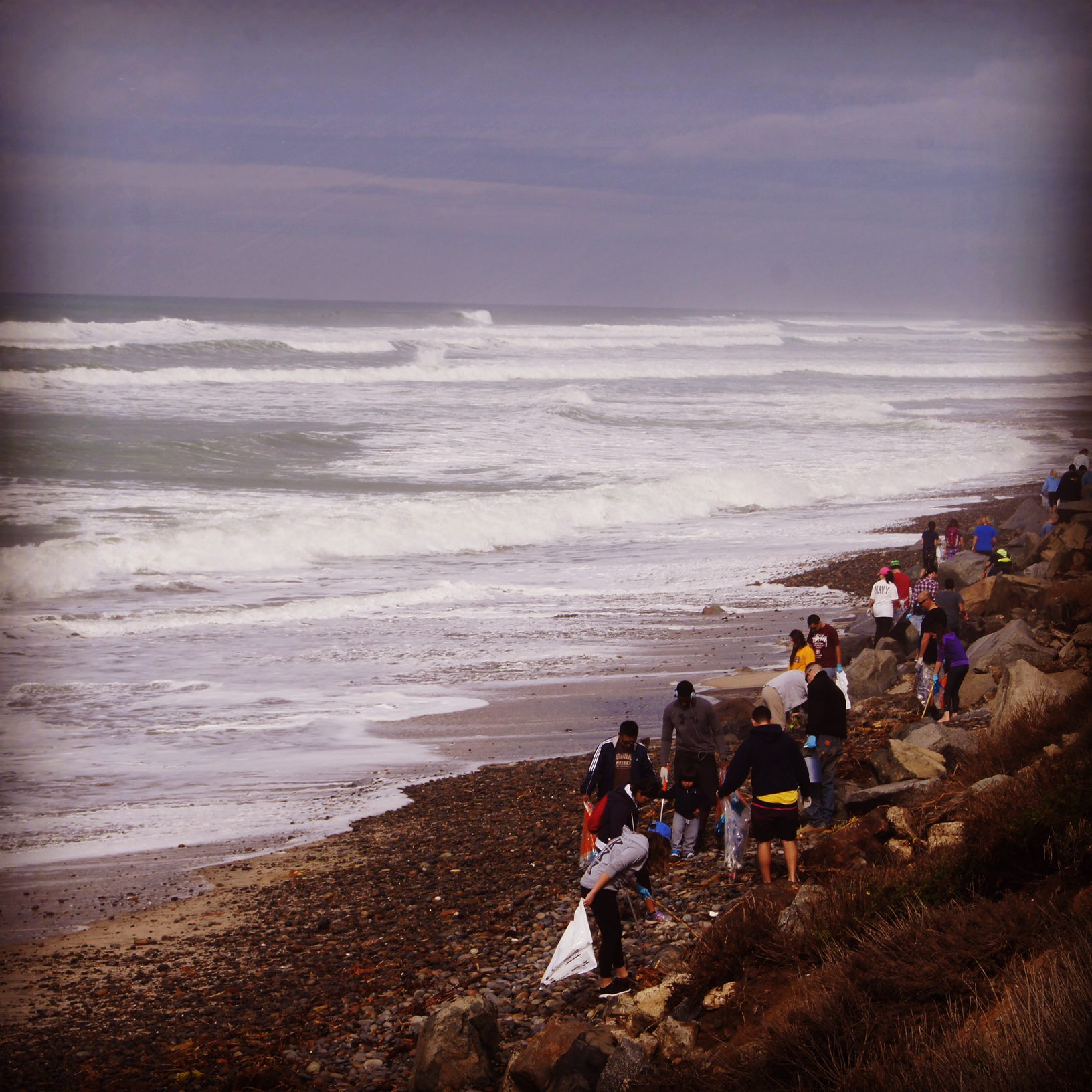
While our volunteers were looking for tsunami debris, there was plenty of litter to pickup on our end, as well. Our coastline is the last stop for litter before it reaches the Pacific Ocean so ILACSD and an astounding crew of 305 volunteers set out to beautify one of San Diego’s most scenic and iconic natural spaces, Torrey Pines State Beach.

SONY DSC
Volunteers ready to cleanup with waivers and even reusable buckets in hand!

Even with a chance of rain in the forecast, hundreds of San Diegans turned-out to keep Torrey Pines State Beach clean and beautiful. Equipped with bags, buckets, trash grabbers and gloves, volunteers of all ages spread out across the sandy coastline and walkways. 

SONY DSC
Volunteers took to the walkways in addition to the sandy beach where they found more Styrofoam and cigarette butts.

Thanks to the full moon, the tide was unusually high, but that didn’t slow down our team of dedicated volunteers. Many of them took to the nearby walkways to capture trash before it reached the sand and tide, as well.

On the beach side of the cleanup, volunteers continued to find small pieces of trash including several pieces of fishing net.

SONY DSC
Rocks and boulders are the perfect hiding spots for litter.

In a matter of only two hours, volunteers collected mostly cigarette butts, bits of Styrofoam and food wrappers. Even though our volunteers didn’t find any tsunami specific debris, volunteers still collected over 500 pounds of litter! 

SONY DSC
Weighing the litter at the end of the event is one of the most rewarding parts of every cleanup we do.

If you weren’t able to make it to our first cleanup, don’t worry! We have monthly cleanups as well as two countywide cleanups, Creek to Bay and Coastal Cleanup Day. Find out how to get involved by visiting our upcoming events page!

Get to know Sam!

Today, we’d like to introduce I Love A Clean San Diego’s Contract Manager, Sam! Sam hit the ground running when he first joined our team in October. Now that he is more settled in his role, we’d like to take this opportunity for all of you to get to know him better. Read on to learn about Sam’s journey to ILACSD!

Sam DeCapua, I Love A Clean San Diego’s Contract Manager (right)

Q: What brought you to I Love A Clean San Diego?

Before coming to ILACSD, I really enjoyed politics, but since there was such a wide array of issues that needed to be addressed, I realized that this is my chance to hone in on a topic I could really contribute to.

There are so many problems which affect us all in the environmental sphere, so I felt I had a great opportunity to make a positive change in my new-found home (San Diego) and I could work towards something I was passionate about: curbing food waste, educating others on the importance of the world around them. The great office culture that exists at I Love A Clean San Diego is a plus, too.

IMG_1259Q: What environmental topic are you most passionate about?
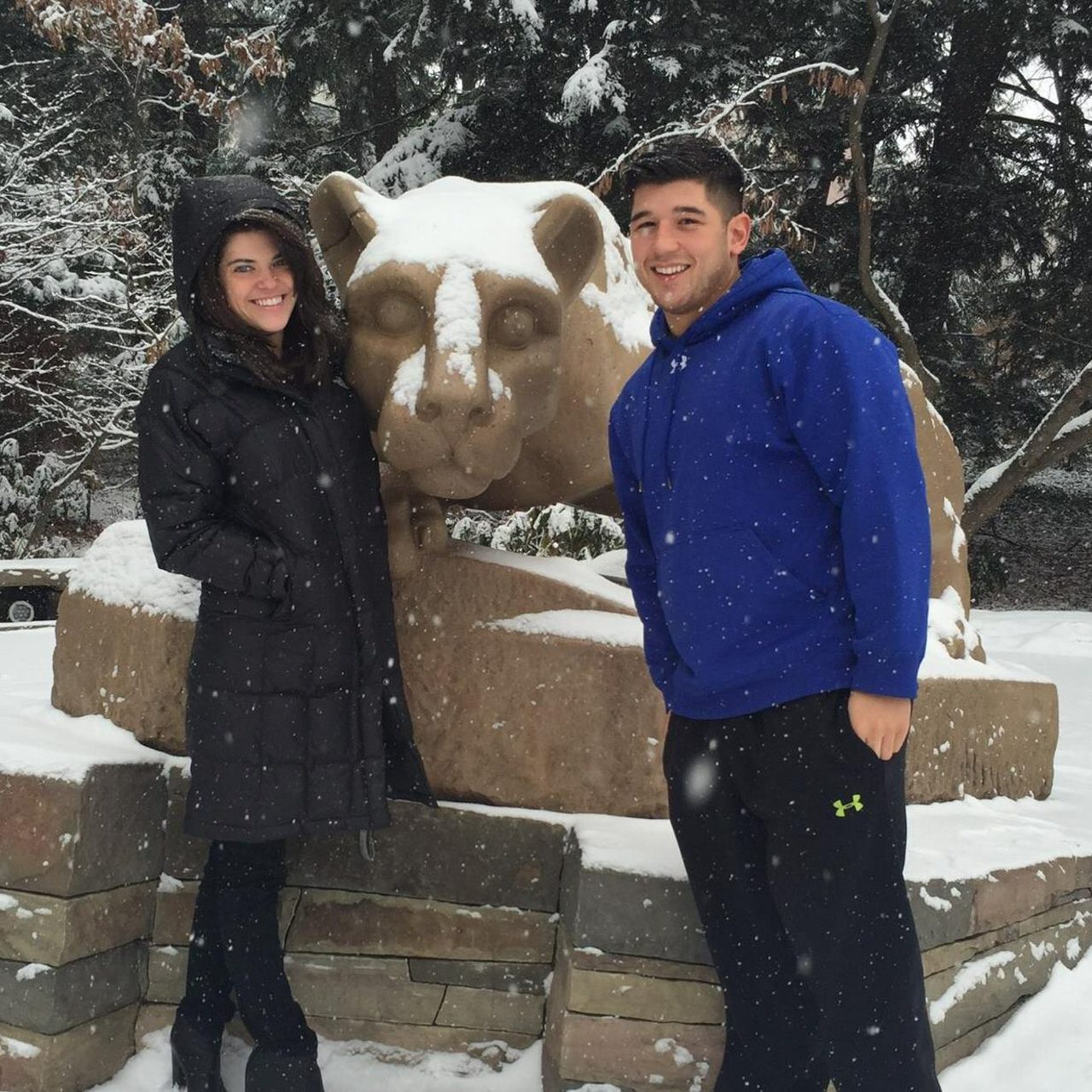
Although I think they are all important, I think food waste is a BIG one. It is a stark reminder that we have this abundance of food, which if channeled properly, could be a large step forward in effectively ENDING hunger in the United States. What a change that would be! Not only that, but food waste creates methane, which is 25 times more dangerous than CO2 emissions, when disposed at landfills. I’m also very intrigued by the Zero Waste initiatives showing up around the country. I love that California has been so aggressive to reduce the waste we create. It’s a great goal to pursue, and I’m really looking forward to contributing to the implementation of those lofty goals.

Q: What is your most recent environmental goal?
Since joining I Love A Clean San Diego, I’ve seen what a noticeable difference the smallest habits and actions taken daily can make. Therefore, I’ve tried to reduce buying excess packaging which creates unnecessary trash, as well as making sure I plan my portions for food to avoid wasting valuable food by either spoilage or excess. Packing lunches goes a long way in saving the environment and your wallet!IMG_1513

Q: “When I’m not at a the office or a cleanup you can find me…”

I love going to the gym, it is a big part of my life. Additionally, I love doing outdoorsy stuff, and I really want to get into surfing soon! Apart from all of that, I really love reading and watching Netflix. I’m also getting into the local restaurants and breweries, and as a big burrito and beer fan San Diego has definitely exceeded my expectations!

Chula Vista students explore the impact of plastics

SONY DSC
ILACSD Education Specialist, Grace!

Today’s blog is from our Education Specialist, Grace! Grace is apart of ILACSD’s team of educators which leads thousands of students and adults each year in hands-on activities that showcase how our choices impact the environment around us. Read on for highlights from one of our favorite presentations from last year! 

First, a little background.

Plastic has been integrated into almost every facet of our daily lives, from plastic water bottles and grocery bags to polyester clothing and packaged food. It has become so incorporated into our society that often times it is hard to perform routine tasks without the use of plastic. Subsequently, a lot of  plastic makes its way into our environment, travels through our waterways, and often finds its way into the ocean. One of the most notable areas where this garbage collects is the Pacific Garbage Patch.

Various animals are impacted by plastics in the environment, through entanglement and ingestion. One animal in particular that has been severely harmed by this trash is the albatross, a seabird that frequents the Pacific Garbage Patch. Through this ingestion of plastics and other trash, many of these birds become malnourished and starve.

How can we make a difference?

SONY DSC
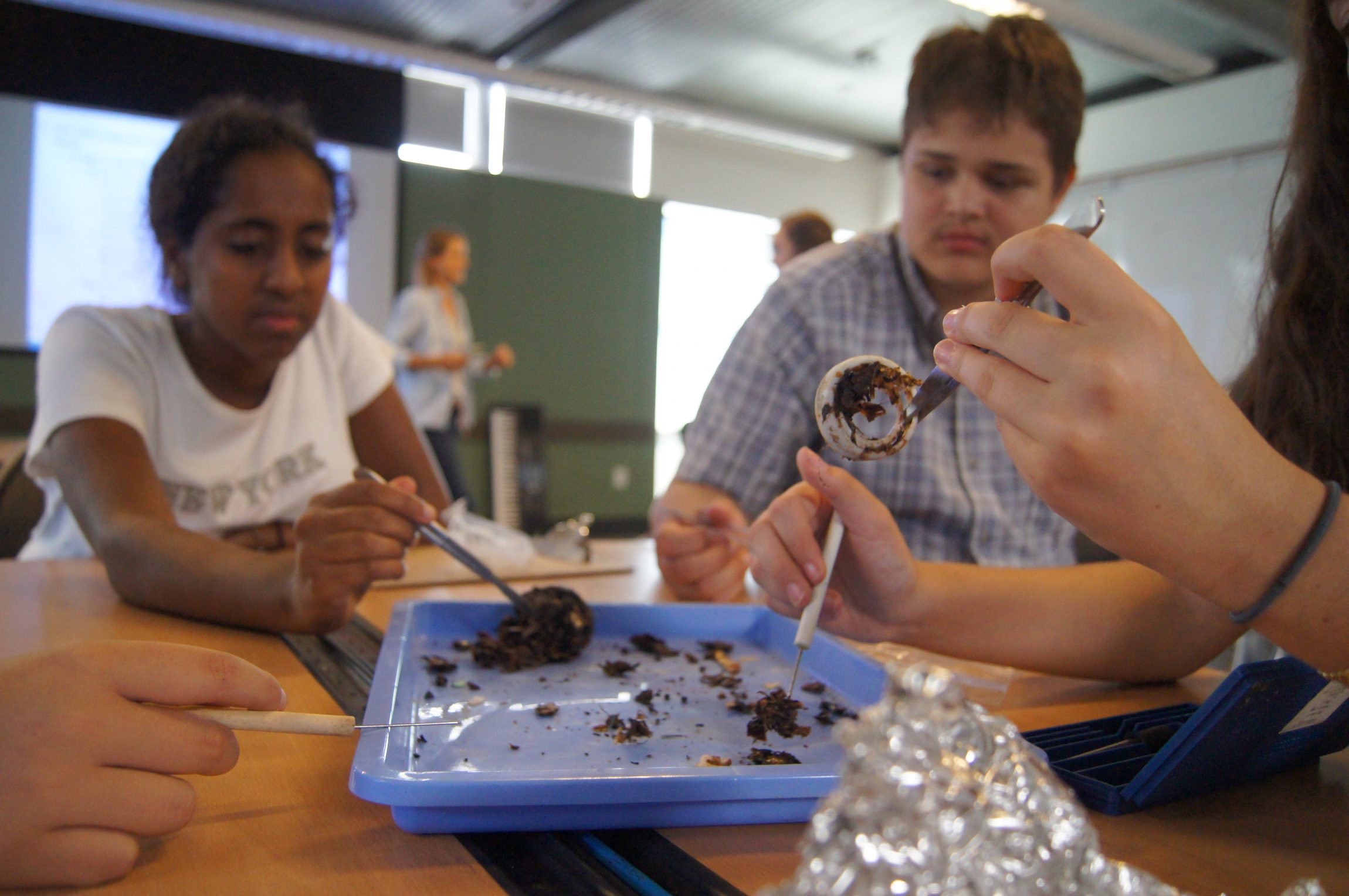
Grace engaging a group of students in a discussion about what they found during the bolus dissection.

In conjunction with our educational programs, students at High Tech High Chula Vista were given the opportunity to witness this tragedy first hand through their dissection of an albatross bolus. Much like an owl pellet, these birds naturally regurgitate indigestible items including squid beaks, and volcanic rocks that help with their digestion, all components of a typical bolus. However, as the students discovered, today’s boluses tell a different story. Students removed fishing line, bottle caps, plastic and foam bits, and polyester fibers from boluses, highlighting the level of impact that we are having on the albatross and other marine organisms. Plastic has become so ubiquitous in the environment and the lives of these albatross that of the 10 boluses the students dissected, 100% of them contained some degree of plastic fragments.

SONY DSC
100% of the boluses that the students dissected contained plastic.

Although many would feel discouraged by these findings, the students at High Tech High Chula Vista felt further empowered to continue their journey toward having a more positive impact on their environment. If you’re looking for simple ways to start reducing your personal plastic usage, consider refusing single-use straws, investing in reusable sandwich bags, and committing to remember your reusable grocery bags. Get started on the right foot by attending I Love A Clean San Diego’s free Zero Waste Home workshop happening this Saturday, January 9th! 

10.7.15 - SLS (22)
Learn the basics of living a zero waste lifestyle at our next free workshop happening this Saturday, Jan. 9!

Also, keep an eye out for our upcoming blog about the students’ 70 Day Shake-up project and how they integrated creative environmentally friendly habits into their everyday lives!


Sustainable gift wrap solutions

Whether you’re looking for more creative and sustainable ways to wrap your gifts this year or you’ve simply ran out of wrapping paper, Ani, I Love A Clean San Diego’s Recycling Programs Manager, is here with a couple of quick, eco-friendly gift wrap solutions!

Did you know that food waste, shopping bags, wrapping paper, and ribbons all contribute to an additional 1 million tons of waste to our landfills? Here is a quick gift wrapping guide to limit the amount of waste that ends up in our landfills after the holiday season (and beyond):

Start early.  I reuse boxes from my online shopping, food packaging, tissue paper, gift bags and bubble wrap year round to avoid having to buy any additional gift wrapping materials; and it saves me some money as well!

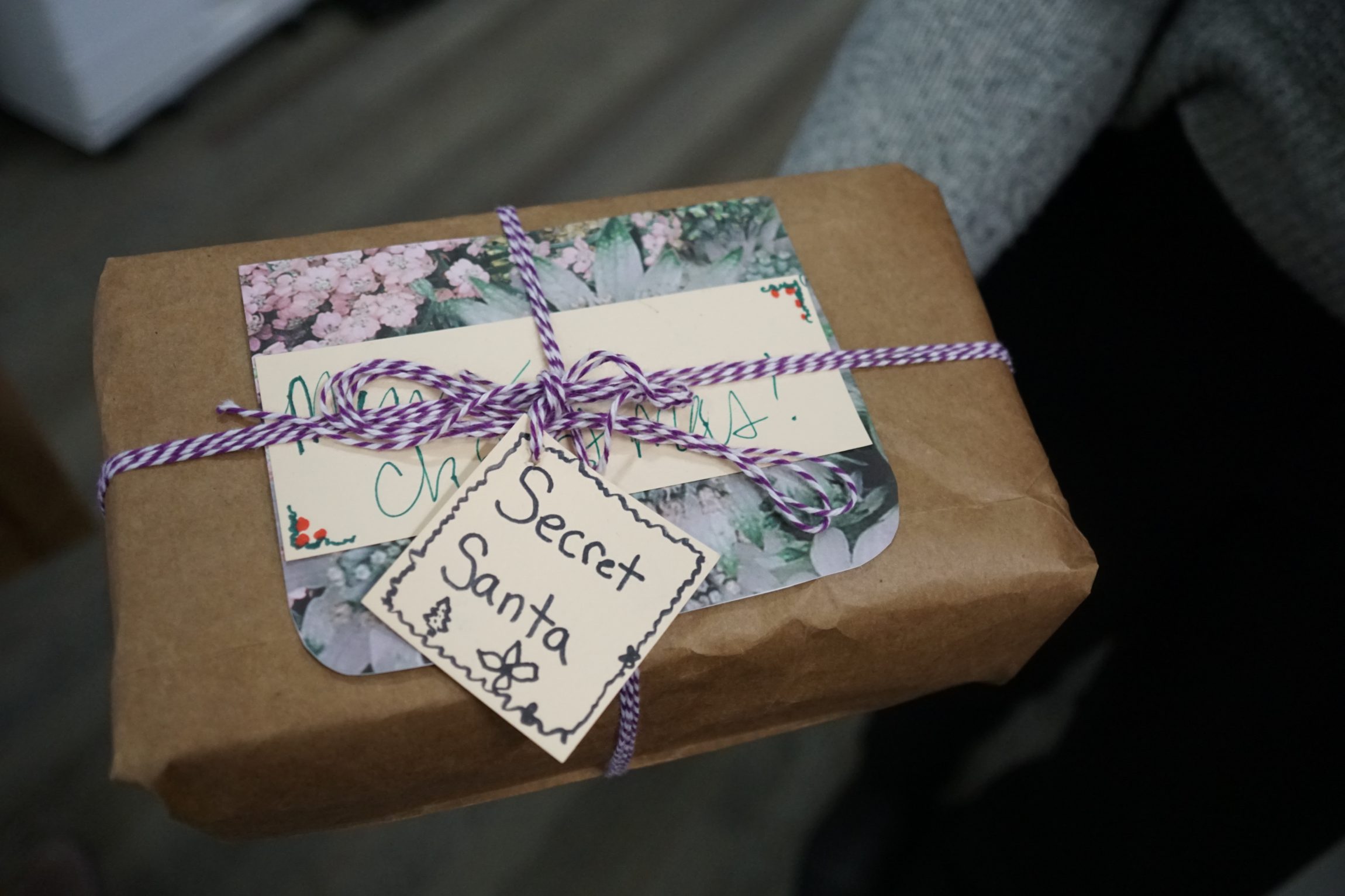
Secret Santa 12.16 (8)
Community Programs Coordinator, Moriah, reused a paper grocery bag to wrap her gift and it looks great!

Consider wrapping gifts in fabric or newspaper. Unfortunately, festive wrapping paper usually ends up in the recycling bin and is often difficult to reuse. Give the gift of beautiful fabric or simply dig through your recycling bin to find paper to cover a gift.  I guarantee your gift will stand out from the rest!


Furoshiki is a type of traditional Japanese wrapping cloth


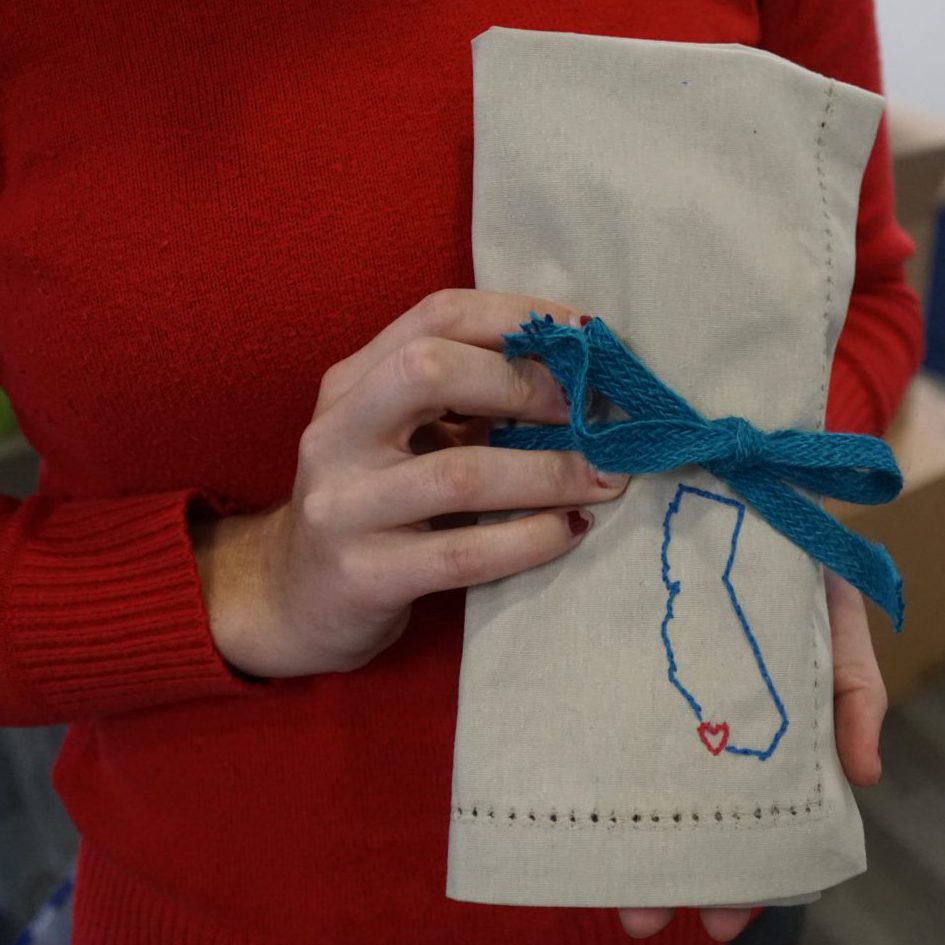
Skip the ribbon, skip the bow! These items are difficult to reuse and uncommon to keep. Check out Emily’s gift below!

Secret Santa 12.16 (9)
Education Manager, Emily, wrapped chocolates in a personalized reusable napkin.

All in all, try to hold on to gift wrapping items or opt out of using items that are hard to reuse and you’ll be on the path to creating less waste in no time! For recycling options, check out our one-stop database, www.WasteFreeSD.org

Happy Holidays from the ILACSD staff! Be sure to follow us on Facebook, Twitter, Instagram and Pinterest for other creative zero waste ideas!