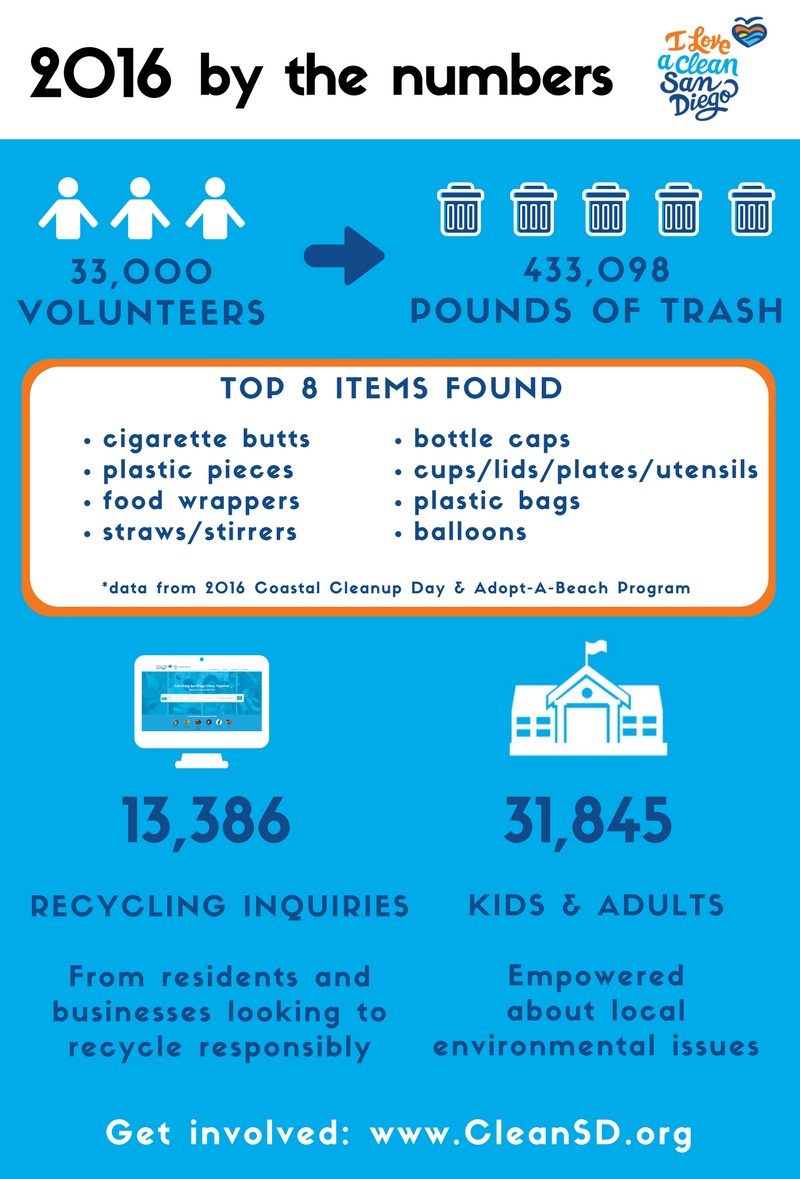
2016 was a great year for I Love A Clean San Diego! Check out the highlights of our impact in San Diego this past year.
2016 Accomplishments Breakdown:
We led 250 cleanups in 74 communities around San Diego. Of the 433,098 pounds of debris picked up at cleanups, the most common items were cigarette butts, plastic pieces, food wrappers, and straws/stirrers. 63,183 cigarette butts were found during last year’s Coastal Cleanup Day and through our Adopt-A-Beach program alone! The weirdest items? We found a dog house, wizard hat, wedding dress, and dentures.
Our Education team empowered more than 31,000 kids and adults through 750 presentations around San Diego County. The presentation topics focused on local San Diego environmental issues, such as watershed protection and zero waste.
Our Recycling Programs team received more than 13,000 inquiries through our hotline and recycling database, WasteFreeSD.org. The most frequently requested items: paint, motor oil, medicine, florescent light tubes, and sharps/needles. If you aren’t sure where to recycle these items in your area, visit WasteFreeSD.org and search by item and zipcode.
LOCATION CHANGE FOR EVENT: This beautification event will now be at nearby Coral Gate Park.
Join ILACSD at Coral Gate Park in San Ysidro for a second cleanup bringing in the Adopt-A-Beach Program!
As of December 2016, San Ysidro will have two new added parks to the Adopt-A-Beach Program. Volunteers will now be able to choose from: Howard Lane Park and Larsen Field! During this kickoff event, volunteers will assist in various beautification projects throughout the area like planting, mulching, storm drain stenciling and litter pickup. Volunteers will have the opportunity to begin the Adopt-A-Beach/Canyon program that day with the cleanup counting towards the program. For more information, visit the Adopt-A-Beach Program website.
All participants will need a waiver form and any under the age of 18 will need a parent/guardian signature on their waiver forms. As always, we encourage the use of reusable items – like a water bottle, work gloves, or bucket – to help create a zero waste event.
Directions to Coral Gate Park. See map below or view this PDF Map.
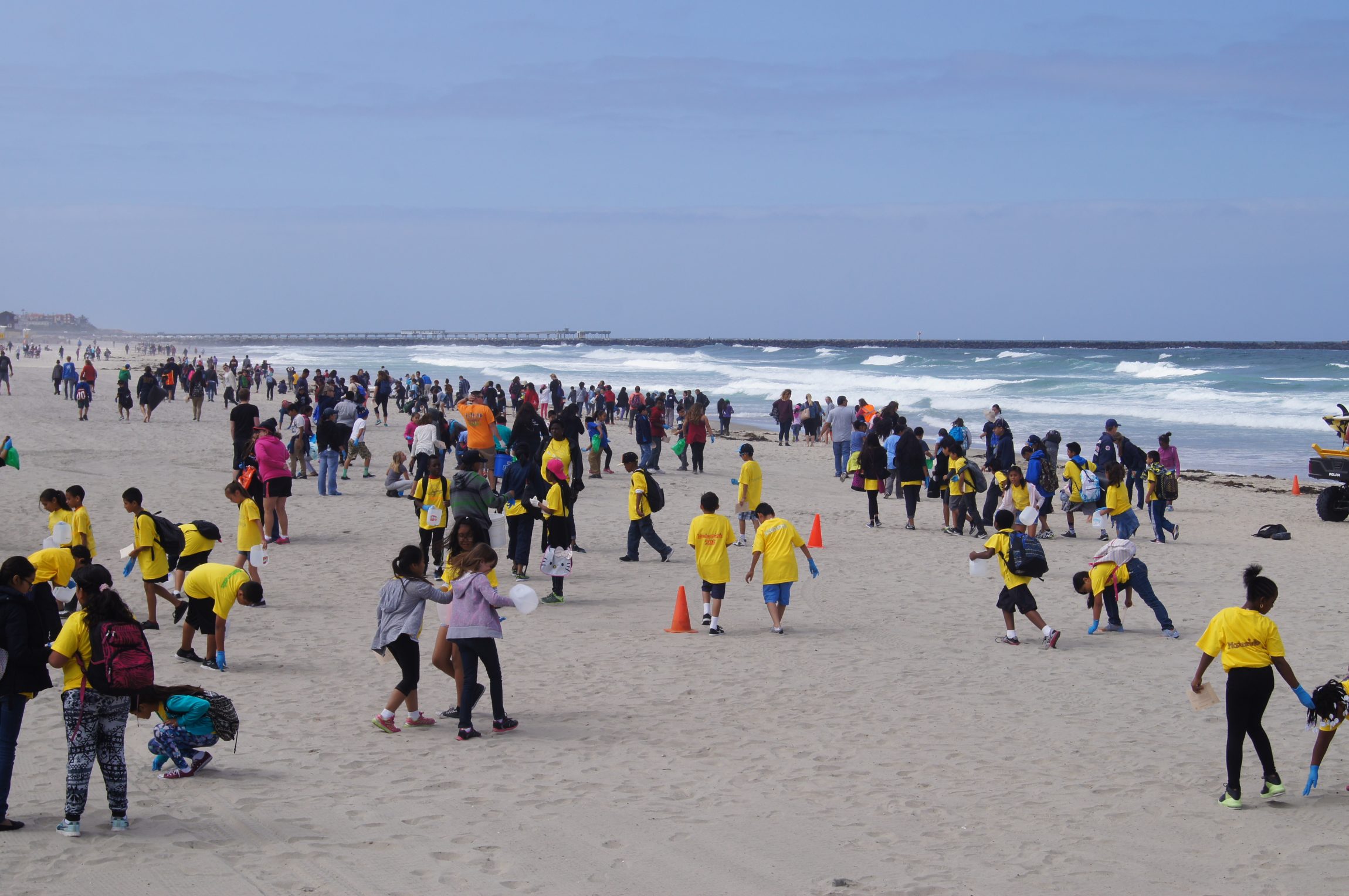
Hats off to another successful Kids’ Ocean Day – ILACSD’s 18th and the state’s 23rd annual event! Kids’ Ocean Day is a unique, annual event centered on engaging our youth as environmental stewards. After a school assembly about ocean conservation, 3rd-5th grade students from eight Title 1 schools around the county joined together at South Mission Beach to leave a lasting impact on their environment.
Take a look at how we spent the day!
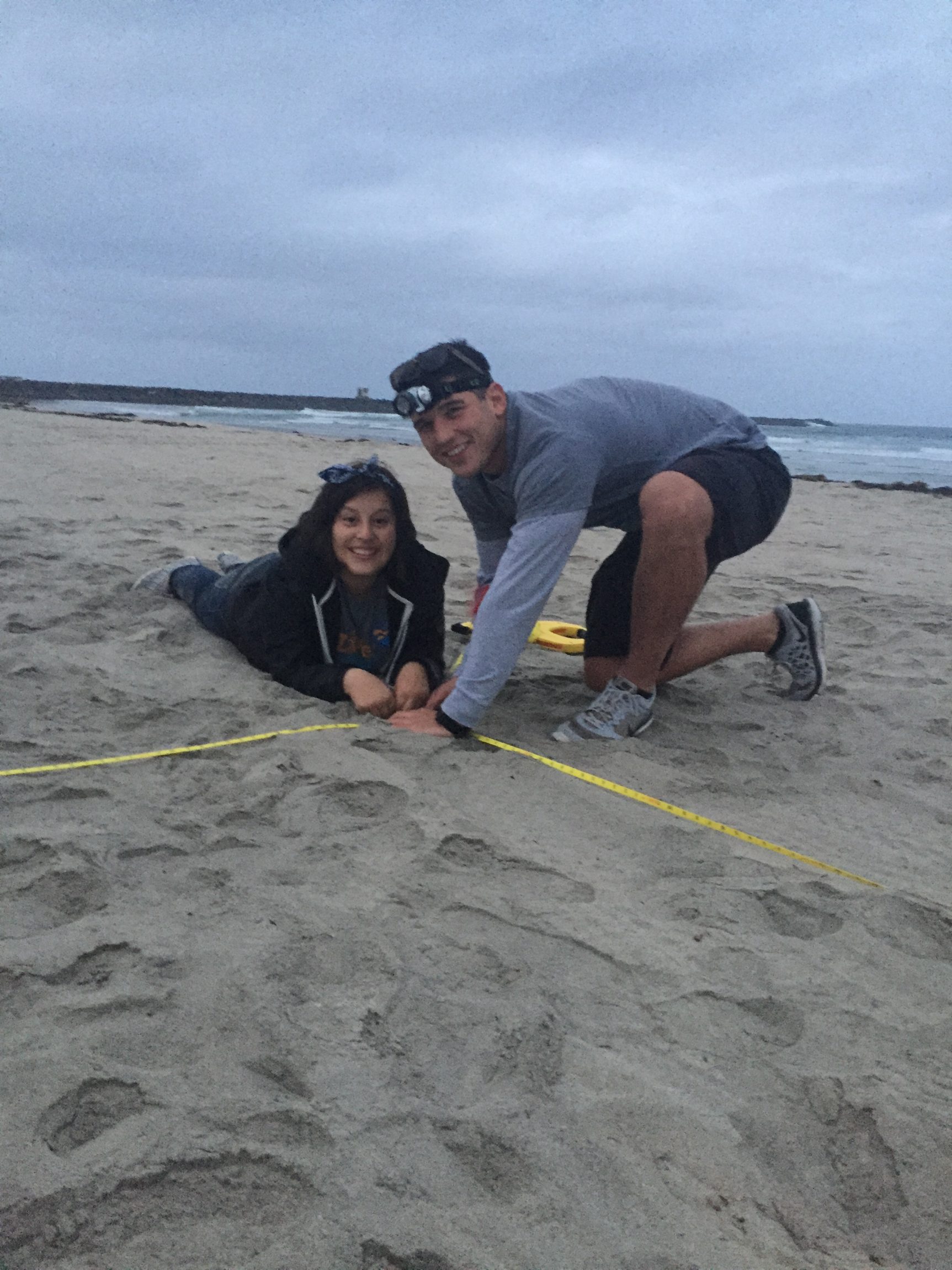
Staff arrived at 5:00 AM to lay the aerial art design in the sand.
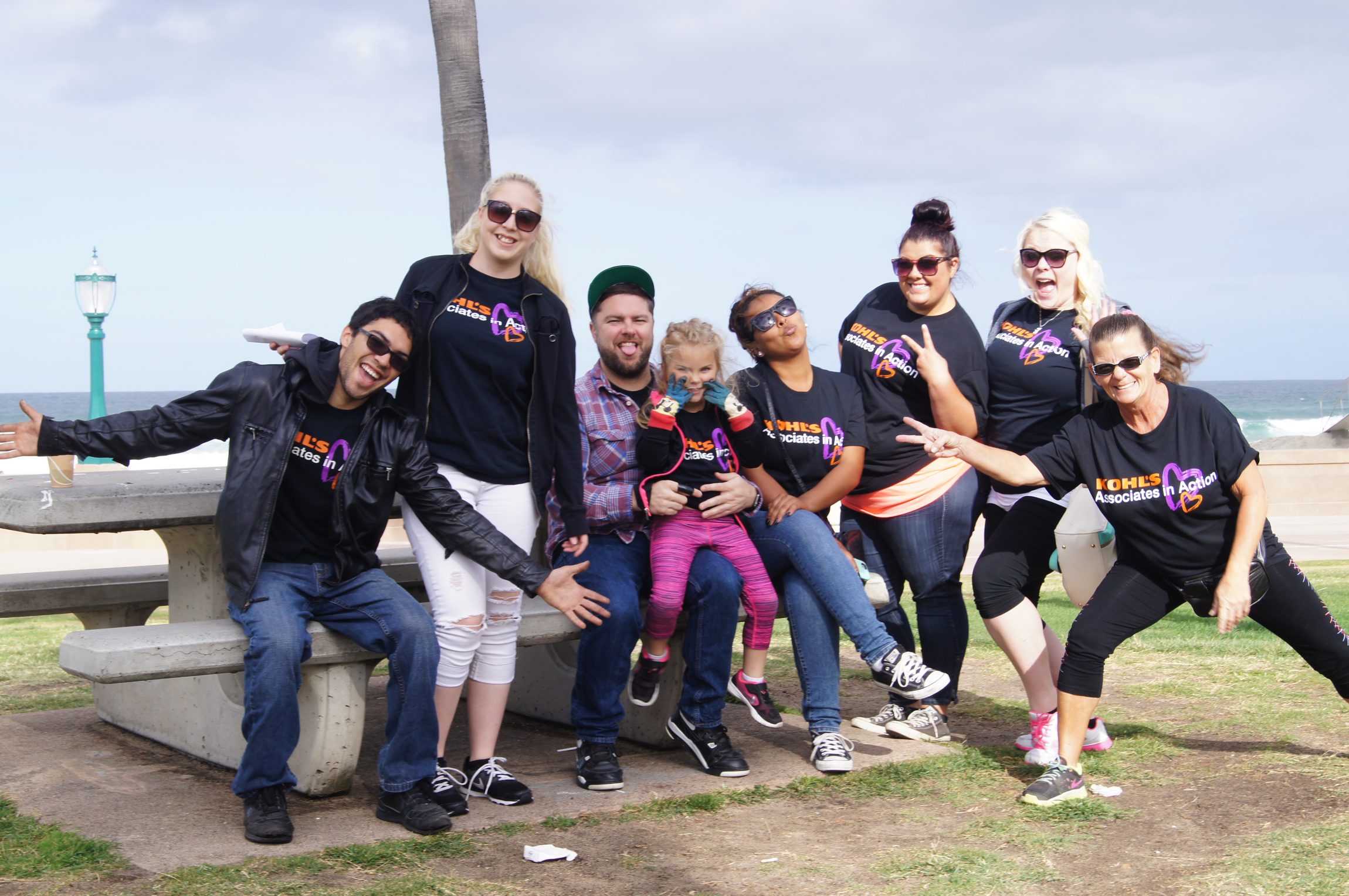
Volunteer groups, like Kohl’s Associates in Action, led students during the cleanup to ensure the day ran smoothly!
Thanks to additional sponsorship this year, ILACSD provided 50 reusable buckets for the cleanup, reducing the amount of disposable trash bags used at this event.
Volunteers reviewed safety tips for the cleanup and got students energized for the day!
Over 950 students, teachers, and volunteers participated in a beach cleanup, ensuring fewer pieces of land litter become marine debris.
Zero Waste in action! Most students created temporary trash bins from repurposed milk jugs, which they later recycled.
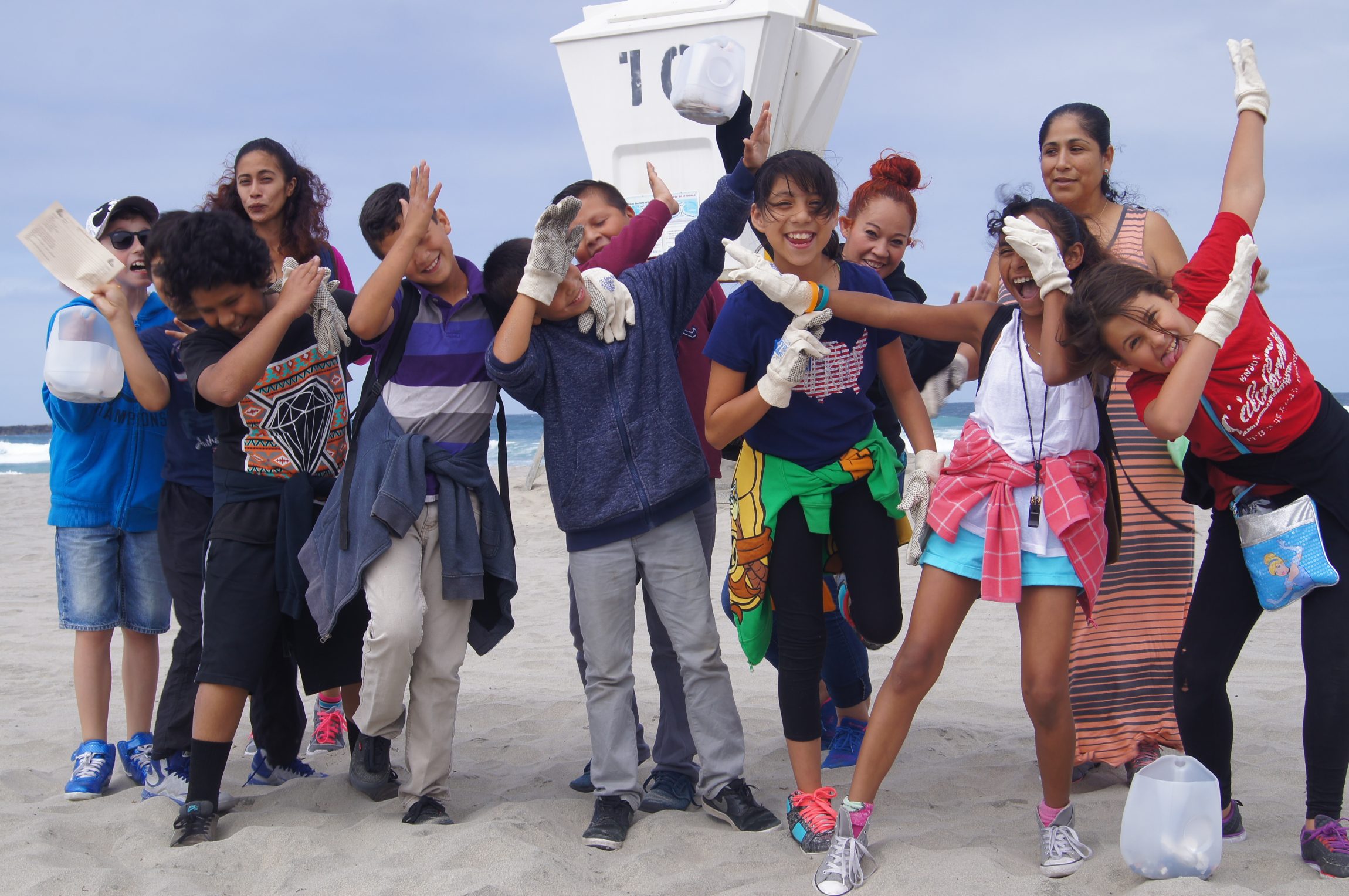
Fresh air + fresh dance moves + a freshly cleaned beach = a great day.Students waiting patiently for the helicopter to circle overhead and capture the perfect shot of the aerial art.
And lastly, the official image! Great job, team! To get involved with an upcoming event, please visit CleanSD.org!
Hi, I’m Shannon and as one of the marketing interns for ILACSD I am excited to have the opportunity to explore the effects of food waste. My interest in food deserts and the lack of healthy food options in America led me to investigate how food waste affects our community and ways we can prevent it all together.
When I think about wasted food I imagine feeling guilty about leaving those last pieces of broccoli on my plate after dinner, however, food waste is much more serious than wasting a few good veggies. Food waste refers to the massive quantity of quality food that is wasted annually instead of being given to those in need. According to the National Resources Defense Council, “Forty percent of the food produced in the United States never gets eaten.” So what does food waste really do?
Don’t worry there are ways to fight back against food waste!
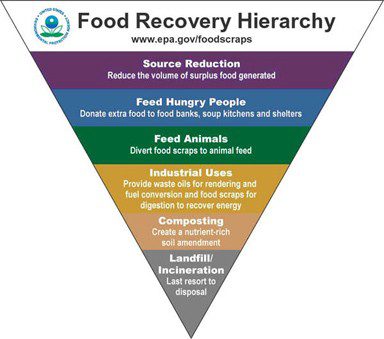
The San Diego Department of Public Works has some great solutions to help you minimize food waste in the future. They rely upon the Environmental Protection Agency’s food recovery strategyto most efficiently and cost-effectively reduce San Diego’s food waste. Based on this hierarchy, San Diego’s DPW established a food waste system based on 3 simple steps: Reduce, Donate and Compost.
Food Recovery Hierarchy
To best implement waste reduction in our personal lives, the DPW suggests re-considering portion sizes, limiting the number of menu items you order when you go out to eat and planning all the week’s meals so your grocery list only consists of what you need to make those meals. According to the DPW, it is important to be conscious of the volume of food you eat in comparison to the volume of food you waste.
Donating leftover food is another great way to reduce food waste! There are a lot of local organizations that lead San Diego’s effort to feed hungry San Diegans. Check out Feeding America and San Diego Food Bank for local options to donate your leftover quality food. Reducing food waste also means giving those without the means to feed themselves the food they need to survive.
Kids think composting is fun too!
The final step is using spoiled and leftover food for composting in your own backyard or neighborhood! Check out our previous blogs on composting to see how easy and fun it really is.
It’s important to remember that food waste is a serious national issue so let’s work together to help make San Diego even better than it already is and improve the lives of thousands in the process!
Today’s blog comes from our Contracts Manager, Sam, who has been attending several meetings related to San Diego’s Zero Waste Plan, including food recovery and organics recycling. The idea of zero waste can seem daunting or too far-fetched. Read on to learn about other cities that have successfully implemented zero waste practices IRL (in real life) and what San Diegans can do to help reach these waste diversion goals.
As we all know, “Zero Waste” is a hot button word around environmental circles these days. By its definition, Zero Waste is a commitment to diverting at least 90% of all waste away from landfills, and utilizing other means of proper disposal. But what does it look like in practice? How far along are we? What are the challenges? We will take a look at three California cities to see!
Repurpose tip: extend the life of common items like glass bottles and jars by transforming them into home decor!
Let’s start with the current big kid on the block in all environmental programs, San Francisco. San Francisco has been among the leading pioneers in the nation for environmental programs, and zero waste is no exception. As a part of their commitment to 90% waste diversion by 2020, San Francisco has implemented composting and green waste recycling pickups at businesses and residences. Along with convenient disposal, San Francisco has also invested in providing the public with educational resources about reducing food waste, consumer and producer responsibility, and the list goes on! When other cities in the U.S. look to a city to replicate good behaviors, San Francisco is a wonderful place to start.
Next, let’s look at Los Angeles. Currently hovering around 75% diversion of waste away from landfills, Los Angeles’s goal is to to achieve a lofty 97% waste diversion by 2030 through SWIRP, which is an acronym for Solid Waste Integrated Resources Plan. LA’s infrastructure will soon follow in the footsteps of San Francisco to ensure that greater tonnages of green waste (yard clippings, food scraps, etc.) and compost can be properly disposed of instead of winding up in a landfill. Along with San Francisco, LA believes educational outreach for both food waste reduction and proper recycling techniques are critical to their long term goals. Looking to achieve 87% diversion by 2020, Los Angeles has made a firm commitment to realizing their ultimate “zero waste” initiative by 2030.
Practice makes habits! Students practice sorting paper, cans, and food scraps into pretend trash, compost and recycling bins.
Last, but certainly not least, our wonderful home of San Diego. The macro-level goal is to achieve virtually 100% waste diversion by 2040, with yearly increments designed to test the progress. Along with LA, San Diego is playing catch up to San Francisco in regards to the infrastructure required to divert large quantities of green waste. Working with the State recycling agency, CalRecycle, as well as haulers and constituents to ensure the County meets its goals will be required if they hope to reach their goals:
75% by 2020,
90% by 2035
“zero” waste by 2040
In order to achieve this, the County will need to divert an additional 332,000 tons to offset the current 67% diversion rate. They hope to do this by encouraging haulers to divert more away from landfills, educate San Diegans, and of course divert more green waste away from landfills.Click here to learn more about San Diego’s Zero Waste plan.
It’s exciting times! Zero Waste is no longer just a dream, but it is now a successful process! And with the process, we can see the evolution towards greener, healthier, and more beautiful communities. I Love A Clean San Diego is doing its part by revamping our comprehensive recycling database, WasteFreeSD.org, to include zero waste tips and tricks to fit any lifestyle. You can always give us a call at 1-877-R1-EARTH to have any of your recycling questions answered as well.
If you’re looking for a more hands-on approach, our education team hosts community workshops designed to give you real life solutions like choosing reusables, how to shop in bulk, etc. Our next workshop, the Zero Waste Summit, will take place on Saturday, June 11th at Ocean Knoll Farms in Encinitas. Let us know you’re coming by registering ahead of time – Here’s to Zero Waste!
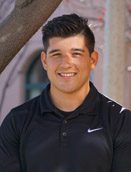
Hi my name is Hannah and I am currently one of the Outreach Interns at I Love A Clean San Diego! I am graduating this May from San Diego State University with a Bachelor’s Degree in Sustainability. My love for the environment started in high school after taking a course in environmental science, which led me to my major. I am always trying to find ways to be more sustainable, including my upcoming college graduation.
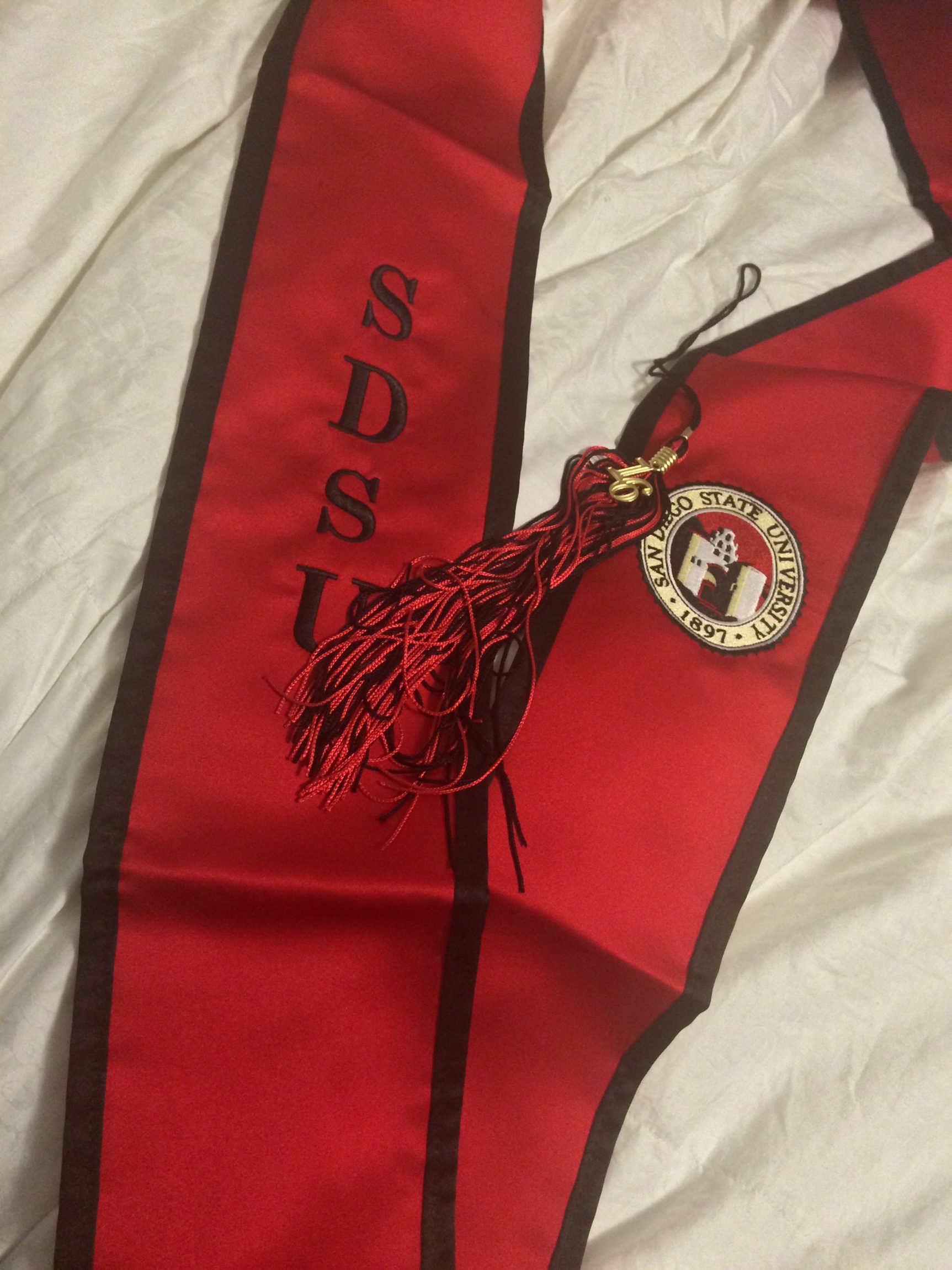
Graduation season is quickly approaching. From kindergarten to college, there will be millions of students all over the globe walking across a stage to receive their diploma. Here are 4 ways to be sustainable this graduation season and have a green graduation!
Send evites to your friends and family to attend your graduation ceremony or party rather than paper announcements! You will not only be saving the planet, but also saving money. The online alternative to invitations is affordable, easy, and environmentally friendly! Websites such as Paperless Post, Greenvelope, and Punch Bowl all offer free or low cost alternatives.
Rent or recycle your graduation gown! There are more than 5 million high school and college graduates every year each purchasing a graduation gown they will probably never wear again and could end up in a landfill, if it is not recycled. Greener Grads is a website that provides low cost cap, gown, and tassel rentals. If you have already graduated or purchased your gown, don’t fret, Greener Grads will recycle it for you after you are done.
Arrange a carpool for your guests attending your graduation or encourage them to take public transportation. Not only will there be tons of traffic getting to and from the ceremony, but they will be making a positive impact on the environment. Since SDSU has a trolley stop right on campus, my family is staying at a hotel in close proximity to a trolley stop for my graduation this May for a quick, sustainable, and hassle free journey.
Encourage your friends and family to refrain from showering you with balloons and candy leis at your graduation ceremony, and let them know their attendance is more than enough! We are currently facing a helium shortage, you know the stuff that we fill balloons with, and studies suggest supplies could be depleted before the middle of the century. Helium is a non-renewable resource, so once it’s gone it’s gone. Another popular graduation ceremony gift are candy leis, but candy wrappers are made from mixed materials that can be very difficult to recycle.
We’ll that’s it! If you’re graduating this spring or if you know someone who is, take these tips with you as you celebrate this incredible milestone with our environment in mind. For more sustainable ideas for other occasions, follow I Love A Clean San Diego on Pinterest!
Spring is here which means many of us will be cleaning out our closets to make room for our summer clothes. For others it means that a much needed home cleaning will be underway, as well. What better way to enjoy Earth Month than by donating your unwanted items to local organizations that keep items out of the landfill.
If you have furniture in good shape, workable appliances or electronics that you would like see find a good home, consider posting them on websites like Craigslist, Freecycle and the Buy Nothing Project. These sites offer a method of landfill diversion and provide items in good condition with a second home. This is also the hassle-free way to donate items without having to physically move the items yourself.
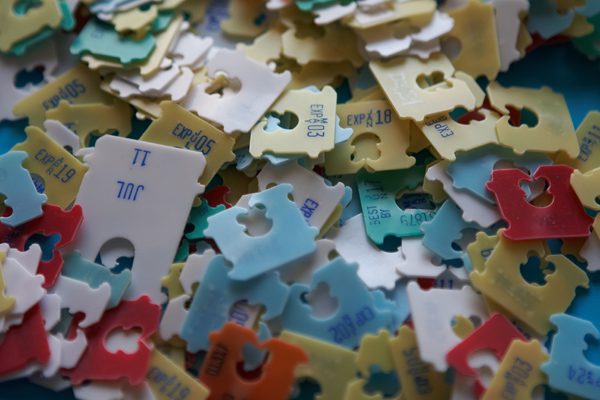
Looking to donate something smaller? ArtForm at the Rare Hare Studios will accept household items that can be reused for art projects. Items such as buttons, ribbons, bottle caps and yarn are just a few things in the long list of items that they accept as donations. To find what else they will accept check out their wish list online. Donations need to be pre-approved so give them a ring before dropping anything off – they’d love to hear from you!
Looking to donate something bigger? If your spring cleaning involves some home renovations, places like Habitat for Humanity’s ReStore locations will accept things like doors, windows, and cabinets that are in good condition. To read more about donating construction and demolition debris to organizations that provide great services for people check out this blog.Remember to check with each location before dropping-off donations to ensure that your items will be accepted and to confirm drop-off times.
Lastly, if you have items that cannot be donated such as broken electronics or appliances, household hazardous waste, or old/unwanted medications, be sure to search WasteFreeSD.org for recycling options near you!
What is zero waste? First, let’s define what zero waste is to better understand how it affects you and what it means for our communities.
Zero waste is the process of eliminating reusable or repairable materials from ending up in the landfill. Zero waste encourages manufacturers, municipalities, and consumers to evaluate current consumption patterns and minimize single-use items. In order to divert materials from the landfill we must share the responsibility of producing and consuming sustainable products while limiting our use of disposable items.
Now that we know what zero waste means, let’s explore why this practice impacts San Diegans. Currently, the Miramar Landfill is composed of reusable substances; yes that is right REUSABLE substances. The top 3 reusable substances in our landfill are:
Organics (food scraps, yard waste) 39%
Construction and Demolition (building materials) 25%
Paper 17%
When we choose to send these items to the landfill, large amounts of methane gas are released which pose serious public and environmental health concerns. On the positive side, all of this can either be recycled, reused or composted, which means, we can do something about it!
In response to the amount of reusable materials in the landfill (or should we say landFULL) the City of San Diego adopted a zero waste plan to focus on reusing rather than disposing items. Currently, the City of San Diego diversion rate has been consistent around 67%. Here is an outline of upcoming benchmarks for the city’s waste diversion plan:
75% by 2020
90% 2035
100% diversion rate by 2040.
The plan’s primary focus is on organics diversion. There are several resources available to help you reduce food waste through planning and composting. Learn more at by reading about some of our past food waste blogs and WasteFreeSD.org!
Even I Love A Clean San Diego’s Recycling and Household Hazardous Waste database is getting a zero waste makeover! Stay tuned for the redesign release of WasteFreeSD.org this summer! The new database will include a easy to use search bar that will help you find convenient ways to divert waste from the landfill!
Today’s blog comes from our Community Program Coordinator, Moriah as she shares her love for San Diego craft beer and our environment!
I am known as the resident beer nerd at I Love a Clean San Diego. After working at a local brewery for about a year and brewing at home, it’s safe to say I know a thing or two about beer.One thing I didn’t know, however, was how connected my love of beer was to my love for the environment. In a city like San Diego, it’s not surprising that our local breweries value our environment as much as they value their craft.
Ways SD breweries minimize waste
Water conservation is a big issue for everyone in California, and that includes craft breweries. The industry average in California ranges from 3.5 to 6 gallons of water for every gallon of beer produced. Breweries in San Diego are leading the way in reducing the amount of water needed for their production. Local breweries are becoming increasingly water-wise. According to the California Craft Brewers Association, Ballast Point has reduced its water use by more than 24 percent, and Stone Brewing Company recycles more than 62 percent of its water daily.
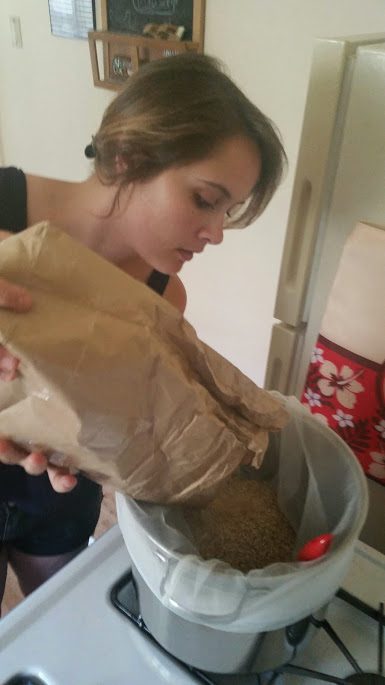
One of the biggest ways that local breweries reduce waste is by using their spent grain in creative ways. Spent grain is the grain left over after the brewing process. Instead of throwing this used grain in the landfill, most of San Diego’s breweries donate it to local farms, where it can be used as livestock feed.Stone Brewing Company even uses it as a mulching tool in their garden. Some of their spent grain goes towards locally made soaps and dog treats as well!
Hop farm picture is Jordan Brownwood tending hops at Nopalito Farm & Hopyard. Photo credit: slowfoodurbansandiego.org
San Diego is known for its hop-heavy beers, but did you know that farms right here in San Diego County grow one of beer’s most important ingredients? Nopalito Farms is a local, family-run organic hopyard and orchard in North County San Diego. Since water conservation is always an issue in Southern California, Nopalito Farms has adopted sustainable farming practices like drip irrigation and mulching, and they work to maximize the rain that they get in Valley Center.
Imbibe with the earth in mind!
Bring a growler with you next time you pick up beer. Instead of cans or glass bottles that will end up in your blue bin, get a reusable growler and take it to the closest brewery. Get fresh, draft beer straight from the source! Be sure to check with the brewery first to see if they have any specific growler policies.
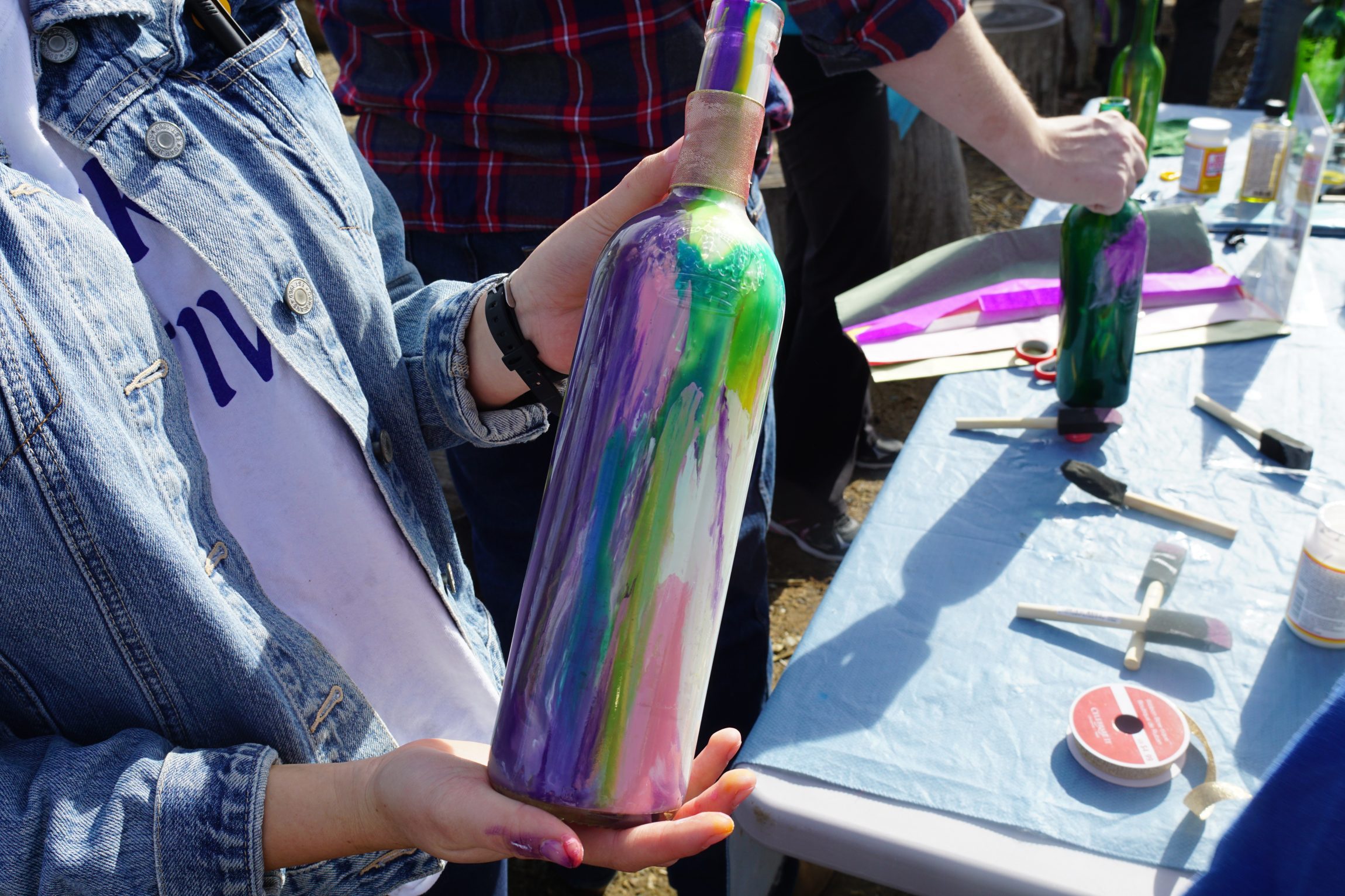
Reuse old beer or wine bottles to make decorations for your house. At our recent Sustainable Living Workshop that focuses on a zero waste home, our educators taught attendees how to reuse their old bottles and turn them into fashionable home decorations.
One example of a repurposed wine bottle from our Zero Waste Home Workshop.
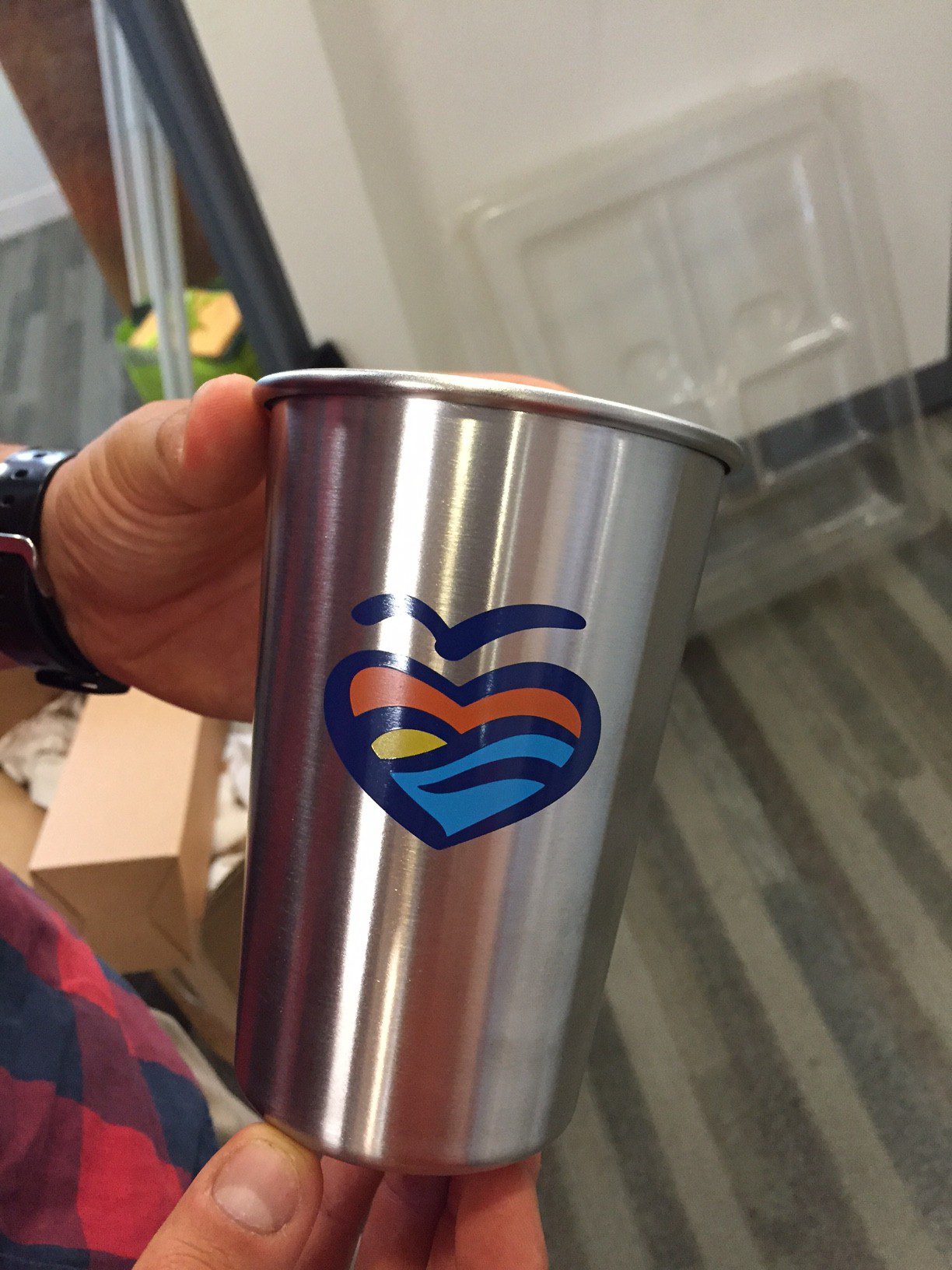
Use reusable pint glasses instead of disposable cups. Even if you are at a beach or camping, you don’t need to resort to disposable cups, you can use a metal pint glass like ours.
Volunteer at Cupid’s Cleanup!
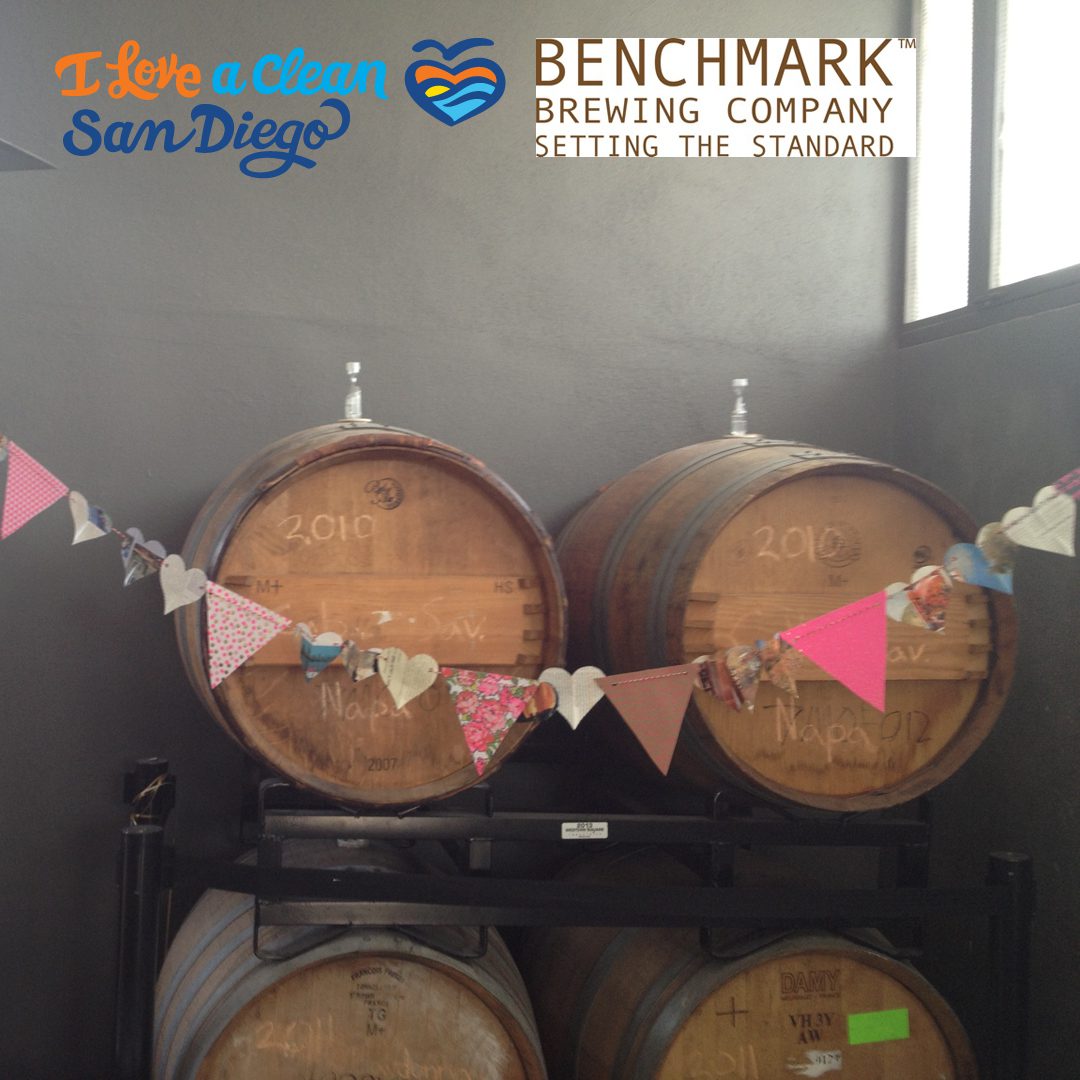
If all of this beer talk has you thirsty, you can join us and Benchmark Brewing Company on Saturday, February 13th from 10am-12pm for a cleanup of the San Diego River! Why not switch up the typical dinner and a movie Valentine’s Day date and help us clean up the San Diego River instead. Then, if this blog has inspired you to try some local San Diego suds, you can join us afterward for a Valentine’s Day-themed mixer hosted by Benchmark Brewing Company! Families, sweethearts, kids, and singles are all welcome.
Register here! Help us spread the word by joining the Facebook event and sharing the cleanup with your friends and family.











 Today’s blog comes from our Contracts Manager, Sam, who has been attending several meetings related to San Diego’s Zero Waste Plan, including food recovery and organics recycling. The idea of zero waste can seem daunting or too far-fetched. Read on to learn about other cities that have successfully implemented zero waste practices IRL (in real life) and what San Diegans can do to help reach these waste diversion goals.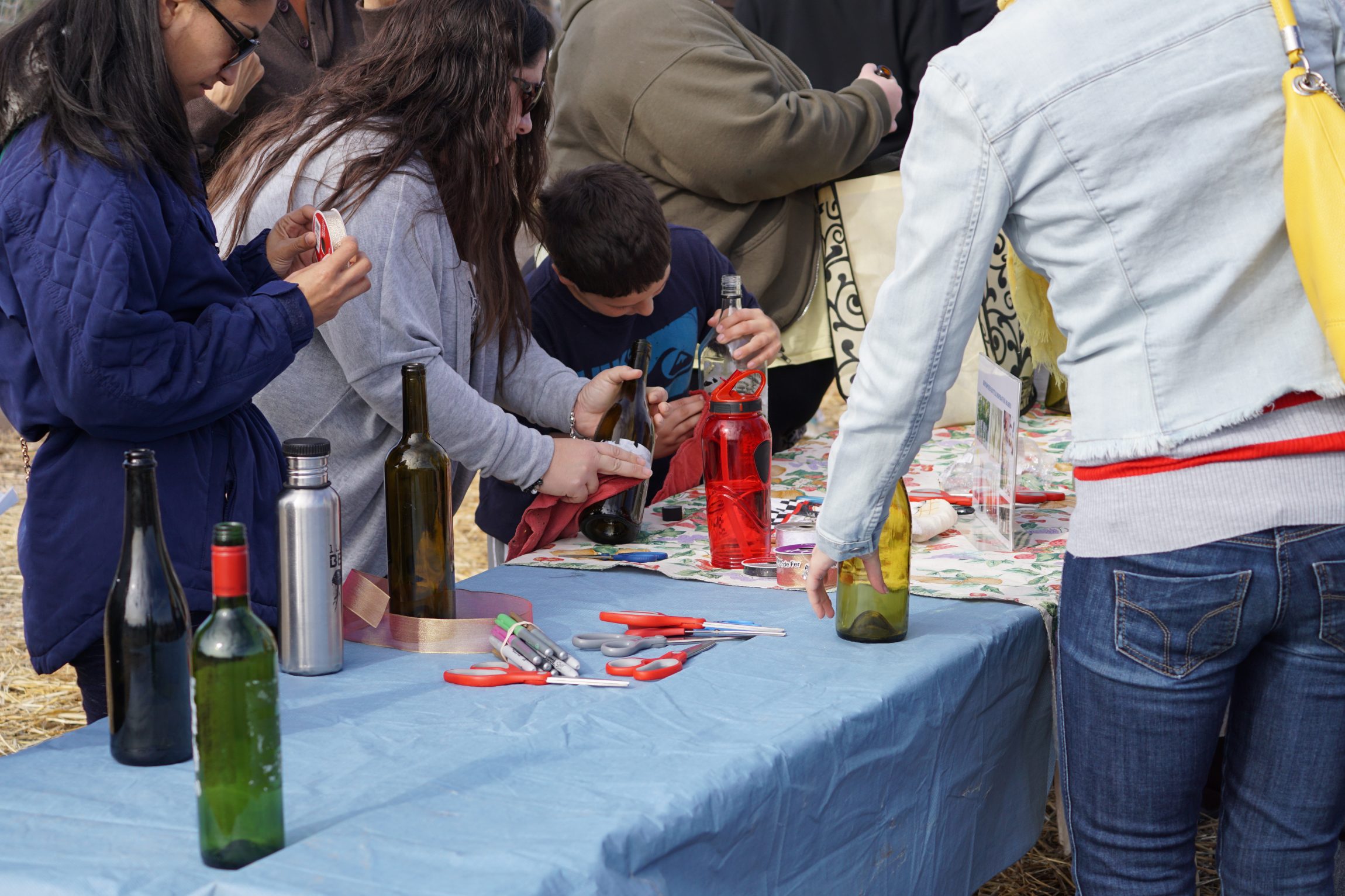







 Remember to check with each location before dropping-off donations to ensure that your items will be accepted and to confirm drop-off times.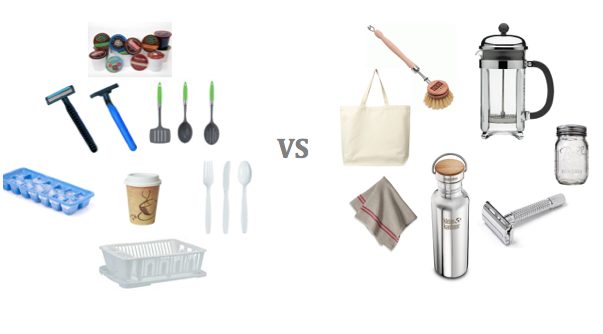

 Today’s blog comes from our Community Program Coordinator, Moriah as she shares her love for San Diego craft beer and our environment!