
Join the conversation #AmericaRecyclesDay

Ani_team15Ani has written another amazing blog for this week! If you follow us on social media, you know that we’re gearing up for America Recycles Day, the one day a year that is dedicated to making the most of our resources through recycling and upcycling! By the end of this blog, not only will you know what ARD is all about, but we hope you’ll be inspired to celebrate with us by boosting our recycling efforts here in San Diego!  

The 8th annual America Recycles Day is November 15th so be sure to mark your calendar! The goal of America Recycles Day, an initiative led by Keep America Beautiful, is to acknowledge our recycling efforts and stir up a conversation about what more can be done to ensure our communities stay litter-free. This is ever so important in San Diego as the city is moving towards a 75% waste diversion rate by 2020, an ambitious goal that will engage the community to think twice about what is thrown out. That means that in addition to beefing up our recycling efforts, the city is also encouraging upcycling and repairing many things that would have otherwise been thrown away.
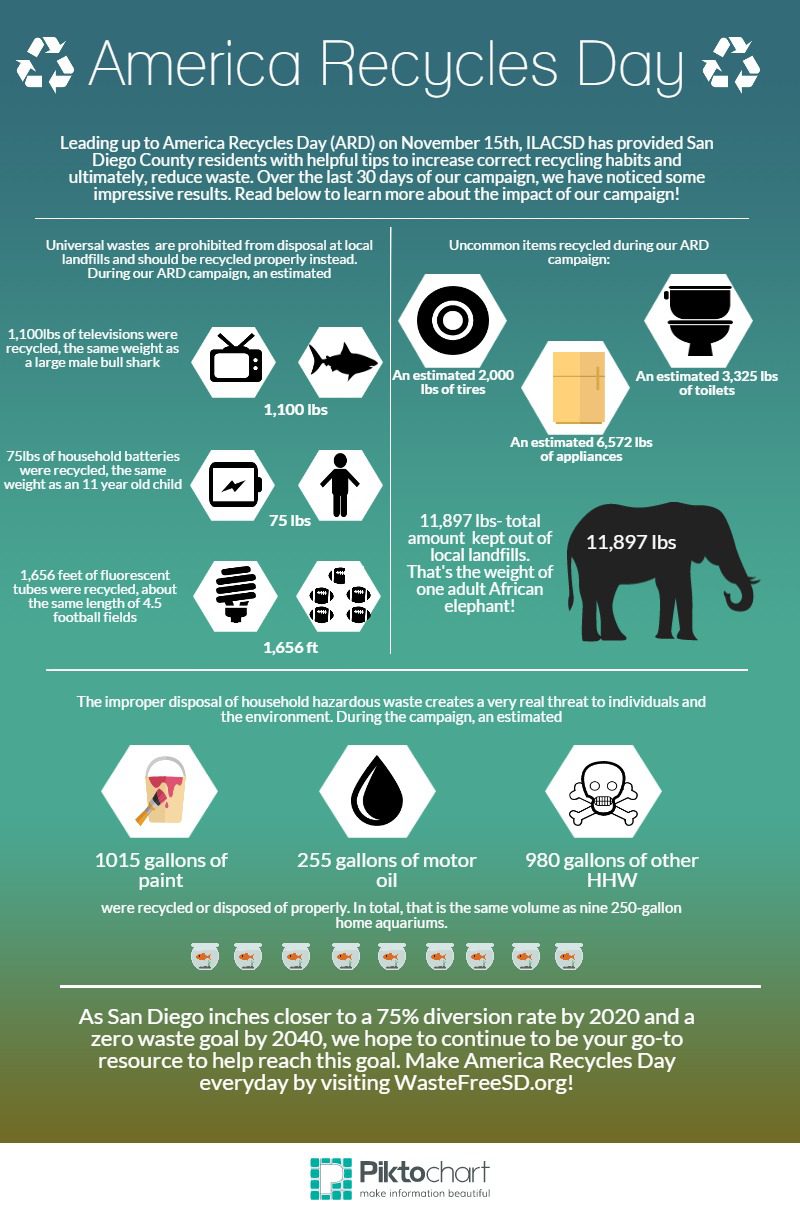
End of campaign infographic
Click here to see the full infographic highlighting last year’s results!

Last year during our campaign, an estimated 1,015 gallons of paint, 255 gallons of motor oil, and 980 gallons of other household hazardous waste was properly disposed of thanks to the help of Waste Free SD, the County of San Diego’s Recycling and Household Hazardous Waste database lead by yours truly, I Love A Clean San Diego.

What’s new this year?

  • GLEANERS! Don’t know what a “gleaner” is? Not to worry, we’ll get you up to speed!
  • Test your blue bin knowledge. Let us know how much you know about curbside recycling.
  • In need of a fast way to recycle your old cell phone and make some cash? You’ll learn more about one of my favorite tried and true options!

This year we would also like to recognize Sony for supporting our America Recycles Day campaign and allowing us to share important recycling information with all of you through social media. Sony is one of our longest standing supporters, helping us achieve our mission year round by volunteering at cleanups and supporting our environmental education programs. Thank you, Sony!

SONY_logo_blue_no(R)
Sony is our America Recycles Day sponsor! Thanks for investing in a clean and sustainable SD, Sony!

Be sure to connect with I Love A Clean San Diego on Facebook, Twitter, and Instagram to keep the conversation going during our 2-week long campaign. We want to congratulate your efforts and encourage everyone to recycle! Let’s keep San Diego clean, together #AmericaRecyclesDay

 

Fallbrook’s Recycling Ninjas

Emily M.It is never too early to take action towards waste reduction. After meeting with the Fallbrook Street Elementary School Recycling Club, Emily wanted to share the students’ enthusiasm about recycling with all of you! Read on for some inspiration to start a recycling program at a school or office near you!

From the time students enter the halls of Fallbrook Street Elementary School, they are coached to become strong leaders. Joshua Mills’ 5th grade class is a shining example, leading the school in efforts to be more environmentally active. As part of their rotating class jobs, students serve as recycling collectors, traveling from classroom to classroom “like ninjas” so as not to disrupt the learning environment. They compile the school’s recycling into a central bin and remove any non-recyclable items.

recycling ninja
You don’t have to be a student to be a recycling ninja! Check out the Ocean Conservancy’s Recycling Ninja pledge here.

What keeps them motivated to be dedicated recyclers? “Recycling is important to me because I like to have a clean environment,” said one student. “I like to keep my school clean,” said another. Many of them echoed this sentiment: “I love to recycle because I don’t want paper going to the landfills because you can recycle and reuse it.” To help encourage other students and teachers to adopt this perspective, they created informative posters displayed around campus and presented at a school-wide leadership rally.

As they look ahead to 6th grade, the students are excited to continue this recycling program. One student mentioned he is transferring schools, but intends to bring this knowledge with him to his new school.

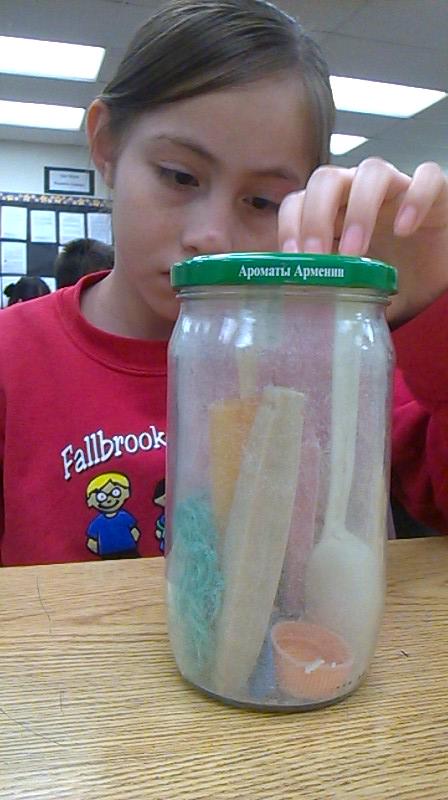
albatross jar
The contents of this jar represent items commonly mistaken as food by marine life such as albatross. These items include plastic utensils, a lighter, and bottle caps.

During I Love A Clean San Diego’s free presentation, we built upon their recycling foundation and discussed next steps – further ways to reduce overall lunch waste. When I left, Mr. Mills was already scheming on how to teach math through a classroom worm bin.

To conclude our interview, I asked the students one thing they want the people of San Diego to know. They had some sound and simple words to live by:

“Don’t put things that you shouldn’t recycle in the recycling bin.”

“Don’t pollute because we won’t have good air.”

“If you see some garbage, pick it up, even if it’s not yours.”

“Pick up after your cats and dogs.”

Based on the variety of these responses, we can see how one small step towards waste diversion can lead to a lifetime of environmentally-minded choices.

Comment below to tell us about what your school is doing to help keep your community clean and green!

Interested in having our educators visit your classroom? We are currently scheduling for the 2015-2016 school year. To schedule, please email our education department at education@cleansd.org.

classroom panorama

Reclaim and re-imagine to reduce construction waste

amanda-2-photoshopToday’s blog comes from our Hotline Manager, Amanda! You may remember her from one of our most popular blogs, “Curbing Food Waste by Gleaning” which was all about reducing food waste. Now, she’s focused on reducing another common landfill item – construction and demolition debris.  Whether you’re knocking down walls or swapping out home embellishments, you’ll be surprised how much can be recycled and repurposed! Read on to learn more about how you, too can help give these items a second life! 
Are doing some remodeling around your home?  According to the County of San Diego’s Public Works Department, each year 20% to 35% of the waste that goes to landfills in San Diego is generated from construction and demolition. This amounts to more than 1 million tons countywide. You probably already know a lot about recycling, so today we suggest thinking of a different “R” for your materials; reclaim and reimagine! You will keep valuable materials out of the landfill and make your home dazzling at the same time.

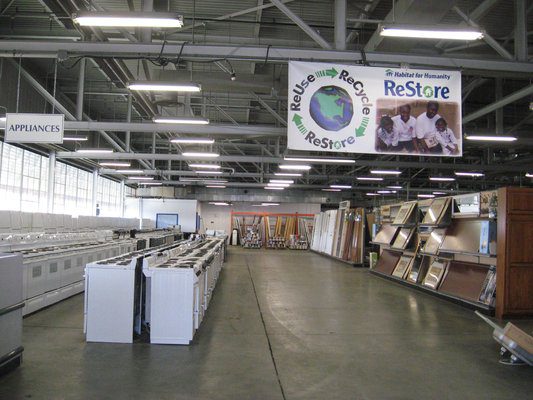
If the building materials you have are in good condition, consider donating them to Habitat for Humanity’s ReStore, which has locations in Mission Valley and Escondido. Items sold at these locations help to support Habitat for Humanity’s programs in San Diego County. Also, if you’re looking for materials to use for projects around your home, you can shop at ReStore too!

Construction Blog pic 1 (Habitat for Humanity ReStore)
Habitat for Humanity ReStore not only accepts donated home materials, you can shop as well!


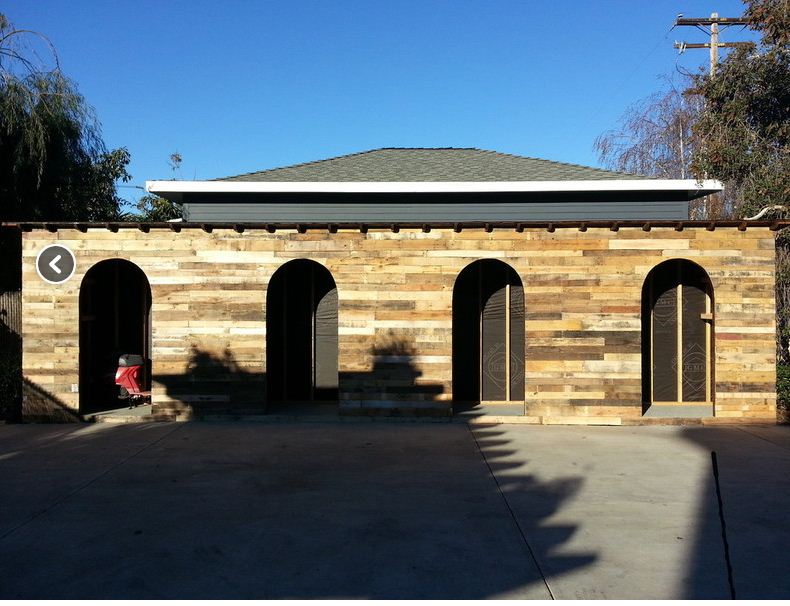
Reconstruction Warehouse is a local company that is also available to accept your reusable construction related materials and offers a place to shop for these materials. Reconstruction Warehouse builds custom furniture from reclaimed wood, and it’s quite beautiful!  Click here to find out more about their pick-up program, plus you can also find them on Etsy!

Construction Blog pic 2 (Reco Warehouse Pallet Wall)
Reconstruction Warehouse makes beautiful custom pieces out of reclaimed wood. Visit their website to learn more!


If you are lucky enough to come across some unique and/or antique items in your home remodel, Architectural Salvage is a great option to consider. They specialize in period building materials; from vintage doorknobs to stained art glass windows, and eclectic one-of-a-kind treasures. If you aren’t sure if your materials of value, give them a call and they will be able to lend a helping hand! Learn more about Architectural Salvage here.

If you would like a little help in your home remodel project, The ReUse People of America provide deconstruction services in San Diego County. They assist with deconstructing a building, rather than demolishing it. In doing so they are able to salvage up to 80% of the buildings materials. They can assist with both full and partial deconstruction, and they are a nonprofit organization which allows you to make tax-deductive donations to them by allowing them to keep your valuable deconstructed materials. More information about the ReUse People can be found here.

Lastly, other items you may end up with after a home remodel include Asphalt & Concrete, Brick/Masonry/Tile, Dirt and scrap metal. These are all items that can be recycled! You can find a location for these items, along with info on the companies listed above, by visiting WasteFreeSD.org!

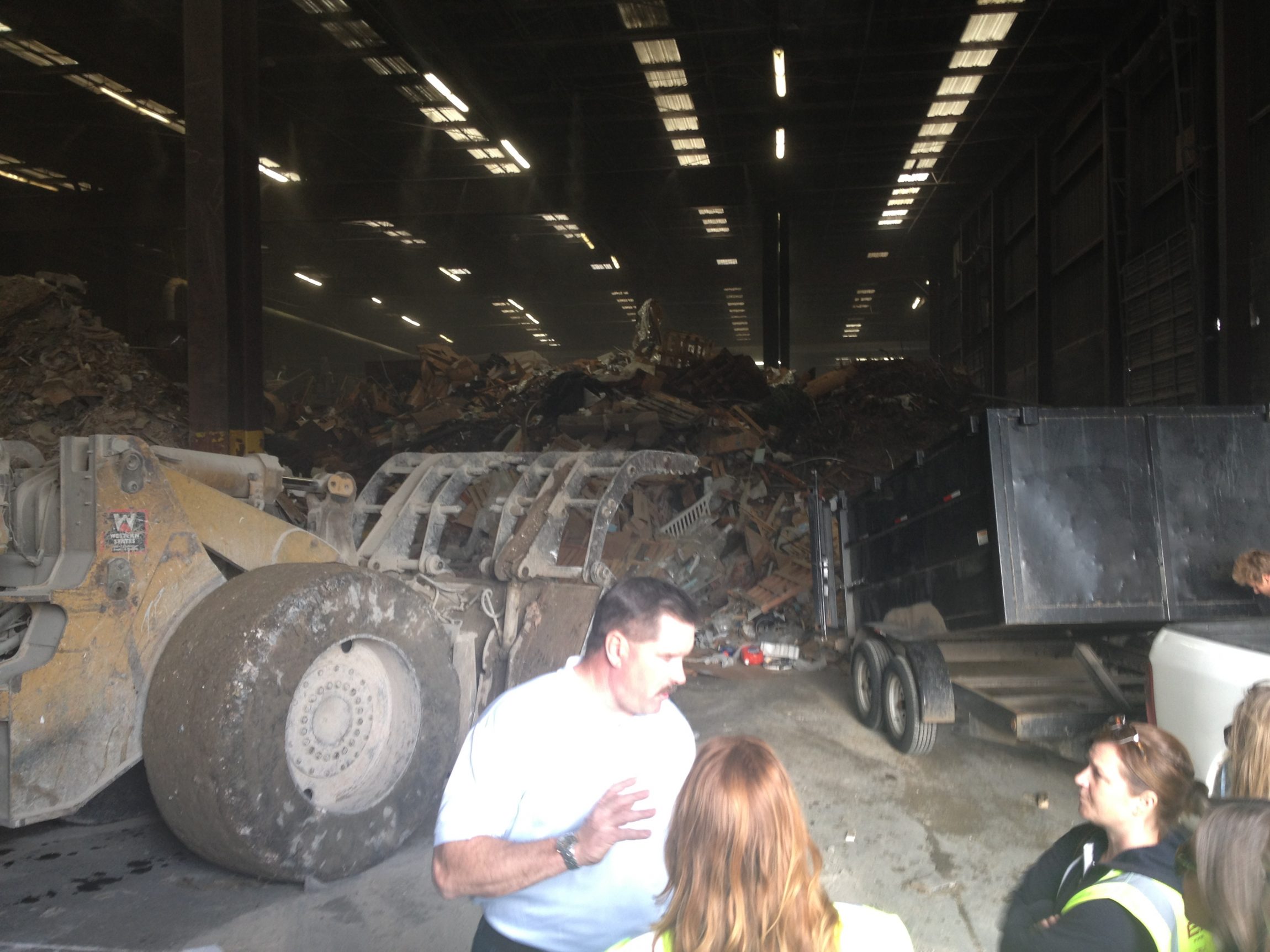
Construction Blog pic 3 (general C&D recycling)
Our friends at EDCO also operate SANCO, a recycling center in Lemon Grove specifically for construction and demolition debris. Click here to learn more!


Green Up Your Spring Cleaning!

Amanda, ILACSD Hotline ManagerAlthough the groundhog saw its shadow and predicted six more weeks of winter last month, it sure feels like spring has taken hold in San Diego! For today’s blog, Amanda, our Hotline Manager, has put together a variety of useful tips to help jumpstart your eco-friendly spring cleaning!

Some may argue that San Diego only has two seasons – summer and a slightly cooler and rainier version of summer. Nevertheless, it is officially spring! Along with visions of bunnies, tulips and warmer weather – you’ll probably think of (and dread!) spring cleaning when you hear the word “spring”.

Eco-friendly products are now more popular than ever, but how do you know if what you’re purchasing is really helping to protect the environment? The EPA is rolling out a new program this spring/summer, it is called the Safer Choice Label. These labels will not only help you choose products that are safer for our environment, they will also help you choose products that are safer for your family, children and pets. More information on the EPA’s program can be found here

Per the EPA  – “Only products that meet our Safer Choice Standard, which includes stringent human health and environmental criteria, are allowed to carry the label.”

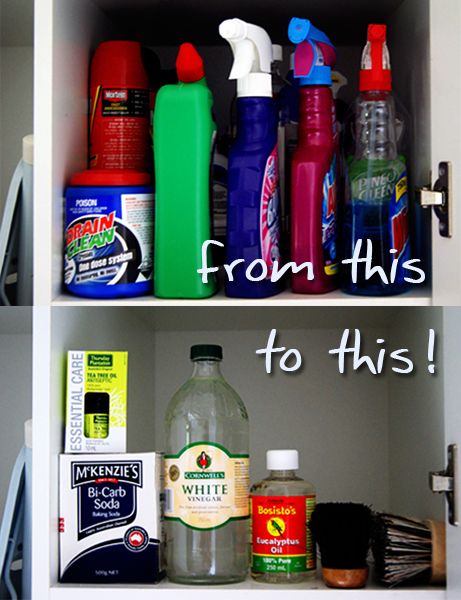
If you aren’t able to find a product with the Safer Choice Label, there are a few things you can look for when choosing an eco-friendly cleaner on your own. Here is a list of harmful ingredients to avoid:

  • Phosphates and EDTA, or ethylenediaminetetraacetic acid
  • Butyl or 2-butoxyethanol and oxalatesgreen cleaning alternatives

In place of these harsh chemicals, look for sodium citrate, sodium bicarbonate alkyl polyglycoside, isopropanol and glycerol on the ingredients list.  For more information, check out this article from Washington Post!

If you have a little more time to invest, DIY cleaning products are great alternatives as well! You can make anything from glass cleaner to furniture polish to carpet cleaner with some basic products you may already have at home. You can clean your toilet bowl with vinegar and baking soda – yes, just like the volcanoes you made as a kid! Find more tips on our Pinterest board “Clean and Green” including this great Buzzfeed article about DIY household products!

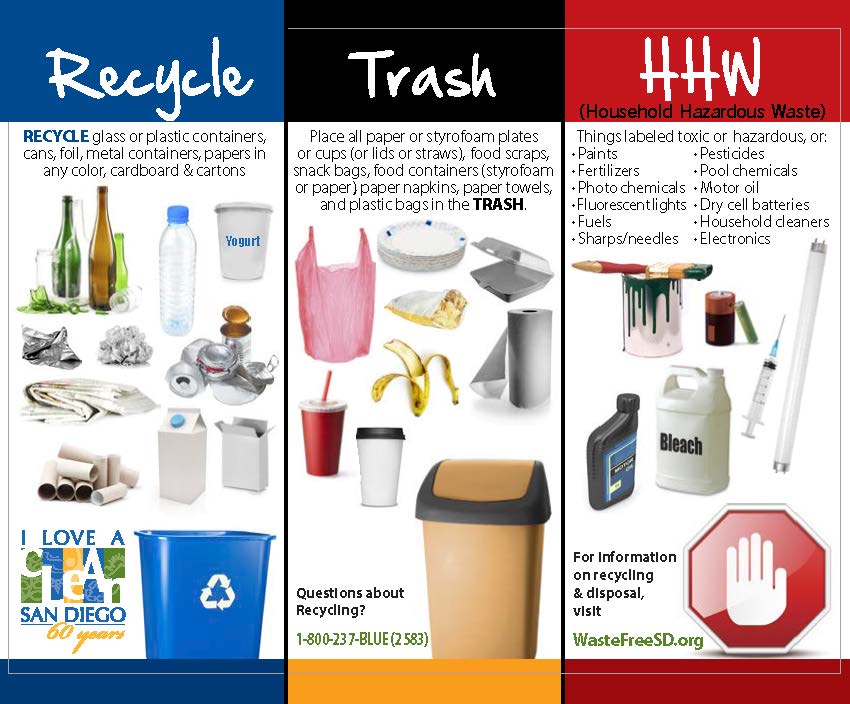
After your house is spick and span, remember to repair, recycle, donate, reuse and/or properly dispose of the excess items, putting things in their place. If you need a refresher on what is considered trash, recyclable, and household hazardous waste turn to www.WasteFreeSD.org! Our database also has lots of information about donation and recycling centers to help you get rid of unwanted items!

Find this handy resource on wastefreesd.org!
Find this handy resource on WasteFreeSD.org!


ILACSD Kicks Off America Recycles Day Campaign!

Today’s blog comes from our Hotline Program Assistant, Barbara and Hotline Manager, Amanda! Our hotline team is gearing up for America Recycles Day and they want to make sure you’re up-to-date on the latest and greatest tips for waste reduction, while having a little fun! Read more below about what you can look forward to leading up to America Recycles day.

America Recycles Day is the nation's one and only day dedicated solely to recycling, so get ready for 1 month of recycling tips and tricks from ILACSD to get you geared up for the BIG DAY!
America Recycles Day is the nation’s one and only day dedicated solely to recycling, so get ready for 1 month of recycling tips and tricks from ILACSD to get you geared up for the BIG DAY!

Mark your calendar for America Recycles Day on November 15th! This year marks the 7th Annual America Recycles Day- the only nationally-recognized day to celebrate our waste reduction milestones and to share ideas with one another. The goal of America Recycles Day, an initiative of Keep America Beautiful, is to inspire communities to recycle more and correctly all year long. On that note, starting today, I Love A Clean San Diego kicks off its own America Recycles Day campaign! From now until November 15th, ILACSD will share with you tips and tricks to help minimize your impact on local landfills!

sorted recycling
Thankfully, in SD most recyclable items can commingle in one bin! Paper, rigid plastics, glass, aluminum, and cartons.

Be sure to follow us on Facebook, Twitter, Instagram and Pinterest to receive our helpful tips. You can look forward to posts about –

  • #DIY upcycling tips – give old items a second life!
  • #TransformationTuesday
  • Recycling humor – yes, it does exist!
  • Tips for hard to recycle items

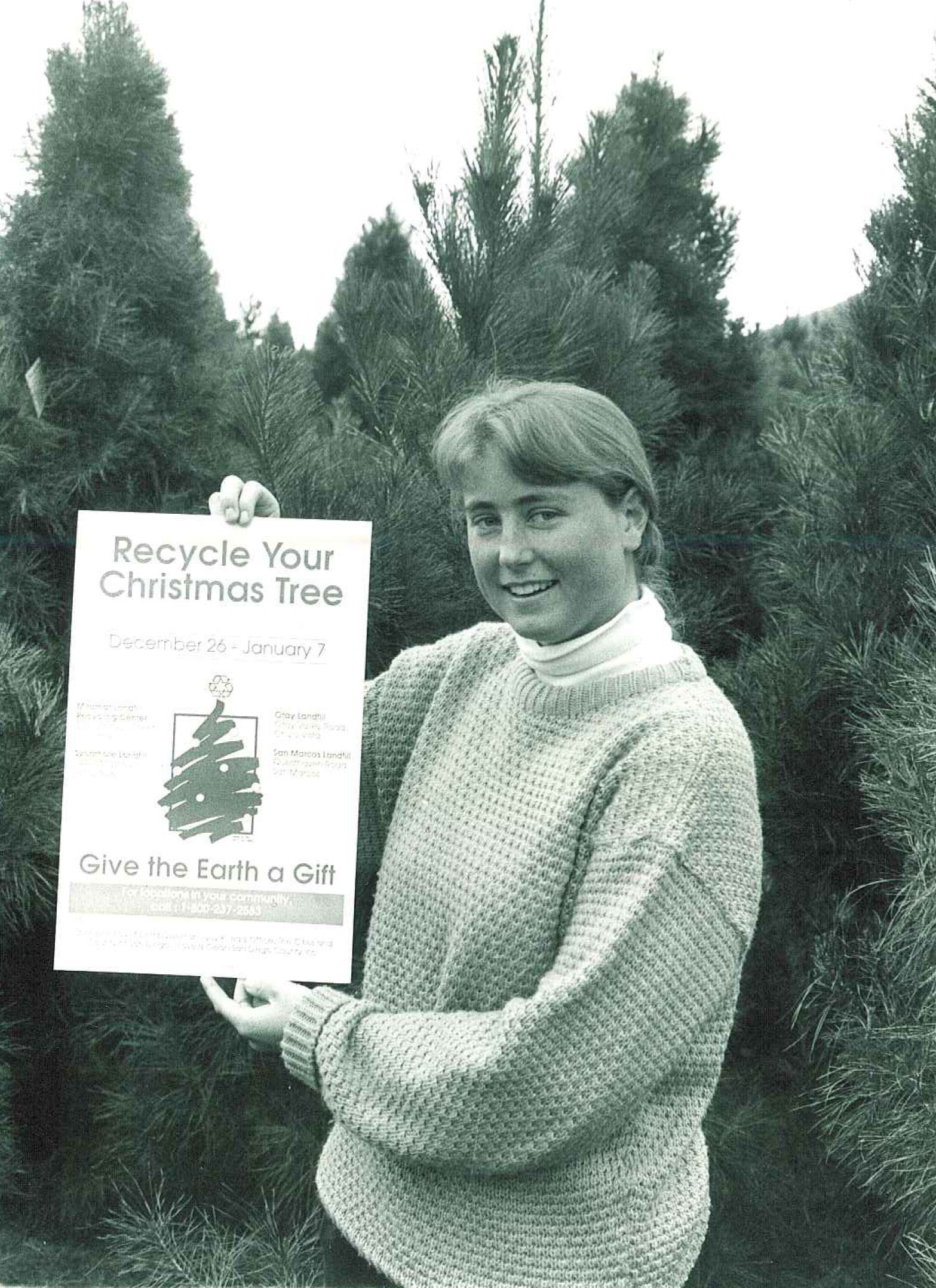
I Love A Clean San Diego started as an organization to combat San Diego’s litter problem, and has quickly evolved to address residents’ recycling needs, as well. ILACSD first started its recycling hotline in 1972, focusing on keeping thousands of Christmas trees out of landfills. Today, we continue to run our one-stop recycling resource, WasteFreeSD.org, and our newest addition, RepairSD.org!

Christmas Tree Recycling, 1972
Challenges in finding out where to recycle Christmas trees spurred ILACSD to start a recycling hotline in 1972…more than 40 years later, it’s still going strong. Give us a call today, 1-800-237-BLUE!

As San Diego moves towards a 75% diversion rate by 2020 and a zero waste goal by 2040, we are dedicated to be your go-to resource to help reach these goals. Although this may appear to be a lofty goal, ILACSD is here to help inform fellow San Diegans and ultimately, keep valuable resources out of local landfills.

More than 51,000 Americans have already taken the America Recycles Day pledge on Keep America Beautiful’s webpage. By taking it, you pledge to learn more about the materials that can be recycled, reduce your waste by recycling, and encourage others to do the same. Click here to take the pledge today!

For more information on all of your recycling, reuse, and repair needs, visit WasteFreeSD.org and RepairSD.org!


What’s Better Than Recycling? Reuse and Repair!

Today’s blog post comes from ILACSD’s Program Assistant – Educator, Bethany Edgar, who breaks down the Reuse & Repair area of San Diego’s Earth Fair 2014.  Bethany_cropped


Thanks to the efforts of the SD Reuse and Repair Network and their partners, this year’s Earth Fair in Balboa Park featured an area dedicated exclusively to the important topic of “Reduce, Reuse, Repair, and Repurpose.”  This area was the perfect opportunity for I Love A Clean San Diego to promote our new repair database, www.RepairSD.org.   People were excited to hear about this helpful new resource, commenting how difficult it can be to find information online about repairing things.  After trying out the database on a tablet at our booth, quite a few people said they were impressed with how user-friendly the database is and that they would definitely use it and help spread the word about this useful tool!

 For those of you who may have missed out on this unique and inspiring section of the fair, here are some highlights:

 SD Reuse and Repair Network

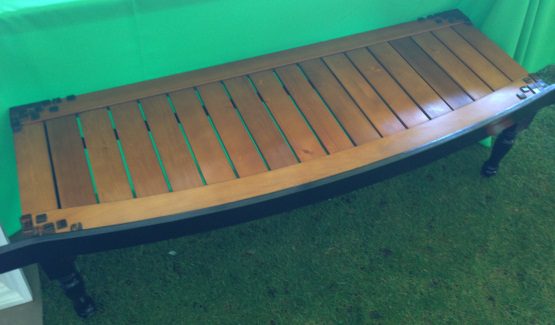
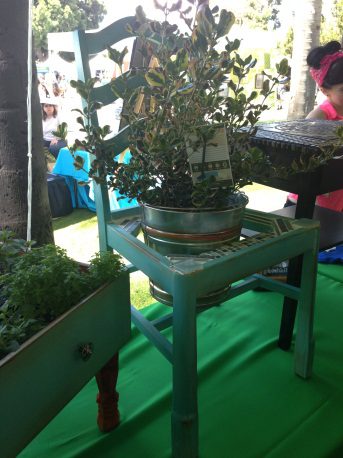
This network of local businesses, municipalities, non-profits, and interested citizens created a stage area offering workshops for fairgoers on a variety of topics including bike repair, San Diego’s zero waste plans, and furniture transformation.  In their booth they showcased a number of creatively repurposed furniture items that were rescued from a truck of leftovers from a Goodwill auction on its way to the landfill, including:

This old headboard was turned into a coffee table
A dresser drawer turned into a herb garden box and a broken chair turned into a plant stand!


Bikes del Pueblo

“Learn, fix, build, ride”

Bikes del Pueblo is a dedicated collective that seeks to empower local communities through bicycle education by offering open workshops to assist people in building, maintaining, and repairing their bikes.  During the Earth Fair they taught several bicycle repair workshops and provided free bicycle repair manuals to fairgoers. You can find them every Saturday from 9 am to 1 pm at the City Heights Farmer’s Market where they set up a mini-shop to walk people through the process of fixing their own bikes.


Boxed Green

“Cheap, gently used boxes near you”

Boxed Green works to reuse cardboard boxes by connecting San Diegans who need boxes with local retailers who have boxes to spare.  On Boxed Green’s user-friendly website, San Diegans can choose a nearby retailer, purchase boxes online for just $1 per box, then pick up the gently used boxes at their convenience directly from the retailer. This unique service saves trees and saves customers time and money when looking for moving boxes.  Plus, a portion of all sales is donated to eco-focused non-profits!


Knife Savers

“Lost your edge? We can get it back for you!”

Jim Green, owner and proprietor of Knife Savers, scours thrift stores and swap meets for high quality old knives that need repair and then sells the refurbished knives at reasonable prices, thereby keeping precious resources out of our landfills and providing a valuable service to the community. Contact Jim at jimg@knifesavers.com or (619) 846-6526


reInterpret

“materials for art & learning”

Judith Toepel has created this innovative non-profit as a community building resource for clean, usable materials that may have been considered waste.  reInterpret collaborates with schools, teachers, artists, and businesses on the topic of sustainability, industry, arts and education.  They offer teacher workshops to inspire the use of recycled materials to aid in learning math, science, language, and creative arts as a means of meeting the Common Core Standards.


Of course, if you are ever looking for repurpose ideas, you can always check out our Pinterest page, or if you need a place to repair items, look no further than www.RepairSD.org.

Plastic Bags. Are they recyclable?

Our Hotline Assistant Barbara Lopez breaks down plastic bag recycling. BLopez_team

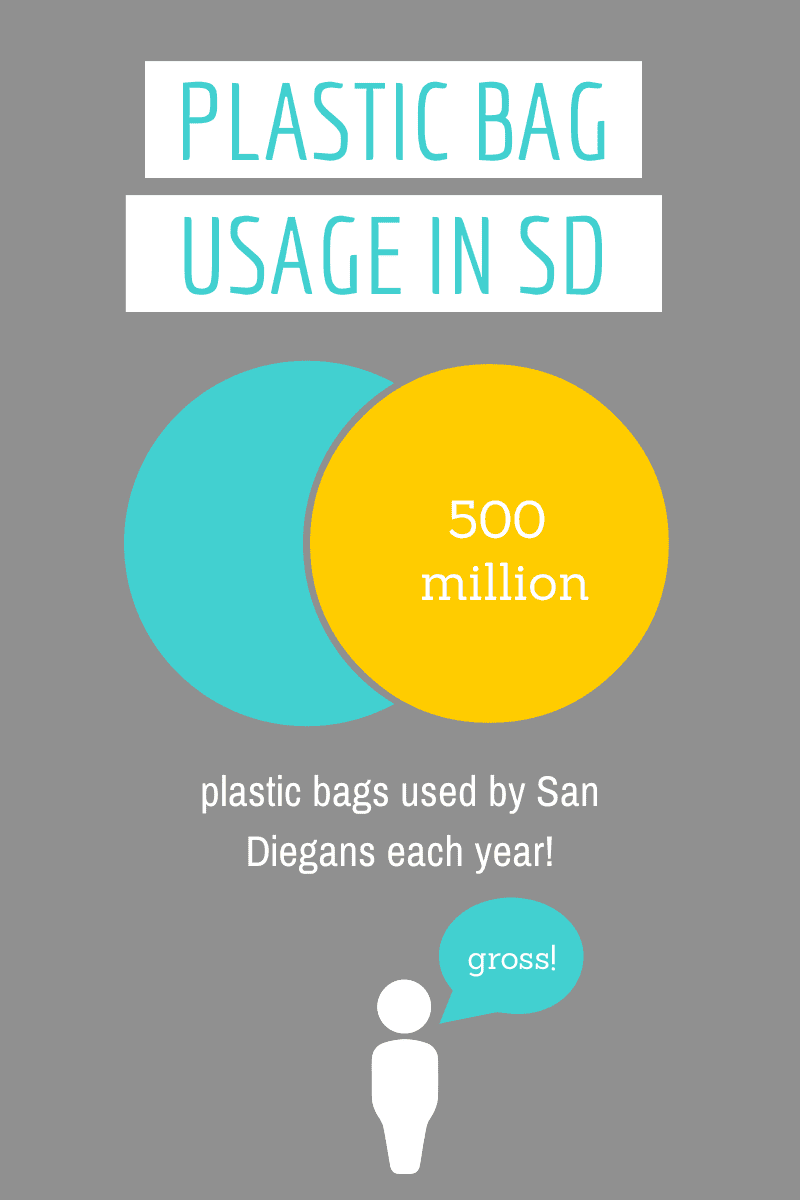
Did you know that San Diego uses 500 million plastic bags every year? And what’s even more shocking…less than 3% of plastic bags are recycled in California. While there are lots of discussions regarding plastic bag bans and ordinances, until we can cut down on our plastic bag usage, let’s talk more about recycling them!

Plastic bag usage

Some background about bans:

There has been much debate recently, both locally and at the state level, regarding plastic bag bans. At the state level, State Senator Alex Padilla is looking to reintroduce legislation that would keep grocery stores and pharmacies from providing customers with single-use plastic bags by July 1, 2015. If this legislation passes, it would make California the first state in the country to ban plastic bags. Locally, San Diego City Council is also looking to vote on a citywide single use plastic bag ordinance later this year. Supporters of such bills argue too many plastic bags end up as litter or take up space in landfills since few of them are recycled. Of the 14 billion plastic bags that Californians use per year, very few of those are actually recycled. Instead, they end up in landfills or as litter on the side of roads and on beaches! But that isn’t to say that there is no market out there for plastic bags.

The skinny on recycling plastic bags:

Many of you may already know that plastic bags do not belong in our curbside recycling. However, we are often asked why we can’t simply put plastic bags in our bins at home. The answer: recycling facilities are set up to separate rigid plastics from other recyclables- paper, aluminum cans, and glass. Current recycling machinery is just not set up to sort plastic bags and film; they would just get tangled in the equipment.

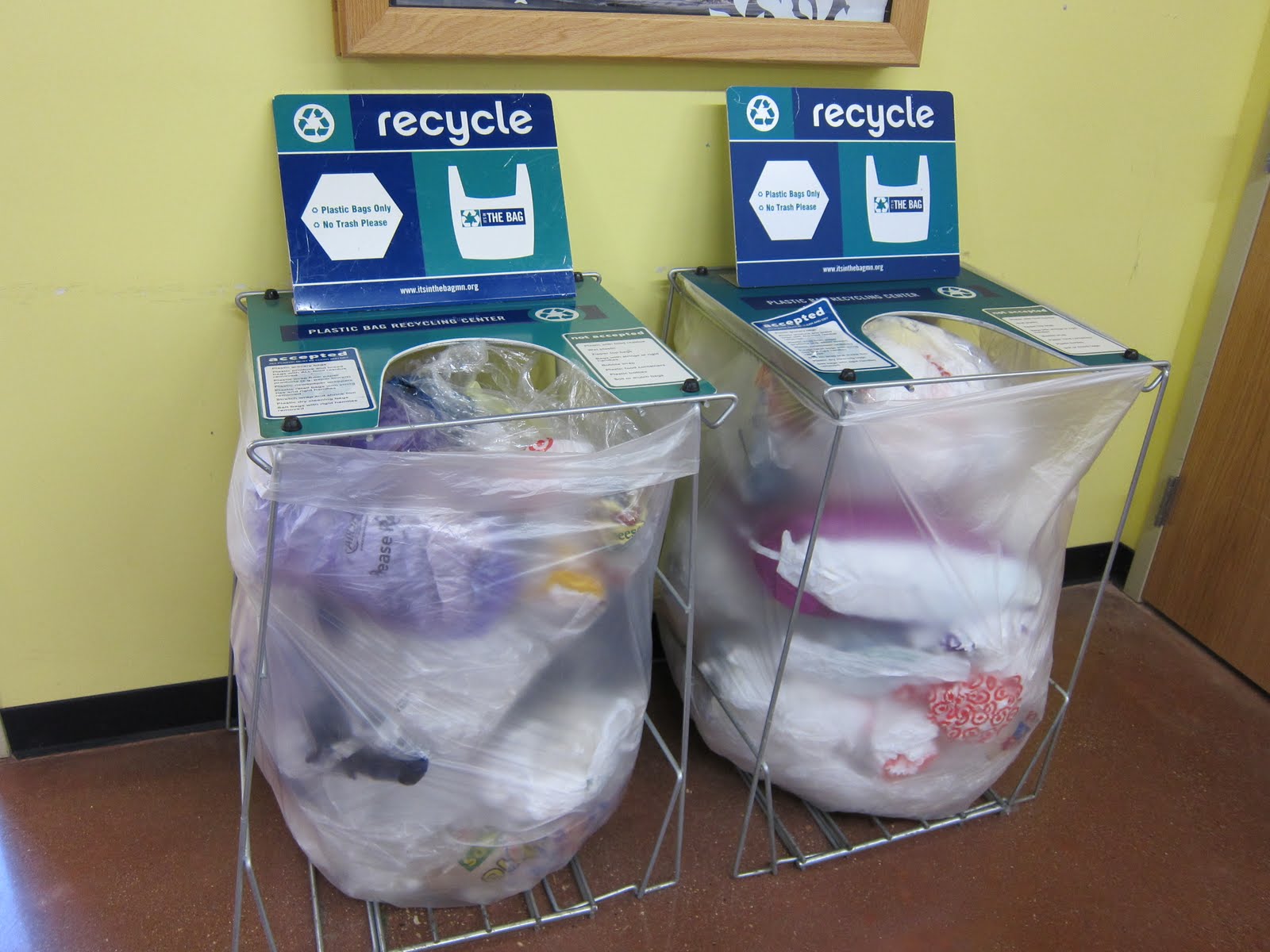
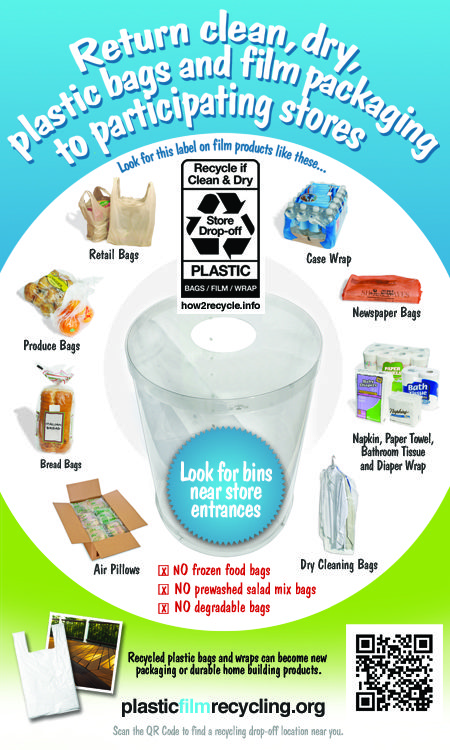
Although plastic bags cannot be placed in curbside recycling bins, they can be recycled. Many grocery stores collect plastic bags, usually placing bins near the front entrance of the store. In fact, many of these stores also take other types of plastic film, such as produce bags and plastic packaging film. Returned plastic bags are then sent to a recycling processor and are turned into different plastic products such as composite lumber, pallets, crates, and pipes.

plastic_bag_bins

If you need help finding a location to take your plastic bags, check out our handy recycling database, www.WasteFreeSD.org!

plastic_film_flyer

Repair…Don’t Replace! Tips for Items to Repair this Fall

After months of hard work, I Love A Clean San Diego is excited to present its brand-new REPAIR database, providing referrals to all the places in town that repair…well…almost everything! Check out our new site and let us know what you think! 

While we have been operating our recycling database, WasteFreeSD.org since 2007, we now have an exciting new addition to that resource, RepairSD.org, which will allow you to search for locations to repair items that you may have originally thought simply trash. Repairing items you already have rather than buying new ones will keep valuable resources out of our landfills, and maybe even help save some of your hard earned money!

Fall is already upon us (where did summer go?!), and as you prepare for our own version of winter weather here in San Diego, we encourage you to consider your options for repairing those old or damaged items you’ve got around the house before you run out and buy brand new ones. Here are some items that you may want to think about repairing instead of replacing…

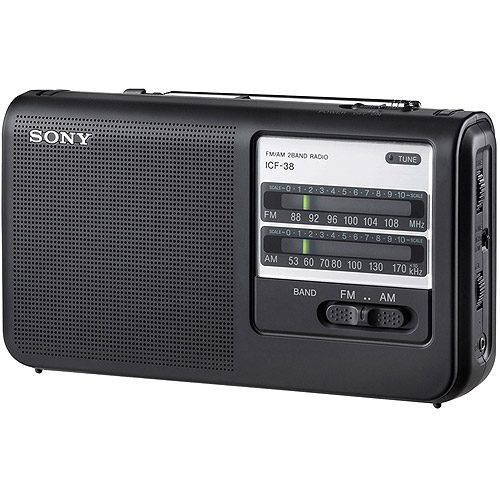
As we all know too well, October is fire season in San Diego County. Ready San Diego recommends having a battery powered radio as part of your family’s emergency supply kit. Get that old battery powered radio that’s been collecting dust in your closet fixed up; you’ll be helping the environment and helping your family by being prepared for any emergencies that may come your way.

Repair your radio, don't replace it!
Repair your radio, don’t replace it!

Cooler temperatures outside mean you’ll definitely need that wetsuit when heading out into the chilly Pacific Ocean; find a shop that can repair your old wetsuit using the new RepairSD.org.  If your wetsuit is truly beyond repair, don’t trash it! You can get a little creative and turn your old one into a can koozie or even a laptop bag.

Try a DIY idea to re-purpose something that is beyond repair!

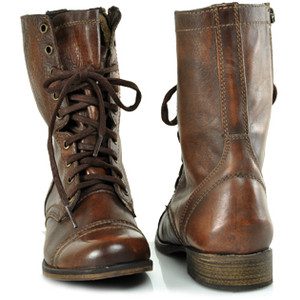
As you fashionistas out there know, it’s about time to swap out those summer sandals for some winter-ready boots! Did you pull your favorite pair out of the closet only to find them looking a little worn? No need to shell out your hard-earned cash to buy new ones; RepairSD.org has plenty of shoe repair location listings to help you get yours looking good as new in no time.

Boots
Ever heard of shabby chic?

Less sunlight in the evenings means more time spent at home. Have a guitar your old roommate left behind? Are your notes more sour than sweet? Use RepairSD.org to find a shop near you to repair your guitar, and impress your friends with your resourcefulness AND your musical talent!

Guitar_1
Sing the 4 R’s on your repaired guitar!

Go ahead and check it out for yourself today: visit the new RepairSD.org  to locate a business that can repair anything from vacuums to furniture to game consoles. And feel good about doing your part to reduce waste!

Test Your Recycling Trivia!

Today’s blog post comes from our Development and Marketing Coordinator, Anna Fadem. Anna is currently in school and wants to make other people take tests…servlet

We know you want to keep America beautiful. Hey, so do we!  Luckily, we here at I Love A Clean San Diego are an affiliate of a national organization called… Keep America Beautiful!  We have adopted two of KAB’s programs and do them locally – the cigarette litter prevention program (which has decreased those butts by 55%) and America Recycles Day.  Keep America Beautiful recently released some really interesting information on how much Americans recycle and how we can up these rates.  Your recycled items can be turned into all sorts of cool stuff:

  • Recycled steel cans can become a bicycle
  • Recycled plastic milk bottles can become an outdoor bench
  • Recycled plastic water bottles can become a pair of blue jeans
  • A cereal box can become a board game (Life cereal=Life board game?)
  • Aluminum cans can become new aluminum cans endlessly and are infinitely recyclable!

    A milk bottle can be recycled into a park bench (cat not included)
    A milk bottle can be recycled into a park bench (cat not included)

KAB provided us with some good statistics on recycling.  So let’s get your recycling trivia up to snuff! School’s out, but here’s a fun quiz where everyone gets an A (because I Love A Clean San Diego loves its readers! And because the answers are at the end of this post).

Ready Set… Go!

1. How much trash does the average American generate per day?
a. 1.3 llbs
b. 2.7 lbs
c. 4.4 lbs
2. How much of that trash is recycled or composted?
a. 0.4 lbs
b. 1.5 lbs
c. 2.1 lbs
3. How much trash does the US produce each year?
a. 57 million tons
b. 176 million tons
c. 250 million tons
4. What percentage of Americans say they are “avid recyclers” (our favorite kind!)
a. 18%
b. 38%
c. 59%
5. Why do Americans say they don’t recycle as much as they should?
a. Lack of access
b. Convenience
c. Awareness/education
d. All of the above
6. So what can we do to get the message out there?
a. Mobilize individual ownership
b. Inspire an emotional connection
c. Learn what you can recycle at WasteFreeSD.org
d. Check out this really funny (really, our staff LOVES this video) PSA from KAB
e. All of the above

Let’s see how ya did! Answers:  c, b, c, b, d, d

download

We appreciate you for all the work you do to keep American beautiful!  For more tips on what you can recycle and where, check out WasteFreeSD.org.

Keeping SD Waste Free

More than 175,000 pounds of trash were collected at this year’s 91 Creek to Bay cleanup sites located throughout San Diego County. The objects most commonly found at cleanups include furniture, shopping carts, and broken glass. However, some items found at cleanup sites can pose an even more serious threat to our local environment. Tires, electronics, paint and motor oil were hazardous items most often found at Creek to Bay this year. These are also the items that visitors to our recycling database, WasteFreeSD.org, and callers to our recycling hotline most commonly request disposal information for.  These items cannot be disposed of in your regular trash, so unfortunately it’s not surprising that they are also commonly found dumped in our canyons, streets, and waterways.

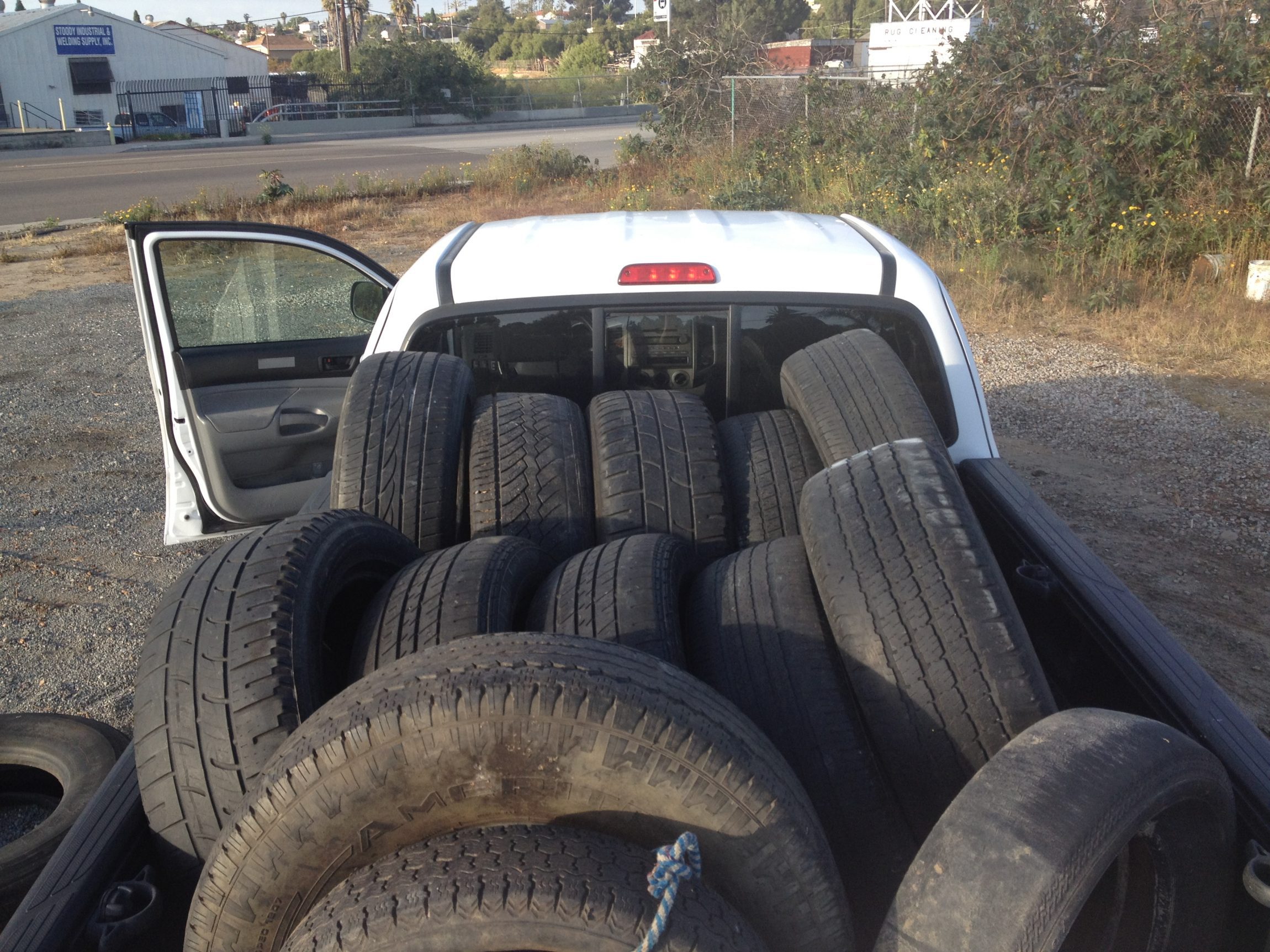
When a tire is illegally dumped in a canyon or even on the side of the road, it can release chemicals as it breaks down that present a fire risk. With our dry Southern California climate this can be extremely dangerous. Also a tire that is abandoned can hold water, which can create a breeding ground for mosquitoes and other disease carrying pests. To avoid these issues, take your tires to the proper place for recycling. Tires can most often be taken to a tire retail store, with a nominal fee. Your local jurisdictions will sometimes hold free collection events where you can drop off your waste tires for recycling with no charge, check with your jurisdiction or visit WasteFreeSD.org to see if there’s an event near you.

Tires collected for recycling

Electronic waste (or e-waste) contains heavy metals; these heavy metals are exposed to us as electronics that are illegally dumped begin to break down. Exposure to heavy metals can have detrimental effects to our health; reduced growth and development, cancer, organ damage and nervous system damage can occur due to exposure to heavy metals. E-waste can easily be disposed of for free at an e-waste collection event or at a household hazardous waste collection facility. There are also recycling centers located in San Diego that accept e-waste during their regular business hours, but fees may apply so be sure to call ahead to make sure you’re well informed.

Harsh chemicals are the solvents used in oil based paint; the main solvent used in latex based paint is water. Latex based paint is less harmful to the environment and your health than oil-based paint, and should be used as a substitute whenever possible.  However if either type of paint is poured down a storm drain or sewer system, they have the potential to pollute our groundwater, rivers, and streams. Latex based paint can now be disposed of at many local paint stores that are now participating in a state wide program called Paint Care. There a few conditions the paint must meet in order to be disposed of through the Paint Care program, check out WasteFreeSD.org for more information. Oil based paint, as well as latex based paint, can be disposed of for free at a household hazardous waste collection facility. The site you can utilize is based on where you live, so be sure to locate your assigned site on WasteFreeSD.org.

Just one gallon of motor oil can pollute one million gallons of water or an acre of soil an inch deep.  Motor oil is toxic to animals and humans if ingested, and it can coat the body of aquatic animals and birds. Motor oil can be conveniently be disposed of at many different auto part stores, without a charge and upon request you can even receive money back! Certified Used Oil Collection Centers will take used motor oil from the public and will pay you 40¢ a gallon, find one by visiting WasteFreeSD.org. (However if your motor oil is contaminated with any other substances, such as water, it would need to go to a household hazardous waste collection facility).

Log on to www.WasteFreeSD.org or call our bilingual recycling hotline at 1-800-237-BLUE to find a recycling center or disposal site near you. We thank you in advance for doing your part to preserve our local environment!