Join ILACSD as we team up with the City of Chula Vista to bring you a Zero Waste Workshop focused on organics! On Saturday, January 26, 2019, we will be hosting the Save Your Scraps Workshop from 10:00 AM – 12:00 PM at the Montevalle Community Center located at 840 Duncan Ranch Road, Chula Vista, CA 91914. The workshop is complimentary and open to the public!
Come by and learn how to keep organics out of the landfill by shopping smart, storing food properly, and composting your scraps. We will also cover water conservation topics, such as ocean-friendly gardens and laundry-to-landscape systems. Join us for this fun, informative workshop and participate in one of the hands-on activities including a ‘make and take’ project and an eco-friendly kids’ craft.
In addition, attendees can bring in gently used items you were planning to donate and participate in the Swap ‘n’ Shop! Participants can exchange or donate those items giving them a second life and keeping them out of the landfill. Some example items that have been brought to past workshops include clothes, nail polish, stereos, pet supplies, books, CD’s, picture frames, kitchenware, Halloween costumes, etc.
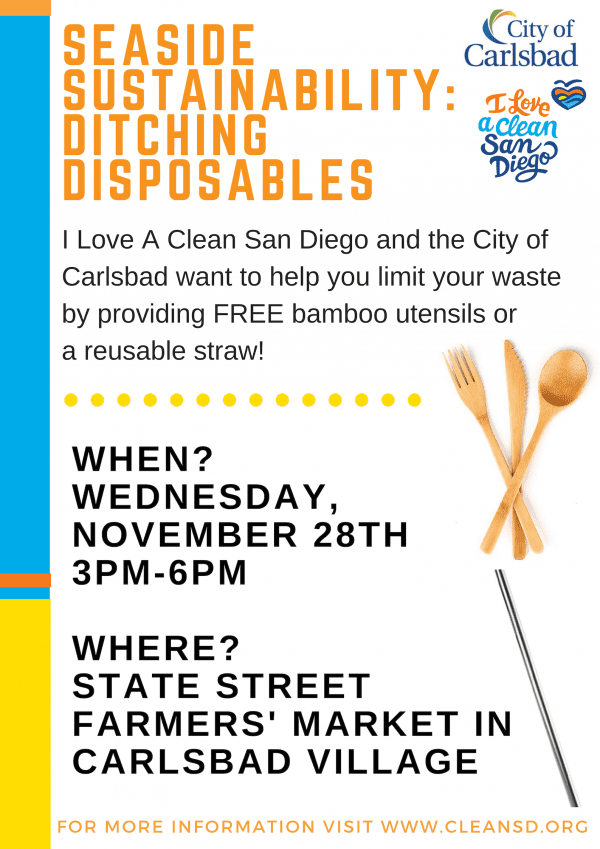
Join ILACSD as we team up with the City of Carlsbad once again to bring you Seaside Sustainability: Ditching Disposables on Wednesday, November 28th from 3:00 PM – 6:00 PM at the State Street Farmers Market in Carlsbad Village located on State Street between Carlsbad Village Drive and Grand Avenue! We are excited to help spread the word about sustainable practices and make it easier for residents to implement these actions in their everyday lives.
ILACSD will be talking with community members about minimizing their consumption of single-use plastics, reducing food waste, and building sustainable habits. Stop by our booth to pick up a FREE set of bamboo utensils or a stainless steel straw! Put your knowledge into action by utilizing your new reusable utensils while enjoying a bite to eat from one of the Farmers Market vendors!
Join ILACSD as we team up with the City of Chula Vista to bring you a Zero Waste Workshop focused on organics! On Saturday, November 3, 2018, we will be hosting the Save Your Scraps Workshop from 10:00 AM – 12:00 PM at the Otay Recreation Center located at 3554 Main Street, Chula Vista, CA 91911. The workshop is complimentary and open to the public!
Come by and learn how to keep organics out of the landfill by shopping smart, storing food properly, and composting your scraps. We will also cover water conservation topics, such as ocean-friendly gardens and laundry-to-landscape systems. Join us for this fun, informative workshop and participate in one of the hands-on activities including a ‘make and take’ project and an eco-friendly kids’ craft.
In addition, attendees can bring in gently used items you were planning to donate and participate in the Swap ‘n’ Shop! Participants can exchange or donate those items giving them a second life and keeping them out of the landfill. Some example items that have been brought to past workshops include clothes, nail polish, stereos, pet supplies, books, CD’s, picture frames, kitchenware, Halloween costumes, etc.
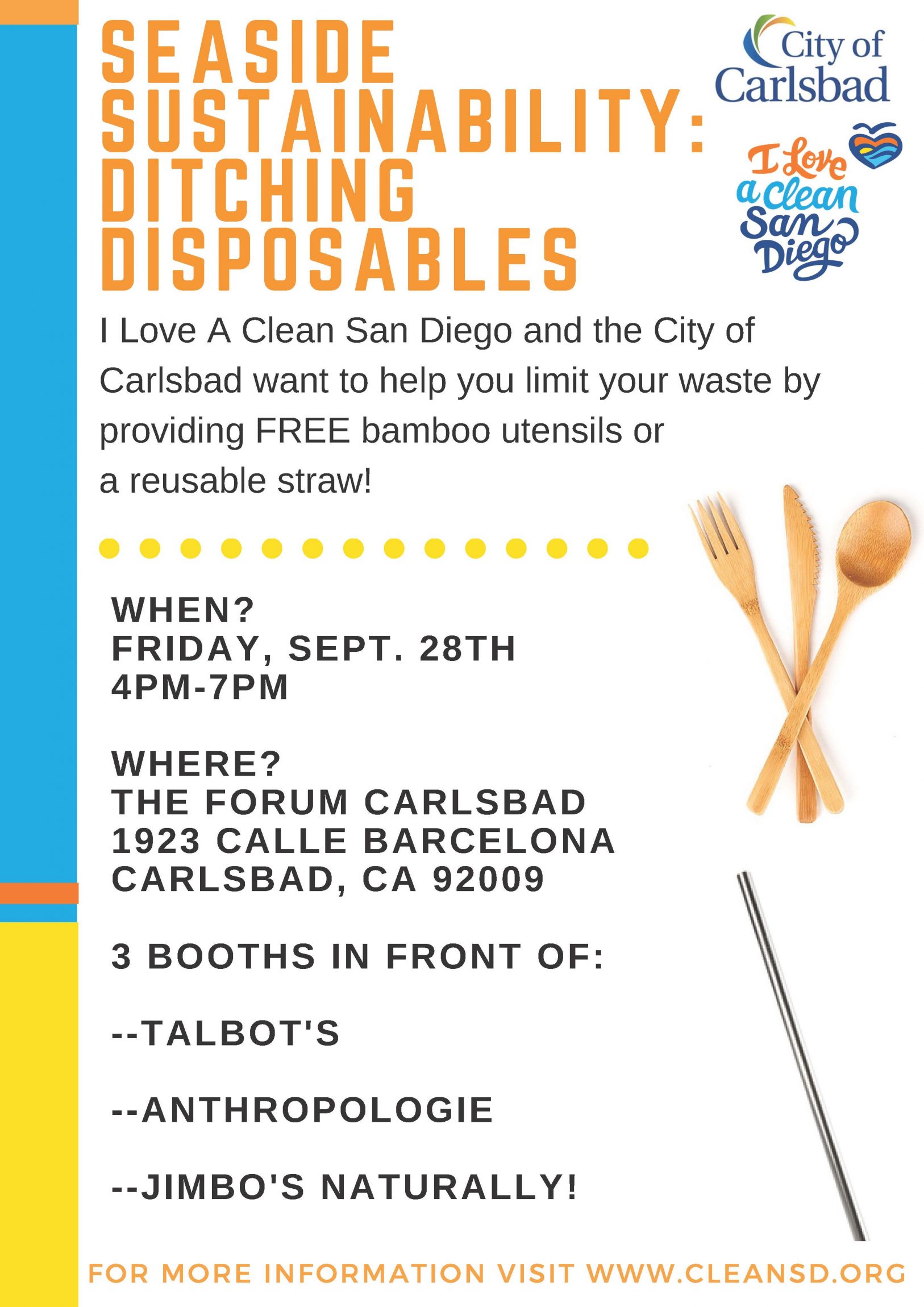
Join ILACSD as we team up with the City of Carlsbad to bring you Seaside Sustainability: Ditching Disposables on Friday, September 28, 2018 from 4:00 PM – 7:00 PM! We are excited to help spread the word about sustainable practices and make it easier for residents to implement these actions in their everyday lives.
At three locations inside The Forum Carlsbad, ILACSD will be talking with community members about minimizing their consumption of single-use plastics, reducing food waste, and building sustainable habits. Stop by one of our three booths to pick up a FREE set of bamboo utensils or a stainless steel straw! If you get hungry while shopping, enjoy a bite to eat at one of the numerous cafes or restaurant throughout the Forum, and put your knowledge into action by utilizing your new reusable utensils!
Come find the ILACSD booth outside of these three locations and grab your reusable bamboo utensils or stainless steel straw at one of the following locations:
Talbot’s | 1925 Calle Barcelona, Suite 166
Anthropologie | 1925 Calle Barcelona, Suite 158
Jimbo’s Naturally | 1923 Calle Barcelona, Suite 149
Join I Love A Clean San Diego and the City of Chula Vista for an organics workshop on Saturday, September 29, 2018 from 10:00 AM to 12:00 PM at Memorial Park, adjacent to the Parkway Community Center located at 373 Park Way, Chula Vista, CA 91910. The event is completely FREE and open to the public.
Come by and learn how to keep organics out of the landfill by shopping smart, storing food properly, and composting your scraps. We will also cover water conservation topics, such as ocean-friendly gardens and laundry-to-landscape systems. There will also be hands-on activities and an eco-kids craft corner!
Registration is full for this event. Please check out our events calendar to find another upcoming workshop!
Join ILACSD as we team up with the City of Vista to bring you a Zero Waste 101 Workshop focused on organics! On Saturday, August 25, 2018, we will be hosting the Save Your Scraps Workshop from 10:00 AM – 12:00 PM at the Alta Vista Botanical Gardens located at 1270 Vale Terrace Drive, Vista, CA 92084. The workshop is complimentary and open to the public!
Come by and learn how to keep organics out of the landfill by shopping smart, storing food properly, and composting your scraps. We will also cover water conservation topics, such as ocean-friendly gardens and laundry-to-landscape systems. Visit educational booths, participate in one of the hands-on activities, and bring in gently used items you were planning to donate and participate in the Swap ‘n’ Shop! Swap ‘n’ Shop participants can exchange or donate those items giving them a second life and keeping them out of the landfill. Activities include a ‘make and take’ food waste project and an eco-friendly kids’ craft.
Registration is full for this event. Please check out our events calendar to find another upcoming workshop!
Today’s blog post was written by High Tech Middle Media Arts 6th grader, Kaiya. Kaiya’s class studied the impact that humans have on our local water resources and their contribution to food waste on a global scale. The students looked into water and food waste issues locally, statewide, nationwide and globally. The class hopes to educate the local community about waste and pollution issues and inspire change.
Have you ever wondered how expiration dates work? Wondered how important they are? Well, I certainly did. So to those who still do, let me explain.
Let’s start with a short history lesson. Expiration dates were introduced in 1950 at a store called Marks & Spencers. It wasn’t until 1970 when “Sell By” and “Best By” tags were added to most supermarkets. Now that our history lesson has concluded, let’s get to the interesting stuff!
Expiration dates aren’t supposed to show a fruit’s edibility, but the fruit’s “peak quality”; not when it’s expired. It’s because of this common misconception that people discard perfectly good food! So actually, expiration dates are optional. They are suggestions meant to assist. It’s more important to know your food and to simply throw it out because of the expiration date.
Americans discontinued making their food, but still wanted to be informed about how it was made. This caused the creation of expiration dates. The facilities did tests on fruit, seeing how long they usually lasted. The most common result would become its “expiration date.”
We are wasting food.
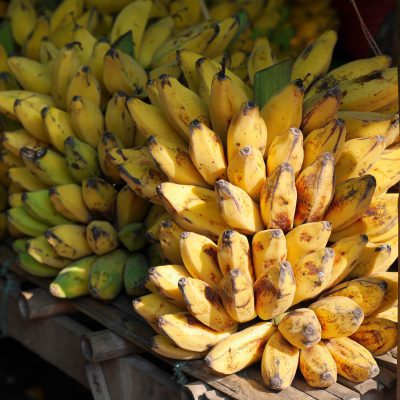
When shopping for fruits, people are usually attracted to the apple that has the least bruises, causing an unnecessary amount of food waste. The food that’s wasted converts to a brown lump and produces a white puss. That’s mold. Mold should be thrown out, but if it’s just brown, it should be fine. Brown spots on fruit are sugar spots, meaning they amplify the flavor. They are perfectly safe to consume, but if it’s a blob of brown, you should throw it away. These spots are discovered on bananas when they continue to ripen, due to ethylene. Supermarkets tend to throw away brown fruit because it doesn’t sell. Food is wasted for no reason.
Brown fruit is oxidized fruit, meaning that air made them turn brown. Brown fruit is still edible! Apples turn brown in recently bitten parts. The brown on parts on apples reduce taste, but it can still be consumed.
Is there anything I shouldn’t eat when expired? Yes. Infant formula loses its nutrients passed its expiration date. Expired deli meats give you food poisoning, as well as eggs. Dairy gets bacteria buildup when it expires, so it also shouldn’t be consumed.
What moldy food can I eat?
Cheese increases in value when moldy. It tastes more flavorful, which makes a higher profit when sold. However, only specific types of cheese are edible with mold. Cheddar, Colby, Parmesan, and Swiss should be fine to consume. Other soft cheeses like cottage cheese, cream cheese, and ricotta cheese with mold should be discarded.
About the Author
Kaiya is a 6th grader at HTMMA. Her blog was democratically selected by her peers to be featured on I Love A Clean San Diego’s website. Her work will be exhibited alongside other students at a community beach cleanup coordinated by the HTMMA students.
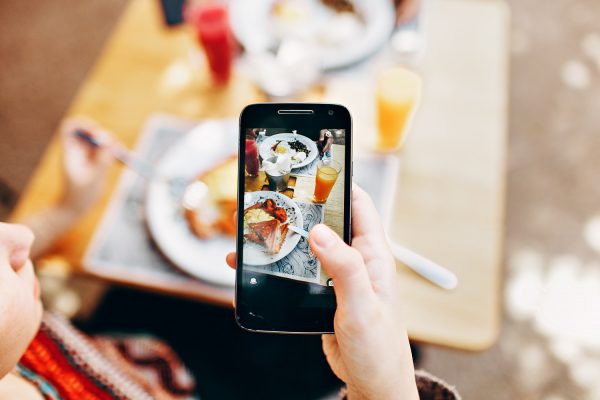
Open your Instagram account and click on the explore page, it won’t take too long for most of us to find images of vibrant, crunchy, creamy, steamy, buttered, drizzled, crystalized, smoky, aged, boiled, briny, cheesy, absolutely delightful images of what is on their plate! These days, foodie culture dominates social feeds. The farm to table movement is bigger than ever. We have never been so in tune and in love with what we are eating until now.
Documenting meals for online followers is a normal habit for foodies.
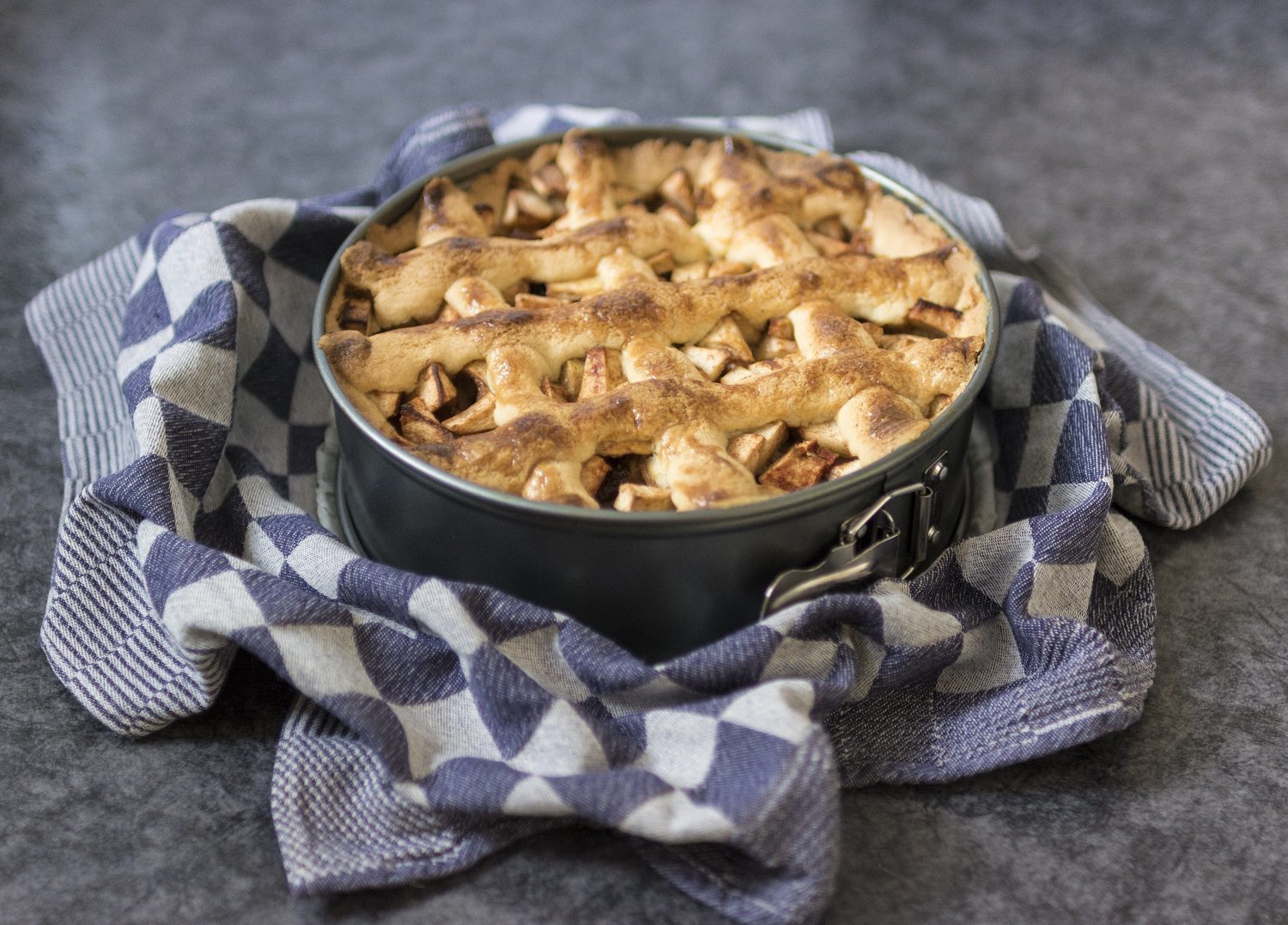
So with that, let’s imagine you just spent all afternoon preparing a pie for dinner guests. You’re are so pleased with the steaming, flaky pie that sits on the counter in front of you. It’s so aromatic and intense that you can recognize each type of fruit in the medley that is making your senses come alive! You cut it into 10 slices, making sure each one is piled high with perfectly candied pastry dough. You are almost ready to serve it to your guests, but before you even unveil it at the dinner table, before you even leave the kitchen, you scrape 4 pieces of pie directly into the garbage. It hits the trash can with a miserable thud, the amber colored gelatin is sliding down the plastic bag and the slices look more like your cat’s food than a guest-worthy dessert. While this might seem like an insane thing to do, it is a realistic picture of the amount of food being wasted in our society.
Sorry, what was I talking about? I am only thinking about pie now…
In the United States, 40% of food goes uneaten. The average Californian throws away 24 pounds of food a month.How can it be that in a time when we are so infatuated with our food, that we are wasting so much? Food waste occurs at many levels – at the farm, at the store, in our fridges, and off our plates. Farmers who grow produce that is considered too ugly, too small, too large, too uneven, or a little colorless are pushed out of the marketplace due to the retailer’s demand for consistency. Food is also lost in transportation. Food spoils in the store and in our refrigerators, but it’s not just food we are discarding without a second thought. We are squandering all of the resources that go into the production and distribution of food! Nationally, 80% of our water, 10% of our energy, and 40% of our land is utilized to grow our food. Despite all of the resources we put into the production of food, it is the leading material in our landfills! In the Miramar Landfill, 40% of the total waste is organic material that could have been mulched, composted, fed to animals, or in some cases, fed to people.
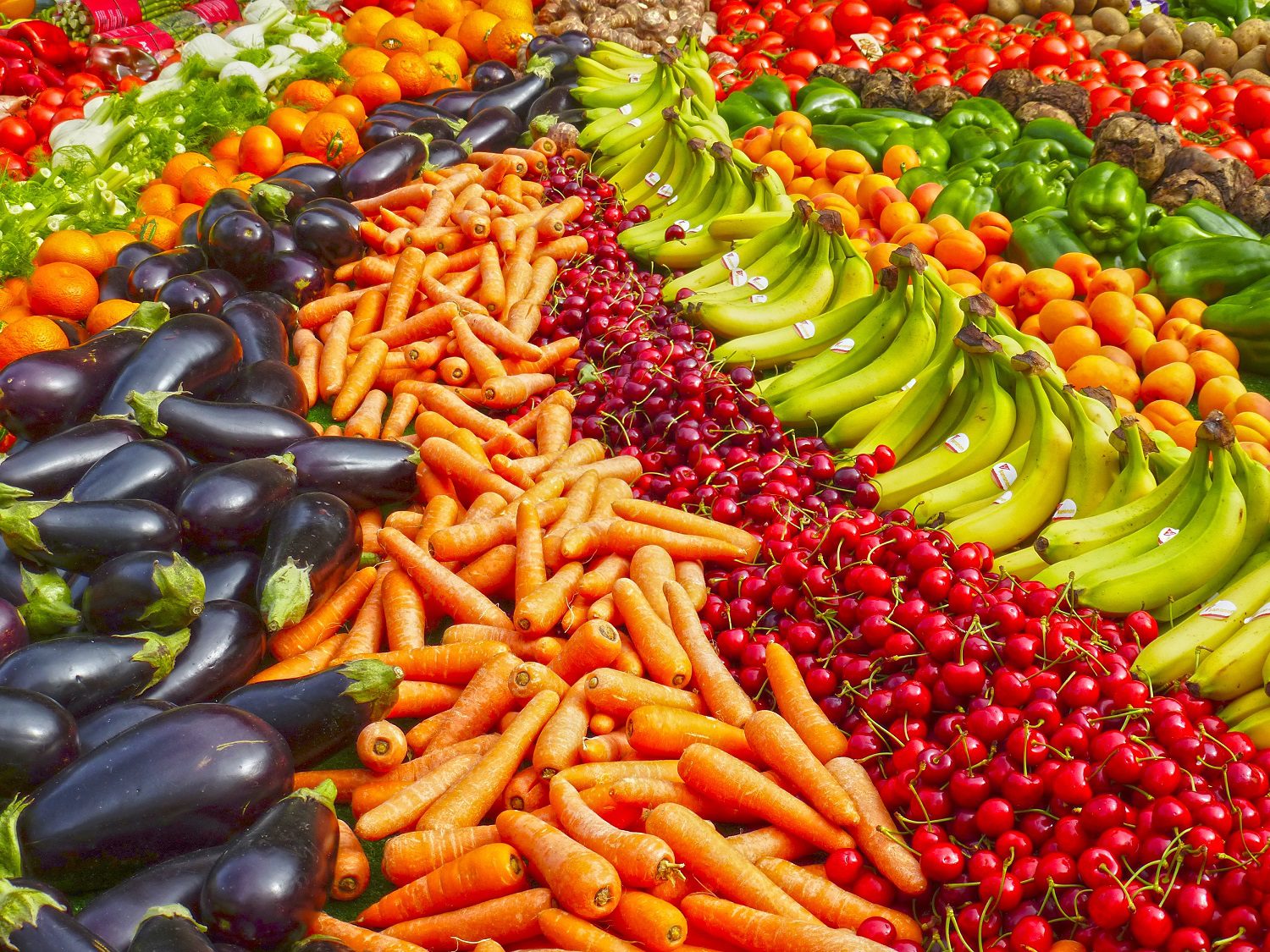
Realizing all of your food doesn’t have to be picture perfect is an easy way to prevent food from going to waste.
Our food systems are not perfect, but together each and every one of us can take a stand against food waste. Even small adjustments to our behavior can create impactful change! Here are a few simple suggestions to help you get started or continue your food waste prevention:
Shop Smart
Be prepared: create a shopping list with menus in mind to avoid impulse buys
Set a time frame: this gives you less time to buy things not on your prepared list
Know what you need: keep stock of what you have at home, note items as they run out to help create your shopping list
Be realistic: if you live alone or only need one carrot for a recipe, don’t buy a whole bag
Bulk is better: buying in bulk requires a little forethought and planning but is definitely worth it
Cut your costs: if you crunch the numbers, bulk purchases typically cost less per unit
Sensible Storage to Slow Spoiling
Practice first in, first out habits: move older products to the front of the fridge and stock unopened newer items in the back
Monitor what you throw away: throwing away half a loaf every week? Start freezing it.
Dates, not deadlines: know that expiration, best by, sell by, and use by dates, are not an exact science but merely manufacture suggestions
Leave a little room: don’t overcrowd your fridge, the air needs to circulate
Figure out your fridge’s compartments: your fridge has a crisper for a reason and the fridge door is warmer than the shelves
If you don’t know, ask: utilize the Alexa Save the Food skill to ask where and how you should store your items while unpacking groceries (like storing your asparagus cilantro, celery, carrots in water to make them last longer)
Creative Cooking
Use it up nights: designate one evening a week to focus on using up open items in your fridge
No tops or stems left behind: use every part of the produce you can – broccoli stems, beet tops, carrot tops, leave the skin on cucumbers, blend your smoothie with strawberry leaves on
Wilted doesn’t have to mean wasted: use your food up, wilted veggies can go into a stir-fry or soup, bruised fruit can be added to a smoothie or applesauce, old cheese rinds can make soups, juice pulp can be utilized numerous ways (bread, guacamole, power bites bars)
Serving, Snacking, and Sensing Satiation
Avoid over ordering: if you’re often ordering too much food, try splitting a meal with a friend or ordering smaller portions when out
Know your limit: don’t feel guilty if you don’t clean your plate as long as you save and store whatever is remaining
Leftovers tonight means lunch tomorrow: take your leftovers home or save anything you cooked but couldn’t finish (don’t forget your reusable containers for leftovers)
Smaller plate, smaller portions: we often over serve ourselves because the plate has room – a smaller plate can help you decrease the amount you dish up
I Love A Clean San Diego is partnering with SDG&E to host Healthy Communities for a Healthy Planet Workshop on Saturday, May 12, 2018, from 10:00 AM – 1:00 PM at The Jacobs Center for Neighborhood Innovation located at 404 Euclid Ave, San Diego, CA 92114. Appetizers made from rescued food will be provided by Kitchens for Good!
Learn how making small, sustainable adjustments to your daily habits can improve not only the health of your family, but the health of our planet as well! Join ILACSD and SDG&E for this fun and informative event focusing on climate science. The workshop will feature presentations covering various topics including ocean acidification, green transportation, and energy efficiency. Attendees will also have the opportunity to interact and engage with fun activities and informational booths featuring community partners! During the workshop, attendees will gain information on the importance of a sustainable lifestyle and gain the tools needed to start implementing green practices at home. This is the perfect opportunity to learn more about how and why you should be eco-conscious consumers and local environmental stewards!
Join ILACSD as we team up with the City of Encinitas to bring you another Zero Waste Workshop! On Saturday, May 5, 2018, we will be hosting the Zero Waste 101: On the Go Workshop from 10:00 AM – 12:00 PM at the EUSD Farm Lab located at 441 Quail Gardens Road, Encinitas, CA 92024. The event is completely FREE and open to the public. This is the final installment of a three-part series on sustainable living!
Come by and learn how to set yourself up for zero waste success while on the go! Visit educational booths, participate in one of the hands-on activities, and bring in gently used items you were planning to donate and participate in the Swap ‘n’ Shop! Swap ‘n’ Shop participants can exchange or donate those items giving them a second life and keeping them out of the landfill. Make sure to stick around for our raffle where you have the opportunity to win sustainable prizes that will help with your zero waste journey!
Get registered today to reserve your spot! We hope to see you there!