Student and Youth Engagement in Environmental Stewardship

Youth Environmental Stewardship

Student and Youth Engagement in Environmental Stewardship

How small actions taken by youth can lead to some big changes.

San Diego County is home to many unique species of plants and animals that all contribute to its biodiversity. However, this special attribute that makes our region a wonderful place to live and visit is at risk.

Did you know San Diego County is located within a biodiversity hotspot?

A biodiversity hotspot is an area with globally unique animals and plants but has suffered massive habitat loss and is now an area of high concern. San Diego County’s youth have a unique opportunity to participate in environmental stewardship opportunities and help mitigate these negative changes. Environmental stewardship is the responsible use and protection of the natural environment through conservation and sustainable practices. Volunteering for environmental stewardship projects has many benefits including acquiring community service hours that can be applied for graduation, psychological benefits, and developing a “sense of place.”

Community Service Hours

In many cases, students must complete a number of community service hours to graduate high school. The specific number of hours is determined by individual districts. If you or a student of yours is looking to earn community service by participating in an environmental stewardship project, here are a few things to make sure you have ready:

  • Locate a project location that works for you.
  • Check if there are any age or equipment requirements.
  • On the day of the event, bring a paper from your school for the person in charge to sign (usually can be obtained from the school’s counseling department).
  • Take pictures of the event and have a good time!

Psychological Benefits

You may be familiar with the benefits of being outdoors, but volunteering outside has even more! Here are some of the many psychological and social benefits to volunteering:

Sense of Place

Volunteering increases a person’s sense of place which is the feeling of being connected to your community. Developing a “sense of place” is important for everyone but is also very beneficial for youth. Students who increase their “sense of place” have increased self-efficacy, increased awareness of climate change, and have more pro-environmental behaviors.

Other Types of Environmental Stewardship

There are many types of environmental stewardship and ways that anyone can become involved. Simple everyday choices that reduce our carbon footprint can make a big difference. Examples include:

  • Reduce, Reuse, Repurpose and Upcycle (also known as the 4 Rs of waste hierarchy)
  • Composting
  • Walk or take public transportation
  • Carry a reusable straw, shopping bag or water bottle

Where Do I Go to Volunteer?

You can always check I Love a Clean San Diego County’s volunteer page to see what events are happening.

Want to help I Love A Clean San Diego remove 30,000 pounds of litter in one day? If so, please join us during Earth Week on April 24th from 9:00 a.m. – 5:00 p.m. for the Creek to Bay Clean Up.
_______________________________________________________________________

Jessica Ullyott is a graduate student with the Miami University, OH in partnership with San Diego Zoo Wildlife Alliance. She is working to complete her master’s degree in biology with an emphasis in teaching. Her mission statement is: “Work to foster environmental stewardship in students through inquiry-based education and active participation because we all play a role in habitat conservation.”

Celebrate Sustainability with the City of Carlsbad This Earth Month

Celebrate Sustainability

Celebrate Sustainability with the City of Carlsbad This Earth Month

The 51st anniversary of Earth Day is April 22, 2021 and the City of Carlsbad’s Sustainable Materials Management Division is celebrating all month long with events and resources to help residents celebrate sustainability by making every day Earth Day.

April is upon us and that means Earth Month is too! In honor of Earth Day, the City of Carlsbad is celebrating all month long and invites residents to join their community’s road to sustainability through numerous Earth Month events.

Carlsbad’s Sustainable Materials Management Division maintains the Household Hazardous Waste program, promotes recycling and composting, provides technical assistance to businesses and multifamily complexes, and is the city’s liaison with Waste Management, the city’s waste hauler.

Follow along as the City of Carlsbad’s Sustainable Materials Management Division partners with I Love A Clean San Diego to give you a teaser of what you can expect this Earth Month!

Earth Month Events

Here are some COVID-safe ways for Carlsbad residents to participate in a month full of activities and celebrate Earth Day’s 51st Anniversary. Visit the City’s Earth Month webpage for all the details.

10 Ways to Live a Sustainable Life Virtual Workshop
Saturday, April 10th
Join the City of Carlsbad for a FREE virtual workshop, focusing on how to put your passion for sustainability into action! Learn practical tips on how reduce ‘disposable’ waste and make sustainable choices part of your everyday life.

Composting Virtual Workshop
Saturday, April 17th
Learn about all the ins and outs of home composting. Learn what system is best for you, how to manage it successfully and how to use the resulting compost. Participants will have the opportunity to interact with the instructor and ask questions on the spot.

Virtual Lunch and Learns
April 19th – April 22nd
Celebrate Earth Day’s 51st Anniversary by participating in a weeklong series of lunch ‘n learns to raise awareness about citywide sustainability initiatives. Join the Environmental Management Department including the Climate Action Plan Division, Watershed Protection Division and Habitat Management Division while enjoying lunch from the comfort of your own home or workspace!

Live Virtual Q&A with Waste Reduction Videos
Thursday, April 22nd
Join the City of Carlsbad for an interactive live Q&A session on Earth Day! The session will include introductions to the City of Carlsbad’s Sustainable Materials Management Division waste reduction video series, time for question and answers, and raffles of Earth Day themed waste reduction, compost or garden related gifts.

I Love A Clean San Diego’s 19th Annual Creek to Bay Cleanup
Saturday, April 24th
Join the largest environmental cleanup in San Diego County during Earth Week! Volunteer for the 19th Annual Creek to Bay Cleanup and help remove polluting litter from your community. Get outside, stay close to your home, socially distance and collect litter throughout the streets of your neighborhood. Help us remove 30,000 pounds of litter in a single day!

To learn more and sign up for these events, visit the City of Carlsbad’s Earth Month webpage.

Don’t forget to follow I Love A Clean San Diego on Facebook throughout April to get the latest updates and news, as well as specialized content, regarding the City of Carlsbad’s Celebrate Sustainability and Earth’s Day 51st Anniversary events!

But WAIT, There’s more!

Our earth minded efforts don’t have to stop at the end of Earth Month. Through existing waste reduction programs, Carlsbad residents have multiple ways to engage throughout the year! The City’s Residential Recycling and Trash Guide conveniently houses many of the City’s residential sustainability resources and is a great place to begin your search.

Recycling & Trash Services

Start by learning more about your recycling and trash services with information on weekly collection, billing and cart exchanges.

An overview of what goes in each cart follows, with in-depth descriptions highlighting tips and best practices. *Take a look at the guide for a detailed breakdown and pictures showing what is acceptable in each bin.
• Recycle: Aim for Empty, Clean, and Dry and “Free your Recyclables” – no bagged recyclables.
• Green Waste: Recycle yard waste into mulch and compost.
• Trash: Trash is not sorted and goes directly into the landfill.

City of Carlsbad Waste Diversion Programs

To help residents dispose of their waste in a way that helps protect the environment, the guide also includes information on a few other City of Carlsbad diversion programs available.

Household Hazardous Waste
Drop off household hazardous waste including old motor oil, paint, chemicals, batteries, pharmaceuticals, pesticides, fluorescent bulbs and electronics for free. This drop-off service is free with proof of residency. (No appointment necessary)
CleanEarth Collection Facility
Location: 1145 E. Taylor St., Vista CA 92084 (800) 714-1195
Hours: Saturdays 9am – 3pm
*The City of Carlsbad also provides a service through CleanEarth to collect household hazardous waste material from the front door of residents’ homes for a $10 fee.
Click here to learn more!

Electronic Waste (E-Waste)
Many electronic products can be reused, refurbished or recycled. Help divert waste away from the landfill by properly disposing of electronic waste (e-waste). This drop-off service is free with proof of residency. (No appointment necessary)
Waste Management Buyback Center
Location: 5960 El Camino Real, Carlsbad CA 92008 (at Palomar Transfer Station)
Hours: Saturdays 8am – 4pm (closed for lunch between 12pm – 12:40pm).

Residential Battery Recycling Program
Residents of the City of Carlsbad have a great opportunity for battery recycling! First, collect used household batteries. Second, place them in a clear zipper bag, one quart or smaller. Third, place on top of your blue recycling cart lid. Do NOT place inside of cart. Batteries will be collected by Waste Management on your day of service.

Pharmaceuticals
The current accepted practice for disposing of medications is through free drop-off programs. Pharmaceuticals or medications do not belong in trash or recycling containers.
They can be dropped off at the San Diego Sheriff’s Encinitas station, the City of Carlsbad Safety Center or the CVS store off of El Camino Real in Carlsbad. Click here to learn more!

Sharps and Needles
Residents may properly dispose of their sharps and needles at Waste Management’s buyback center. A free mail-back kit can also be obtained at the same location. *Each household will be limited to one mail-back kit per year.

Curbside Item Collections

E-Waste: Free collection of up to five items such as computers, printers, fax machines, microwave ovens, TV’s, DVD/CD players, VCR’s, stereos and cell phones from your home three (3) times annually. Call Waste Management to schedule an appointment.

Bulky Items: Free collection of up to five large items such as furniture, including mattresses or appliances from your home three (3) times annually. Call Waste Management to schedule an appointment.
Click here to learn more!

Holiday Trees: Collected for the first two weeks following Christmas on your regular collection day. Place trees next to your green waste cart. Drop-off locations are also provided around the City.

Take a moment to find the Residential Guide for Recycling and Trash Services online and visit the City of Carlsbad’s Sustainable Materials Management website to learn more.

To keep up to date on community cleanups and zero waste resources and continue on the road to sustainability, visit and like I Love A Clean San Diego on social media. Use our handle @iloveacleansd.

The Right Way to Recycle Curbside

Recycle Curbside

The Right Way to Recycle Curbside

Recycling Curbside

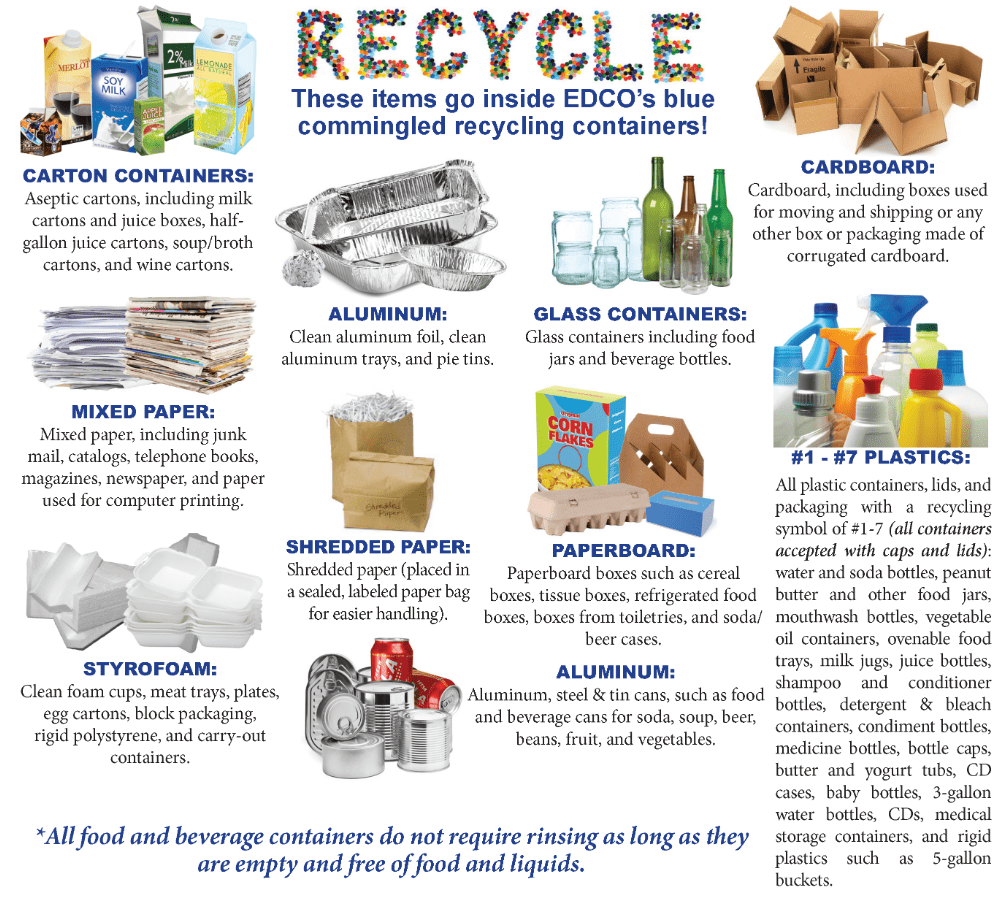
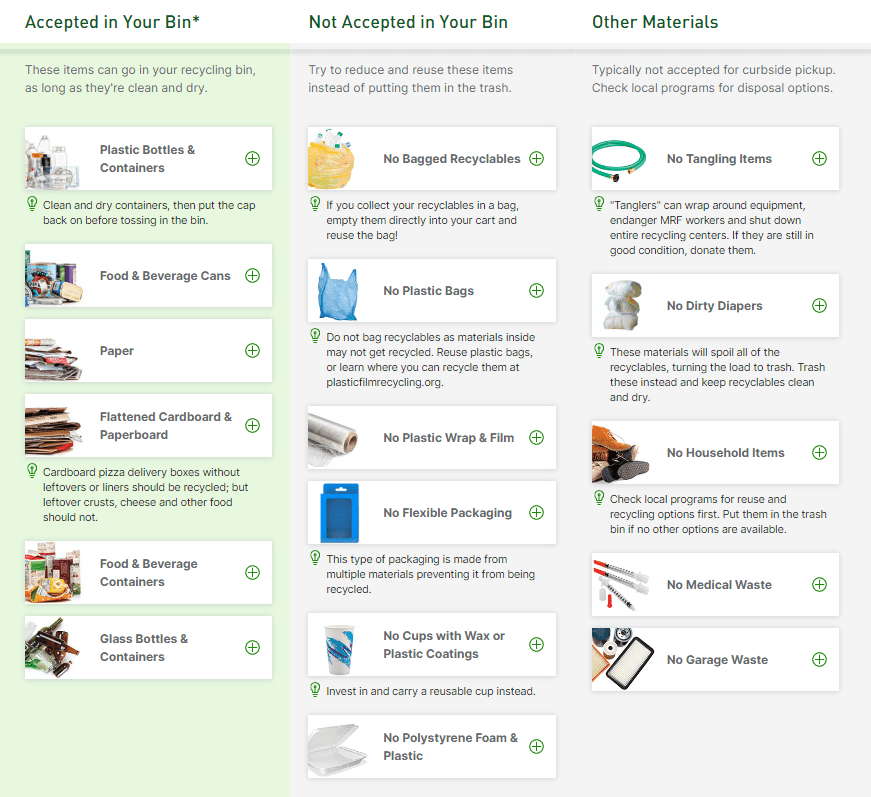
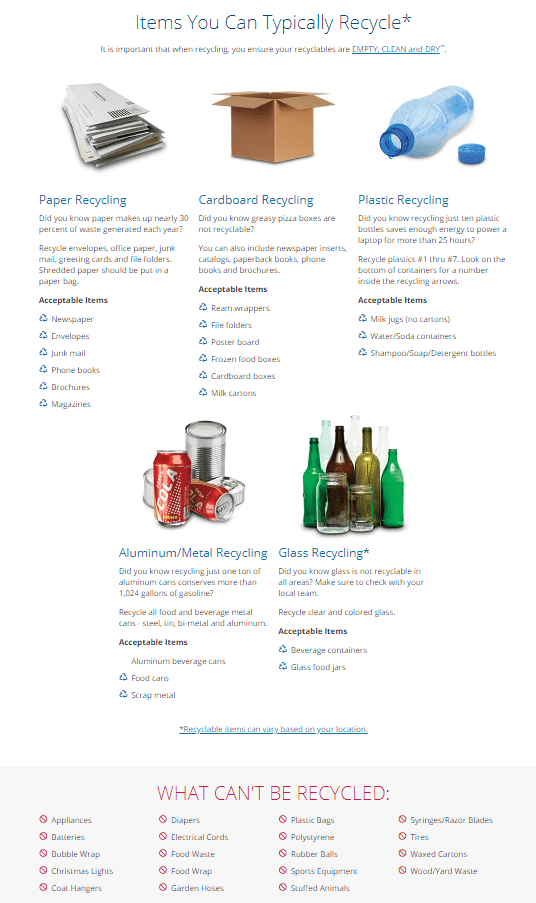
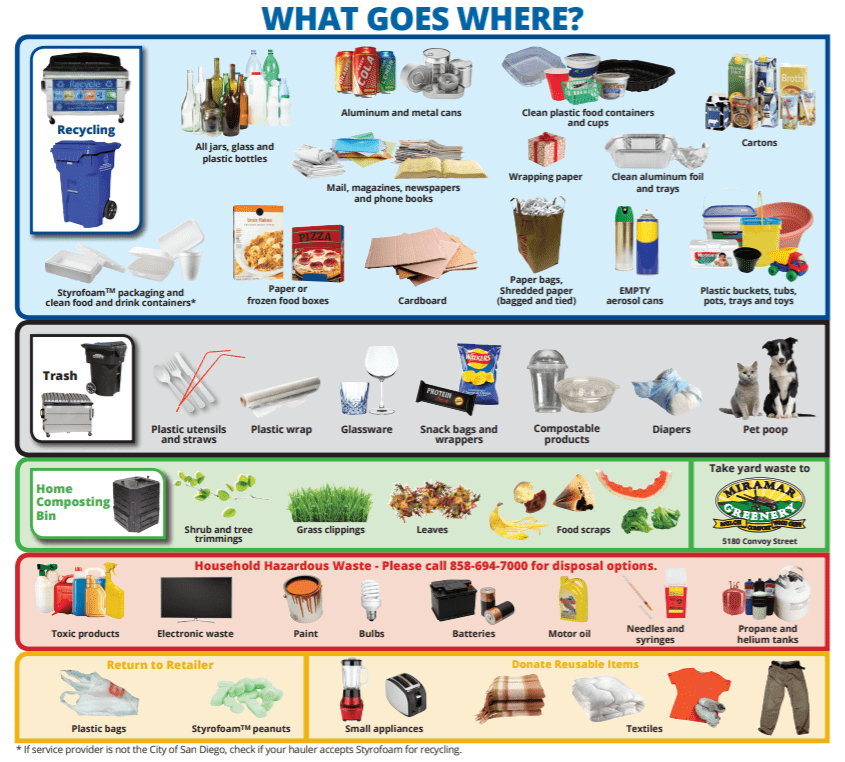
What you can recycle curbside is subject to your residential location. Each jurisdiction might have different rules according to the hauler responsible, which can be either EDCO, Waste Management, Republic or City of San Diego Environmental Services Department.

If you live in the Unincorporated County of San Diego, please refer to the Recycle Right campaign for general directions on what can be recycled in your blue bin, and contact your respective waste haulers for items that you are unsure of.

Recycling Right means your items are:

  • EMPTY. No or very little food residue remaining.
  • DRY. No liquids remaining. Liquids can ruin paper, cardboard and other materials in the recycle bin, making them unrecyclable.
  • LOOSE. Do not bag your recyclables; place them loose in the recycling bin.

Once you find out who your hauler is, click on the company name and you will be able to find their respective recyclability guidelines and what you can put in your blue bin:

EDCO Recycle GuideEDCO Recycle Curbside

 Waste Management Recycle Guide

Recycle Curbside Waste Management

 Republic Services Recycle Guide

Recycle Curbside Republic Services

City of San Diego Environmental Services Department Recycle Guide

Recycle Curbside ESD

Unacceptable Items

Regardless of where you reside or who your hauler is, remember to keep these items OUT of your blue bin:

  • Plastic bags/film (do not bag your recyclables)
    • Click here to find out more about plastic bag/film recycling or visit WasteFreeSD.org
  • Mixed material packaging such as chip bags or juice pouches
  • Polystyrene packing peanuts
  • Tangling items such as garden hoses, chains, clothing hangers and rope
  • Universal wastes such as batteries, fluorescent light bulbs and electronics
    • Click here to find out where you can recycle your batteries or visit WasteFreeSD.org
  • Hazardous wastes such as automotive fluids, cleaners and paint
    • Visit WasteFreeSD.org to find out where you can take your hazardous wastes

Recycling and Buyback Centers

Many items can still be recycled, even if they don’t go in your curbside Blue Bin. Examples include packing peanuts, metal scrap and Universal Waste. To find out where your closest recycling and buyback center is located, look up your item on WasteFreeSD.org.

Love Fore San Diego Zero Waste Golf Tournament June 25, 2021

Love Fore San Diego

I Love A Clean San Diego to Bring Zero Waste Golf Tournament to San Diego County on June 25, 2021

A party on the course or the love of the game for the love of a cleaner San Diego. Online registration and corporate partnership opportunities are now available at cleansd.org.

San Diego County’s longest running nonprofit dedicated to clean communities and zero waste today announces it will host the first zero waste golf tournament in San Diego County at Riverwalk Golf Club on Friday, June 25, 2021. Titled the Love Fore San Diego Zero Waste Golf Tournament, the event is now open for online golfer registration and corporate partnership opportunities available at CleanSD.org.

More Than a Fundraiser

The Love Fore San Diego Zero Waste Golf Tournament is more than a fundraiser for I Love A Clean San Diego County (501c3), it is a move by the organization to demonstrate how zero waste events can be produced without leaving a trace on the environment, while making events fun and educational. 

“People come from around the world to visit our region and play on its many outstanding golf courses, so we’re excited to create this unique opportunity for local players and those who are visiting,” said Keith Riggio, board member and tournament chairperson for I Love A Clean San Diego. “We want people to come enjoy and see that the zero waste effort supporting the tournament enhances their experience. We can all be part of the solution on and off the green.”

Inspired Nationally, Planned Locally

When planning for its event, organizers were inspired by the zero waste efforts of the PGA’s Phoenix Open. I Love A Clean San Diego’s board decided its mission would directly influence a regional golf tournament for the recreational player.

“Refuse, Reduce, and Recycle are the elements we will incorporate through our expertise to ensure nothing goes to the landfill,” said Len Hering, executive director of I Love A Clean San Diego. “In addition, the event and every participant’s carbon footprint will be offset through a certified carbon offset program.”

Sign up and Support

Online registration and corporate partnership opportunities are now available at event website. Most sponsorships include a foursome, but players can sign up now as singles, twosomes and foursomes.

In the coming years, I Love A Clean San Diego plans to host the tournament at other venues throughout the county to demonstrate the zero-waste event model can be done anywhere and showcase the region’s best championship golf courses for players of all skill levels.

Since 1954, I Love A Clean San Diego and its volunteer corps have been responsible for cleaning over 8.5 million pounds of litter from San Diego County’s streets, parks, canyons, beaches and other open spaces. Through education, it has also helped tens of thousands of people reduce their impact on the environment. Now entering its 67th year, the organization is doubling down on its commitment to zero waste engagement and education.

Contact for Corporate Partnerships

Please contact Ian Monahan by calling 619.795.5806.

About I Love A Clean San Diego County 

Founded in 1954, I Love A Clean San Diego is an environmental nonprofit supporting residents and businesses of San Diego County through youth and adult education, public resources and impactful volunteer cleanup and beautification programs aimed at nature conservation, recycling and zero waste living. As the region’s most influential advocate for sustainability, I Love A Clean San Diego hosts over 900 workshops and 600 community cleanups, which are responsible for clearing over 300,000 pounds of pollution from the region each year. Through service to nearly 100,000 people each year, I Love A Clean dedicated to empowering every person to be leaders in conservation and waste-free living to protect and improve the health of the home we love. 

Waste Hierarchy: What are the 4 Rs?

4R's of Waste Hierarchy

Waste Hierarchy: What are the 4 Rs?

Reduce, Reuse, Repurpose/Upcycle, Recycle –

These 4 R’s are extremely important when it comes to sustainable living and help manifest environmentally responsible consumer behavior. They all aim to reduce the amount of waste we create, which will not only save money but conserve natural resources and energy as well.

Reduce

Reduce comes first in the waste hierarchy and is the most effective way to prevent waste from being generated in the first place. From production to transportation, every single product that we own uses up large amounts of raw materials and energy, which poses as a detriment to the environment through resource depletion and pollution creation.

Tips on Reducing

  • Only buying what you need
  • Buy in bulk, click here to learn the basics of bulk buying
  • Buy used items from thrift stores or consignment shops
  • Borrow, rent or share items that are used infrequently like Halloween costumes, party decorations, pool toys
  • Printing double sided
  • Avoid buying non-recyclable products

Reuse

Reuse is a great way to give an item an elongated life span by using it more than once. This means that none of the components of the product are wasted and can be used again for the same purpose.

Tips on Reusing

  • Using a reusable grocery bag instead of a getting a new plastic bag at the store
  • Using reusable utensils and water bottles
  • Reusing plastic or glass jars as storage containers (e.g. glass honey jars to store flour or sugar)
  • Repair items like clothes, shoes, tires, electronics or appliances instead of throwing and replacing them
  • Donate unwanted items to charity organizations like Goodwill or Habitat for Humanity and help those in need

Repurpose

Repurposing and upcycling are often used interchangeably but they are actually slightly different. Repurposing is using one product to serve a different purpose and creating a new use for an old product. Examples include making plant pots out of egg cartons or making tea lights out of bottle caps.

Tips on Repurposing

  • Look for inspo on creative ways to repurpose items: blogs
  • Repurposing can be a fun arts-and-craft activity to do with children
  • Works really well during holidays like Halloween and Christmas, where you can make decorations and costumes from old and used items at home

Upcycle

Upcycling on the other hand is enhancing or upgrading a product to better serve the same purpose through the addition of paint, ad-ons, decorations etc. An example is painting over your old table to transform it into a new pretty one.

Tips on Upcycling

  • Look for inspo on creative ways to repurpose items: blogs, YouTube
  • Utilize items at home that might be outdated such as old clothes to use as rags and towels for your project

Recycle

Recycle comes last in the waste hierarchy and should also be the last option you choose if you exhaust all the other choices from reduce, reuse and repurpose/upcycle. This is because it is still creating materials and using up energy during the recycling process. Recycling aims to close the loop on resource consumption and preserve them for continued use by turning them into new products. For example, milk jugs and other plastic containers can be made into new bottles and containers, or even furniture and playground equipment. Paper can be recycled into toilet paper and tissues, and thin cardboard boxes and cartons.

Tips on Recycling

  • Only put items accepted by your waste hauler in your blue recycling bin
  • Make sure your recyclables are generally clean and dry
  • Putting contaminated items into the blue bin can contaminate the entire recycling load and deem it unusable
  • Never bag recyclables in plastic bag
  • Mixed material items such as chip bags cannot be recycled because there is no process to separate the items
  • Keep electronics and hazardous waste items out of your blue bin
  • Visit WasteFreeSD.org to find out where you can recycle other items like electronics and batteries

Recycled Crafts: Toilet Paper Tube Binoculars

Recycle Crafts

Recycled Crafts: Toilet Paper Tube Binoculars

Wondering how to teach your kids about Zero Waste? Recycled crafts are a great place to start! Creating crafts from materials you already have at home is the perfect way to help teach your children about the importance of resource conservation and upcycling.

Here in San Diego County, we create a lot of waste. Residents create an average of 5.6 pounds of waste per person per day. This adds up to 2,044 pounds of waste per year, weighing more than a giraffe! After we throw our trash away, it never really goes “away,” but rather ends up in our landfills. With the current rate our waste is entering our landfills, they are expected to close a lot sooner than we realize. Regionally, our landfills in San Diego County are estimated to close in 2052. In order to avoid going out into our environment and building a new landfill, it is important to see how we can reduce the amount we are throwing away and slow the rate at which our landfills are filling up.

Get Creative and Reuse!

So, how can we throw less away?

Recycling is a great place to start! By sorting our metal, paper and cartons, glass and plastic containers into our recycling bin, we are helping to put these resources back into our economy and produce new products!

Looking to take it one step further? Reuse! Reusing is one amazing way to reduce what we throw away and help our environment thrive. By reusing an item, you are using something again or in a completely new way, giving the item a whole new life. There are many ways to reuse items, but one clever way to get kids involved is to make toys from “trash!” Creating recycled crafts is a great way to get creative with your children and simultaneously teach them about why it’s important to reduce what we throw away.

Start off by taking a look at the items you have at home: toilet paper or paper towel tubes, soda bottles, newspapers, magazines and plenty more! There are so many crafts you can create with traditionally recycled materials. Crafting with repurposed materials helps children think outside the box, while developing fine motor skills and expressing themselves in unique ways; let your child’s imagination take the lead!

Getting Crafty

Don’t toss your toilet paper tubes! They’re great tools to see the world. Simply follow the below instructions and build your very own binoculars.

With a few supplies from around your home, you’ll have everything you need for an afternoon of creativity and science! Follow along to learn how to make Toilet Paper Tube Binoculars.

How to Create –  Toilet Paper Tube Binoculars

Step by Step Instructions

Materials:

  • Two (2) toilet paper rolls
  • Scissors
  • Glue
  • String, ribbon, yarn, or wire
  • Scrap paper or photos
  • Markers, paint, or crayons
  • Hole punch or pen

Follow these steps:

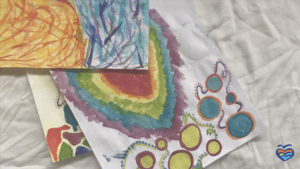
1. Gather supplies. Create your own drawing, gather photos from magazines and newspapers, or use wrapping paper to create your own designs to decorate the binoculars.

Recycled Crafts

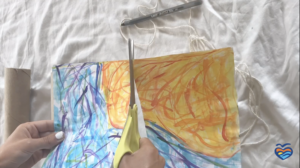
2. Cut your picture, designs or photos to the same length as the toilet paper roll. Place glue on the back of the photo or picture.

Recycled Crafts

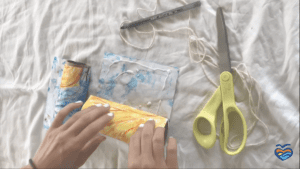
3. Roll the paper around each tube. Let it dry. Punch a hole in each side of the toilet paper roll with a pen or hole punch.  You may want to ask for help with this step.

Recycled Crafts

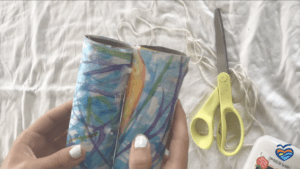
4. Glue the two rolls together. Tie a string on the side of each roll for a neck strap. Once dry, your binoculars are ready to see new things and explore your world.

Recycle Crafts


Visit I Love A Clean San Diego’s YouTube channel to view the video on How to Make Your Toilet Paper Tube Binoculars!

Backyard Science

Once you’re finished making your binoculars, let your budding scientist take inspiration from the outdoors and explore their living landscape! Take a walk around your neighborhood, backyard, park, or playground to see what they can find.

Scavenger Hunt Idea – What can you spot with your binoculars?

Observe what’s around you. Have your child make a list of what they spot. Have them record what they see, draw a picture or describe what the item looks like, noting any specific characteristics.

Keep an eye out for any local San Diego County species:

☐ Animal      ☐ Mineral      ☐ Vegetable      ☐ Wood      ☐ Metal

☐ Plastic      ☐ Glass         ☐ Paper            ☐ Insect

HOW TO: Make Your Own Doggie Bag Carrier from Upcycled Materials

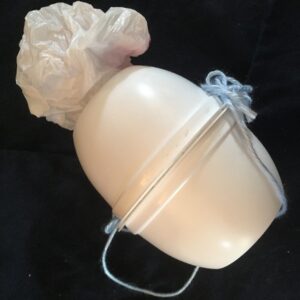
One of the best things you can do to help prevent pathogens, harmful nutrients, parasites, and diseases from entering our waterways is to make sure that you pick up after your pet. To help keep you equipped with bags on this mission, we put together a quick “how to” for crafting your own doggie bag holder from upcycled materials. These are great for pet-owners and concerned citizens alike, and can be worn around your wrist, tied to a leash, or kept in your car.

Materials Needed:

• Two clean yogurt containers OR the bottoms of two plastic soda bottles (with labels removed)
• Scissors OR crafting knife
• Sandpaper or nail file (optional)
• Tape (the thicker the better here but most kinds will work)
• String, yarn, ribbon, or a strip of cloth

Prepare the Dispenser Piece

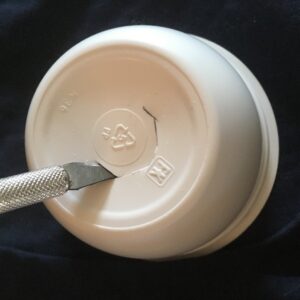
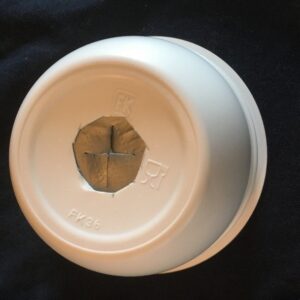
1. Cut a hole roughly 1¼ inches in diameter on one of your two containers. Using your sandpaper or nail file, sand down any rough edges here as desired.

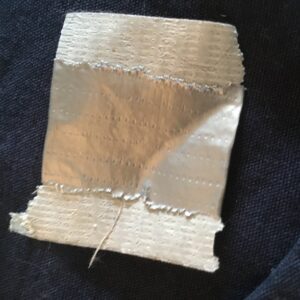
2. Tear off a piece of tape roughly 2 inches square. Set that aside for now.
3. Tear off a second piece of tape just slightly larger than 1¼ in each direction.
4. Place the two pieces of tape together – sticky-sides together – as shown in the picture below. The first piece of tape should have some of the sticky side still exposed.

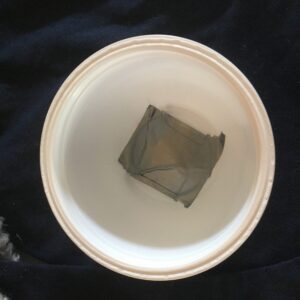
5. Tape the joined tape strips to the bottom of the container you cut a hole in. There should be no sticky sides showing on either side of the hole.
6. Tear off a last piece of tape, about 3 inches square, to cover both pieces of tape and secure them in place. It should look like the following:

7. Set the container so the side with the hole you cut is facing up. Cut an “x” shape into the middle of the tape.

Make the Handle

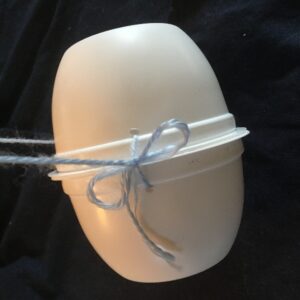
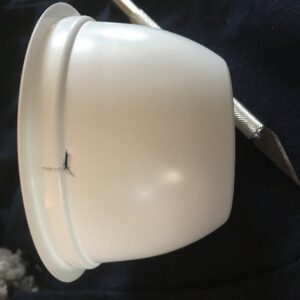
1. Cut two small holes near the rim of each of your containers, one on each side, as shown below.

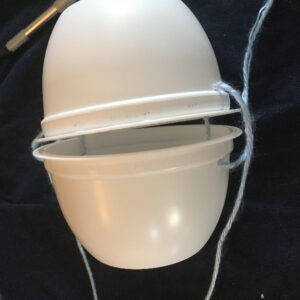
2. Thread your ribbon, string, or cloth through the hole (if you choose ribbon or cloth, your hole will need to be bigger than the one pictured). Be sure to leave extra string for a handle between each knot, so you have a handle to use when carrying. This handle size can be to your preference, but for the model shown about 12” of slack between knots was enough.

3. Tie one of the sides off in a double-knotted bow

Fill with Your Bags of Choice

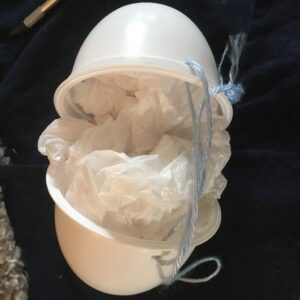
1. Before tying shut your second side, fill your holder with bags. Here, I have used upcycled grocery bags, but rolls of pet poop bags will fit as well. Go ahead and poke one of your bags through the hole created in step 1 to get your dispenser started.

2. Leaving as much string as you would like for a handle between knots (again, I left about 12” for a handle on mine), tie shut the second side with a double-knotted bow. Keep in mind that to refill your holder, you will untie one of these bows, so try not to tie too tight to undo again!

Decorate as Desired and Get to Scooping!

1. Personalize and decorate your exterior however you’d like! Then, you are finished and ready to enjoy your new bag holder! You can slip the handle over your wrist or tie it to your leash and you are all set to start scoopin’!

7 Ways to Shop More Eco-Friendly and Support Non-Profits through AmazonSmile 

Cut down on packaging, request less plastic and use AmazonSmile to generate donations for nonprofits like I Love A Clean San Diego by choosing us as your beneficiary.

As we head into the giving season, I Love A Clean San Diego offers some resources and suggestions to be environmentally conscious while also stretching your purchases to support nonprofits when using Amazon.

Fortune Magazine predicts online sales will grow by 25 to 35 percent this year as fewer consumers purchase in stores during the COVID-19 pandemic. Many of those purchases will be made through Amazon. Like the more than one million charitable organizations on AmazonSmile, I Love A Clean San Diego benefits from those who choose our nonprofit as their beneficiary when shopping through this service. While our organization is grateful for the donations we receive through these purchases, online shopping is responsible for producing alarming amounts of unnecessary waste.

So, please consider these seven tips before logging on for convenience. You’ll lower your environmental footprint and automatically spread social good.

1. Refuse, Reduce and Reuse

While online shopping can be attractive for hard-to-find necessities, unfortunately, the service is not always the best option for the environment. Overseas manufacturing, coupled with transportation from shipping and home delivery releases tons of greenhouse gasses throughout the process. Additional packaging for delivery adds significantly to the waste stream.

It’s true that online shopping provides convenience and competitive prices, but you might take this as an opportunity to pause and consider the bigger picture and ask – do I really need this thing?

Considering the Boston Globe reported “one out of 10 American households rents a storage unit,” located in one of nearly 52,000 storage facilities nationwide, one might conclude we don’t really need more stuff.

Refusing to buy disposable or less durable products, especially plastics, is the most significant way to reduce waste. Reducing what we purchase still brings joy without excess that ultimately contributes to growing landfills.

2. Shop local and support your community

The list of positive reasons to shop local are far too long include in this article! The bottom line is this –
the more money we choose to keep in our communities makes for a more resilient economy and sustains local employment. Shopping local sustains the character and fabric of a city or town and is the most environmentally friendly purchase anyone can make. Choosing to buy products from local eco-conscious brands takes it a step further to enhance local economies and do less harm to our environment.

Shopping domestically produced goods is yet another way to add a greater level of environmental mindfulness to a purchase. Cheap items from overseas are on the fast track to the landfill. Here in San Diego County, the region’s largest landfill in Miramar is scheduled to reach capacity and close in 2030. Then what?

3. Shopping on Amazon? Use AmazonSmile

When you are choosing to shop online, make a conscious choice and shop using AmazonSmile. AmazonSmile donates 0.5 percent of eligible purchases directly to registered nonprofits like I Love A Clean San Diego. Supporting a nonprofit comes at no additional cost to you and is a great way ensure these organizations can continue to spread good in the world. It only takes a second to switch from Amazon to AmazonSmile and make your purchase go farther. You can also access AmazonSmile from the mobile app. Use the link above for directions.

4. Don’t Rush, Reduce the Carbon Footprint

When choosing to shop on Amazon, consider the effects Amazon Prime has on our environment. The option for same-day, one-day or two-day shipping increases our carbon footprint and releases unnecessary greenhouse gases as manufactures and shippers rush to get individually packaged products on your door step as quick as possible. Fast shipping contributes to a transportation sector that is already the largest source of air pollution in the world. More delivery trips to the door means more fuel burned.

Select no rush shipping and group your purchases. By choosing to send multiple purchases to your door at one time, you reduce the carbon footprint dramatically and will be equally elated as your items arrive together. Group shipping also reduces unnecessary packing for individually shipped products.

Amazon Prime members – choose Amazon Day Delivery and opt to have your eligible purchased items sent to you on a single day of the week of your choosing. Orders will be combined into fewer boxes and collectively delivered once a week. Save packaging, save delivery runs, save our planet.

5. Shop Frustration Free!

We know there is an absolute cost to convenience. National Geographic published an infographic, illustrating 40 percent of plastic produced is packaging and is used just once before it is discarded. In addition, the magazine noted that some 18 billion pounds of plastic waste flows into the oceans every year from coastal regions. Plastic never fully decomposes and is detrimental to the health of wildlife on land and in the oceans.

Want the dollars and sense of packaging costs to you? The University of Florida Institute of Food and Agricultural Sciences says, “the average cost of packaging is $1 for every $11 spent. Nine percent of the amount you spend on any product is probably the cost of its packaging.”

Frustration Free shopping on Amazon only takes a second and can save waste for a lifetime.

Amazon has an option to shop products that will ship in their own packaging, no additional packing needed and no extra waste. Here’s the deal – Amazon’s Certified Frustration Free Packing Program is designed to reduce waste, tested to ensure items are not damaged while shipped and includes recyclable materials. When shopping online, it’s a no brainer.

When you log in to your AmazonSmile account, select Amazon Frustration-Free Packing from the dropdown on the left side of the search bar or type directly into the search bar itself. From there, shoppers have access to all products that are included in this reduced waste program.

6. Go the extra mile. Go plastic free!

Feel like going the extra green mile? Email cs-reply@amazon.com and request a reduction in plastic and packaging on your account. Amazon will apply this request to all your purchases going forward.

7. Recycle Right

The Environmental Protection Agency reported containers and packaging make up a major portion of municipal solid waste, amounting to 80.1 million tons (United States, 2017). Imagine what that number looks like now with the explosion of home delivery during the COVID-19 pandemic.

According to the Washington Post, by 2050, there will be more plastic than fish in the world’s oceans. This alarming statistic demands consumers reduce waste and recycle whenever possible to preserve our endangered ocean and wildlife.

Amazon Second Chance eliminates the guessing game of which packaging items can be recycled. Check out which Amazon packages can be recycled and learn how to correctly recycle or dispose of each unique item. Amazon Second Chance is also a great resource for purchasing second hand or pre-owned items to reduce waste.

I Love A Clean San Diego founded and maintains WasteFreeSD as a one-stop resource to help residents around the county recycle right and properly dispose of items that would otherwise end up in landfills. As shoppers replace household items of all kinds, it is essential that those items are recycled whenever possible and stay out of the landfills. Click on Recycle Right for additional resources.

Now that you have all the tools to shop online while making a conscious effort to preserve the environment and spread social good to non-profits – you’re ready for the holiday season! I Love A Clean San Diego appreciates all donations made to our organization through AmazonSmile as we continue to lead and inspire our community to actively conserve and enhance the environment through example, outreach, and local involvement.

If you have more helpful tips on how to shop more eco-consciously online, let us know!

WasteFreeSD FAQs during COVID-19

Recycling

WasteFreeSD FAQs during COVID-19

Updates on Local Recycling Facilities and Centers, and How to Maintain Zero Waste Practices

If you are curious about how to stay on top of zero waste practices, proper recycling, and responsible disposal during COVID-19, you’re not alone! Our WasteFreeSD hotline (incorporated residents call:1-800-237-2583; unincorporated residents call: 1-877-713-2784) has received an influx of calls regarding shifts in policy, and updates on the status of recycle centers and buyback facilities.

I Love A Clean San Diego’s Recycling Programs Department has developed an overview of some of their most frequently asked questions, including up to date information on operating hours and changes in recycle policy. Although this list is not comprehensive, we will post updates as we hear about them.

We are all brainstorming creative ways to continue sustainable practices. Please continue to share your questions with us and any unique ways you’ve been able to maintain waste free habits.

Operational Status of Commonly Requested Centers

  • The Miramar Recycling Center is still open and accepts CRV as well as e-waste, u-waste and most metals. Please visit WastFreeSD.org for a full list of accepted items.
  • AutoZones are open and collecting used motor oil and filters. Please call your Local AutoZone to verify hours.
  • EDCO Buyback facilities are all closed until further notice.
  • Fallbrook Recycling and Transfer Station is closed until further notice
  • All PaintCare drop off locations are on hold until further notice. They have cancelled all events through June and are suspending the bulk pick up as well.
  • The Solana Center is closed to all recycling and compost drop off until further notice. Please visit their website for updated information.

Open Household Hazardous Waste (HHW) Facilities

El Cajon:
(619) 596-5100
1001 W. Bradley Avenue
El Cajon, California 92020
Open 2nd and 4th Saturdays every month.
Please call to make an appointment.
Open to Unincorporated residents and City of El Cajon residents only.

Chula Vista:
1 (800) 237-2583
1800 Maxwell Road
Chula Vista, California 91911
Open Wednesday and Saturday every week.
No appointment necessary.
Open to Unincorporated and City of Chula Vista residents only.

Update on Beverage Recycling Centers, In Store Redemption and Grocery Bags

According to Governor Newsom’s Executive Order on Beverage Recycling Centers, In-Store Redemption and Grocery Bags, Public Resources Code section 14571.6, subdivisions (a) and (b), is suspended for a period of 60 days.

MEANING: While California has temporarily suspended enforcement of bottle and can takeback requirements, local retailers and recycling centers may determine whether or not to close or stop redeeming CRV during this time. Consumers are advised to call ahead before bringing CRV containers for redemption. Cans and bottles can still be recycled in your blue bin.

While California has temporarily suspended the single-use carryout bag ban, you can ask to put your groceries in your cart and bag them at your car with your reusable bags!

For questions or concerns on the CRV recycling call CalRecycle at 1-800-RECYCLE.

For additional information regarding recycling resources and zero waste practices, please call our toll free hotline:

Incorporated residents call: 1-800-237-BLUE (1-800-237-2583)
Unincorporated residents call: 1-877-R-1-EARTH (1-877-713-2784)

Visit us on WasteFreeSD.org or leave us a comment below!

April and May Event Updates from the Executive Director

Postponed Events Through April
I Love A Clean San Diego sets new date for Creek to Bay Cleanup and postpones all April events and workshops. KIDS OCEAN DAY is postponed in May until the fall.

Dear I Love A Clean San Diego Family,

As we all adjust to evolving information and our new daily lifestyle with COVID-19, I hope this message finds you and your family well. I want to thank our volunteers and supporters for your patience and continued support during this time.

Creek to Bay and other events in April
As of today, we are postponing all cleanup events and educational activities for the month of April until further notice. This also affects one of our largest cleanups of the year, the Creek to Bay Cleanup. The new date for the countywide Creek to Bay Cleanup is Saturday June 20, 2020 from 9 a.m.-12 p.m.

Marking the first day of summer, we are confident this later date will give all those involved a greater sense of safety in hopes we have returned to a more normal daily routine. Our goal remains to host over 100 sites in communities throughout the county with more than 5,000 volunteers. A list of confirmed cleanup sites and volunteer registration will be released in May.

We of course will follow the guidance and recommendations of public health leadership to adjust for safe event operations.

KIDS OCEAN DAY San Diego
At this time, the only event we know will be postponed in May is KIDS OCEAN DAY. Given the uncertainty of our region’s school schedules, we will hold the event this fall once students are back in school. We are working closely with the California Coastal Commission on coordination.

Become A Sponsor of Creek to Bay and KIDS OCEAN DAY
Contact Ian Monahan
619.795.5806 or imonahan@cleansd.org

As a reminder, our entire team at I Love A Clean San Diego is now working part-time and remotely. We are still maintaining phone inquiries, emails, meetings and virtual conferencing.

In addition, the WasteFreeSD hotline remains open. Visit WasteFreeSD.org for more information.

We will be in touch again with timely updates.

Because we LOVE where we live,

Len Hering

Executive Director

I Love A Clean San Diego