How and Where to Recycle Real Christmas Trees in San Diego County

Christmas Tree Recycling Guide: How and Where to Recycle Real Christmas Trees in San Diego County

Among other benefits over fake trees, real Christmas trees can be composted or turned into mulch and returned to the earth. Trees sprayed with fake snow (flocked) trees cannot be composted.

SAN DIEGO COUNTY (Dec. 15, 2021) – Cut or living Christmas trees are more environmentally friendly than plastic trees. Selecting the real deal reduces the use of toxic materials and fossil fuels to produce their lifelike counterparts. Moreover, real trees can be returned to the earth as mulch or through composting, which returns valuable nutrients to the earth, reduces landfill space and greenhouse gas emissions.

For this year’s Christmas tree collection, the County of San Diego and I Love A Clean San Diego make it easy for residents to recycle their real Christmas trees. The countywide Christmas Tree Recycling Guide at WasteFreeSD.org, has a 2021 listing for curbside and drop-off locations in the region.

According to the EPA, organic materials like Christmas trees, food, and yard clippings are the number one material sent to landfills, composing two-thirds of the solid waste stream. In California, state law (SB 1383) is here to change that. It will require the recycling of Christmas trees as well as other organic waste-food scraps, food-soiled paper, yard trimmings and non-hazardous wood waste (i.e. lumber, pallets, etc.). To learn more, contact your local city or county and/or waste and recycling hauler about organic waste recycling in your area.

Before a tree is turned into mulch or composted, follow some simple tips to ensure they can be fully recycled.

Christmas Tree Recycling Tips

  • Do not flock or buy flocked trees. Fake snow (flock) contains chemicals that interfere with the composting process
  • If you choose to use tinsel it must be completely removed (and placed in the trash) from your tree before it can be recycled. Best option, don’t buy tinsel. It is a wasteful single-use plastic.
  • Make sure to remove all ornaments, garland, lights, nails, tree bags, and tree stands (metal or plastic) before recycling.
  • For areas where curbside tree recycling is available, trees taller than four feet should be cut in half. It is recommended that pieces be under four feet.
  • Reuse or donate artificial trees that are in good condition. Purchasing new plastic trees create more waste and greenhouse gasses.
  • Don’t let real trees sit around too long after the holidays. They can dry out and become fire hazards.
  • Organic wreaths and similar decorations can be recycled with trees.

About I Love A Clean San Diego

Founded in 1954, I Love A Clean San Diego is an environmental nonprofit supporting residents and businesses of San Diego County through youth and adult education, and local action through impactful volunteer events and workshops. As San Diego’s most influential advocate for sustainability, I Love A Clean San Diego’s programs are an environmental catalyst, awakening passion and inspiring action to empower everyone to be leaders in conservation and waste-free living. Our community is passion in action to maintain and improve the health of the home we love. For more information, to volunteer or donate, visit CleanSD.org or call (619) 291-0103. Connect with us on FacebookTwitterInstagram and LinkedIn.

Recycle Right for the Holidays: A Guide for Eco-Friendly Practices and Recycling This Gifting Season

Celebrate-Sustainably

Recycle Right for the Holidays: A Guide for Eco-Friendly Practices and Recycling This Gifting Season

Join the upcoming holiday webinar Celebrate Sustainably: Gifts and Glitz on December 8, 2021.

Getting back together with family and friends is cause for celebration. As we enjoy a season full of holiday traditions I Love A Clean San Diego offers some ideas to reduce holiday waste that occurs during this joyous time.

From shopping bags to increased packaging from online shopping, and giftwrap to food, Americans generate 25 percent more waste between Thanksgiving and New Year’s Day. This equates to an extra one million tons of waste generated per week nationwide during the holidays. However, much of this waste can be recycled or reused.

If every American family wrapped just three presents in reused materials, it would save enough paper to cover 45,000 football fields.

Gifting and festivities can still be special and memorable while reducing waste and recycling right.

Join Us for the Gifts and Glitz Webinar

Join I Love A Clean San Diego for tips and inspiration at the “Celebrate Sustainably: Gifts and Glitz” webinar on Wednesday, December 8 from 5 p.m. to 6 p.m. Online registration is open now to attend the fun and informative event. I Love A Clean San Diego’s education team will bring creative ideas to reducing waste and recycling, while keeping the spirit of the season alive.

Batteries, Bah Humbug

Americans use more than three billion batteries each year and about 40 percent of all battery sales in the U.S. occur during the holiday season. Batteries are considered Household Hazardous Waste. When not properly handled or recycled, batteries corrode and leach toxic chemicals like lithium, cadmium, sulfuric acid and lead. These chemicals can contaminate soil and groundwater. Some of these elements, like lithium, are limited in supply and need to be recaptured.

Here are suggestions to help reduce battery waste
1. Skip the single-use alkaline batteries. If you do, please collect and recycle them properly.
2. Buy rechargeable batteries. Rechargeable batteries pay for themselves many times over and can easily be recycled for free after they reach the end of their useful life.
3. For both single-use and rechargeable batteries, use the free search tool at WasteFreeSD.org to find a drop off location near you.

Low Waste Gift Giving

When thinking about holiday gift shopping, consider the entire life cycle of your purchases. How long will the person receiving this gift actually use it? Will it be memorable and useful, or will they forget about it by next year? Gift giving can be a wonderful opportunity to express love and appreciation, but it can also slip into feeling like a mandatory practice – “I don’t know what to get them, but I have to get them something” mentality. Here are some ideas for low waste, mindful gift giving.

Take the Love Languages Quiz with your friends and family to determine how meaningful gifts actually are to each of you. Does a friend prefer serving others rather than being on the receiving end? Would your family member value quality time more than an item? Knowing this may change what you gift them.

Try shifting the focus away from “stuff.” Check out this graphic on WasteFreeSD.org and this Zero Waste Guide to Holiday Gifts.

Here are some low-waste gift ideas and technologies to consider.
• Give away items you do not need anymore. The new Good Use App, designed right here in San Diego, allows you to give your gently used items a second life. Sign up for the Good Use App here.
• Experiences: Memberships or subscriptions, tickets, classes, or pre-planned adventures and excursions
• Time: Making a home-cooked meal, helping with car or yard maintenance, “get out of a chore” or “design your perfect day” passes for kids
• Donations on their behalf to a cause or organization they’re passionate about
• Second-hand items: The most sustainable item you can buy is the one that already exists. Used items can still be high quality and in practically new condition. Aside from thrift stores, the Good Use App, Facebook Marketplace, Offerup, and Buy Nothing can be good online sources to check regularly.
• Zero waste tools: Help your loved one live more sustainably with items such as cotton produce bags, handkerchiefs, reusable makeup wipes, dryer balls, or a refillable growler.
• Items: If buying a new item, opt for locally made products and items made from reclaimed materials, such as upcycled skateboard sunglasses, dog leashes from retired climbing rope, and reclaimed wood picture frames

Gift Wrapping

Many traditional gift-wrapping materials, such as ribbon, bows, and cellophane, are not recyclable in your blue bins. To help sort out what is recyclable during the holidays, check out the Don’t Take a Holiday from Recycling flyer from the County of San Diego.

Stick to these recyclable items when wrapping presents
• Paper wrap without metallic and glitter designs
• Paper gift bags
• Cardboard boxes
• Paper cards and envelopes
• Glass jars are great for DIY gifts

These materials cannot be recycled in your curbside bin so please avoid or reuse them
• Metallic, glossy and glitter-covered wrapping paper
• Ribbons, bows, and twine
• Polystyrene packing peanuts
• Cards on glossy photo paper
• Plastic bags and film (return to participating stores for recycling)
• Tissue paper

Reuse supplies you have on hand, such as cardboard shipping boxes, tissue paper from a new pair of shoes, and paper bags from the store. There is no shame in reusing a gift bag; the person on the receiving end will not know the difference.

There are so many ways to get creative with repurposing materials, so have fun with it! See this as an opportunity to customize the gift to the person. For example, check out this tutorial to learn how to make bows out of magazine pages. If you are feeling extra adventurous, give the Furoshiki cloth-wrapping method a try.

Recycling and Proper Disposal

Keep these recycling tips and resources in mind.

• Recycling Right – When sorting through and putting away decorations and gifts, remember to dispose of items properly. Recycle only accepted materials in your curbside blue bin. In general, this includes paper, cardboard and cartons, plastic bottles and containers, glass bottles and jars, and metal and aluminum cans and foil. For more information on what is recyclable, visit the County of San Diego’s recycling page.

Common holiday items that can be recycled include cardboard gift boxes, plastic bottles and containers, glass jars, and brown paper wrap. Remember to keep these items empty, dry, and loose.

• Batteries and other household hazardous waste – Separate out hazardous items such as batteries and lights. These CANNOT go into the trash or recycling bins. Check WasteFreeSD.org for a comprehensive list of hazardous items and find drop-off locations in your area.

• Christmas tree recycling – After the holidays, remember to recycle your fresh-cut tree and help close the loop, returning the tree to the earth as mulch. County of San Diego residents are encouraged to recycle their Christmas trees as soon as possible to reduce fire danger and minimize the amount of holiday waste sent to the landfill. In addition to dozens of community drop-off sites, many local waste and recycling haulers offer curbside tree and wreath pick-up. These trees and wreaths are ground into mulch, which is then used to improve soil health, reduce evaporation and erosion. Visit WasteFreeSD.org or call 1-811-R-1-EARTH for more information and a complete list of drop-off locations.

Incorporating zero waste into your holiday planning may take some time and thought at first, but once these habits are implemented, they can reduce stress, save money, and allow you to focus on what is most important about the holiday season-spending time with those we love.

What Is Giving Tuesday: Need-to-Know Facts to Give Back This Holiday Season

Giving Tuesday I Love A Clean San Diego

What Is Giving Tuesday:

Need-to-Know Facts to Give Back This Holiday Season

Donate to I Love A Clean San Diego to support our service to the residents and environment of San Diego County and join over 30 million people coming together in the 24 hours of Giving Tuesday. 

Need-to-Know Facts for Giving Tuesday Donors. Click here to see our Giving Tuesday donation page. Live now through December 1.

Not sure what Giving Tuesday is or how you can participate as a donor? We’ve got you covered.

When you think about Thanksgiving weekend traditions, it’s hard not to immediately land on Black Friday and Cyber Monday. The shopping (and hopefully saving) is part of the long-standing transition into the year-end holiday season. While many people are already spending more to check off all of the names on their shopping lists, Giving Tuesday rounds out the long weekend as a critical day to give back to charitable causes.

Picture this: Holiday sales during November and December are forecasted to exceed $843 billion in 2021. Now imagine how many people or places in need could see relief from ongoing challenges if just one billion of those dollars were donated.

#GivingTuesday is only becoming more popular and impactful each year as social media spreads the word. If it’s your first time participating, you’re in good hands. We’re walking you through the easiest way to find causes, show your support, and complete donations this year.

When Is Giving Tuesday?

Tuesday, November 30, 2021 – All Day! Mark your calendar! Giving Tuesday is always the Tuesday following Thanksgiving and the day directly after Cyber Monday.

What Is Giving Tuesday?

GivingTuesday started as a day for anyone, anywhere to give, and it’s grown into the biggest giving movement in the world.

Giving Tuesday sets new donation records each year to help nonprofits such as environmental organizations like I Love A Clean San Diego, food banks, healthcare organizations, natural disaster relief, and many more gather the support they need to make a true impact on the communities they serve before the year is over.

Giving Tuesday is more significant than ever in its ninth year and shows no signs of slowing down. In fact, it’s now the second-largest giving day of the year for nonprofit organizations to fundraise, only surpassed by December 31.

If organizations see enough momentum on Giving Tuesday, they may be able to turn that success into a year-end campaign as well. The beauty of this day for nonprofits is that people are excited and passionate to help ignite change, allowing nonprofits of all sizes and sectors to drive their missions forward with bolstered support.

What Is the History of Giving Tuesday?

Giving Tuesday was created in 2012 to counteract the spending of Black Friday and Cyber Monday with philanthropic giving to charities in need of support. It started in the U.S. and has quickly made its way across more than 70 countries. You’ll likely see the day branded as “#GivingTuesday” to emphasize the collaborative power of social media to spread the word.

As we move forward into a new year that will continue to reflect the impact of COVID-19, 84% of donors intend to give the same amount or more than they did in 2020.

How to Become a Giving Tuesday Donor

Feeling inspired? Let’s dive into how you can make a difference on Giving Tuesday.

Organizations of various cause sectors, sizes, locations, and goals come together on Giving Tuesday, giving you endless ways to show support.

Here are a few ways you can plan to show support for I Love A Clean San Diego

  • Advocate for a cause by sharing our Giving Tuesday campaign on your social media channels or by setting up your own fundraising page on our behalf.
  • Give a recurring gift that automatically deducts a small amount of your choice from your bank account on a regular cadence, adding up to a larger impact over time for I Love A Clean San Diego.
  • Upgrade your recurring gift if you already give on a monthly or quarterly basis. By adding just few dollars more makes a big difference.
  • Give on behalf of a loved one and use the donation confirmation as a thoughtful holiday gift they’ll never forget. Our donation page makes this simple.

What Is Giving Tuesday Bringing to the Holiday Season? 

The end of the year is a time for reflection and getting ready for fresh starts. If you’ve ever thought about giving back around this time but weren’t sure where to begin, we hope you now know why Giving Tuesday is an excellent opportunity to do so.

If this is your first time participating in Giving Tuesday, you may be on your way to an entirely new tradition to share with your friends and family ahead of the holidays. Regardless of how you choose to support nonprofits, you’ll be joining a global movement for good.

Share this post with anyone asking “what is Giving Tuesday” and get your inner circles involved in a day to remember for the best kick-off to the holiday season.

We also encourage you to share how you’re getting involved on Giving Tuesday on your social media channels.

Content contributed Classy.org, I Love A Clean San Diego’s online giving solution.

Reduce Holiday Food Waste and Prepare for Organic Waste Recycling in 2022

Reduce Food Waste Holidays

Reduce Holiday Food Waste and Prepare for Organic Waste Recycling in 2022

Residents of San Diego County will soon be able to recycle food scraps and other organic waste curbside. Holiday meal planning is an excellent time think about reducing food waste while enjoying deliciousness of the season.

Did you know food is the single largest material disposed in U.S. landfills today, costing the average family of four approximately $1,500 per year? Discarded food also wastes the money, time, labor, transportation, water and land used to grow the food. When organic materials like food scraps decompose in landfills, methane is released, a driver of global climate change that’s up to 86 times more potent at trapping heat than carbon dioxide.

In California, there is a solution on the horizon to curb methane generated by discarded food waste in landfills. A state law (SB 1383) will require the recycling organic waste, including food scraps, food-soiled paper, yard trimmings and non-hazardous wood waste (ie. lumber, pallets, etc) beginning in 2022. Contact your local municipality and/or waste and recycling hauler for additional information about organic waste recycling in your area.

The organic waste recycling process will greatly reduce greenhouse gas generation and yield beneficial compost, fertilizer and/or renewable energy depending on the process used.  However, the ability to recycle our food scraps and other organic waste should not be a reason to stop reducing food waste, considering 40 percent of all food produced in the U.S. is discarded and around 1 in 8 people in the US are food insecure.

“While recycling organic waste into beneficial products like compost, fertilizers and renewable natural gas is a positive step forward, we still want to emphasize the tremendous benefits of reducing food waste in the first place,” said Ian Monahan, director of communications at I Love A Clean San Diego.

Resources like the Natural Resource Defense Council’s Save The Food campaign as well as some simple tips from the County of San Diego and I Love A Clean San Diego, can help save money and positively impact the environment all while enjoying delicious holidays meals.

  1. Tune in to the Celebrate Sustainably: Food & Festivities Webinar on November 17

I Love A Clean San Diego is hosting a free webinar on Wednesday, November 17 from 5 p.m. – 6p.m., titled Celebrate Sustainably: Food & Festivities Webinar. Please register online to attend.

We will focus on ways to reduce the amount of waste produced in our kitchens around big holiday meals. Come hungry for strategies to begin practicing in the kitchen right away, and leave feeling satisfied that you can live a low-waste lifestyle at all times of the year.

  1. Cook and serve with a plan

The easiest way to reduce food waste during the holidays is to buy and prepare the right amount of food. The Save the Food Guest-mator helps create a menu based on how many guests are attending your holiday feast. Try it out here.

Once you know how much food is needed, create a detailed shopping list and stick to it. This will prevent excessive purchases that may not be needed.

When shopping for ingredients, opt for items in recyclable packaging to further minimize unnecessary waste. Learn how to Recycle Right on this County of San Diego website.

  1. Shop at local farmers’ markets

Visit one of the 36 certified farmers’ markets in San Diego County (farmers’ markets) and buy local, unpackaged produce directly from regional farmers. Doing so cuts down on packaging, transportation and benefits the farmer directly while providing you with the freshest ingredients.

  1. Embrace all foods

When shopping, most people search for the perfect looking produce, meaning the “ugly” fruits and vegetables are often left on the shelves. If these items are not sold in time, they may end up as wasted food.  This “ugly” produce has the same vitamins and nutrients as their “prettier” counterparts. Give all produce a chance when at the grocery store or farmers’ markets, especially if the chosen produce will be cut up and used as part of a larger dish (the “ugly” part won’t be noticeable).

  1. Go for plant-based meals

Did you know most vegetables use nearly eight times less water per calorie than meat?  Incorporating more plant-based foods into holiday celebrations, such as green bean casserole, lentil shepherd’s pie, and stuffed peppers, can cut the environmental footprint of meals significantly. Find more plant-based holiday recipes here.

  1. Shrink serving sizes

Reducing portion size by using smaller dishes and smaller serving spoons, can significantly reduce food waste– seriously, it works!  Your guests can always come back for seconds.

  1. Anticipate yummy leftovers

Having a plan for leftovers is another way to ensure food is eaten. After all, half the goodness of holiday food is in the delicious leftovers.  Ask guests to bring containers or provide them to take remaining food home, freeze leftovers for a later date, or use in creative ways. Some recipe ideas can be found here.

  1. Check out WasteFreeSD.org

Visit WasteFreeSD.org for more tips on how to reduce food waste, learn more about organics recycling and find recycling options for just about anything.

Coastal Cleanup Day Returns to San Diego County September 18, 2021

Coastal Cleanup Day

International Coastal Cleanup Day 2021:
San Diego County’s Largest Environmental Cleanup Returns on September 18

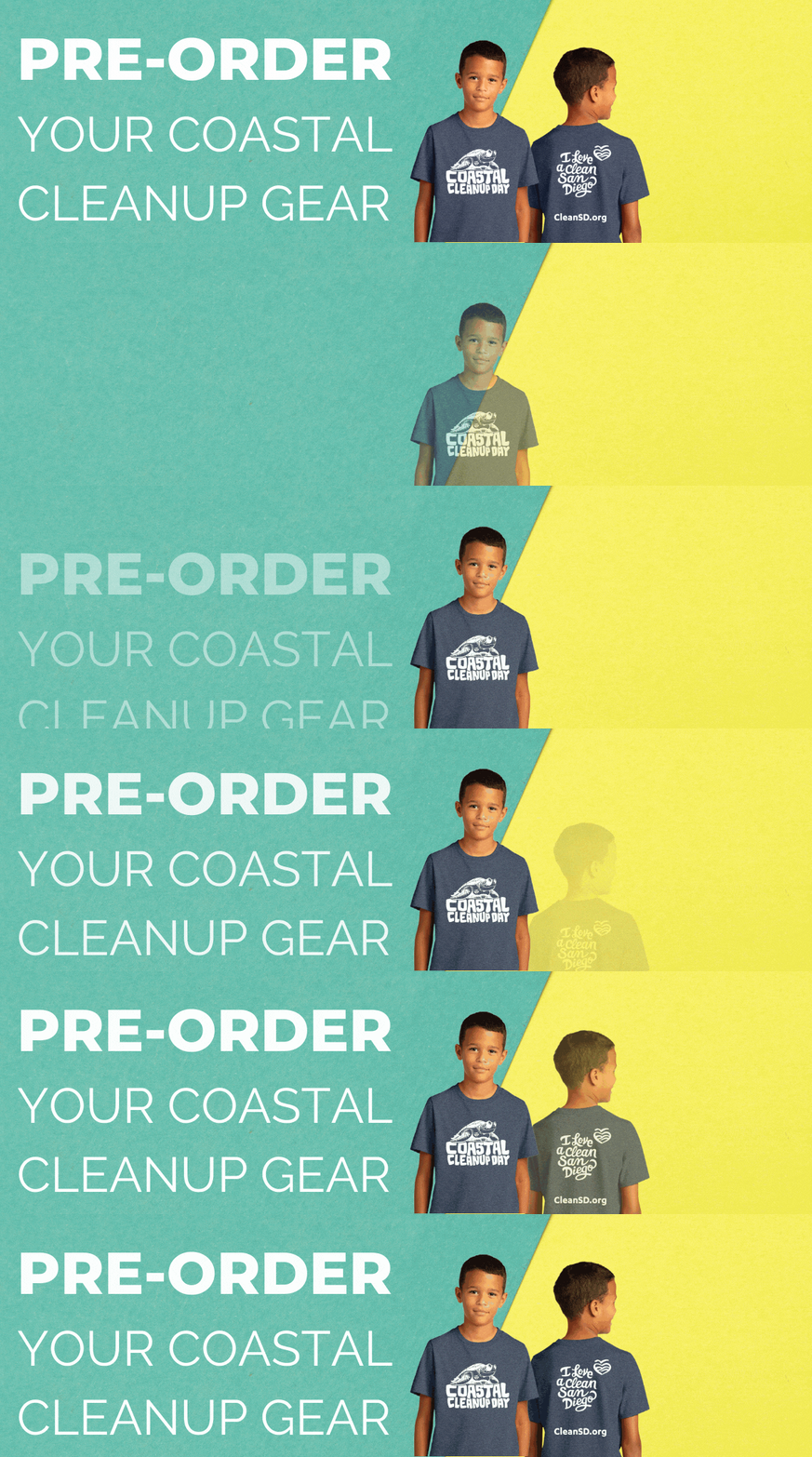
Free online volunteer registration opens September 1, 2021 at CleanupDay.org. Volunteer groups expected to grow significantly from 2020. New Coastal Cleanup Day T-Shirt is available on event website.

International Coastal Cleanup Day returns to San Diego County for its 37th edition on Saturday, September 18, 2021. About 80 percent of all marine debris originates inland, so people of all ages and from all points in the region are encouraged to participate in one of the world’s largest environmental preservation efforts. Volunteers can cleanup at any point during the day. Learn more at the official Coastal Cleanup Day San Diego website CleanupDay.org.

Coastal Cleanup Day T-Shirt

Order your Coastal Cleanup Day Tshirt Today! All proceeds benefit I Love A Clean San Diego. Thank you!

The countywide event is a major part of International Coastal Cleanup, which includes many U.S. states, territories, and over 90 countries. San Diego County volunteers are joining nearly one million volunteers all over the world in the removal of pollution from our connected ecosystems.

“Each year, at least 8 million tonnes of plastics leak into the ocean – which is equivalent to dumping the contents of one garbage truck into the ocean every minute. If no action is taken, this is expected to increase to two per minute by 2030 and four per minute by 2050. Estimates suggest that plastic packaging represents the major share of this leakage. The best research currently available estimates that there are over 150 million tonnes of plastics in the ocean today. In a business-as-usual scenario, the ocean is expected to contain 1 tonne of plastic for every 3 tonnes of fish by 2025, and by 2050, more plastics than fish (by weight).” World Economic Forum Report

Produced by I Love A Clean San Diego for the region, and in cooperation with the California Coastal Commission and Ocean Conservancy, over 269,000 volunteers countywide have removed over 5.4 million pounds of litter and debris from local communities since Coastal Cleanup Day’s inception in 1985. Despite the effects of the pandemic in 2020, San Diego County stood out. The region’s effort accounted for 1 percent of international litter totals, nearly six percent of the national totals and 20 percent of California’s results.

This year, Coastal Cleanup Day is making a return to group volunteering and data collection at litter hot spots across the county. If volunteers would like to find a litter hotspot in the county to do their cleanup, they can check the hotspot map on CleanupDay.org when registration opens Sept. 1.

Keeping with the theme protecting the coast starts at your front door, organizers are still offering a close to home option to allow more volunteers the opportunity to cleanup streets, parks, canyons and beaches within their own communities.

“No matter where you live in San Diego County, we all live in one of the region’s 11 watersheds, which need our help to protect the inland environment, creeks, bays and ultimately the ocean,” said Len Hering, executive director at I Love A Clean San Diego. “We’re happy to be making a significant step toward getting back together in groups to show our love for the region we call home.”

San Diego Gas & Electric (SDG&E) will be celebrating its 20th year participating in Coastal Cleanup Day, making it the longest serving corporate team in the San Diego region, according to I Love A Clean San Diego. SDG&E encourages all volunteers to be community scientists and record their data during and after their cleanup so the results of local efforts are included in the global totals.

“Coastal Cleanup Day is an event our employees look forward to each year, and we will be out at four locations this year,” said Scott Crider, senior vice president of customer services and external affairs at SDG&E. “Heading into our 20th year of volunteering for the event, we are proud to have stopped over 110,000 pounds of trash from going into our waterways.”

Be a community scientist and report cleanup data online.

This year we are recording the Thank Yous volunteers receive from passersby while working on their project.

All volunteers must register at CleanupDay.org to officially participate and have their cleanup totals officially counted in the international effort.

Prior to event day, registered volunteers will receive a link to a simple cleanup report form to record their cleanup data, which can be accessed on mobile device or computer.

I Love A Clean San Diego has created a Volunteer Impact Map. This map visualizes all locations and cleanup totals around San Diego County in real time as volunteers submit data.

Adding an appreciation metric, volunteers will report the number of “thank yous” they receive from passersby while working on their cleanup project.

“It is critical volunteers register first and then review and submit their totals on our easy online cleanup report form,” said Lauren Short, the event’s program manager. “This data gives us a snapshot of the weights and types of pollution collected so we can share those accomplishments internationally.”

To help expand the countywide experience, volunteers are encouraged to contribute to the virtual cleanup’s story through Facebook and Instagram with images and video to show themselves in action as they beautify their community. #ILoveACleanSD @ILoveACleanSD #ProtectYourHappyPlace #CCD2021

Top 10 Items Collected Around the World in 2020

Plastic is the problem: All items listed below are example of single-use plastic.
1. Food Wrappers (candy, chips, etc.) 4,771,602
2. Cigarette Butts 4,211,962
3. Plastic Beverage Bottles 1,885,833
4. Plastic Bottle Caps 1,500,523
5. Straws, Stirrers 942,992
6. Plastic Cups, Plates 754,969
7. Plastic Grocery Bags 740,290
8. Plastic Take Out/Away Containers 678,312
9. Other Plastic Bags 611,100
10. Plastic Lids 605,778
Source: OceanConservancy.org

Supporting partners of Coastal Cleanup Day San Diego County

Think Blue, County of San Diego and its Watershed Protection Program, Project Clean Water, COX Communications, SDG&E, Wells Fargo, Coca-Cola Foundation, News 8, Bank of America, Northrop Grumman, Illumina, Sony, City of Imperial Beach, City of Carlsbad, City of La Mesa, City of Poway, City of Chula Vista and San Diego Regional Airport Authority.

About Coastal Cleanup Day San Diego County

I Love A Clean San Diego has been the official organizer of Coastal Cleanup Day in San Diego County since it was founded in 1985. The event is a major part of International Coastal Cleanup Day and includes many U.S. states and territories, and over 90 countries. Each year the event attracts nearly one million volunteers globally and about 6,000 throughout San Diego County who prevent ocean pollution from our connected ecosystems. International Coastal Cleanup was founded by the Ocean Conservancy and is coordinated in California by the California Coastal Commission.

About I Love A Clean San Diego

Founded in 1954, I Love A Clean San Diego is an environmental nonprofit supporting residents and businesses of San Diego County through youth and adult education, and local action through impactful volunteer events and workshops. As San Diego’s most influential advocate for sustainability, I Love A Clean San Diego’s programs are an environmental catalyst, awakening passion and inspiring action to empower everyone to be leaders in conservation and waste-free living. Our community is passion in action to maintain and improve the health of the home we love.
Zero Waste BBQ

Zero Waste BBQ

Zero Waste BBQ

Summer means longer days, warmer weather, and spending more time outside. For San Diegans, this leads to beach days, barbecues and other outdoor events! It can also lead to a lot of waste – every summer, I Love A Clean San Diego collects thousands of pounds of litter from our local beaches. For your gatherings this this season, consider going zero waste! I Love A Clean San Diego wants to help you host a low waste barbecue so you can spend less time worrying about trash, and more time focused on fun!

Ditch the Disposables

When there are large groups involved, it can be easy to reach for paper plates and plastic cutlery. However, one plastic water bottle requires 1.85 gallons of water to make. When we throw single use items away, we’re throwing away our natural resources as well. It’s best for the environment to use reusable tableware instead. If you’re concerned about being left with a ton of dishes at the end of the night, ask your guests to BYOP – bring your own plate! Let everyone know you are going for a plastic-free event, and people will be excited to help out. Try cloth napkins instead of paper, or glasses and mugs instead of paper cups. You can even find metal skewers for roasting marshmallows, rather than disposable ones.

Here in San Diego, we are lucky to have so many breweries and wineries close by. Try filling a few growlers instead of opting for bottles and cans, and look for wineries that will refill or reuse their wine bottles.

Forgo Food Waste

In the United States, the average person throws about 3.5 pounds of wasted food per week. In planning your menu for your summer BBQ, look for recipes that have ingredients you can buy in bulk. Reducing packaging during your grocery trip can cut down on your overall waste from the event. You can also do your best to use every part of the ingredient – instead of throwing away your potato peels, bake them into chips!

Try out the recipes below for your next event.

For each, you can use up what you have, or easily find ingredients in bulk or recyclable packaging.

Other ideas include…

  • Making sangria or flavored water with leftover fruit
  • Roasting any wilting veggies on the grill
  • Using the last of that loaf of bread in bread pudding

Set it Up for Success

A key component to any zero waste event is making sure your guests know where and how to dispose of things at the end of the night. Make sure it’s clear which bin is for recycling, where they can put compost, and what they should do with anything that might need to go in the trash. Clearly labelling your bins ensures your guests feel confident enough to sort their waste on their own.

Some quick disposal tips…

  • Glass, metal, paper, and plastic containers can all be recycled
  • Food soiled paper and food scraps from produce can be composted
  • Bottle caps are too small to go into the recycling on their own. Collect these throughout the night and place them in an empty metal can to be recycled.

We know it can be hard to make these adjustments in the whirlwind of party planning but try a few small adjustments and see how easily habits can change. The best part is you might inspire friends and family to think differently about their waste habits as well! Let us know how your zero waste barbecue goes by tagging us on Facebook, Instagram or Twitter @ILoveACleanSD!

Pick up more tips and knowledge by attending our Celebrate Sustainably: Summer Fun webinar on July 28th! Register here. For more information on how to adopt a waste-free lifestyle visit WasteFreeSD.org. For more information about our educational programs, contact education@cleansd.org.

Recycling: Top 10 Most Asked About Items in San Diego County 2020

WasteFreeSD Top 10 Recycling Chart

Recycling and the Top 10 Most Asked About Items in San Diego County

WasteFreeSD.org provides solutions for residents looking to recycle, reuse, donate or properly dispose of just about anything.

Did you know the team at WasteFreeSD.org (WFSD) assisted nearly 30,000 San Diego County residents in 2020 through its online waste diversion database and free hotline? And, each year, the number of people looking for advice on how to recycle, reuse, donate or properly dispose of unwanted household goods grows. This resource powered by environmental nonprofit I Love A Clean San Diego, in partnership with the County of San Diego, is a unique regional solution dedicated to recycling and preventing hazardous waste and many common household items from entering the landfill and the environment.

In 2020, resident inquiries increased 56 percent when compared to 2019. I Love A Clean San Diego assumes more people had time at home during the pandemic to clean out their homes, resulting in more questions about appropriate disposal of common household items. More importantly, it appears more county residents are looking for ways to keep waste out of the landfill.

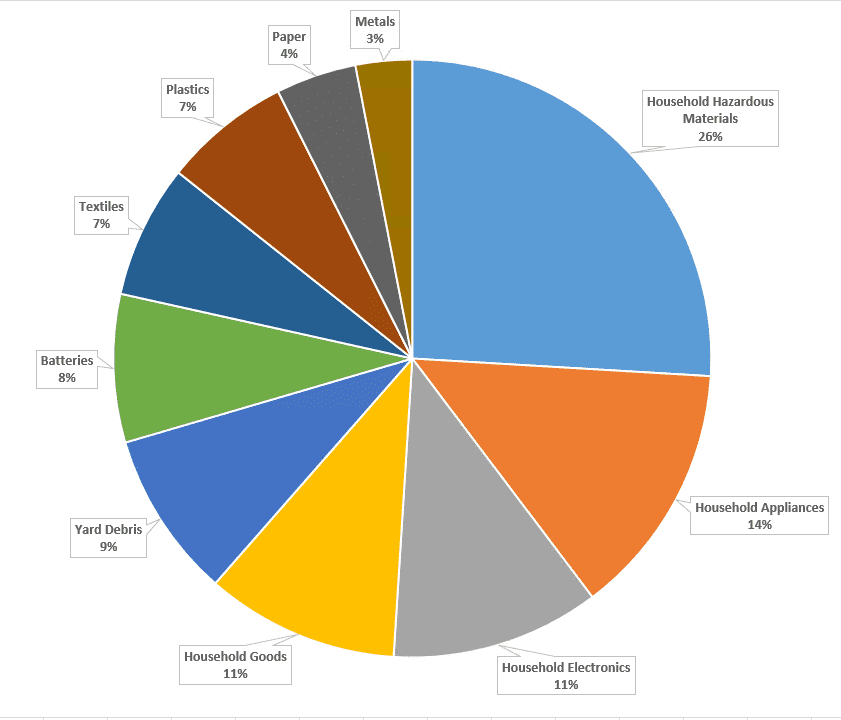
The top ten list of inquiries from residents in the past year provides insight into the types of materials our region has questions about and helps others know there are solutions to their questions.

WasteFreeSD.org Top 10 Inquiries 2020

WasteFreeSD Top 10 Recycling Chart
Pie chart of the top ten most asked about items from WasteFreeSD.org database and hotline in 2020. Credit: I Love A Clean San Diego County.

“Judging by the increasing number of phone calls and hits to our database, we know residents care about doing the right thing for the environment. However, there are still many more who don’t know where to go for information,” said Len Hering Executive Director of I Love A Clean San Diego. “We want all San Diegans to know there are answers to their questions about what should be done with the toaster that no longer works, half-full paint cans, batteries and electronics, broken appliances and that couch that is no longer wanted or in need of repair.”

Some of the Top 10 items like household appliances, electronics (e-waste), household goods and textiles, cannot be placed in the recycle bin, but can still be recycled. WFSD can help point to donation and recycling options for these materials and others.

WFSD is also a great resource for upcycling or repurposing used items. For example, an old mobile phone may no longer work but companies like Apple and Best Buy offer takeback programs where the phones and other e-waste are recycled, dismantled for parts, and then upcycled into new phones or other products.

Unwanted items may also be classified as hazardous waste.

According to the EPA, household hazardous waste or HHWs are products that can catch fire, react, or explode under certain circumstances. These products, such as paints, household cleaners, oils, batteries, and pesticides come with warning labels. Products that contain corrosive, toxic, or flammable ingredients require special care.

Questions about warning labels and other HHW can be answered quickly and WFSD can assist in finding facilities and appointments to help people dispose of the items properly.

The WasteFreeSD.org team is eager to help inform more of the region’s communities and continuously researches resources to keep up to date on the latest low waste resources in the region. The R1-EARTH (1-877-713-2784) hotline staff offer friendly customer service and are open to assist with live consultations between 8 a.m. to 1 p.m. Monday to Friday (except Holidays)

Household Cleaners Resource

Household Cleaners Resource

Household Cleaners

An average of 120 different household cleaners are commonly found and used in and around the household. An average American household spends on average $638 per year on household cleaners alone on products such as bathroom cleaners and kitchen cleaners. The improper disposal of household cleaners creates a very real threat to individuals and the environment. Disposing of household cleaners in the trash can cause hazardous fumes that can injure your family or your local trash collector. Plus, it is illegal to discard of household hazardous waste in the regular trash!

Defining Household Cleaners

Household cleaners are consumer goods designed to assist in cleaning, pest control and general hygiene purposes for at home use. Leftover household products that contain corrosive, toxic, ignitable, or reactive ingredients are considered to be household hazardous waste. Household cleaners include:

  • Auto detail products
  • Oven cleaners
  • Drain cleaners
  • Toilet cleaners
  • Bleach
  • Pool chemicals
  • Electronic cleaners
  • All-purpose cleaners
  • Paint thinner
  • Nail polish remover
  • Turpentine
  • Carpet stain removers
  • Detergents
  • Disinfectants

Empty Household Cleaner Containers

Empty household cleaner containers can be placed in your recycling bin. Make sure to dry out small amounts of residue and leave the cap on for all containers.

Leftover Household Cleaners

Unused or leftover household cleaner containers must be taken to a Household Hazardous Waste Collection Facility to be disposed of. Residents are allowed to take up to 15 gallons or 125 pounds total volume of household hazardous waste per household per drop-off. Visit wastefreesd.org to find out which facility you can take it to.

Eco-Friendly Cleaners

Instead of buying conventional household cleaners that are full of chemicals, consider purchasing eco-friendly products that use recyclable packaging and natural ingredients.

Blueland

Blueland is a company that is both Climate Neutral Certified and Cradle to Cradle Certified. Their ingredients are all sustainably sourced and they use packaging that is plastic free, recyclable and compostable. Blueland products are all made without water – just purchase their tablets and drop them in a Forever Bottle filled with water and start cleaning in minutes.

Cleancult 

All Cleancult products are created using natural, powerful formulas. Their bottles are made with reusable, shatter-resistant glass which can be consistently refilled whenever you run out. Their refillable containers are all made out of recyclable milk cartons to reduce waste and plastic.

Supernatural 

Supernatural products are all-natural and sustainably sourced, with the goal of having the lowest carbon footprint possible. Their bottles are designed to look aesthetically pleasing while lasting a very long time. Essential oils are also added to their all their products to make them smell amazing.

Grove Collaborative 

Grove Collaborative is a subscription-service company that is committed to zero-waste and provides carbon neutral shipping. A few examples of clean brands they carry are Meyer’s, Burt’s Bees and Method. All products in their subscription box are non-toxic and created using plant-based formulas.


Paint Recycling Guide

Recycling Paint

Paint Recycling Guide

Disposing of paint in the trash or sink causes toxic chemicals to seep into the soil and water, thus creating a very real threat to individuals and the environment, not to mention it is illegal. Leftover paint is considered household hazardous waste. Household hazardous waste products, such as paints, contain potentially hazardous metals that require special care when you dispose of them.

Where To Recycle Paint 

There are about 50 paint retailers in San Diego that currently participate in the PaintCare program. PaintCare is a paint stewardship program on behalf of paint manufacturers in California that have passed paint stewardship laws in order to keep harmful chemicals out of the environment. The program allows participating paint retailers to take back paint from residents to recycle it properly. Examples of participating paint retailers include Sherwin Williams and Dunn Edwards. Visit wastefreesd.org and search “Paint” to find the closest PaintCare location near you.

Types Of Paint Accepted At PaintCare Locations 

  • Interior and exterior architectural paints: latex, acrylic, water-based, alkyd, oil-based, enamel (including textured coatings)
  • Deck coatings, floor paints (including elastomeric)
  • Primers, sealers, undercoaters
  • Stains
  • Shellacs, lacquers, varnishes, urethanes (single component)
  • Waterproofing concrete/masonry/wood sealers and repellents (not tar or bitumen-based)
  • Metal coatings, rust preventatives
  • Field and lawn paints

Paint Recycling Checklist

  • Paint must be in its original container
  • Container must be labeled and legible
  • Container must be in good condition, not leaking
  • Container must be 5 gallons in size or smaller
  • Check with the site if you have more than 5 gallons

What To Do If Labels Are Missing And Paint Cans Are Rusting

Paint cans that are leaking, unlabeled, rusting or empty are not accepted at PaintCare drop-off sites. Paint retailers also do not accept aerosol, industrial, original equipment or specialty coatings. These items should be taken to a Household Hazardous Waste Collection Facility. Visit wastefreesd.org to find the closest facility near you.

What To Do With Paint Cans That Are Empty

Paint cans that are completely empty or all dried up can be placed in your recycling bin.  Just remove the lid before placing in your recycling bin.


Fluorescent Light Bulbs and Tubes Recycling

Fluorescent tube Recycling

Fluorescent Light Bulbs and Tubes Recycling

Fluorescent light bulbs and light tubes are considered hazardous waste items because they contain a small amount of mercury which poses a danger if released into open air. According to the Environmental Protection Agency (EPA), Compact Fluorescent Lamps (CFLs) on average contain only about four milligrams of mercury, which might seem insignificant compared to 500 milligrams of mercury in older thermometers. However, they should still be disposed of properly in order to prevent any adverse effects on the environment and human health. Recycling of fluorescent light bulbs/tubes can also ensure that other materials of the bulb such as glass and metals are all reused.

Batteries Plus Bulbs 

Recycling your fluorescent light bulbs/tubes, batteries and electronics at Batteries Plus Bulbs is easy and convenient. Bring your items to the nearest store and they will then pass the items along to their recycling partners to repurpose salvageable materials. Be aware that fees may apply, so feel free to contact the store before you go to inquire about pricing.

EnviroGreen Electronic Recycling Services 

EnviroGreen accepts fluorescent light bulbs for recycling at a price of $1/bulb. They also accept batteries and appliances for a small fee, and electronics free of charge. EnviroGreen has a residential pickup service starting at $35 and a business pickup service starting at $65.

Universal Waste Disposal Company

Universal Waste Disposal Company offers fluorescent light bulb, batteries and electronics recycling services. Visit their website to get a free quote.

Home Depot

Certain Home Depots accept fluorescent light bulbs for recycling in store. Call your local Home Depot before you go to make sure they are currently accepting the CFLs.

Lowe’s 

Most Lowe’s stores offer a recycling center that accepts fluorescent light bulbs near the entrance. Call your local Lowe’s before you go to make sure they are currently accepting the CFLs.

Hazardous Waste Collection Facilities

If your fluorescent light bulb or light tube is broken, the only place that you would be able to take it to would be your local hazardous waste collection facility. Make sure you safely place the broken bulb/tube in a tightly sealed container. Visit WasteFreeSD.org to find the location of your closest hazardous waste collection facility.

Bulbcycle 

Bulbcycle has a free mail-in program for businesses to recycle fluorescent light bulbs/tubes, batteries and electronics. Businesses can fill up different sized containers at their own pace and return the container to Bulbcycle within a year. This will not only help keep hazardous materials out of the landfill, but will also earn your company LEED points as well.

TechWaste Recycling

TechWaste Recycling offers nationwide business pickups for fluorescent light bulbs, fluorescent light tubes, batteries and electronics. Visit their website or call them to schedule a pickup.