Wanna Be Like Mike? Get the Goods on Coastal Cleanup Day Site Captain, Michael Page!

Ever wondered about the secret life and thoughts of our site captains?  Well, we had the opportunity to interview one of our MVSCs (Most Valuable Site Captains), Michael Page, about why he loves Coastal Cleanup Day, why he thinks YOU should get involved, and some weird things he has found during cleanups.  (Interview has been edited).Mpage1
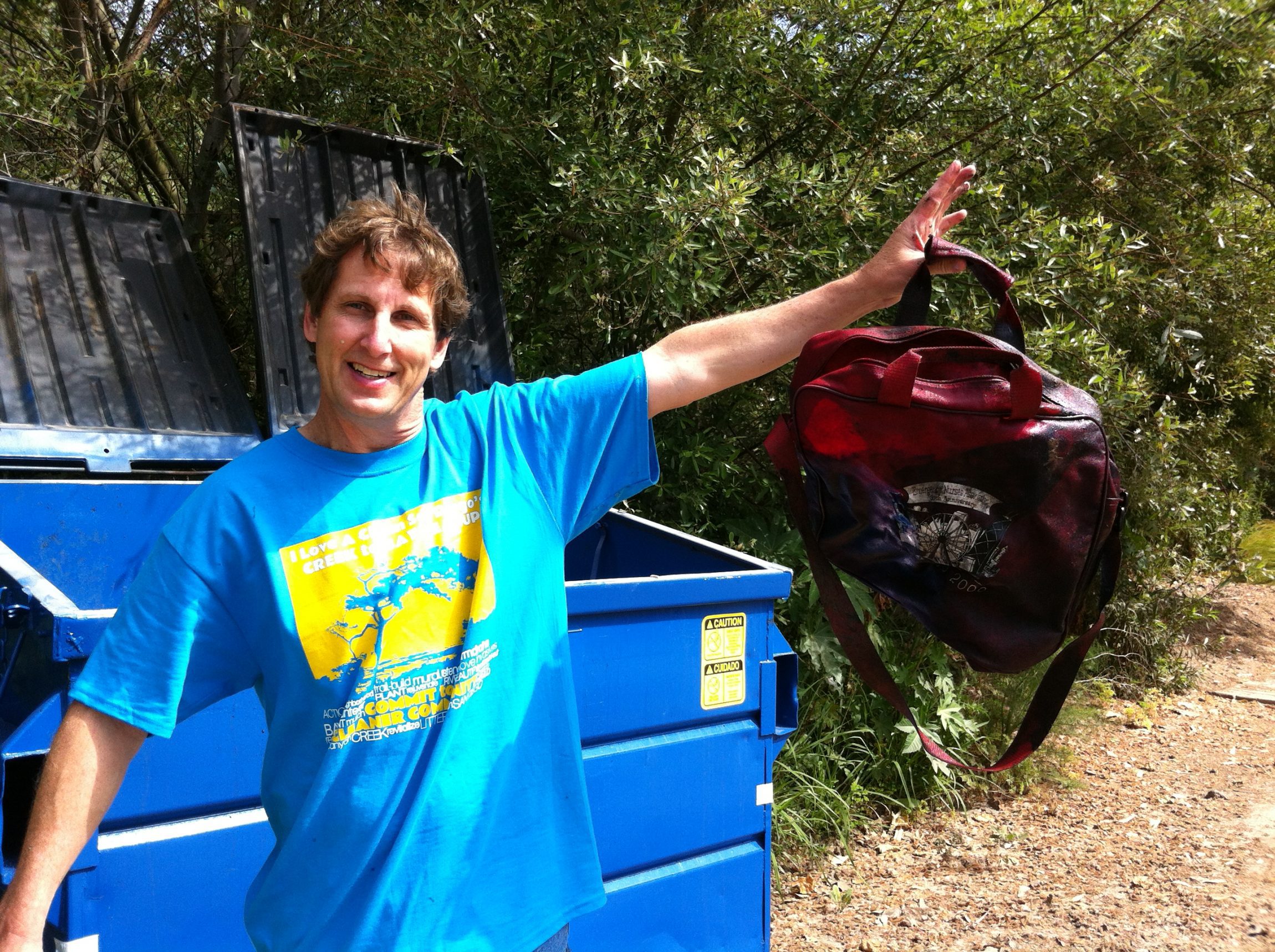
Why do you think Coastal Cleanup Day is important for our local environment?

Coastal Cleanup Day raises public awareness of the interconnectedness of our creeks and oceans.  People take a clean environment for granted; when you look around there are areas that aren’t clean and would benefit from community attention.

Why did you decide to become a CCD Site Captain?

I’m an environmental planner for AECOM and have a friend and co-worker who did canyon cleanups- he encouraged me to do one with ILACSD.  I volunteered to be site captain for my second time volunteering.  I like to volunteer at a different site each time

What is important or unique about your cleanup site?

This year, my cleanup site is the San Elijo Lagoon. This is a part of the coastline that is important for wildlife habitat, recreation and clean water.

What is your favorite part of Coastal Cleanup Day?

All the great people you meet! We bring a big group from our office who doesn’t usually work together. This is a great opportunity to work with people from other groups and neighborhoods and make connections with other like-minded individuals.

What is the most unique item you’ve found at a cleanup?

An unopened bottle of champagne in Sorrento Valley.  (PS- Michael mentioned that no cleanup member partook; the bottle was recycled. However, we do encourage staying hydrated (with water!) during this cleanups).
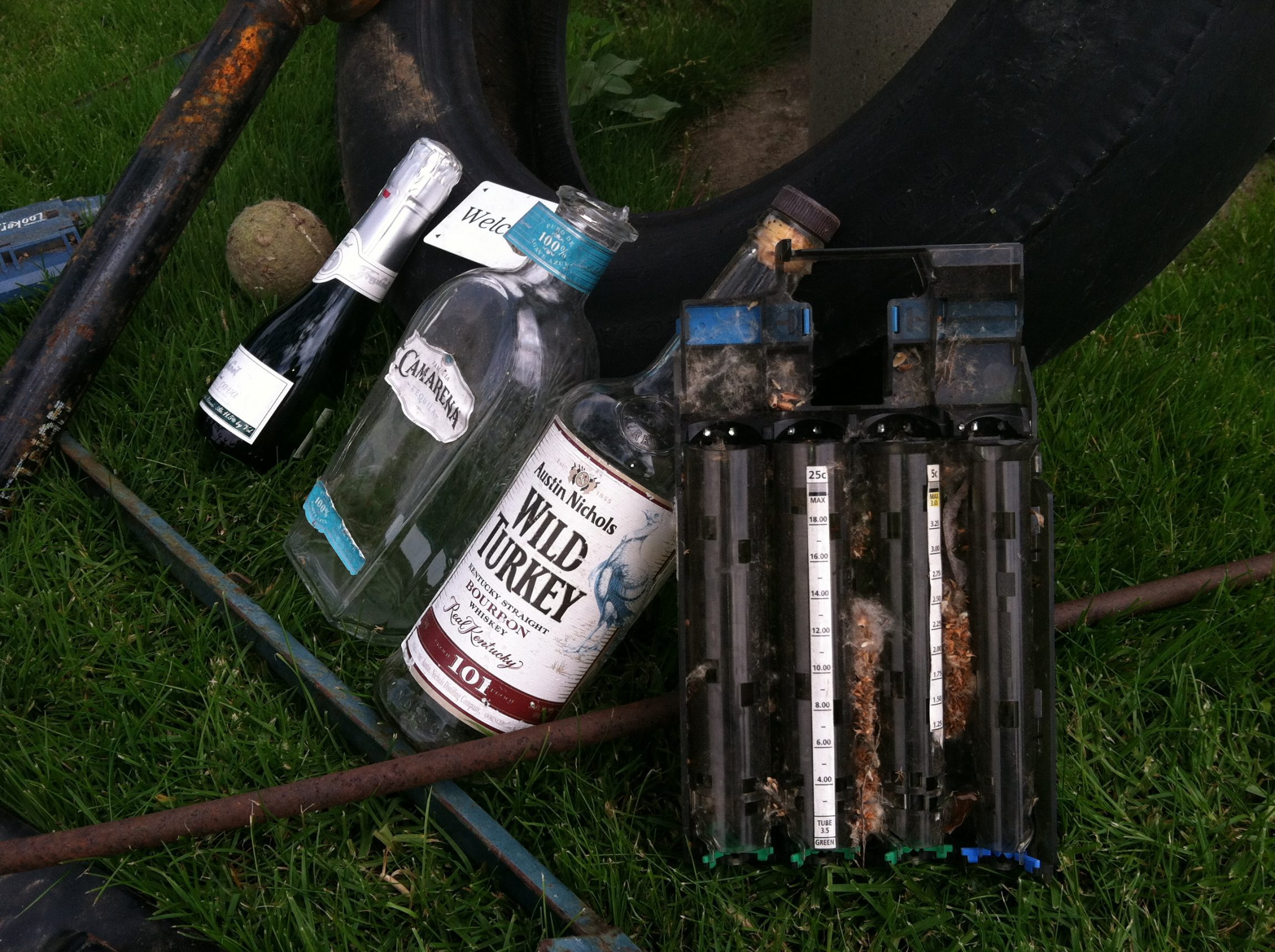
Cheers to Coastal Cleanup Day!

Thanks Mike! We appreciate all your hard work and are excited to see you again for this year’s Coastal Cleanup Day on September 21! 

Want to join?  Sign up to volunteer! We have 90+ sites throughout San Diego County.  Volunteers also get cool giveaways like tote bags and free Chipotle’s!   
CCD-Logo-date-time-website

Keep Cool With These Hot Tips for Your Home and Your Furry Friends

Today’s blog post comes from our Development + Marketing Coordinator, Anna Fadem. Anna has a cat,  no air conditioning, and had a lot of fun looking up photos for this blog.servlet

 San Diego is known for its great, warm weather, but August is our hottest month and it can get a bit, well, too great.  ILACSD has always been a big believer in saving energy, and we’ve been working with SDGE to get the word out! I can’t help you if you chose to tromp around outside for a hike or a surf (or a cleanup!), but here are some tips for staying cool at home while keeping your energy costs low.


Be a fan of fans! Use a ceiling or portable fan instead of A/C.

Beware of vampire energy drain! Power down equipment. Unplug TV, Cable, DVD or gaming devices when idle or use a smart power strip.

Change filters regularly. Make sure the filter in your central A/C is clean to help it run more efficiently.

Install weather stripping. Keep cool air in with weather stripping on doors/windows.

Lucky owner of a pool or spa? Use a cover.  Covers can reduce heat loss by up to 90%.

Switch off and replace. Turn lights off when you leave a room and replace regular bulbs with CFLs. (The new CFLs have way better lighting quality and won’t make you look like you’re in a dentist’s office).

Filter pools and spas in the early morning or after the sun goes down.  Hey, it’s cooler then anyway- win win!

Install window coverings. Install shade trees, awnings or blinds over brightest windows.  This is a great excuse to buy those flamingo print curtains you’ve always wanted.

Set your A/C to 78°F between 11 a.m. and 6 p.m., and turn it off if you’re not home and don’t have pets.

beagle

Got pets?  All that fur (well, maybe not for you reptile and fish owners out there) can really overheat those guys.  Keep them safe and happy with these tips.

Never ever leave a pet in the car. On an 85-degree day, for example, the temperature inside a car with the windows opened slightly can reach 102 degrees within 10 minutes. After 30 minutes, the temperature will reach 120 degrees.

Limit exercise on hot days. Try and stick with the morning and evenings.  Watch out for hot asphalt that can burn paws. Also, sunblock isn’t just for your nose- pets with pink noses can get sunburned, so rub a little on them, too!

Provide ample shade and water. Any time your pet is outside, make sure he or she has protection from heat and sun and plenty of fresh, cold water. In heat waves, add ice to water when possible.  Tree shade and tarps are ideal because they don’t obstruct air flow.  A doghouse does not provide relief from heat- in fact, it makes it worse.

Don’t rely on a fan. Pets respond differently to heat than humans do. (Dogs, for instance, sweat primarily through their feet, who knew?) And fans don’t cool off pets as effectively as they do people.

Cool your pet inside and out. Whip up a batch of quick and easy DIY peanut butter popsicles for dogs. (You can use peanut butter or another favorite food.)

Cat owner? When it gets really hot, here’s my personal tip: sometimes it can help to get a damp washcloth and rub the cat down- this will help the heat evaporate and help your cat be “feline” fine in no time!

Also an option for keeping pets cool...
Also an option for keeping pets cool…

Test Your Recycling Trivia!

Today’s blog post comes from our Development and Marketing Coordinator, Anna Fadem. Anna is currently in school and wants to make other people take tests…servlet

We know you want to keep America beautiful. Hey, so do we!  Luckily, we here at I Love A Clean San Diego are an affiliate of a national organization called… Keep America Beautiful!  We have adopted two of KAB’s programs and do them locally – the cigarette litter prevention program (which has decreased those butts by 55%) and America Recycles Day.  Keep America Beautiful recently released some really interesting information on how much Americans recycle and how we can up these rates.  Your recycled items can be turned into all sorts of cool stuff:

  • Recycled steel cans can become a bicycle
  • Recycled plastic milk bottles can become an outdoor bench
  • Recycled plastic water bottles can become a pair of blue jeans
  • A cereal box can become a board game (Life cereal=Life board game?)
  • Aluminum cans can become new aluminum cans endlessly and are infinitely recyclable!

    A milk bottle can be recycled into a park bench (cat not included)
    A milk bottle can be recycled into a park bench (cat not included)

KAB provided us with some good statistics on recycling.  So let’s get your recycling trivia up to snuff! School’s out, but here’s a fun quiz where everyone gets an A (because I Love A Clean San Diego loves its readers! And because the answers are at the end of this post).

Ready Set… Go!

1. How much trash does the average American generate per day?
a. 1.3 llbs
b. 2.7 lbs
c. 4.4 lbs
2. How much of that trash is recycled or composted?
a. 0.4 lbs
b. 1.5 lbs
c. 2.1 lbs
3. How much trash does the US produce each year?
a. 57 million tons
b. 176 million tons
c. 250 million tons
4. What percentage of Americans say they are “avid recyclers” (our favorite kind!)
a. 18%
b. 38%
c. 59%
5. Why do Americans say they don’t recycle as much as they should?
a. Lack of access
b. Convenience
c. Awareness/education
d. All of the above
6. So what can we do to get the message out there?
a. Mobilize individual ownership
b. Inspire an emotional connection
c. Learn what you can recycle at WasteFreeSD.org
d. Check out this really funny (really, our staff LOVES this video) PSA from KAB
e. All of the above

Let’s see how ya did! Answers:  c, b, c, b, d, d

download

We appreciate you for all the work you do to keep American beautiful!  For more tips on what you can recycle and where, check out WasteFreeSD.org.

A Big Welcome To Our Community Events Intern, Maddy!

Today’s blog post comes from Maddy Kutsch. Welcome, Maddy-we’re so excited to have you on board!maddy

I joined I Love A Clean San Diego almost a month ago now (Woo!) as a Community Events intern and enjoy every second of it! I am focusing on creating maps of cleanup sites and other ILACSD programs through ArcMap, a mapping and geospatial information program. Recently, I completed a map of Storm Drain Stenciling locations completed by volunteers in the last three years in order to discover missed locations in the City of San Diego that may not have been otherwise apparent. I also finished a map of our Adopt A Beach locations alongside the schools that received visits from our Education Department, so that schools can see which cleanup sites are convenient and practical to potentially adopt. Currently, I am starting to undertake a mapping project to determine the countywide use of the R-1-EARTH Recycling hotline by comparing the origins of calls with volunteer-reported hazardous waste dump sites across the county. It will be a challenging project, and I cannot wait to continue to aid I Love A Clean San Diego through digital analysis and mapping.

On June 6, I was lucky enough to be a part of ILACSD’s annual Kids’ Ocean Day, a massive event encompassing almost 1,000 children and resulting in a huge areal art image (if you want to learn more about the event and see our photo, head over to http://cleansd.org/e_programs.php). I still feel honored to have been included in the event, and it will be something I remember forever.

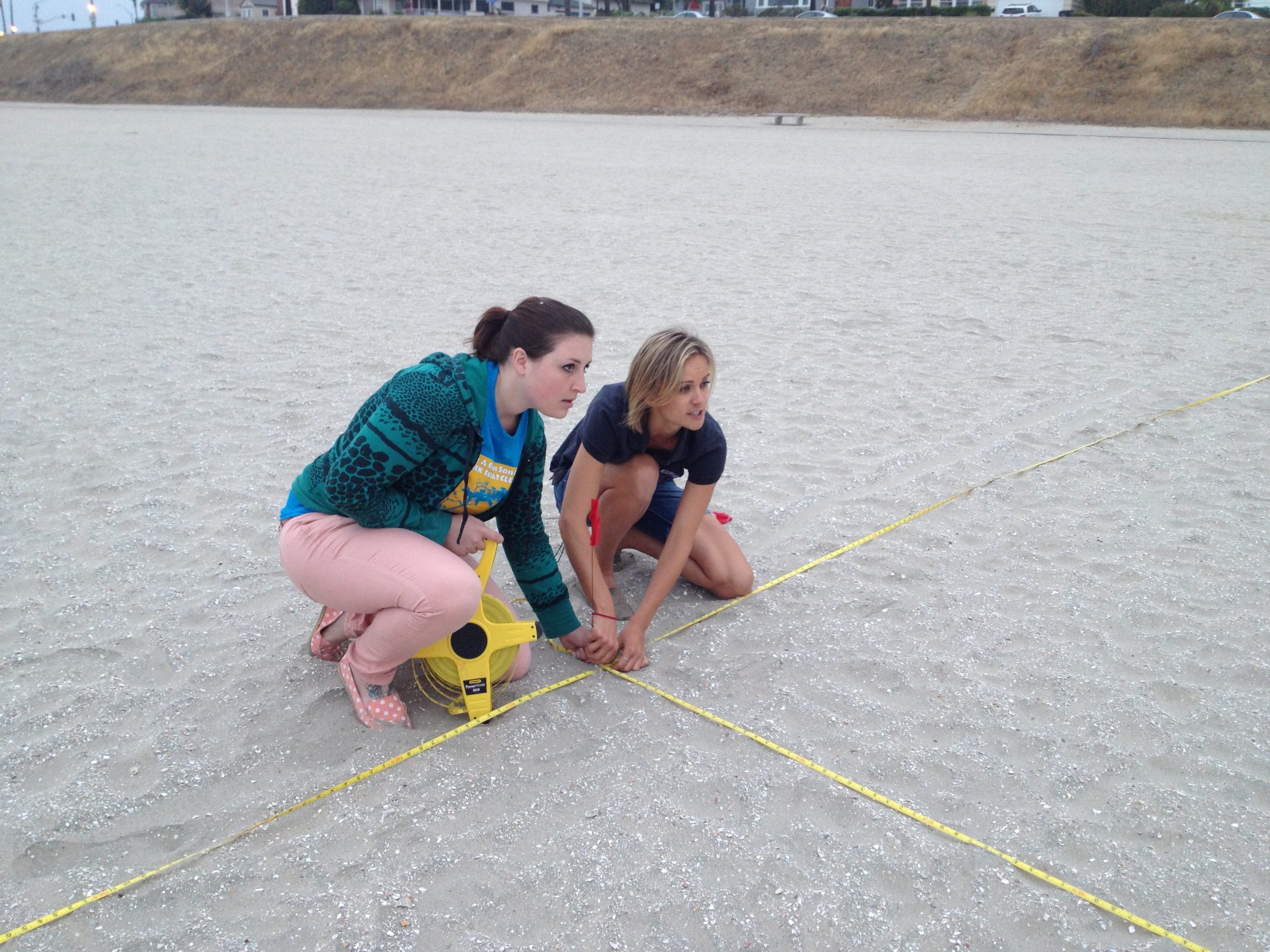
Here I am at Kids' Ocean Day, measuring out the grid for our aerial art.
Here I am at Kids’ Ocean Day, measuring out the grid for our aerial art. Despite my very serious face, I was super excited about the project!

Currently, I am a San Diego State student, about to begin my final year of my Bachelor’s degree in Geography: Environmental Resource Analysis. I am also in the process of completing SDSU’s certificate in Geospatial Information Systems, so that I can work with digital maps in the future. After this year, I plan on pursuing a Masters in Geography either in San Diego or Los Angeles.

In my free time, I geek out and create costumes for the upcoming San Diego ComicCon (nothing fancy, just for me!). I also travel when I have the money, and have visited many countries around the world. This exposure to other countries in varying degrees of urbanization and development sparked my passion for sustainable growth and environmental awareness at all levels of economic and social class, and I am excited to further discover how I Love A Clean San Diego creates positive environmental change in the community.

Cheers to Stone Brewery, Keeping Our Summer Social Sustainable!

Today’s blog post comes from our Education Coordinator, Erika Bjorkquist, who is an expert on “green” beerErika-team

Summer is upon us! One of my favorite things to do after a long day in the sun is to relax with an ice-cold beer. And in San Diego, we are lucky to have so many award-winning microbreweries at our fingertips. But did you know that when you reach out for that Levitation IPA, you are actually helping the environment?

Stone Brewery World Bistro and Gardens just opened a new location walking distance from ILACSD’s offices. Along with bocce and movies, Stone is also on the forefront of sustainability. Sustainability has not always been a word associated with beer…until now. Many local breweries have decided that green beer isn’t just for St. Patrick’s Day. From their ingredients to their delivery trucks, Stone Brewery World Bistro and Gardens practices many forms of sustainability.

As an environmentally conscious person, I’m stoked that a local business promotes renewable energy through their use of solar panels and has a water reclamation system that prevents 30,000 gallons of wastewater from entering the sewer system each day. However, what I really care about is the food and beer.  Being vegan I have become aware of what ingredients are in food and I recently discovered that not all beers are vegan – weird. I’m happy to report, according to Barnivore, Stone’s beers are vegan! Often I am frustrated by salads as the only vegan options available; Stone has a smorgasbord of vegan friendly options!  They have even gone a step further through the promotion of their Meatless Monday Menu, preventing 110,448 lbs. of CO2 from being released annually. Not only am I eating a nutritious and tasty meal, but I know that it is coming from quality ingredients, since Stone Brewery also uses all-natural ingredients in their beers and local, organic produce in their restaurant. Also, they are the largest purchaser of local, organic produce in San Diego County. Talk about supporting local businesses! Some of the extra food is composted and the spent grain from brewing is repurposed.

Cheers to a great (and sustainable) summer!

Just writing this is making me thirsty! Haven’t visited Stone yet? No problem! Check out their sustainable practices on July 20th at I Love A Clean San Diego’s Summer Social. Support a local business and nonprofit organization! Tickets are $35 and include two craft beers (or house wine for you non-beer drinkers), food, and a commemorative pint glass. There will also be aauction and raffle that include two round-trip tickets anywhere Alaska Airlines flies, and a week-long stay at a private vacation home in Kona, Hawaii, Bocce ball, a growler toss, and other fun games, and for kids, a visit from Papa Smurf and Smurfette, to promote their new film The Smurfs 2, “America the Bluetiful”! Take the opportunity to soak up the summer sun, mix and mingle with other eco-minded San Diegans, and experience the new Stone Brewing Liberty Station on July 20th!

Click to register for our summer social, guaranteed to be full of good, clean, fun!
Click to register for our Summer Social, guaranteed to be full of good, clean, fun!

Whadya Do When It’s Time for Your Mattress to Go to Its Final ‘Resting’ Place?

Today’s blog post comes from our Hotline Program Assistant, Barbara Lopez, on of our resident recycling gurus!

BLopez_team

It is recommended that mattresses be replaced every 7-10 years and this results in nearly 20 million mattresses being landfilled each year. The disposal of old mattresses poses a few problems. First, mattresses that are landfilled take up about 23 cubic feet, do not decompose, and the steel springs can easily damage equipment.  Another problem with old mattresses is that they are sometimes illegally dumped along roads or in open spaces. Not only are they unsightly, but old mattresses tend to attract pests and mold. Occasionally, our awesome volunteers will find a mattress during a cleanup and work tirelessly to pull it out of a canyon and into the dumpster. Anyone who has ever had to move a mattress knows what an effort that can be!

About 85% of the materials in a mattress can be recycled through simple manual disassembly. The polyurethane foam can be reprocessed, the cotton and steel springs can also be recycled. The wood in the mattress can be recycled but it usually has low value due to the staples. Although mattresses can be recycled, it can be quite difficult for consumers to find a place to recycle them. Our recycling hotline receives several calls from residents asking where to recycle an old mattress and many are surprised to hear that there is no drop off location for it except a landfill. However, some mattress retailers will refurbish or recycle your old mattress when you purchase a new one from them; it is best to ask your mattress retailer what is done with old mattresses.

Time for a wake-up call on what to do with these guys!

Luckily, mattress recycling may become much easier in the near future. State senators Loni Hancock and Lou Correa have introduced SB 254, a bill that would create an industry-led organization that would administer a mattress recycling program in California. The authors of the bill claim that it would help conserve resources, save landfill space, reduce the impact of illegally dumped mattresses, and create new jobs in the recycling industry. The bill was approved by the State Senate in late May and now moves to the Assembly for hearings and a floor vote. We’ll keep our eyes out for any updates on this bill.

For more information about recycling, visit our one-stop recycling resource WasteFreeSD.org!

Plankton, Krill, and….Plastic?

Today’s blog post comes from our Education Coordinator and Plastics Detective Extraordinaire, Erika Bjorkquist

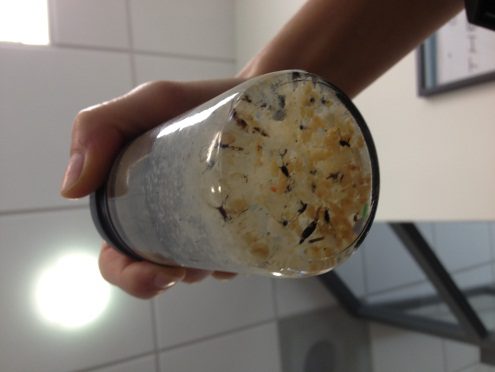
An ocean sample- look at all that gunk!

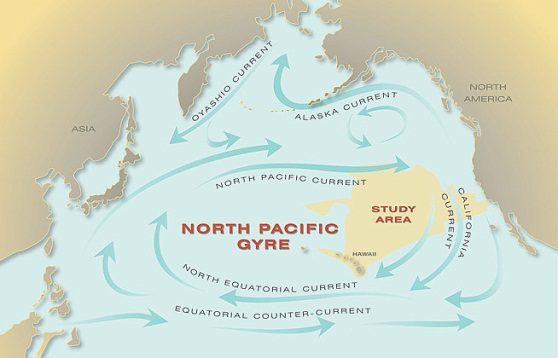
Today, we received a ‘sick’ new hands-on piece to augment our Watershed Protection Presentations. When you look at the picture below, what do you see? Before scenes of snowglobes flash through your mind’s default state, look closer. Those white specks are not falling snowflakes, but organic materials. But is that it? Along with plankton and other invertebrates, you can see plastic. One of these things is not like the other. What is plastic doing alongside plankton, and a better question is why do I feel the need to tell you about this? This latest addition to our educational resources is a sample from our oceans, specifically the North Pacific Subtropical Gyre, plastic and all.

The North Pacific Subtropical Gyre

I first heard about the Great Pacific Garbage Patch in 2003 in Mr. Dorr’s APES class. Since my discovery, I have become more interested in the topic and finally in 2013, I feel comfortable enough with the subject to introduce the problem to others. The problem is that our oceans are inundated with trash. While many varieties of trash enter our oceans each second, minute, day, year, plastics are what are sticking. Mr. McGuire was right, plastics are the future. They are the future of our oceans. The reason that plastics have developed into such a big problem is that they do not biodegrade, like organic material, they photodegrade. Like the name suggests, plastics breakdown [degrade] by sunlight [photo]. This is not a chemical change but a physical one; they do not disappear, they simply become smaller and smaller pieces of plastic.

These plastics are considered microplastics, a mere 5mm in diameter. Their accumulation creates a ‘plastic soup’, which comprises the Pacific Garbage Patch. Yum. This is a recipe for disaster, as our sea creatures have not adapted to our trash in their habitats. Often times animals will ingest trash when instead of food. I mean, can you differentiate between plastic and plankton in that jar?

While this seems dark and stormy, there is a solution! It starts with education. I Love A Clean San Diego talks about these issues and more in our Watershed Protection presentations. For more information about our programs, shoot me an email at ebjorkquist@cleansd.org.

6 Ways to Be a Responsible Boater

Today’s blog post comes from our invaluable boating aficionado and Administrative Assistant, Brittany Fischer!

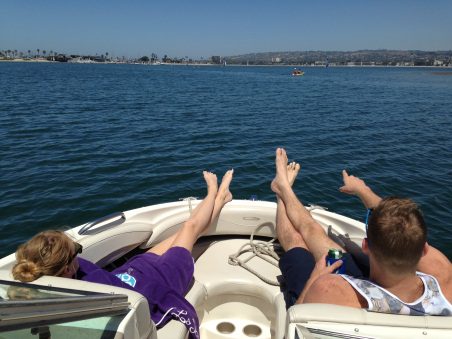
“Salt in the air, sand in my hair”, that defines my summer in San Diego! What better way is there than spending your time by the beaches and bays? One of my favorite things to do during the warm weathered months is going boating! The mist of salt water and the adrenaline from the boat speed is always bound to be a good time. Boating is a great recreational activity but it’s important to remember that boating can pollute our waters. So here are a few tips on how to be a responsible boater this summer:

Toes to the nose
Toes to the nose

1.       Remember to be green!

Something as simple as bringing a reusable water bottle can make a difference! Why? Empty plastic bottles can easily and accidentally fly out and end up in the water. This goes for all trash. Make sure to keep your trash sealed away!

 2.       Plan out your boat route!

Whether you’re on Mission Bay or the ocean, try just anchoring your boat for a few hours, not only is it saving your fuel, it’s less pollution that goes into the water. Also, make sure to watch out for shallow areas to avoid getting stuck but also avoiding damage to habitats.

Keeping the bay beautiful

 3.       Avoid fuel spills!

When filling your tank, fill slowly and leave 10% empty. The fuel will expand as it warms up. When boaters do this properly, animal lives are saved!

 4.       Say no to hitchhikers!

Once on land, drain the water out of every part of the boat and engine. This avoids the spread of invasive species. After boating ANYWHERE, always clean your boat DRY before going into water again.

5.       Switch up your “after boating” cleaning supplies!

No boat owner likes a dirty boat but try using eco-friendly cleaning supplies! It gets the job done and it is not harsh on the environment.

6.       Make sure to recycle your boat waste properly!

Boat oil, paint, batteries, and cleaning products need to be disposed of properly! Not sure exactly where? Try ILACSD’s hotline! 1-877-R-1-Earth or visit www.WasteFreeSD.org

Bringin’ in the Bins!

Today’s blog post comes from ILACSD’s Director of Development & Marketing, and beach lover, Morgan Justice-Black. MJB-2010-Rounded-Corner

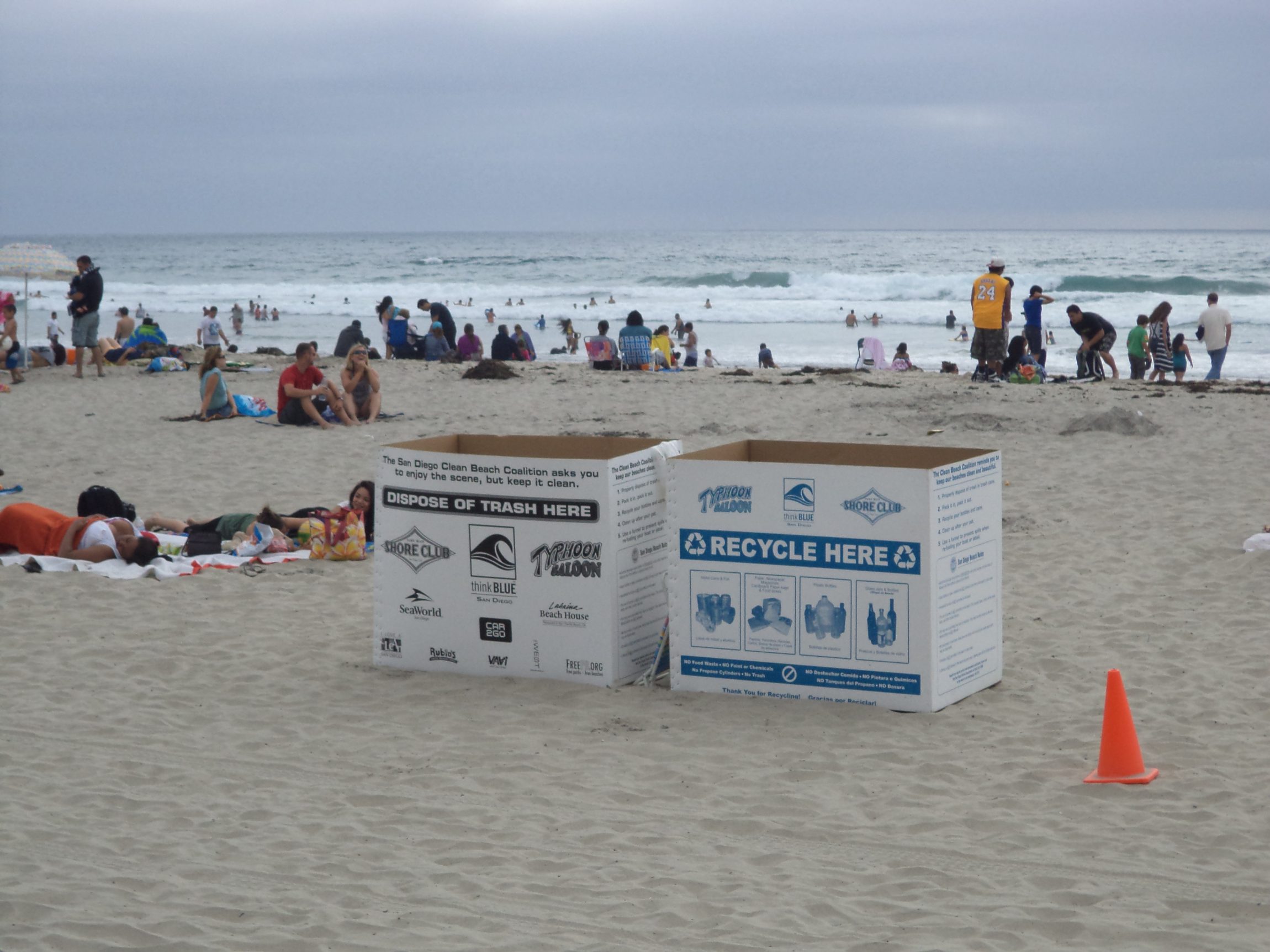
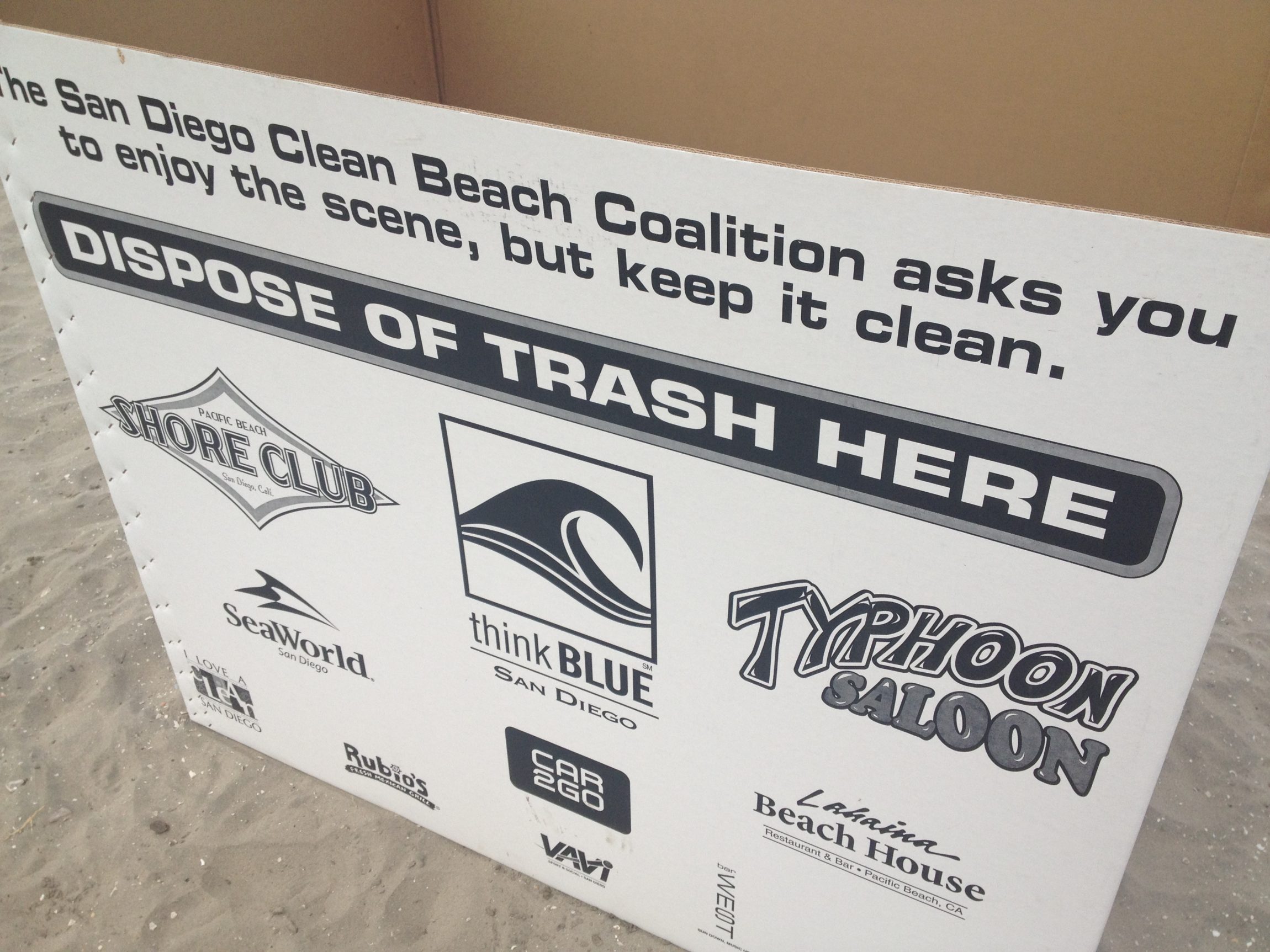
Were you one of the many who braved the traffic and parking struggles to hit the beach over Memorial Day weekend? Well, if you happened to be along Mission Bay, Mission Beach, Pacific Beach or Ocean Beach, you probably saw these big cardboard bins on the sand.

Belmont Shores, Memorial Day
Memorial Day at Belmont Shores, before…

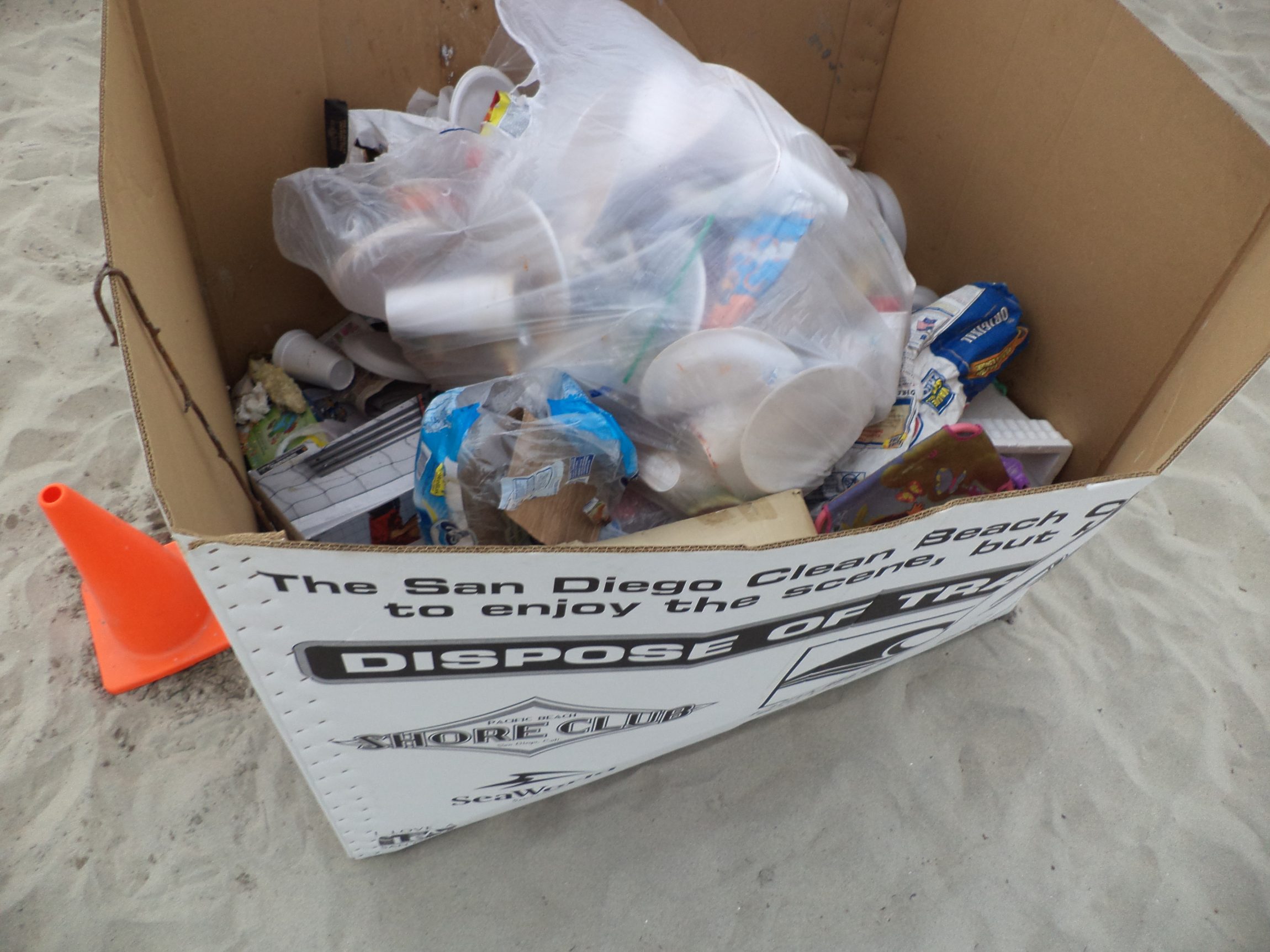
I Love A Clean San Diego and FreePB.org worked together again this year to order hundreds of temporary trash and recycle bins for the big beach holidays over the summer. This year is the first year that we were able to place the bins in time for Memorial Day weekend, and man were they popular!

Memorial Day at Belmont Shores- after!

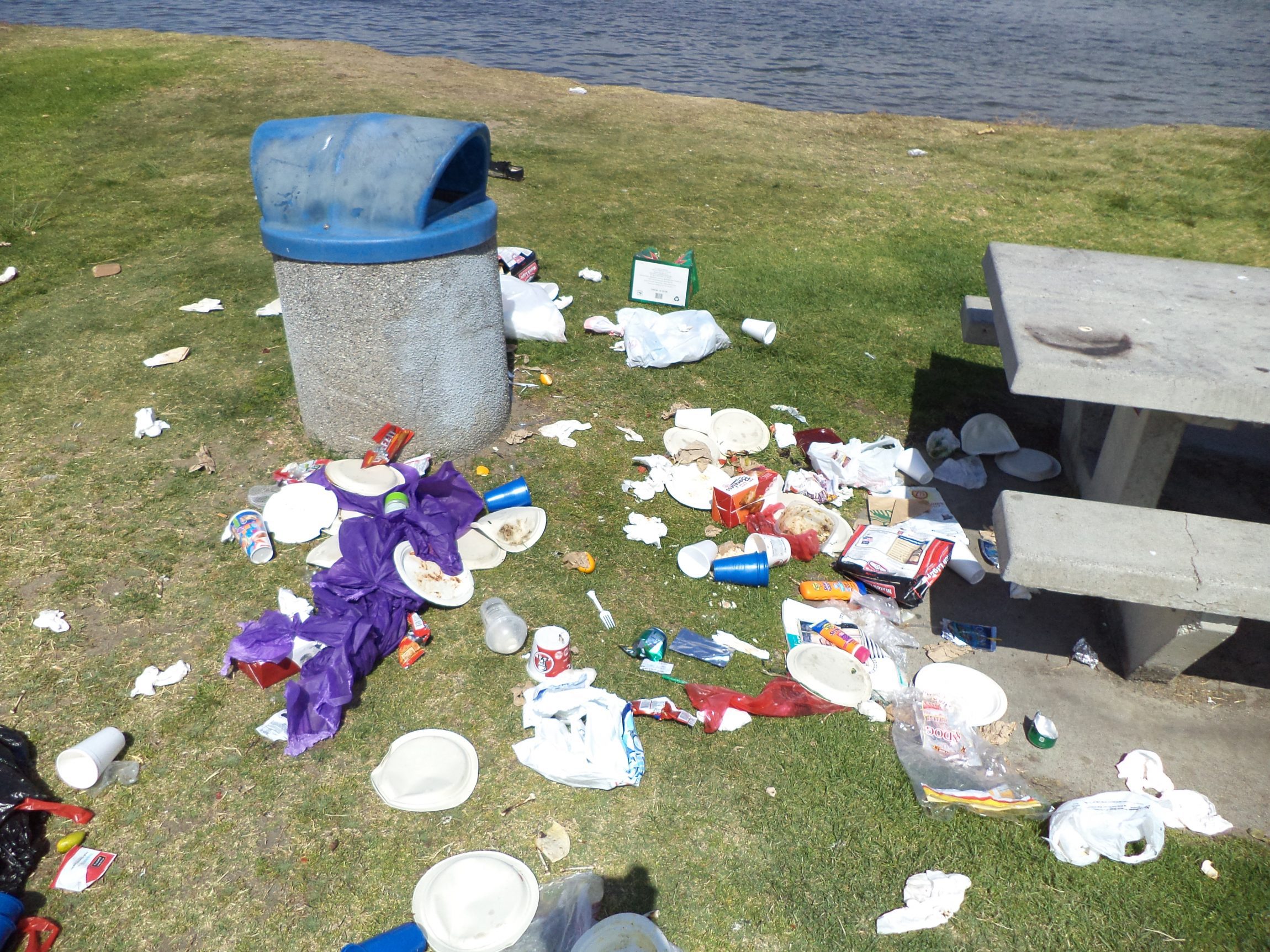
The City of San Diego Parks & Recreation Department provides major help in this endeavor, both placing the bins and removing them, and hauling all of the trash to the landfill. They also calculate how many tons of debris the bins collected. Thanks to the efforts of these bins, we avoid handing out beachside next to images like this… mb_visitorscenter4

To make sure that these bins are durable enough to stand up to the crowds (and the sometimes inclement weather), the bins are double-walled for strength. The cost for these bins certainly adds up. Thankfully this year, we had great support from Think Blue San Diego, Pacific Beach Shore Club, Typhoon Saloon, car2go, SeaWorld and many other sponsors who are recognized on the bins.

If your Fourth of July plans involve a little beach action in PB, MB or OB, make sure you tell your friends that the bins are out there for you to use. As the Clean Beach Coalition motto states, Enjoy the Scene, But Keep it Clean!

crownpt4

Kids’ Ocean Day: Through The Years

Today’s blog post comes from Monica Rosquillas, our environmental educator.

Kids’ Ocean Day is just around the corner, only 1 week away! This is a BIG event; almost 1,000 San Diego Unified Elementary school students from 7 title-one schools will come out to the beach to participate in a cleanup and be part of an aerial art formation.   Although I Love A Clean San Diego has been participating in Kids Ocean Day for the last 15 years, this is my first Kids Ocean Day and I couldn’t be more excited…and nervous.  If you would like to be a part of this one-of-a-kind event, adult volunteers are needed from 8am-12pm. Please contact Lexi Ambrogi at lambrogi@cleansd.org.

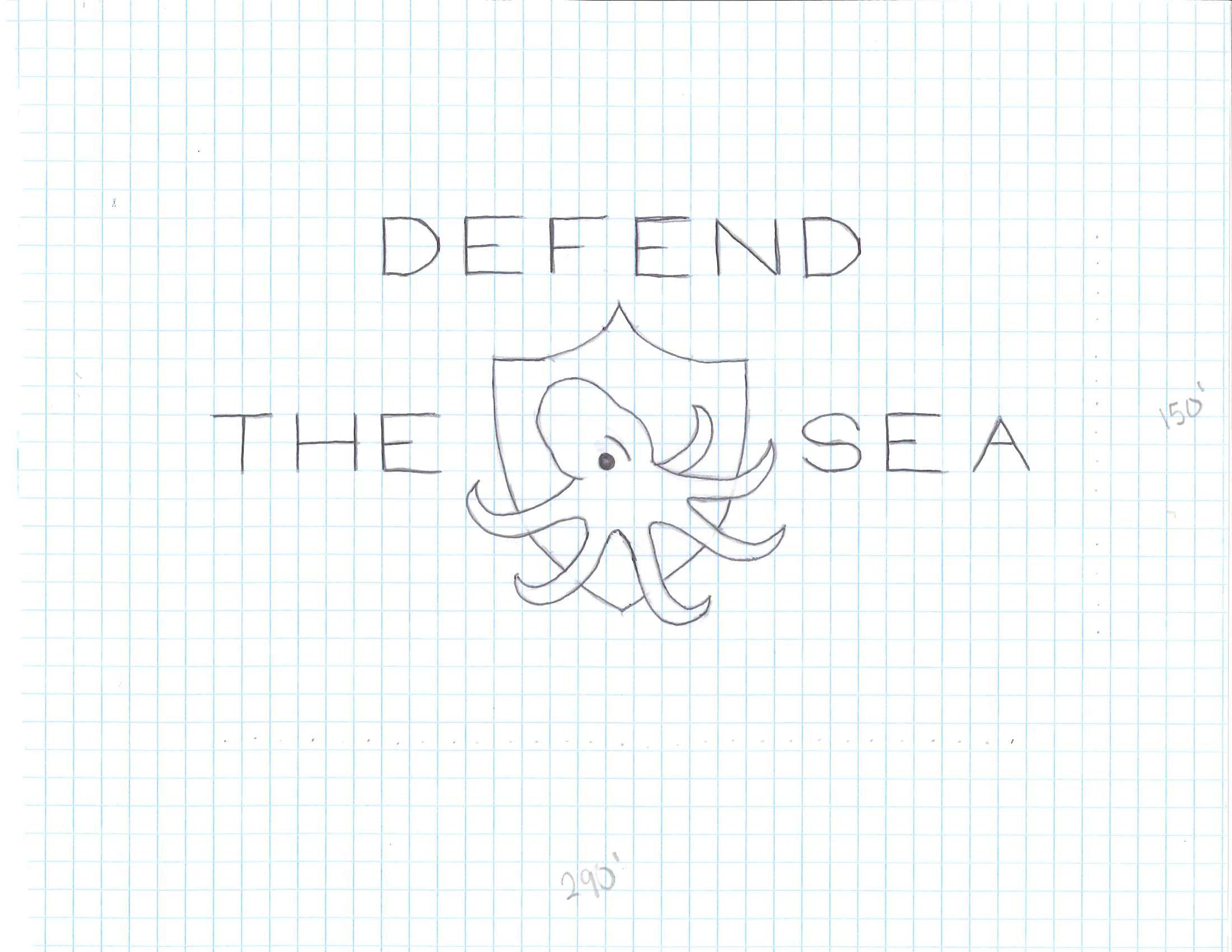
A sketch of this year's aerial art
A sketch of this year’s aerial art

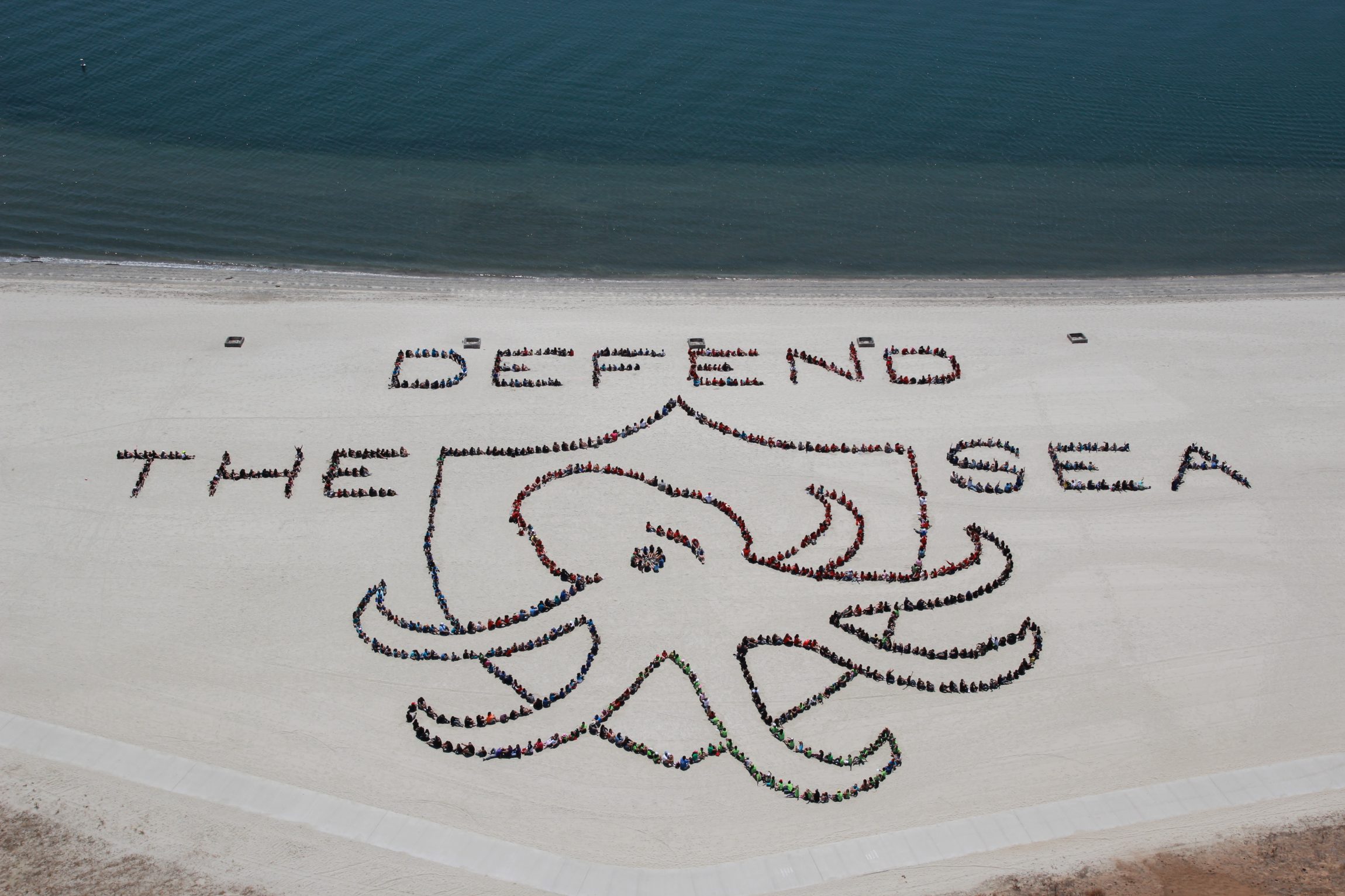
What is aerial art? Good question! It is art that you can see from the sky! Participants gather to create a message of conservation, which will be captured by Out of the Lens photographer, Niki, in a helicopter.  To help us out on this big day we’ll have more than 100 amazing volunteers, including teachers and parents. So how exactly do we get the image on the ground? The ILACSD Aerial Art Team will be arriving very early in the morning to outline the design of the aerial art. This part is crucial; we have to make sure everything is measured out precisely so that our design comes out as planned.  Communication and attention to detail are key, after all, it takes a lot of hands to turn a 8.5”x11” drawing into a 170’x300’ aerial art piece. After the cleanup, the students will form part of the aerial art. Once everyone is in place, a helicopter will fly overhead and Niki will take photographs from a bird’s eye view. Since we can’t see what the design looks like from the ground, we have to trust that we measured everything correctly and that our design came out well. This is the moment we are looking forward to with most anticipation! Fortunately, we have a few Kids’ Ocean Day veterans on our aerial art team who have years of experience. As you can see from the pictures, I Love A Clean San Diego has done a great job with previous aerial art design and event execution, and although we do have a very daunting task ahead of us, we are positive this year’s Kids’ Ocean Day will be a success!

Every year, Kids’ Ocean Day sends a new message that’s all about protecting and conserving our Oceans. The message this year is “Listen”. What’s so great about this message is that it is from the kids, and it can be interpreted in different ways. What does it mean to you?

This year’s design is child holding a shell to her ear and the word “Listen”. The kid with the shell is a bit of change from previous years when we’ve had marine animals be our aerial art piece. That’s why this year’s is unique and special. In previous years we’ve had an Octopus, a Mako Shark, a California Least Tern, A Sea Turtle, A Bottlenose Dolphin, a Gray Whale, and a snail. All of these are important animal species that inhabit our local marine habitats.

Our 2012 aerial art sketch turns into...
Our 2012 aerial art sketch turns into…
A real-life image made up of almost 1,000 kids!

Why do this? Why do we arrive at the beach at 5 in the morning and bring hundreds of students and adults to form a child and shell in the sand? Partly because the aerial art looks really cool. All those little dots in the picture are actually people, forming a huge image, it’s not something you do every day. We hope the children experience this as well. They get to come to the beach on a school day, actively help the environment by participating in a beach cleanup, and be a part of this cool picture that they can have forever. The most important part is that they are giving the message of “Listen”; telling the world we have to listen to the ocean and help.