
Zero Waste Home Decor

Grace- 131x172Today’s blog comes from Grace, one of our Education Specialists! If you want to create less waste in 2016 get started today with one of our tried and true zero waste crafts! If you like what you find here, be sure to come to our next free workshop this Saturday, February 20th to learn first-hand from our educators like Grace! 

The average person in San Diego County makes 1,825 pounds of trash in just one year – that’s 5 pounds a day! This abundance of trash can have a variety of consequences, including filling up our landfills and harming animals if this trash makes its way into our environment. In an effort to inspire San Diegans to kick-start a zero waste lifestyle, I Love A Clean San Diego has incorporated the following DIY repurposing projects into our Sustainable Living Series workshops. Repurposing projects not only save items from the landfill, but also reduce the amount of new resources that need to be purchased by upcycling the resources we already have.
10.7.15 - SLS (22)
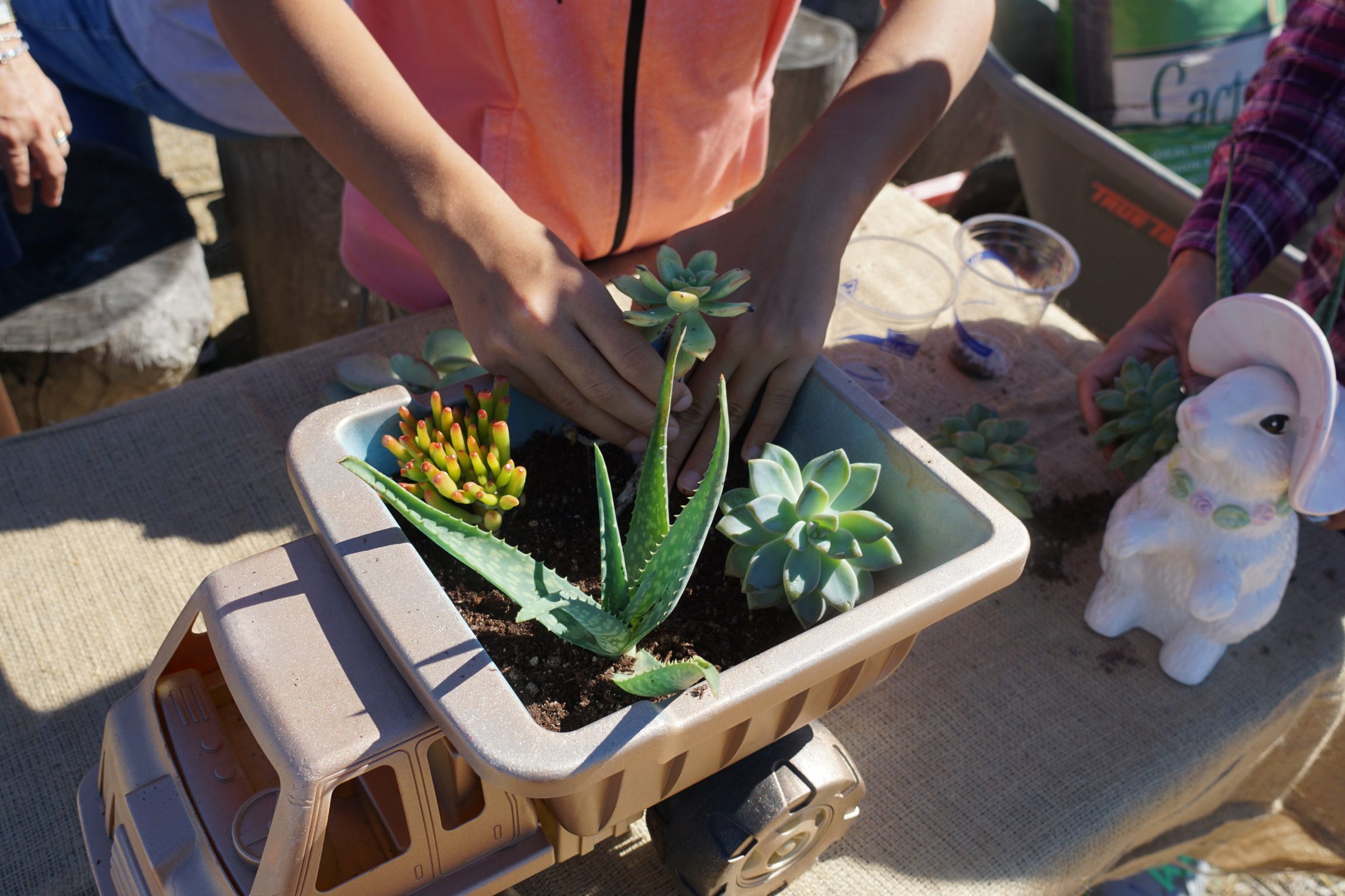
Toy trucks, shoes, tea cups, you name it! Any common item can be transformed into a succulent planter with a little creativity.

Planting succulents in repurposed containers: This project utilizes drought resistant succulents that are perfect for our dry Southern California climate. Your succulent “pot” can be anything from an antique tea cup to a shoe.

Supplies:

  • Repurposed container
  • Drill (optional)
  • Charcoal (optional)
  • Rocks
  • Succulents
  • Soil
10.7.15 - SLS (40)
Who knew a gravy boat could be transformed into such a beautiful planter?

Instructions:

  1. Select your repurposed container.
  2. Some drainage in the container is preferred. If possible drill a hole in the bottom of the container. A diamond drill bit may be needed depending on the material OR cover the bottom of the container with a thin layer of charcoal to absorb excess water.
  3. Add a layer of river rocks at the bottom of the container.
  4. Fill container ¾ with soil.
  5. Arrange succulents to your liking.
    • For indoor arrangements, widely space plants in the same container for maximum exposure to sunlight.
  6. Once complete, give your succulents a soak with a spray bottle.
Zero Waste Home - Jan 2016 (40)
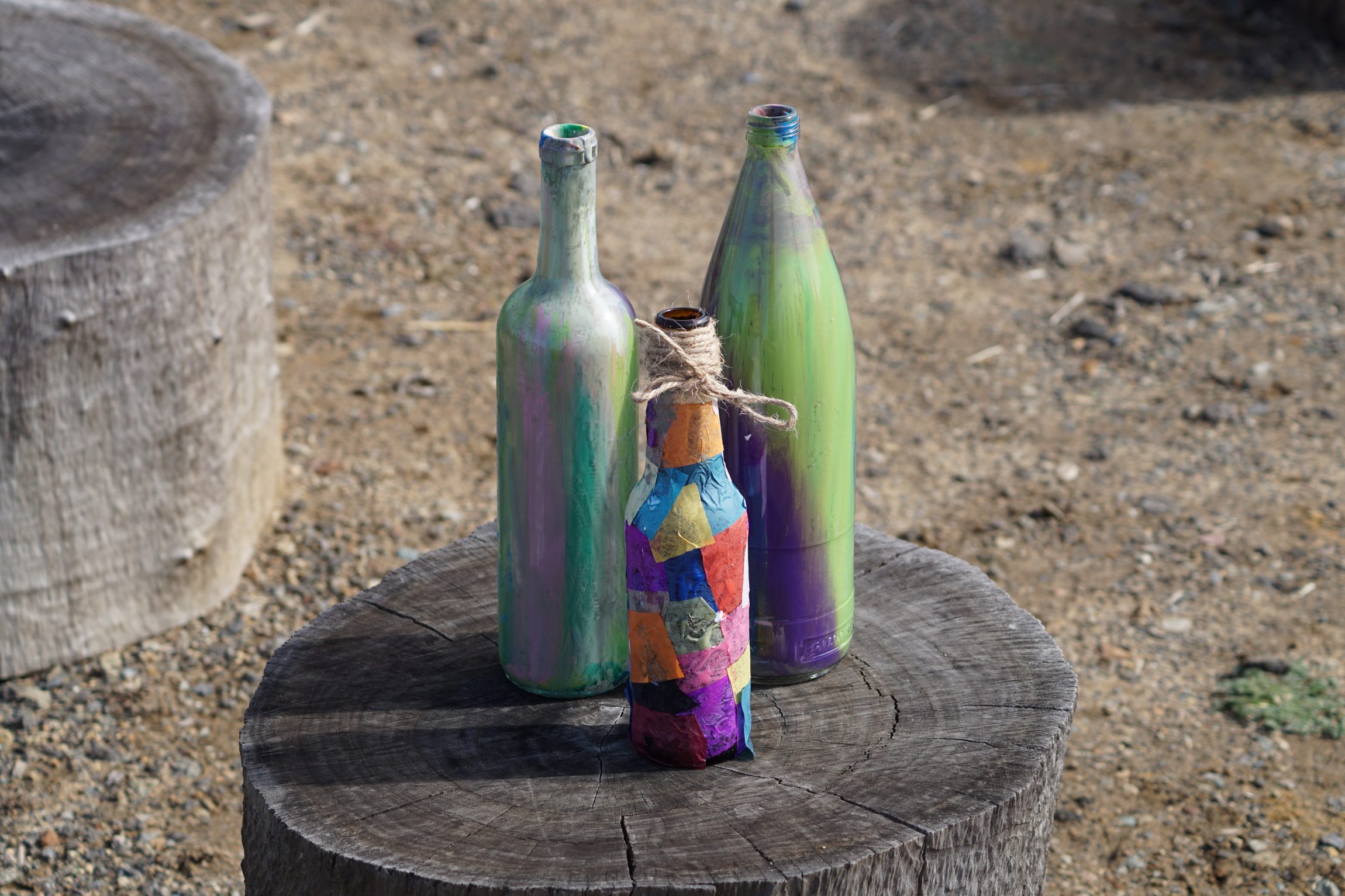
Finished pieces from our Zero Waste Home Workshop.


Repurposing glass bottles:
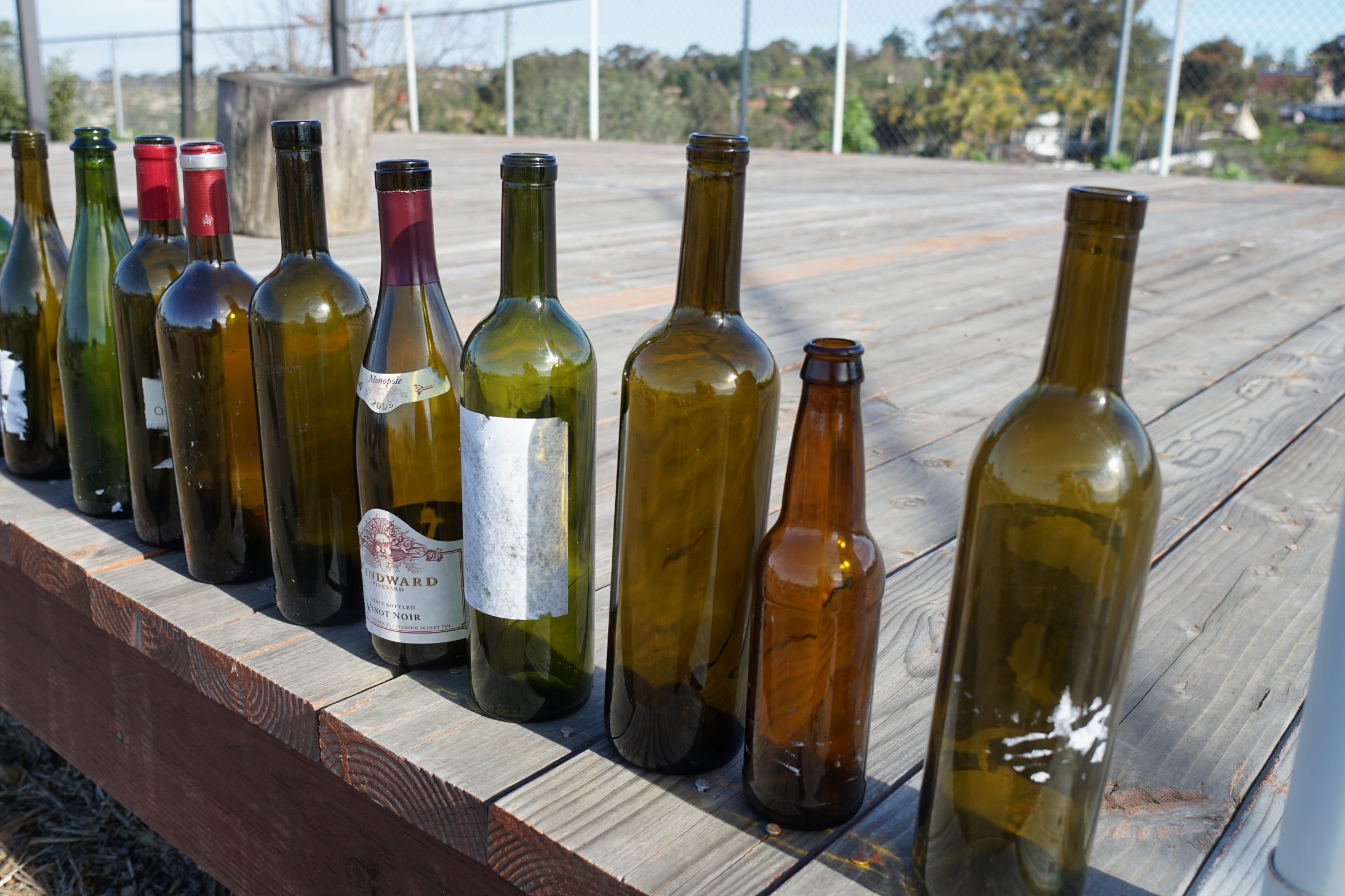
This project takes your empty glass bottles from one party and upcycles them into decorations for your next! Any sized bottle can be transformed into a vase or centerpiece.

Supplies:

  • Glass beverage bottles
  • Goo Gone
  • Paint or Spray Paint
  • Twine

Zero Waste Home - Jan 2016 (85)Instructions:

  1. Remove labels and clean residual glue from bottles with Goo Gone.
  2. Swirl the inside of the bottle with paint OR Spray paint the outside of the bottle.
  3. Wrap selected areas of the bottle in twine.
  4. Variations can include using newspaper, old book pages, metallic markers, tissue paper and ribbon.

Try your hand at a DIY project at our next Zero Waste workshop! Register for our Zero Waste Shopping workshop on February 20th at Ocean Knoll Farm.
Zero-Waste-Living-Workshop---Feb-2016

Moriah bridges love for craft beer & the environment

Mo brewing beerToday’s blog comes from our Community Program Coordinator, Moriah as she shares her love for San Diego craft beer and our environment!
I am known as the resident beer nerd at I Love a Clean San Diego.  After working at a local brewery for about a year and brewing at home, it’s safe to say I know a thing or two about beer.  One thing I didn’t know, however, was how connected my love of beer was to my love for the environment.  In a city like San Diego, it’s not surprising that our local breweries value our environment as much as they value their craft.

Ways SD breweries minimize waste

Water conservation is a big issue for everyone in California, and that includes craft breweries.  The industry average in California ranges from 3.5 to 6 gallons of water for every gallon of beer produced.  Breweries in San Diego are leading the way in reducing the amount of water needed for their production.  Local breweries are becoming increasingly water-wise.  According to the California Craft Brewers Association, Ballast Point has reduced its water use by more than 24 percent, and Stone Brewing Company recycles more than 62 percent of its water daily.

One of the biggest ways that local breweries reduce waste is by using their spent grain in creative ways.  Spent grain is the grain left over after the brewing process.  Instead of throwing this used grain in the landfill, most of San Diego’s breweries donate it to local farms, where it can be used as livestock feed.  Stone Brewing Company even uses it as a mulching tool in their garden.  Some of their spent grain goes towards locally made soaps and dog treats as well!

Hop farm
Hop farm picture is Jordan Brownwood tending hops at Nopalito Farm & Hopyard. Photo credit:  slowfoodurbansandiego.org

San Diego is known for its hop-heavy beers, but did you know that farms right here in San Diego County grow one of beer’s most important ingredients? Nopalito Farms is a local, family-run organic hopyard and orchard in North County San Diego.  Since water conservation is always an issue in Southern California, Nopalito Farms has adopted sustainable farming practices like drip irrigation and mulching, and they work to maximize the rain that they get in Valley Center.

Imbibe with the earth in mind!

  • Bring a growler with you next time you pick up beer. Instead of cans or glass bottles that will end up in your blue bin, get a reusable growler and take it to the closest brewery.  Get fresh, draft beer straight from the source! Be sure to check with the brewery first to see if they have any specific growler policies.
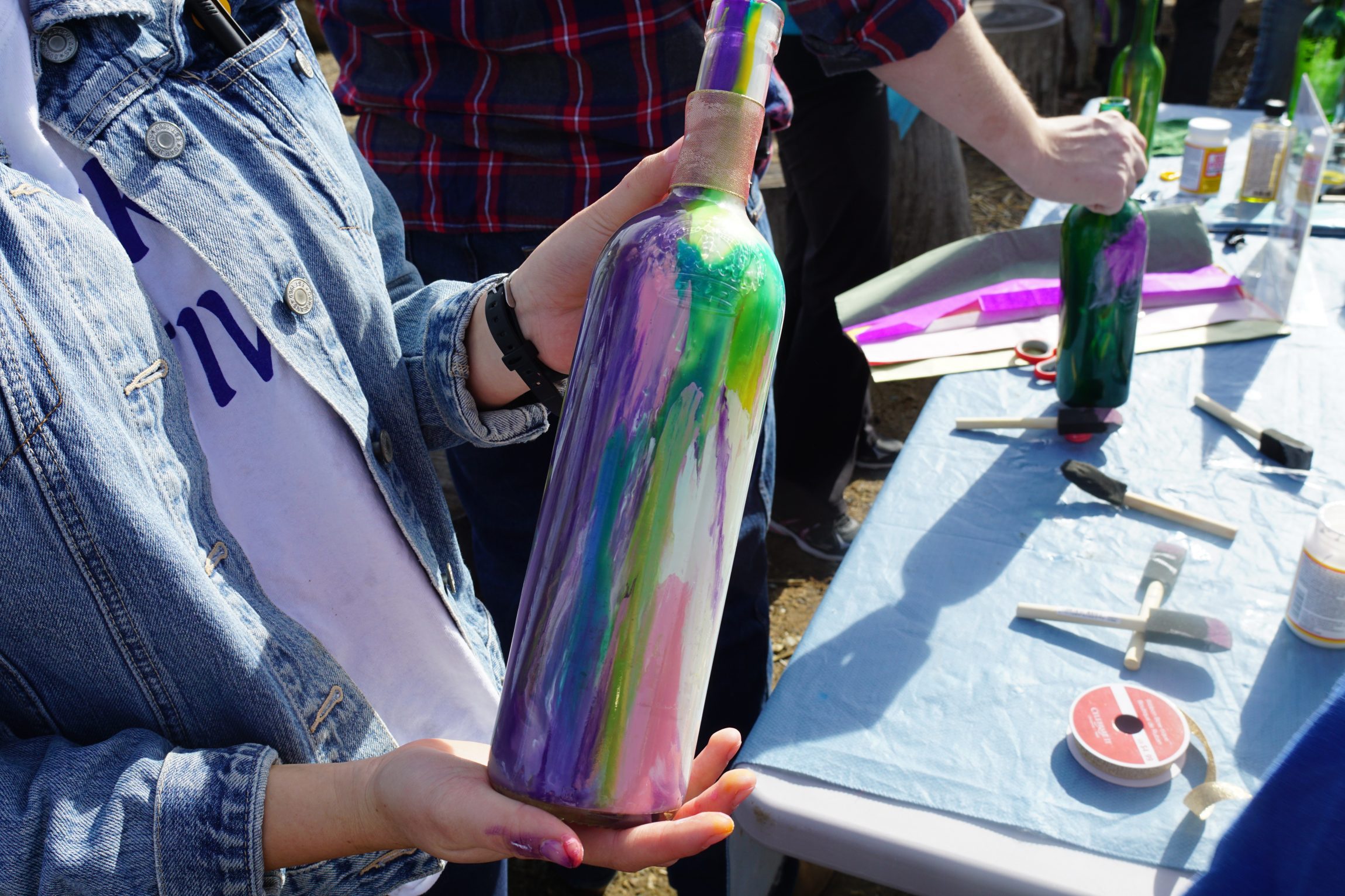
  • Reuse old beer or wine bottles to make decorations for your house. At our recent Sustainable Living Workshop that focuses on a zero waste home, our educators taught attendees how to reuse their old bottles and turn them into fashionable home decorations.

    Zero Waste Home - Jan 2016 (29)
    One example of a  repurposed wine bottle from our Zero Waste Home Workshop.

Volunteer at Cupid’s Cleanup!

If all of this beer talk has you thirsty, you can join us and Benchmark Brewing Company on Saturday, February 13th from 10am-12pm for a cleanup of the San Diego River! Why not switch up the typical dinner and a movie Valentine’s Day date and help us clean up the San Diego River instead. Then, if this blog has inspired you to try some local San Diego suds, you can join us afterward for a Valentine’s Day-themed mixer hosted by Benchmark Brewing Company! Families, sweethearts, kids, and singles are all welcome.

Register here! Help us spread the word by joining the Facebook event and sharing the cleanup with your friends and family. 

cupids instagram

Meet Becca – Our newest educator!

Becca-131x172Hello Everyone! My name is Becca and I’m the newest Education Specialist for I Love A Clean San Diego!
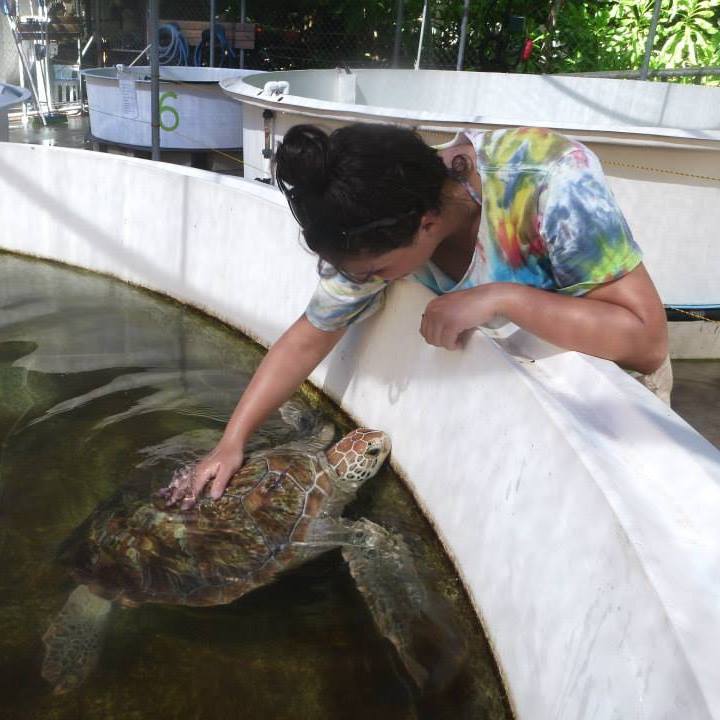
I have been involved in teaching students all ages about the environment since college when I discovered that my passion could easily translate to a career. The appeal for working as an Education Specialist for I Love A Clean San Diego is multifaceted, but one of the most important aspects I appreciate is how we focus on helping students understand their individual power. Students may not be able to drive or vote, but they can make a difference and improve their environment with their individual actions. For example, students have power over choosing whether or not to pick up their pet’s waste. This is a very simple task that takes minimal time and has huge benefits. Who knew kids had that power?

Becca's-first-presentation
Becca’s first presentation as an ILACSD Education Specialist!

That explains why I Love A Clean San Diego (ILACSD) is great, but why do I do this work in general? I believe in empowering students. Every person can make a difference through their choices and that when they feel connected to their environment, they are more likely to make choices that support conservation and protection efforts. When students engage with their environment, it benefits the students’ development as future citizens of the world.

I also love the ocean. Whenever my family vacationed when I was little, it was to visit the beach. I have seen a variety of coastal systems now and have both the scientific and anthropogenic understanding of coastal ecosystems. This being said, there is also an aspect beyond the science. There is the element of emotion behind my connection to the ocean. The ocean is a powerful, incredible, yet calming presence. When students make that connection with the ocean for the first time, it is always an awe-inspiring experience for me.

12079991_2563852741250_8910089781427291076_o
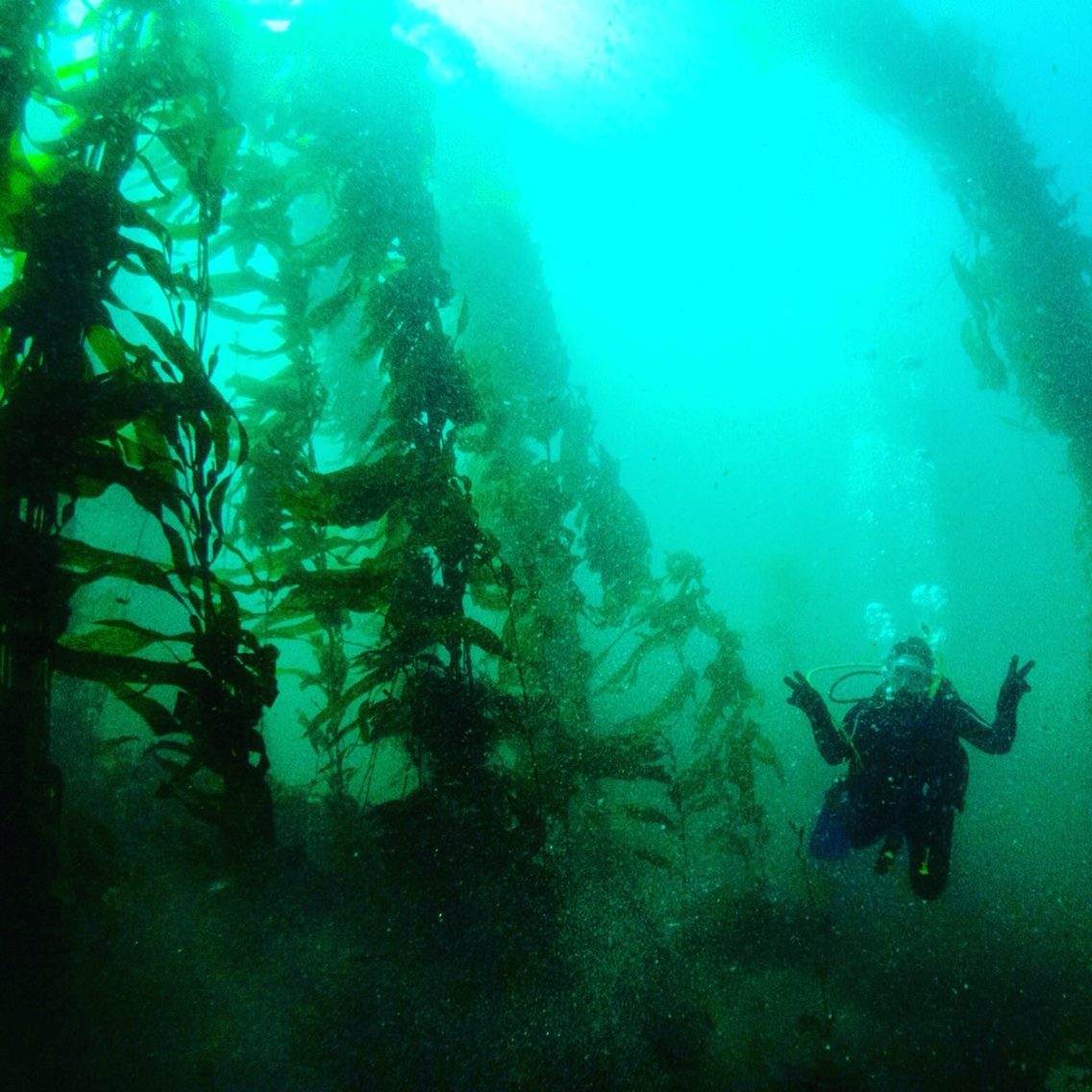
Becca exploring the depths of the ocean.

ILACSD takes on a challenge that many others may shy away from – we introduce the students to the bigger picture of how undesirable items travel from land to our beloved ocean. This is a new challenge for me is to help students that might not regularly visit the ocean to understand how their everyday actions greatly impact such a giant body of water as the Pacific Ocean. It is an important lesson with great value and hopefully is a model for other programs to learn how to introduce such a big concept of interconnectivity to students of all ages.1505657_2123297407642_5278649911434705247_n

If you’d like to have our educators visit your classroom, please contact our Education Manager, Emily! 

What’s that Smell? Ani’s Compost Journey

Several members of the ILACSD team compost food scraps at home. While our previous compost blogs have focused on vermicompost, composting organic material with the help of worms, it is isn’t the only option for those with limited space. Ani, our Recycling Programs Manager, recently added a small, easy to turn, worm-free compost bin to her home to make the most of her food scraps. Read on to learn more about her compost journey and one of the trials she faced early on – smelly compost.  

MILACSD holiday party 2015 (41)y journey with compost started about a year ago when my boyfriend and I decided that we wanted to invest in a compost bin for our food scraps. The first step was determining what type of bin I needed that would best suit my schedule and needs. It is important to note that every compost pile and bin is different, for example, I chose to purchase a compost tumbler to limit the time it takes to manually turn the contents in the pile with a shovel. This might not be the case in every household though. My compost bin instantly mixes when I spin it, which is convenient for me and needless to say that it takes less than a minute to turn.
Compost Pile
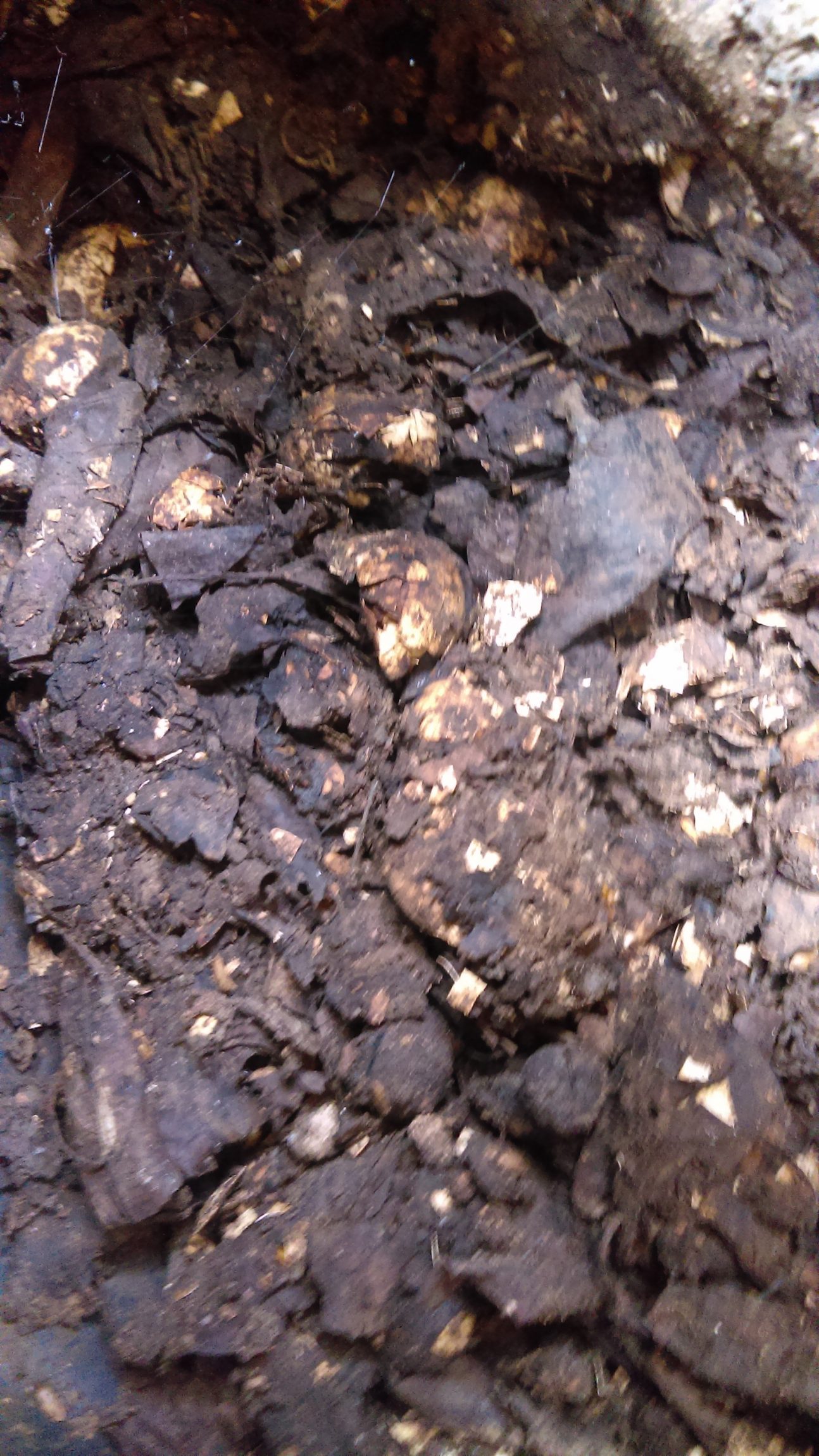
An look inside Ani’s compost bin showcasing a healthy balance of greens and browns.

When I started collecting food scraps for the bin, I found myself with an overly stinky compost pile. I had missed an important component of composting practices…keeping the ratio of nitrogen to carbon just right. This balance between nitrogen and carbon is key to having a successful compost pile. Carbon-rich materials like leaves, mulch, wood chips and nut shells are referred to as “browns” and nitrogen-rich materials like food scraps are referred to as “greens.” I was so excited to have a place to store my food scraps, or my “greens,” that I neglected my “browns” contribution to the compost bin. To offset the smell, I placed shredded newspaper in the pile as my “browns” because of the lack of “browns” in my backyard.

Composting is definitely a work of art with an environmental twist. Maintaining that balance between “greens” and “browns” is a small component of it and this was just one issue that required some research on my part. It’s safe to say that my experience with composting has been an interesting and informative one.

Compost Bin
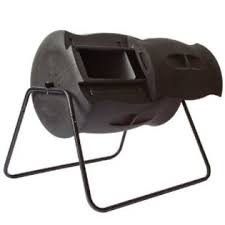
Here’s an example of what Ani’s bin looks like – compact and easy to turn.

Remember that every compost pile is different and may require several changes to the formula before it starts to look (and smell) like its processing your organic materials correctly.

Stay tuned for my follow-up blog where I will share my best practices for pest control!

If you’re looking for more composting resources, check out our one-stop recycling database, WasteFreeSD.org!