
Brittany’s Green Routine

Brittany green routine pic

Being environmentally-conscious doesn’t have to be confined to your blue bin. If you look closely, not so environmentally-friendly materials, such as micro-plastics, are hidden in everyday products. Follow Brittany’s Green Routine to learn how you can reduce waste, phase out hidden plastics and simplify your health and beauty routine! And check out our Pinterest boards for even more DIY inspiration!
 

routine definition
Routine (noun). – A sequence of actions regularly followed.

Everyone has routines and once you start, they are pretty hard to break. Since working at I Love A Clean San Diego, I’ve been inspired to be more eco-friendly in my day-to-day life, but I didn’t know where do start. Then I realized I could start by having what I now call my “green routine”. What is a green routine you might ask? A green routine is a type routine you create which benefits the environment. I realized I could save money while also being eco-friendly by creating some beauty products with ingredients I already have in my house.  For this week’s blog, I wanted to change it up and share some of my favorite DIY recipes I incorporate in my daily green routine!

Original-Lip-Scrub-with-textBrown Sugar & Honey Lip Scrub: Need to get rid of chapped lips? This is my favorite lip scrub

What you’ll need:

1 teaspoon of brown sugar

1 teaspoon of honey

Mix them together, lather your lips with the scrub, rinse with warm water, and pucker up! Your lips will feel moisturized, soft, and not to mention, this scrub is tasty!

Honey, Nutmeg, Cinnamon Face Mask: This mask is perfect for when you experience breakouts or are looking to brighten up your skin tone! You can use this has a spot treatment or as a mask. Honey is not only hydrating, but it helps soothe inflammation as well as fight against bacteria – that’s why it’s great for so many things! For sensitive skin I recommend leaving this on for 2-3 minutes.

What you’ll need:

cinnamon face mask
1 teaspoon of cinnamon, 1 teaspoon of nutmeg, 2 teaspoons of honey

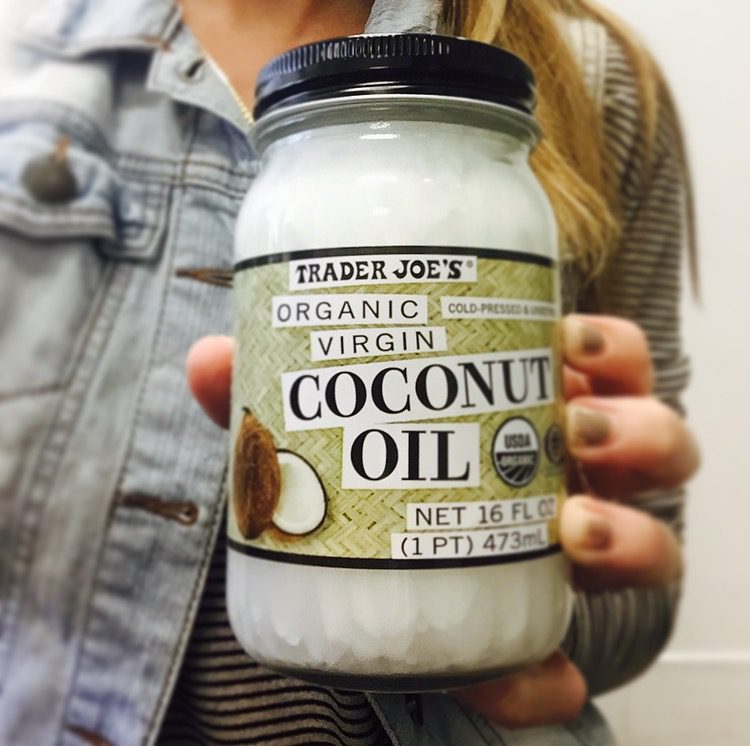
Coconut Oil: Plain and simple, a jar of this does wonders and is extremely moisturizing.  Not only is this something I cook with but I use it for a variety of things which cuts down the number of products I use and minimizes the waste I create.

  • Skin Moisturizer: After a good (plastic-free) skin exfoliant, I take a dab to keep my skin smelling great and soft. A little goes a long way!
  • Hair treatments: I’m notorious for using heat products on my hair, so every once and a while I like to give my hair a little bit of love. After washing and conditioning my hair, I rub coconut oil through the ends of my hair to prevent breakage. You could also use coconut oil as a hair mask and rubbing the oil on your scalp helps with dandruff. I recommend keeping the oil in your hair for around ten minutes then rinsing.Coconut Oil
  • Lip moisturizer: Instead of using chapstick before bed, I use coconut oil, sometimes with a dab of honey, as a replacement. Be sure to pair it with the brown sugar lip scrub mentioned above!
  • Makeup remover: This is something I would normally spend a lot of money on. Instead, I take a small amount with my fingertips and rub it on the areas of my face until it melts. Then I take a wash cloth to wipe it off with warm water. That’s it!
And Guys, don’t worry, we have a recipe for you this year’s No Shave November too! This recipe sent to us by Alexandra Engel to help keep your beards fresh and clean. Blend together, rub through your beard, and rinse.

FullSizeRender (2)
A little beard oil goes a long way! *Flowers will not grow out of your beard after using this recipe.*
  • 3 fl. oz. Sweet Almond oil
  • 25 oz. Vitamin E oil
  • 25 oz. Argan oil
  • 30 drops Tea tree essential oil – prevents ingrown hairs and fights breakouts
  • 30 drops Rosemary essential oil – stimulates hair growth
  • ~20 drops Spruce essential oil (optional)
  • ~20 drops Pine essential oil (optional)
  • ~20 drops Cypress essential oil – astringent and antiseptic for oily skin.
  • ~20 drops Bergamot essential oil – antibiotic and deodorizing.

I hope you enjoy my favorite green routine recipes as much as I do. Not only are you saving green bills but you are also helping to keep the environment clean by eliminating micro plastics and cutting down on waste!  For more fun DIY beauty tips, crafts, and green living tips, be sure to check out I Love A Clean San Diego’s Pinterest boards


Fallbrook’s Recycling Ninjas

Emily M.It is never too early to take action towards waste reduction. After meeting with the Fallbrook Street Elementary School Recycling Club, Emily wanted to share the students’ enthusiasm about recycling with all of you! Read on for some inspiration to start a recycling program at a school or office near you!

From the time students enter the halls of Fallbrook Street Elementary School, they are coached to become strong leaders. Joshua Mills’ 5th grade class is a shining example, leading the school in efforts to be more environmentally active. As part of their rotating class jobs, students serve as recycling collectors, traveling from classroom to classroom “like ninjas” so as not to disrupt the learning environment. They compile the school’s recycling into a central bin and remove any non-recyclable items.

recycling ninja
You don’t have to be a student to be a recycling ninja! Check out the Ocean Conservancy’s Recycling Ninja pledge here.

What keeps them motivated to be dedicated recyclers? “Recycling is important to me because I like to have a clean environment,” said one student. “I like to keep my school clean,” said another. Many of them echoed this sentiment: “I love to recycle because I don’t want paper going to the landfills because you can recycle and reuse it.” To help encourage other students and teachers to adopt this perspective, they created informative posters displayed around campus and presented at a school-wide leadership rally.

As they look ahead to 6th grade, the students are excited to continue this recycling program. One student mentioned he is transferring schools, but intends to bring this knowledge with him to his new school.

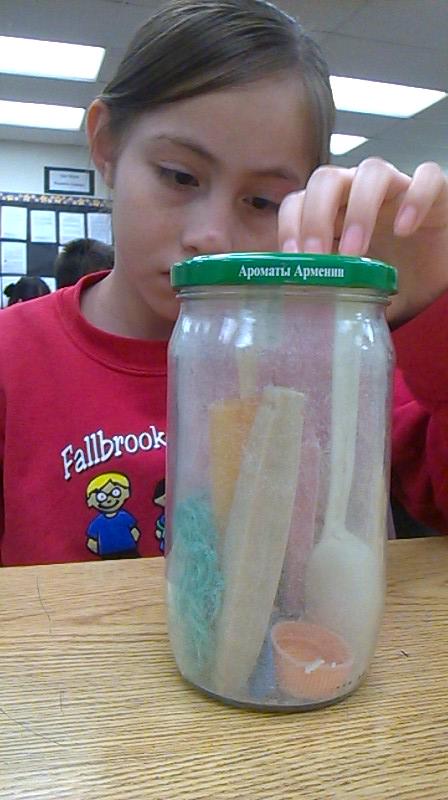
albatross jar
The contents of this jar represent items commonly mistaken as food by marine life such as albatross. These items include plastic utensils, a lighter, and bottle caps.

During I Love A Clean San Diego’s free presentation, we built upon their recycling foundation and discussed next steps – further ways to reduce overall lunch waste. When I left, Mr. Mills was already scheming on how to teach math through a classroom worm bin.

To conclude our interview, I asked the students one thing they want the people of San Diego to know. They had some sound and simple words to live by:

“Don’t put things that you shouldn’t recycle in the recycling bin.”

“Don’t pollute because we won’t have good air.”

“If you see some garbage, pick it up, even if it’s not yours.”

“Pick up after your cats and dogs.”

Based on the variety of these responses, we can see how one small step towards waste diversion can lead to a lifetime of environmentally-minded choices.

Comment below to tell us about what your school is doing to help keep your community clean and green!

Interested in having our educators visit your classroom? We are currently scheduling for the 2015-2016 school year. To schedule, please email our education department at education@cleansd.org.

classroom panorama

No yard, no problem! Composting in small spaces.

amanda-2-photoshop
Today’s blog comes from our Hotline Manager, Amanda!

Earlier this year, our Hotline Manager, Amanda, wanted to increase her composting knowledge, much like our Education Manager and Master Composter-in training, Erika. After taking a series of classes, Amanda wanted to share these two new methods that are great for small spaces. Read on to learn the basics of two innovative composting methods; perhaps you’ll find one that works for you! 

Many of you already know about traditional backyard composting, but there are other options out there to help you recycle your organics at home. Today, I’ll cover some basics on two composting methods you may not have heard of yet: vermicomposting and bokashi.

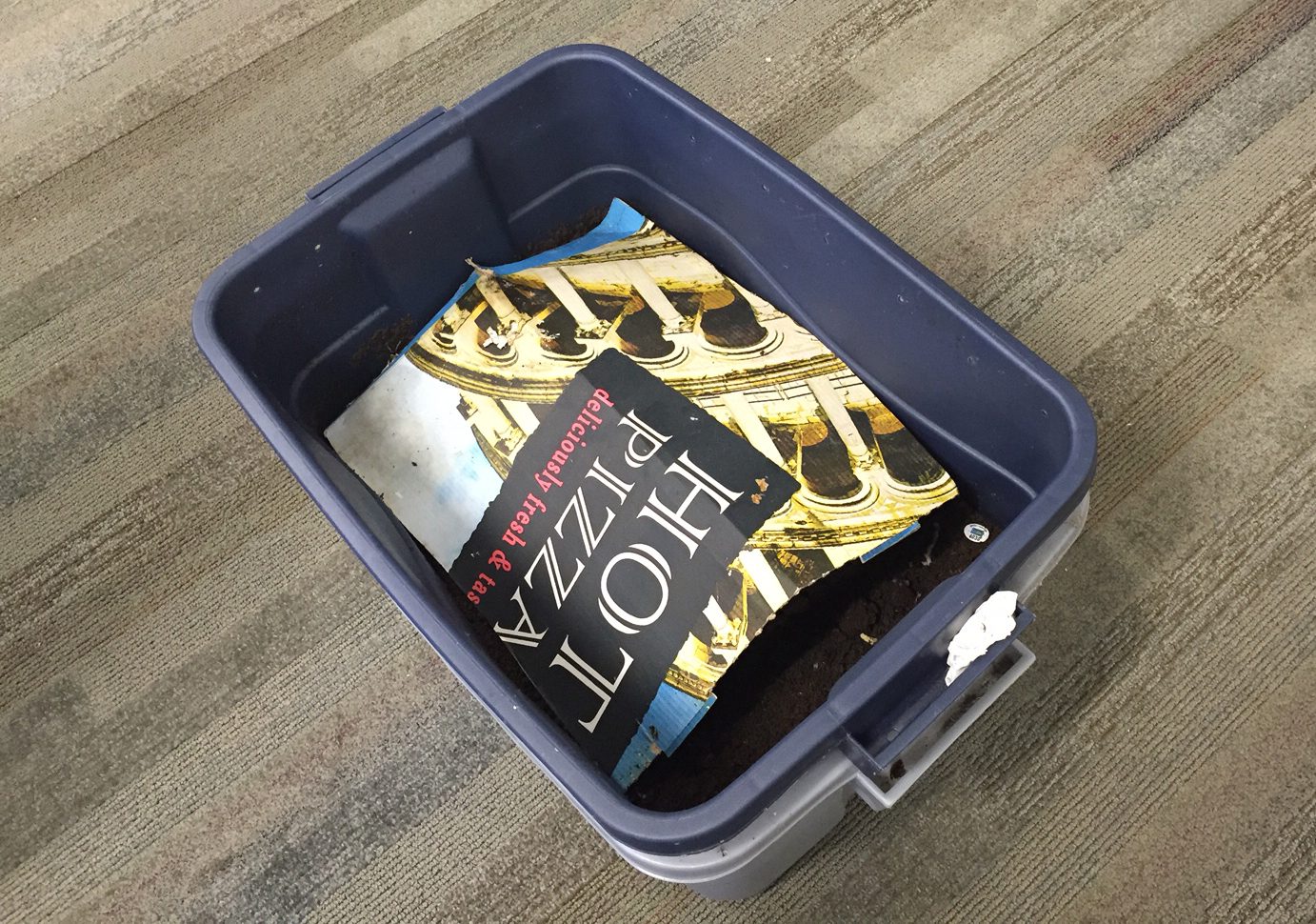
erikas vermicompost - cropped
Erika keeps her vermicompost under her desk and just as it should, it doesn’t smell!

Vermicomposting is a method of composting where organic material is broken down through the use of worms, red wigglers and red tigers being the best types of worms for this method. Vermicomposting is a great option for apartment and condo dwellers or those that do not have yard waste available. It can be done on a small scale (even under your kitchen sink!). Mostly food scraps are added to the vermicompost bin, as opposed to traditional composting where large amounts of carbon rich yard waste is needed. Vermicompost bins are available for purchase, and some residents may even be able to purchase subsidized bins – click here to see if you qualify! Or if you are feeling handy and you want to build your own vermicompost bin, check out some basic instructions from the Solana Center for Environmental Innovation.

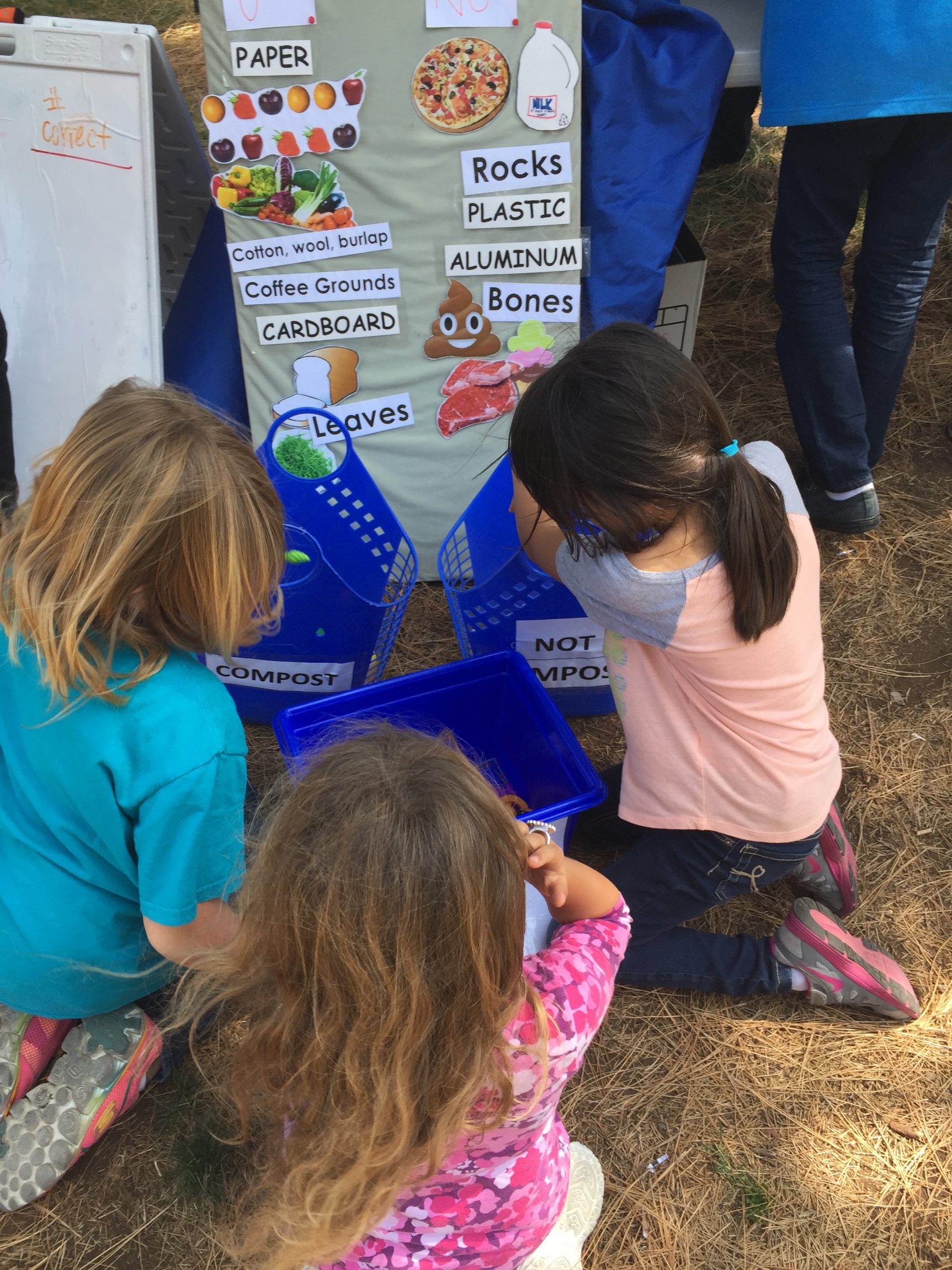
CV_AfterSchool_compost (17)
Practice makes perfect! At this station, kids learned how to sort out compostable vs. non-compostable items.

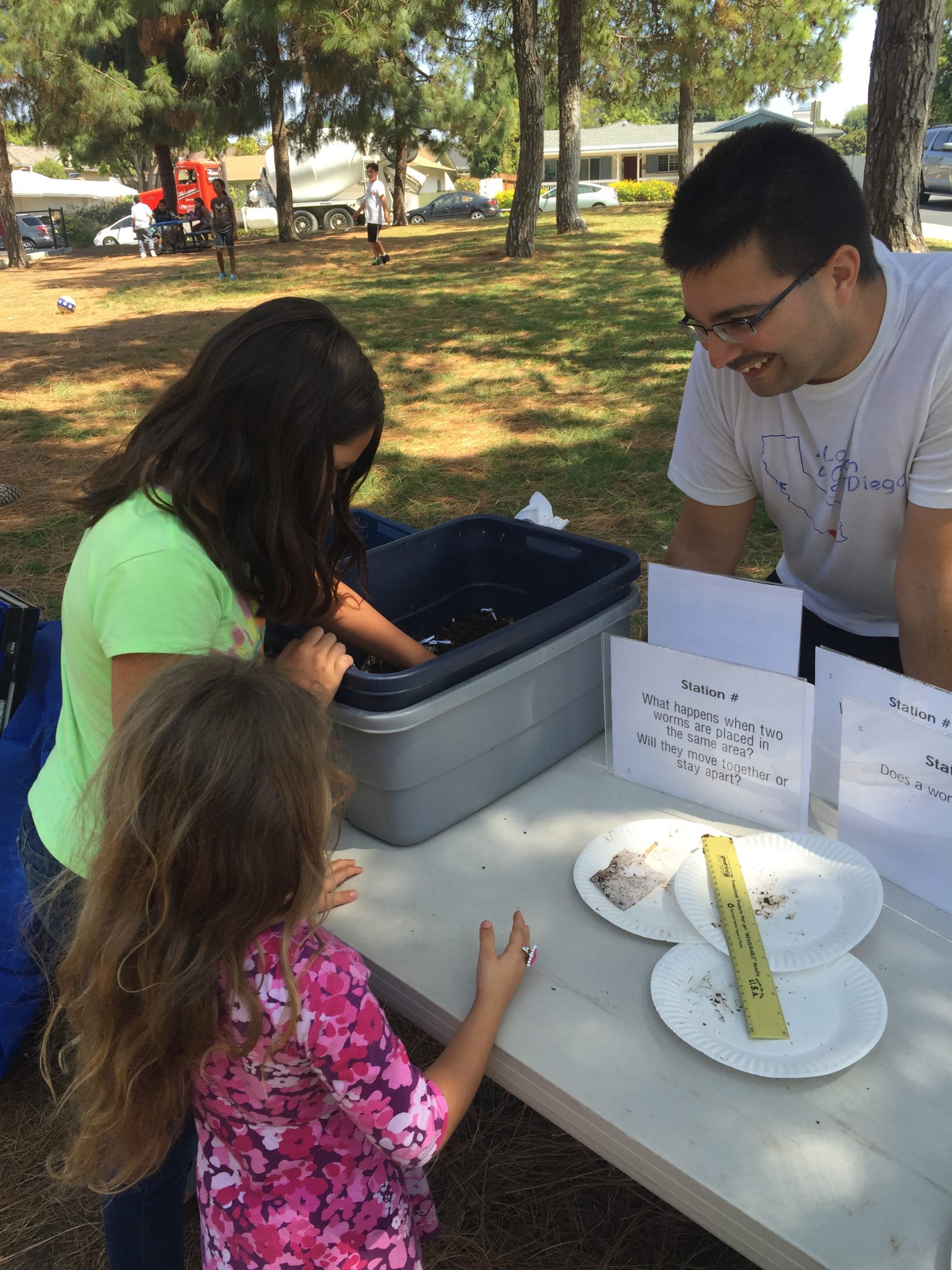
I Love A Clean San Diego has also integrated our newly acquired composting knowledge into some of our education offerings as well! Recently, we partnered with the City of Chula Vista & the Chula Vista Recreation Department to augment their youth after-school program, Empower Hour.  ILACSD educators lead  several hands-on activities during May & June to cover topics such as waste diversion, recycling and composting.  During the composting activities, the kids learned how to sort recyclables from compostable materials, and even got their hands dirty during the compost bin and worm discovery activities. If you’re interested in learning more about our education presentations, please contact our Education Manager, Erika at education@cleansd.org!

CV_AfterSchool_compost (13)
Here’s ILACSD’s Program Assistant, Joseph leading the worm exploration station!

Here are 7 tips to maintaining your vermicompost bin:
1. Worms don’t have lungs, they breathe thru their skin. Fats and oil will coat their skin and they can no longer breathe, so avoid putting fatty or oily foods in your vermicompost bin.
2. Worms don’t like motion, vibration or extreme heat/cold.
3. Your bin should never smell, an odor would likely mean you are over feeding your worms.
4. If you are adding watery food, add some paper as well.
5. Moldy food is ok to add, the bacteria actually helps give the worms a head start on digesting the food.
7. Food scraps are best in smaller pieces.

Are you ready to start composting? Find local resources, such as bins, worms and classes near you at www.WasteFreeSD.org!

Bokashi is another composting method where you can pickle your food waste and thus store for later use in your traditional compost pile. What makes it unique is, unlike traditional composting, dairy, meat and bones can be used with this method. An inoculant, a combination of anaerobic microbes, is used to pickle the food waste and are available for sale online or you can also find online tutorials. Once you get your inoculated grain/paper and a 5gal bucket (or larger!) you are ready to go.

Simply add your food waste to the bucket and some inoculated gain/paper as you go along. After you bucket is full, it will take ten days to two weeks for your pickled food scraps are ready to be added to your traditional compost bin. As you are adding to your bokashi bin, place a plate on top to keep pests away. If you see white mold it is ok, only be concerned if you see green ,red or brown mold. Bokashi workshops are offered by Solana Center for Environmental Innovation, but keep an eye out for them on www.WasteFreeSD.org because they fill up fast! 

Summer Water Savings Solutions

Today’s blog comes from our Education Manager, Erika. To help all of us to better understand the relationship between our water use and drought conditions, Erika has taken it upon herself to become well-versed in the ways of water conservation. Read on to learn more about how you can help America’s Finest City reach its water conservation goals! 



It’s not news that San Diego and the rest of California is experiencing severe drought conditions. In April, Governor Brown imposed mandatory restrictions in municipal water use, designed to save 25% of state drinking water supplies. Despite the fact that most San Diegans are aware of our drought, according to the Equinox Center, “the member agencies of San Diego County Water Authority experienced a 2 percent increase in average daily water consumption on a per person basis” in 2014. While it is my opinion, the best way to conserve water is to evaluate your eating and purchasing habits; although these savings won’t be reflected on your water bill. So, here are some ways you can #wastenowater this summer.water conservation

Educate yourself.

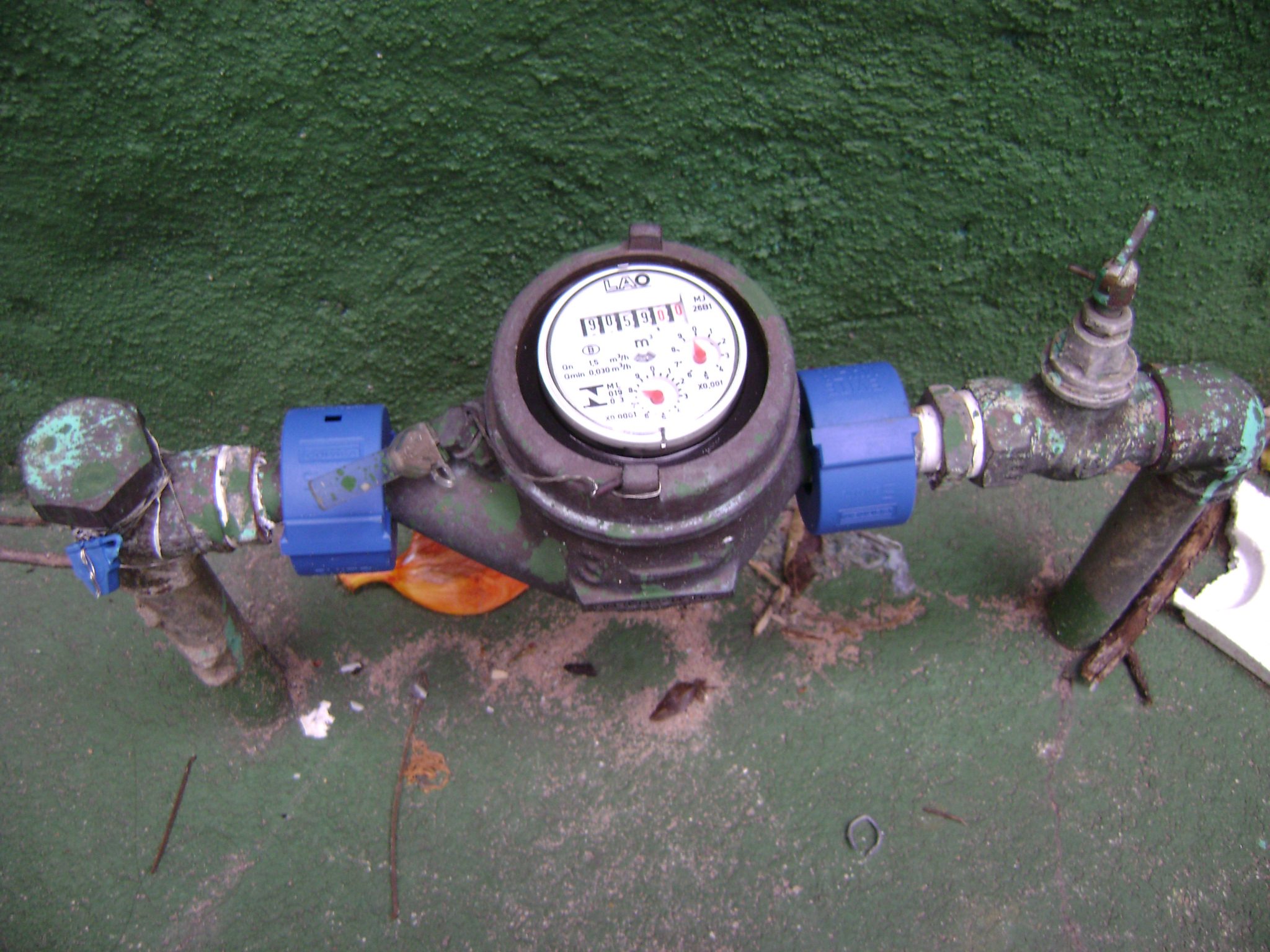
Figure out where you are using the most water in your home: watering the lawn, long showers, or perhaps there’s a leak? One of the first steps is learning how to decipher your water bill and read your water meter (and teach the kids in your life to do the same!). Once acquainted with your standard water usage, any abnormalities will alert you of any leaks. Another simple solution to identify toilet leaks is to put food coloring in the fill tank; if dye travels to the bowl, you know you have a leak.
meter
There are also lots of resources available including free water savings kits from SDG&E – click here to request yours today

Go beyond the bucket.

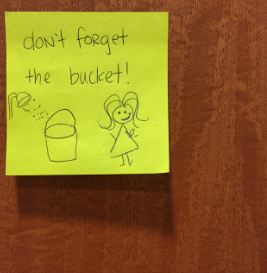
I’ve been hearing stories of people capturing shower water while waiting for it to heat, which is awesome. Most people use this water for irrigation; however, there are plenty of other uses for this water. Try using it to fill the toilet fill tank, as water for your animals, or to fill ice cube trays and water jugs. If you plan to do laundry or cleaning that day, you can keep it to mop or use for hand washing your delicates. 

postit

Scrape and Soak.

When washing dishes, make sure to scrape excess food into the trash (or compost) before rinsing. You can use a bucket to minimize excess water use, too. Also, if you are fortunate enough to have a dish washer, make sure to have a full load before starting. Water saving doesn’t have to start with dishes. Use a bowl to wash fruits and veggies and be smart about the size of the pot you use to cook.

Gray your garden.

graywaterIrrigation accounts for a large percentage of water use, especially in the summer. Our solution, go gray(water)! Laundry to landscape graywater systems don’t require permits. Take a course or study up through YouTube on how to be most efficient in your garden. Also, you can never use too much mulch! Mulch and compost can prevent evaporation from your soil and your plants will love it, too! Don’t forget to use water wise and native plans and try out a rain barrel! Whenever I see a sprinkler watering the sidewalk, I adjust the head to point toward the grass.
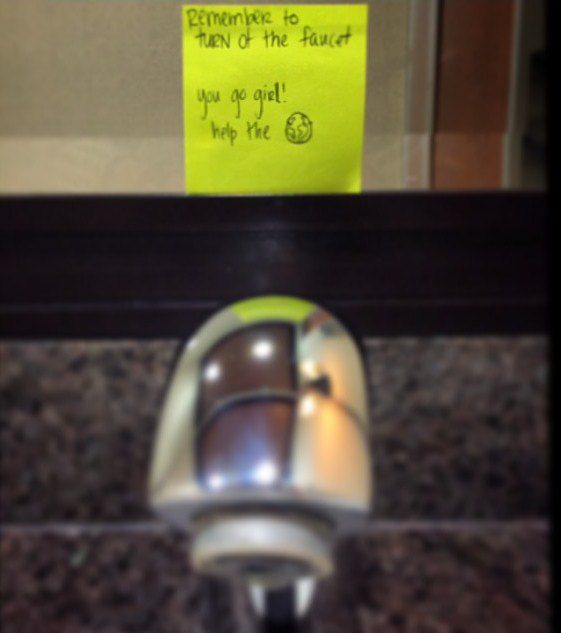
 

These habits don’t develop overnight, so place sticky notes around places that are atypical of your routine (and don’t forget to recycle the notes once you are done!).

IMG_1854 (3)

Brittany’s litter-free beach day guide

Brittany FischerToday’s blog comes from our administrative assistant, Brittany! San Diego native, born and raised, Brittany it goes without saying that she loves our beaches and 4th of July. To get you jazzed for the long holiday weekend ahead, she has put together some of her favorite waste-free tips for a day at the beach!
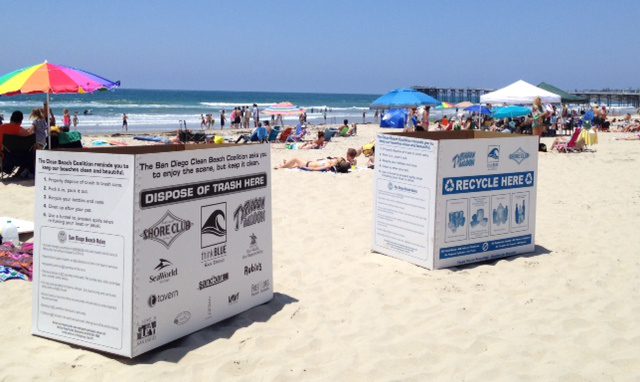


Looking for something fun to do for the upcoming patriotic holiday? Why go anywhere else when you live in a city full of beautiful beaches! The 4th of July has always been one of my favorite holiday’s to spend at any beach in San Diego. With so many people at our beaches, there is one thing that tends to be left behind and that’s trash. This 4th of July, Clean Beach Coalition will have large trash and recycling bins located at Ocean Beach, Mission Beach, Mission Bay, and Pacific Beach to give every beachgoer a chance to continue to keep the beach sparkling clean!  Last year alone, the CBC bins collected 96,860 lbs of trash and 2.8 MILLION pounds in the last 8 years. Pretty impressive, right? In order to prevent more trash from ending up on our beaches this holiday, I wanted to share some of my favorite things to pack in order to stay green while still rocking red, white, and blue!

CBC bins
Keep an eye out for our huge trash and recycling bins. They’ll be hard to miss so be sure to put them to good use!

The key to staying green is to pack up all your reusable items to prevent any trash! Here is my easy to follow step-by-step guide to a waste-free weekend!

  1. For starters, instead of using a Styrofoam cooler, bring a more durable reusable cooler. Not only will it last you years, it prevents any Styrofoam pieces from ending up on our beaches and the Pacific Ocean where it will never biodegrade.

    IMG_0490
    Plastic pieces are easily mistaken for food by marine animals causing serious health issues. Here are pieces mixed in with sea kelp recently found at a cleanup.
  2. When packing up your goodies, try using reusable containers to transferring and reusable silverware! Here are a couple of my personal favorite snacks to bring to my Fourth of July beach festivities:

Fourth of July Rice Crispies Treats are a favorite of mine. Not only are they easy to make, but you can put them in a reusable container and be set to go! Check out the recipe here!

Fruit Kabobs! All you need are some wooden skewers, strawberries, bananas, and blueberries and you have an ecofriendly, patriotic snack!

plastic free treats
Fruit kabobs are the perfect plastic-free treat! Although the skewers will eventually go in the trash, wood will naturally biodegrade with time, unlike plastic.


3. Feeling thirsty? Fill up a reusable water bottle and bring it with you! Did you know American’s throw away 35 billion water bottles a year? It’s important to reduce bringing plastics to our beaches because once plastic enters the ocean, it is extremely difficult to clean up. Don’t have a reusable water bottle? Check out some of ILACSD’s reusable water bottles online!

patriotic water bottle
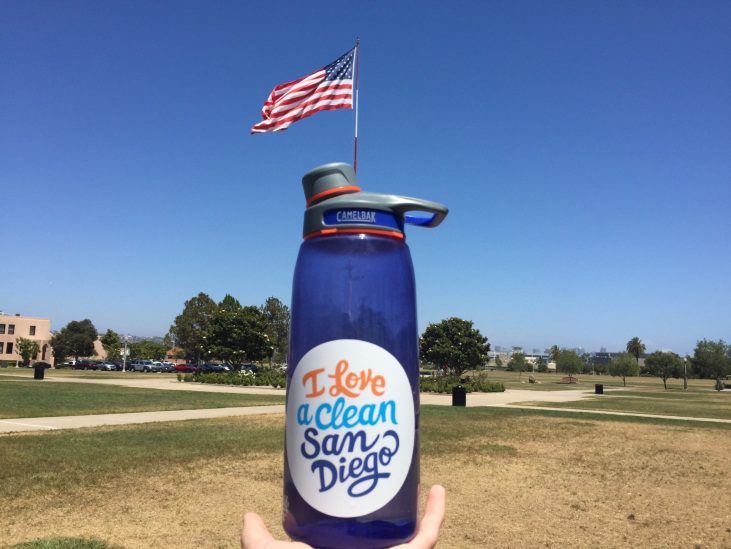
Brittany always carries her reusable water bottle wherever she goes whether it’s the beach, a park or work. Check out our merchandise to get you own ILACSD gear to sport around town!

4. Don’t have anything to pack up the rest of your goods? Use a tote bag! My favorite tote bag can be washed and reused over and over again. Do your best to not bring plastic bags to the beach, not only are they not recyclable but if blown into the ocean, marine mammals can accidentally mistake them for food.

Still not ready to end your beach time this weekend? Come show your patriotism in a new way with I Love A Clean San Diego on July 5th for the Morning After Mess Cleanup. From 8-11am we will clean up the excess trash left behind on Mission Beach from the holiday celebrations. Plus, the first 400 volunteers will receive a free tee from REI!

Whether you decide to stay in San Diego this 4th of July Weekend or travel elsewhere, please enjoy the scene, but keep it clean. Have a safe and wonderful 4th of July!