
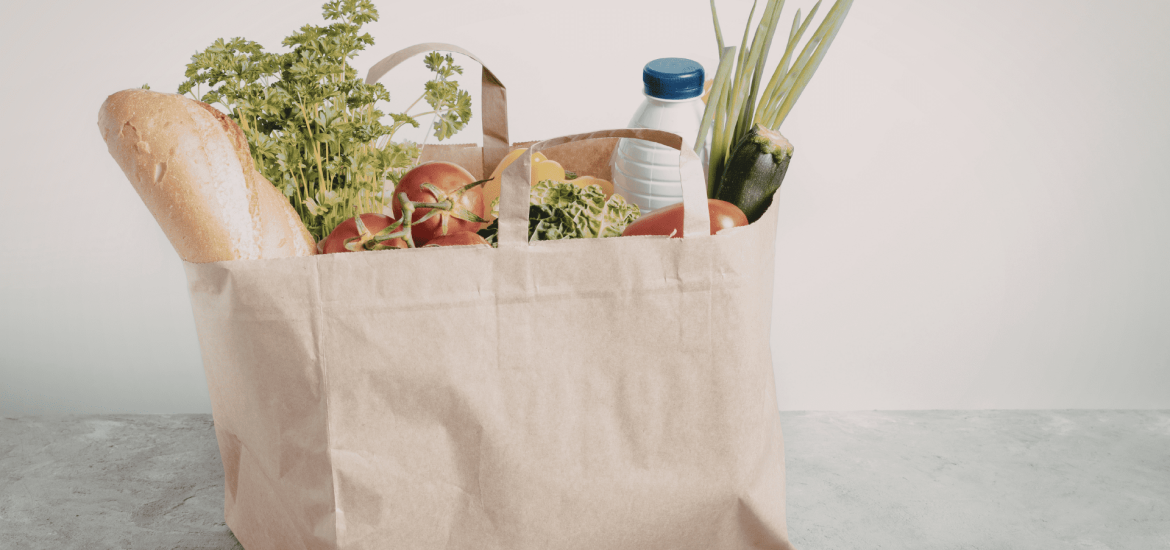
It’s a new year and plastic bags are out in California. As of January 1, Senate Bill (SB) 1053 closes a loophole from the 2014 bag ban that allowed thicker, reusable or recyclable plastic bags to be sold at checkout. Supermarkets, drugstores, convenience stores, and other shops can sell paper bags instead.
This plastic bag ban and the new wave of paper bags in our homes is a great opportunity to rethink how we handle food scraps.
Make the Most of your Paper Bag Stash
1. Use Paper Bags While Prepping Food Scraps Instead of tossing every peel, core, or coffee grind into the garbage, use a paper bag to collect scraps as you go. Once you’re done, simply toss the whole bag into your curbside organics bin. This makes meal prep cleaner and keeps your bin from getting messy.
If you can’t immediately make it out to your curbside organics bin, you can put the paper bag in the fridge or freezer to reduce any odors and toss it later.
2. Double Up for Juicy Scraps For foods that tend to leak or get soggy (like citrus peels or melon rinds) double-bag with paper bags. This keeps your kitchen tidy, prevents odors and flies, and still ensures your food scraps will get turned into mulch and compost.
3. Experiment With Different Brands Not all paper bags are created equal. Some are sturdier, some are smaller. Use the ones that fit the type of scraps you’re collecting. Put heavier scraps in thick, large bags and lighter ones in smaller or thinner bags.
Why Composting Matters
When food scraps end up in the landfill, they don’t break down the way we might think. Without oxygen, they release methane, a powerful greenhouse gas that contributes to climate change.
Under California’s organic waste recycling law (SB 1383), food scraps, yard waste, and other organic material must be placed in your curbside green bin to be recycled, composted or otherwise not end up in the trash. However, organic waste still makes up about 40% of what San Diego County residents send to landfills. Redirecting that waste into the green bin not only reduces methane emissions but also creates valuable compost used to enrich soils throughout the region, closing the loop on the food cycle!
Reduce, reuse, recycle.
While paper bags are a handy tool, don’t forget that bringing your own reusable bag is still the most sustainable option at checkout. But when life hands you a stack of paper bags, you can put them to work in your kitchen and make food scrap recycling easier, cleaner, and mess-free.
If you have more paper bags than you can use for food scraps, they can go in your curbside blue bin. Just be sure they are clean (not soiled with food or wet)!
Check out our informative social media video on this topic HERE.