Take a look at this great video created by our intern, USD student Maddy Blake, talking with the ILACSD staff and Creek to Bay site captains about why they love the Creek to Bay Cleanup and why it is an important part of keeping San Diego clean:
We are so excited to celebrate the 10th anniversary of this great event! Do more with you morning, sign up to volunteer this Saturday, April 28th from 9am-12pm at any of our 86 cleanup sites around San Diego County: www.CreektoBay.org – volunteers are especially needed at our 47th St. Canyon (City Heights) site and our kickoff site along the San Diego River behind Fashion Valley Mall!
Today’s post comes from Morgan Justice-Black, ILACSD’s Director of Development and Marketing!
Charge those camera batteries and get ready to compete in the Sony Creek to Bay photo contest! I Love A Clean San Diego and Sony challenge you capture the spirit of the Creek to Bay Cleanup by taking photos of volunteers in action on Saturday April 28th. Whether you’ve got a fancy camera or a cell phone, you could be the winner of a brand new Sony Cyber-Shot camera if your picture makes the final cut!
Here’s how to do it:
Volunteer at the Creek to Bay Cleanup on Saturday April 28th from 9am – 12noon (register on the event website: www.creektobay.org)
While you’re cleaning up at the event, take a moment to capture your best “volunteer in action” shot from your site. It may be you, a friend or someone who looks like they are giving their all for a cleaner environment. Just make sure that the image captures the spirit of the Creek to Bay Cleanup!
After the cleanup, submit your best photo via email to iloveacleansd@gmail.com. Please include your name, phone number and email address so that we may contact you if you are the winner. All entries must be submitted by Friday May 4th.
I Love A Clean San Diego staff will narrow down the field to three finalists, whose photos will be posted on ILACSD’s Facebook page for voting May 11-May 17.
Encourage your friends to “like” ILACSD’s Facebook page and vote for their favorite picture. Voting will go through May 17. (www.facebook.com/iloveacleansd)
Cross your fingers, because we will announce the winner on Friday May 18th!
We are less than two weeks from I Love A Clean San Diego’s 10th Annual Creek to Bay Cleanup! With over 5,300 volunteers last year, our amazing site captains are vital in guaranteeing the success of this countywide event. This year they are taking the lead at 88 sites across San Diego County and ensure that their volunteers have everything needed for a successful cleanup.
This week is also National Volunteer Appreciation Week and it couldn’t have come at a better time! We’ll be recognizing many of our amazing volunteers throughout the week so if you haven’t already, make sure you’re following us on Facebook and Twitter.
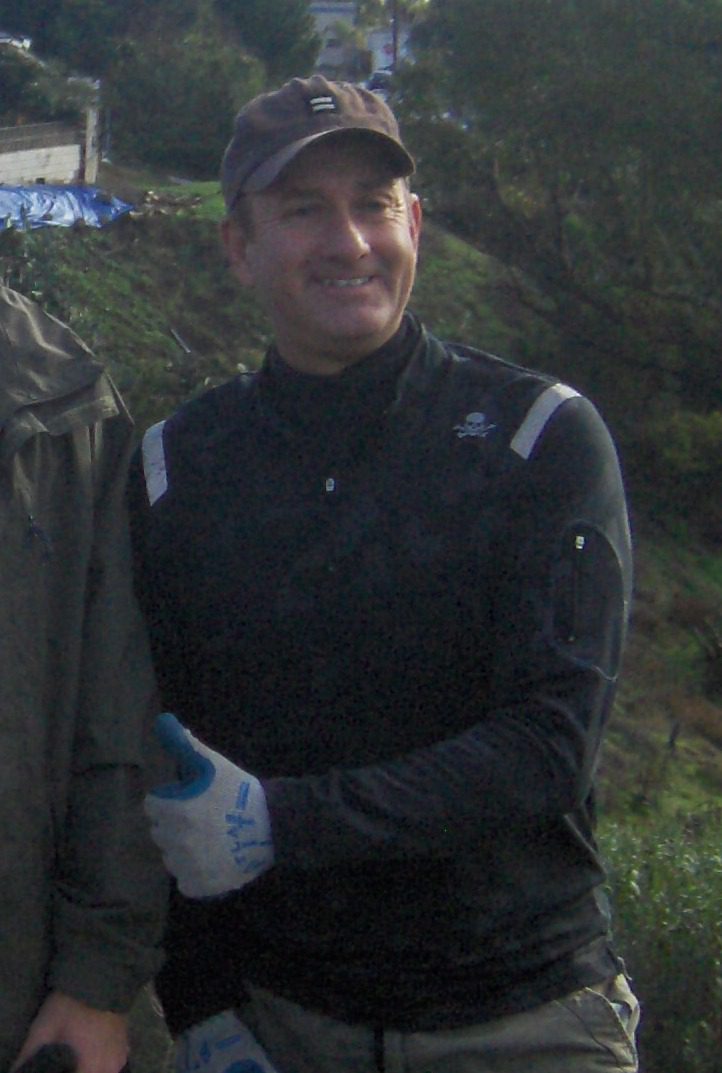
Today’s Spotlight: Creek to Bay site captain, Brent Carter!
Brent first reached out to ILACSD four years ago because he needed supplies for a cleanup he was organizing in a canyon near his home. He quickly decided to become a volunteer site captain at our Creek to Bay Cleanup, leading volunteers to beautify the 47th St. canyon site. Brent says that Creek to Bay is an important event because “bringing attention to urban sites that have been forgotten is essential, and Creek to Bay does that in a great way. It is easy to forget the pathway of debris, from the watersheds in the canyon, down to the sea. It also a great way to get people out of their homes or routines and make some new friends on a wonderful day of stewardship!”
All of us here at ILACSD want to thank Brent for his dedication to keeping his backyard canyon and our watersheds clean!
Full Q & A with Brent Carter:
What motivated you to volunteer with ILACSD?
I had been doing cleanups and restoration in the canyon near where I live, and heard about ILACSD from community leader, Linda Pennington. She said ILACSD had helped her do events and helped organize, bring volunteers and provided equipment. I can say that they have been so organized and helpful. They essentially provide an “event in a box,” which is heaven-sent for a small group leader like myself.
How long have you been volunteering with ILACSD?
Four years (ish)
How long have you been a site captain for Creek to Bay?
Four years (ish)
Have you always been a captain at the same site (47th St. canyon)?
Yes, although I helped manage five sites for Coastal Cleanup Day last year.
Why is that site important to you?
I live on the edge of the canyon and walk my dog there every day. There are five of us with dogs that pick up trash and patrol the canyon each morning! Keeping it clean, restored and safe is a priority to me.
What is your favorite part of participating in the Creek to Bay cleanup?
From start to finish, this is a great event. ILACSD helps bring volunteers, gives advice, and provides equipment. I wish every organization I have worked with was so professional and on the ball! Working with such surprising and varied volunteers is awesome, then walking through the site looking at how effective everyone has been is wonderful.
Why do you think cleanups like Creek to Bay are important to keeping San Diego healthy and clean?
Bringing attention to urban sites that have been forgotten is essential and Creek to Bay does that in a great way. It is easy to forget the pathway of debris, from the watersheds in the canyon, down to the sea. It also a great way to get people out of their homes or routines and make some new friends on a wonderful day of stewardship!
What is the strangest piece of trash you’ve found at a Creek to Bay Cleanup?
Strangest thing EVER is: four baby teeth in a little box. I still have not figured out how they got in a canyon – any ideas? It’s odd, just odd.
Today’s post was written by Maddy Blake, ILACSD’s Marketing Intern.
Maruta, left, with volunteers at Creek to Bay
To continue our celebration of the 10th anniversary of our signature event, the Creek to Bay Cleanup, this week’s volunteer spotlight is Maruta Gardner! Although Maruta began volunteering with I Love A Clean San Diego fourteen years ago, she fully dedicated herself to the organization by becoming a site captain for Santa Clara Point eight years ago and has been returning annually ever since. Located in Mission Beach, Santa Clara Point houses the Mission Beach Women’s Club, an organization that Maruta has been involved in for many years.
Like many of our site captains, Maruta resides in the same area that she oversees during the Creek to Bay Cleanup. This gives the captains a sense of personal responsibility towards their specific location and the overall success of the cleanup event. They, like Maruta, value their local community and want to ensure that its beauty and cleanliness are available for everyone to enjoy. By becoming a site captain, Maruta chose to become accountable for the Mission Beach area and the place she’s called home for so many years.
Maruta says that her favorite thing about being involved with the Creek to Bay Cleanup is, “seeing all of the parents who bring their kids to start them early on the path to community service. It’s also great to see all of the student groups working together to improve the neighborhood.”
Full Q&A with Maruta
What motivated you to volunteer with ILACSD?
For the 22 years we have lived in Mission Beach, my husband and I have been involved in the community in numerous ways. Keeping the beach clean has always been a high personal priority. We were going around picking up trash on our own but when we learned about the efforts of ILACSD, we saw how effective the work of a group can be.
How long have you been volunteering with ILACSD?
At least 14 years on a regular basis.
How long have you been a site captain for Creek to Bay?
8 years.
Have you always been a captain at the same site?
I have been an active member of the Mission Beach Women’s Club for many years. MBWC is located at Santa Clara Place and Bayside Walk. Santa Clara Point has been a clean up site for ILCASD and that’s where I started being a site captain. We want to keep the neighborhood around the club clean for all to enjoy.
What is your favorite part of participating in the Creek to Bay cleanup?
The best part is seeing all of the parents who bring their kids to start them early on the path to community service. It’s also great to see all of the student groups working together to improve the neighborhood.
Why do you think cleanups like Creek to Bay are important to keeping San Diego healthy and clean?
The cleanups bring awareness to the entire community about the negative effects of trash on our environment. They also encourage citizens and kids to get involved in making community improvements.
What is the strangest piece of trash you’ve found at a Creek to Bay Cleanup?
We mostly get tons of cigarette butts and food wrappers. We’ve also had discarded underwear, shoes, and toys. Nothing exotic.
As many of us know, today’s marine life is threatened by the multitude of plastics that make their way into our oceans and endanger sea creatures and their habitats. Artist and educator Angela Haseltine Pozzi understands this reality all too well and as a result, began an amazing project to not only showcase the types of trash found within our oceans, but also to encourage individuals to think twice before polluting our environment.
“The Washed Ashore community project aims to educate and create awareness about marine debris and plastic pollution in art.” It began in Oregon after hundreds of volunteers collected over 7,000 pounds of trash in order to create larger-than-life sculptures. This clean-up event brought people together to create awareness about the problems that marine debris causes. There are fifteen huge sculptures in total! Some include a coral reef made completely from Styrofoam, jellyfish created from plastic bottles, and a giant, musical sea star.
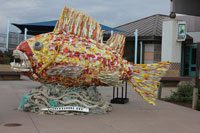
Henry the fish, made of assorted plastic pieces that volunteers collected and sorted by color.
Since Washed Ashore debuted in Oregon, it has started a global tour to teach communities to change their potentially hazardous bad habits. Today, you can find it at the the Living Coast Discovery Center in Chula Vista! Not only will you be able to witness these gigantic sculptures first-hand, but you’ll also have the opportunity to listen to special guest speakers and participate in field trips and art workshops. It’s an interactive and fun way to learn about how human interaction can be detrimental to our oceans.
The ILACSD Staff visited the exhibit and posed in front of “Lidia” a seal made mostly of plastic lids found on Oregon’s shores.
The ultimate hope for the Washed Ashore project is global action “to create a stream of events, discussions and awareness that lead to active solutions.” The exhibit has been extended and will be on display through September 3rd, 2012 at the Living Coast Discovery Center located at 1000 Gunpowder Point Drive in Chula Vista. We encourage you to check out the fun and visit www.washedashore.org for more information.
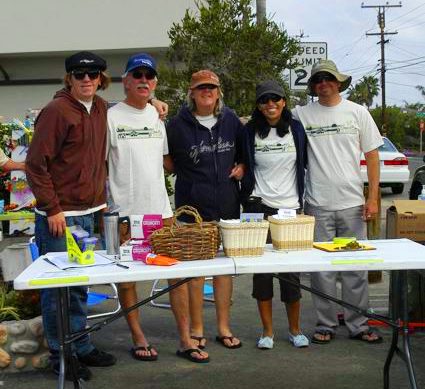
For many years, Bob and Jan Rogers saw a need for beach cleanups and public awareness about clean water in their local community. Since 2004, the couple have been site captains at Beacon’s Beach for ILACSD’s annual Creek to Bay Cleanup and have even involved their family in the fun. “When we first started with the beach cleanup program, our sons were part of the volunteers cleaning the beach. They are now married and our son, Jesse, and his wife work as our bilingual co-captains. Our son, Randy, and his wife, Virginia, also help out as volunteers – they now have a daughter, Sierra, and she is also part of the beach cleanup crew.”
Because the family spends so much time together at Beacon’s Beach (and it’s Bob’s favorite surfing location!), they realize the importance of keeping the water clean and safe and value being a part of this volunteer effort every year.
One of the main goals of the Creek to Bay Cleanup is for residents to gain a sense of ownership of the local environment, especially by teaching the next generation of San Diegans the importance of keeping our community clean. Bob and Jan say, “It’s a great learning experience for the kids. A friend of ours brought her son to Beacon’s years ago and now wherever they go to the beach he picks up trash. They are the stewards of the environment.” The Rogers family also encourages all of the volunteers at their site to bring their own reusable supplies, like gloves and buckets, so that they aren’t producing more waste by using plastic bags and latex gloves at the cleanup.
All of us here want to thank Bob, Jan and the entire Rogers family for dedicating their time each year to cleaning their local beach and spreading awareness about the importance of keeping San Diego clean to their community!
The Rogers Family!
What motivated you both to volunteer with ILACSD?
We moved to Leucadia in ’96 and saw the need for beach cleanups and public awareness about clean water. We love the beach and feel we all have a responsibility to give back.
How long have you been volunteering with ILACSD?
In 1998 we organized our first beach cleanup at South Pontos. Surfriders sent us to Coastkeepers and from there we made contact with ILACSD. With each group we’ve met friends that share our interest in the environment.
How long have you been a site captains for Creek to Bay?
We have collected some of the posters from our beach cleanups. After checking the posters we figured we began around 2004.
Have you always been a captain at one particular site?
We captain Beacon’s Beach for Creek to Bay, South Pontos for “Day After the Mess” and back to Beacon’s Beach for the Sept. Coastkeeper International Beach cleanup.
Why is that site important to you?
This is our neighborhood beach. It attracts families so we get a lot of children at the cleanups. Bob also surfs Beacon’s.
What is your favorite part of participating in the Creek to Bay cleanup?
The returning people that come back year after year and the kids.
Why do you think cleanups like Creek to Bay are important to keeping San Diego healthy and clean?
It’s a vehicle for getting the word out about keeping beaches and our waterways clean. It’s a great learning experience for the kids. A friend of mine brought her son to Beacon’s years ago and now wherever they go to the beach he picks up trash. They are the stewards of the environment. It’s a great event.
What is the strangest piece of trash you’ve found at a Creek to Bay Cleanup?
Led Zepplin album and a jar of pickles (?). In the future, it would be nice to see no balloons, cigarettes and plastic trash bags. Also, volunteers bringing their own supplies to cut down on the debris we generate.
We love doing this. It is so rewarding.
Registration for ILACSD’s annual Creek to Bay Cleanup is now open at www.creektobay.org. Out of the 86 cleanup sites around San Diego county, there’s bound to be one near you! Join us on Saturday morning, April 28th to be a steward of the environment and domore with your morning.
Today’s guest post comes from Marsi Steirer, Water Purification Demonstration Project Director at the City of San Diego, Public Utilities Department.
In summer 2011, the City of San Diego opened its doors to a facility that is testing whether it can provide a new, local source of water for San Diego. Located in northern San Diego, the Advanced Water Purification (AWP) Facility is a small-scale, state-of-the-art facility that purifies one million gallons of recycled water every day to a level similar to distilled water quality. Since opening, hundreds of people from all over the world have toured the AWP Facility which is one component of the City’s Water Purification Demonstration Project that is examining the safety and cost of purifying recycled water. If this project is approved to go full-scale, the purified water would blend with imported supplies at San Vicente Reservoir and become part of the City’s drinking water supply. Throughout this entire test phase, purified water is not sent to San Vicente Reservoir or the City’s drinking water system; instead, it is added to the City’s existing recycled water system.
San Diego is examining water purification as a means to develop a locally controlled, supplemental water supply. San Diego’s semi-arid region is at the end of pipelines that bring imported water from hundreds of miles away. The City needs to develop local, reliable water sources to lessen its dependence on expensive and limited imported water supplies.
“Our City has been both creative and aggressive in trying to diversify our water supply. The less we rely on importing water from outside San Diego County, the more we control our own destiny,” San Diego Mayor Jerry Sanders said. “A locally produced supply of water could be an important option for us.”
All wastewater in San Diego undergoes treatment to remove harmful contaminants, making it safe enough to be discharged into the ocean. Some wastewater is diverted to the City’s recycled water facilities, where it is further treated and then used for irrigation and industrial purposes. A portion of the recycled water produced at the North City Water Reclamation Plant is sent to the AWP Facility.
To become purified water, the recycled water undergoes a multi-barrier purification process, which removes or destroys all unwanted materials in the water and produces one of the purest supplies of water available anywhere. The process also includes continuous water quality monitoring where the City thoroughly examines the safety of the water through laboratory tests and computer analysis to ensure that it meets drinking water quality standards.
The results of the project’s data collection will determine the safety and cost of a full-scale water purification and reservoir augmentation project. After the test phase is complete, the Mayor and City Council will decide on implementing a full-scale project.
“This Demonstration Project will provide the answers San Diego needs before taking the next step with purified water,” said Mayor Sanders. “We owe it to our citizens to see if we can come up with an alternative source of local, safe and relatively inexpensive drinking water.”
The same water purification process is already used around the world from Singapore to Belgium to Australia. Just north of San Diego, Orange County operates the world’s largest water purification plant. The Orange County Groundwater Replenishment System produces up to 70 million gallons a day of ultra clean water for nearly 600,000 residents and for many businesses and attractions, including Disneyland. The purified water is injected into the county’s drinking water aquifer. This facility is being expanded to produce an additional 30 million gallons a day.
Visitors are encouraged to tour the City of San Diego’s AWP Facility to gain a better understanding of the Demonstration Project and what role the AWP Facility plays in the testing phase. At the end of the tour, guests view the purified water produced at the facility and have a chance to visually compare it to drinking water and recycled water samples.
Click here to register online for a tour or view a virtual tour of the AWP Facility online at www.purewatersd.org. To request a Demonstration Project presentation for an organization, email purewatersd@sandiego.gov or call (619) 533-6638.
For more information about the City of San Diego’s Water Purification Demonstration Project, visit www.purewatersd.org, email purewatersd@sandiego.gov, or call (619)533-7572.
This week’s post comes from our intern Maddy, a student at USD. Maddy and her mother are preparing to clean our their garage and want to remind San Diegans to use our one stop recycling resource, WastefreeSD.org, when getting rid of stuff this spring!
It’s That Time of Year Again – Spring Cleaning!
As the rain clears up and we get back to the normal, sunny San Diego weather, I feel as if I have a new spring in my step – and rightfully so. Today, March 20th, marks the Spring Equinox and the beginning of the spring season. It’s time to wear floral dresses, read a great book in the backyard, soak up some desperately needed vitamin D in the sun and unfortunately…clean out our garage.
I’m not sure who made spring-cleaning a necessary evil, but nevertheless, it’s a daunting task that we all feel a need to take on once the new season arrives. This year, we’re taking on the garage and I’m a bit fearful of what that might mean. Like many individuals, my garage is filled with junk from the past – obsolete electronics, bags of aluminum cans I haven’t had the energy to recycle yet, way too many gallons of old paint, an odd mix of cleaning supplies, a lawnmower from the early 1980s, my favorite Disney movies on VHS tapes and storage containers filled with arts and crafts supplies from when the kids were little.
As an environmentally conscious individual, I understand that many of these items aren’t just something I can throw away. I need to be responsible and find designated businesses and organizations that will take these things off of my hands, so I jumped on I Love A Clean San Diego’s recycling and disposal website, WasteFreeSD.org. Since I have more paint than I know what to do with, I thought I would start with that. I just plugged in my zip code, scrolled down to my specific community, found what type of waste I was looking to get rid of, and viola! WasteFreeSD.org told me exactly where to take my excess paint. Could it really be any easier? Now I don’t have any excuses holding me back from creating an organized and clean garage.
With the help of this resource, I’m positive that I can finish my spring-cleaning project within the next couple of weeks in an environmentally friendly manner. It’s important that we don’t just throw away toxic materials, like old paint or various containers of cleaning supplies, but that we dispose of them properly, so we do not endanger the health and safety of ourselves and the planet. So as you’re embarking upon your own big spring cleaning project, I encourage you to use ILACSD’s one stop recycling resource, WasteFreeSD.org.
You can visit WasteFreeSD online at www.WasteFreeSD.org call I Love A Clean San Diego’s bilingual hotline at 1-800-237-BLUE (for incorporated county residents) or 1-877-R-1-Earth (for unincorporated county residents).
The sooner you finish cleaning and recycling your old items, the sooner you can sip lemonade on the front patio with your favorite book and soak up the San Diego sunshine. Because like always, don’t we all love a clean San Diego?
On the seventeenth of March, people from all around the world celebrate St. Patrick’s Day in a variety of ways. Although it first began as a religious holiday to honor Saint Patrick and the coming of Christianity in Ireland, it has evolved into a global secular celebration of Irish culture.
The hallmark of this celebration is to wear green, and if you don’t, you’ll inevitably be pinched. At I Love A Clean San Diego, we don’t just wear green once a year – we practice green everyday of every year and encourage others to do the same.
This St. Patrick’s Day, wear green, but be green too! Here are some easy tips to really show off your green pride.
If you’re wearing a costume:
Don’t forget to recycle those plastic hats. Many of them are made from hard plastics – all of which can be recycled!
Always strive for organic materials, like cotton
Reuse your costume for next year, or donate it to a local thrift store
If you’re hosting a party:
Instead of purchasing plastic decorations, use real greenery!
For your table centerpieces, use potted plants, like the shamrock and add jasmine for a white contrast and sweet scent
Use reusable silverware, plates and napkins
To make paper decorations, use magazine and junk mail to cut into shamrock shapes and paint yourself (DIY is fun anyway!)
Provide eco-friendly foods, such as organic veggies and fruits, and try to purchase locally
If you’re drinking:
Opt for local beers – it cuts down on the environmental impact of shipping
Avoid hazardous chemically-dyed green beverages
Select a responsible driver and carpool. Better yet, use public transportation if you’re heading downtown!
As you’re celebrating this year, remember that you don’t only have to wear green: you can be green too.
This week we are excited to have a guest post by Lana Findlay, former ILACSD staff member who now works with the City of San Diego’s Think Blue Program!
City Provides Rain Barrel Rebate to Promote Conservation and Prevent Pollution
Many of us enjoy green lawns, beautifully landscaped yards, and fresh produce from our backyard gardens. Unfortunately, thriving lawns and gardens can take up a lot of water. In fact, a typical San Diego household spends about 50% of its water use on landscape irrigation.
In addition, when too much water is used to irrigate yards this excess water can travel over contaminated surfaces (sidewalks, gutters, parking lots) to enter our storm drains. Here in San Diego our storm drains connect directly to our creeks, rivers, bays and ocean. This water does not get cleaned.
A quick and easy way to both conserve water and reduce the amount of runoff entering our storm drain system is to capture rainwater from your roof using a rain barrel. If you have always wanted to add a rain barrel to your yard, now is the time. Rain barrel rebate incentives are now being provided by the City of San Diego’s Water Conservation Program and the Transportation & Storm Water Department.
The rebate is simple, Public Utilities customers who install rain barrels on their property can receive a $0.50 rebate for every gallon of storage capacity their rain barrel holds – up to $200! To qualify for a rebate, applicants need to take pre- and post- installation photos and submit them with a completed rebate application and their receipts for rain barrels purchased after January 1st, 2012.
Rain barrels connect to a home’s rain gutter downspout and are designed to capture rain water flowing from the roof to help irrigate gardens and landscaping.
When you supplement your irrigation water with water from your rain barrel, you:
Conserve water – A 1000 ft2 roof collects 625 gal for every 1 inch of rain that falls
Save money – Rainwater is free!
Save energy – Rain Barrels decrease your demand on the municipal water supply
Prevent pollution – Less water flows over contaminated surfaces to our waterways
Residential rain barrels can store from 50 gallons of rain water up to 400 gallons or more and come in many different shapes and designs. A standard rain barrel system consists of a rain gutter and downspout, a storage container, a locking lid and screen grate (to keep out debris and insects), an overflow pipe, and an outlet faucet. From the outlet faucet you can either collect your stored water using a watering can or connect it to a gravity-feed system of irrigation hoses that carry the water to your landscaping or garden.
If you would like to speak with someone about the installation process or about rebate guidelines, please contact a Conservation Representative directly at (619) 533-4126 or via email at waterconservationrebates@sandiego.gov. In addition, a Rainwater Harvesting Guide is also available on the rebate program’s website.
Do your part to conserve water and prevent pollution – Install a rain barrel in your yard and let the rain do the watering!

 Charge those camera batteries and get ready to compete in the Sony Creek to Bay photo contest! I Love A Clean San Diego and Sony challenge you capture the spirit of the Creek to Bay Cleanup by taking photos of volunteers in action on Saturday April 28th. Whether you’ve got a fancy camera or a cell phone, you could be the winner of a brand new Sony Cyber-Shot camera if your picture makes the final cut!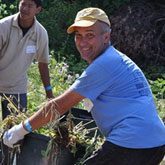






 Click here