
Protecting local waterways at Storm Drain Stenciling Day

internalexToday’s post comes from ILACSD’s Community Events Intern, Alex!

As a student at PLNU in the Point Loma area of San Diego, I get to experience a lot of the weather San Diego has to offer. Usually that means sunny skies or foggy mornings, but sometimes (like last week), it means sitting at my desk listening to the wind howl outside my door and the rain pelt my dorm window. Since I started interning at I Love A Clean San Diego, I’ve become more aware of the effects storms, like the one from last night, have on local waterways and ecosystems. Plus with Storm Drain Stenciling Day approaching, it’s a good time to remind ourselves of the role our storm drains play in the health of our environment and what we can do to keep our communities clean.

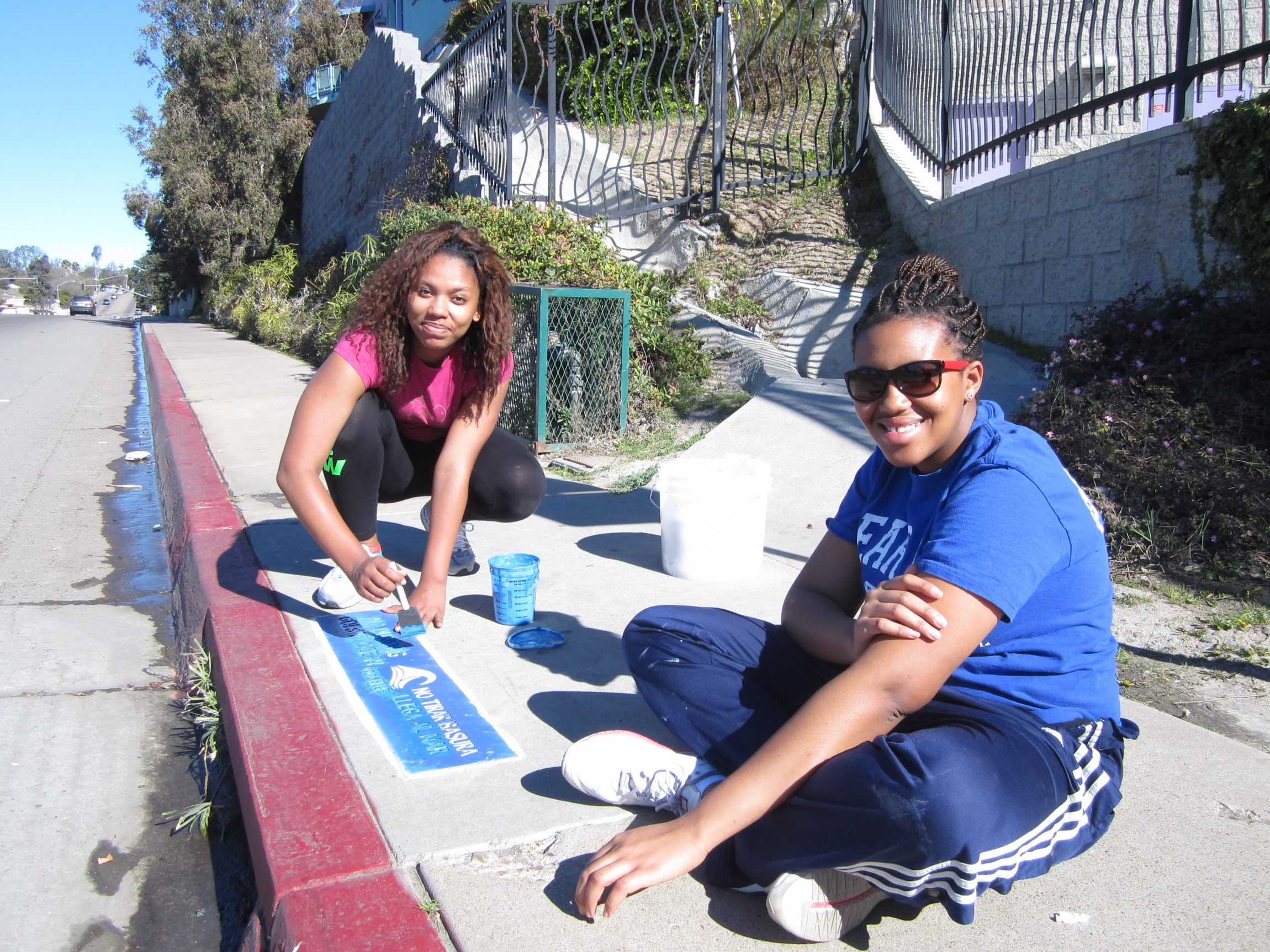
stormdrainMaybe you’ve seen this message stenciled by a storm drain somewhere in San Diego? If you have, it’s because a volunteer has participated in the Storm Drain Stenciling Program ILACSD sponsors along with Think Blue, the City of San Diego Storm Water Department! The simplicity of the Storm Drain Stenciling Program is one of my favorite traits. Volunteers check out stenciling kits and use the paint and stencils to write the message on any surface that is linked to a storm drain inlet. So great and so easy!

You might be asking yourself why a storm drains need to be stenciled, anyway. After all, they just link up to the sewage system, right? While this was my own misconception, the truth is sewage and storm drain systems are different. Our sewage system takes all the wastewater from our toilets, showers, and sinks to a treatment facility where the water goes through a three-step process of filtration and treatment before getting released into a natural water source. Storm drains, on the other hand, get no such treatment. Since a storm drain’s job is to literally drain storm water that accumulates on streets when it rains, filtration takes a back seat to avoid street flooding. So when it rains, any and all chemicals, oil, disposable cups, food wrappers, gum, or other trash we leave on the curb get washed down the storm drain system and eventually into our ocean. This is not only bad for wildlife that lives in and depends on the ocean, it poses a threat to human health as well.

When we think of cleanups, it’s really easy to picture beaches and to forget about inland areas. However, a lot of the pollution we see on our beaches has been washed downstream from an inland waterway or canyon. This year’s Storm Drain Stenciling Day around Caramel Creek Neighborhood Park aims to paint and stencil 118 drains that will help inform and remind the community about where their trash is headed. By preventing dumping in inland areas, we can diminish the amount of pollution that reaches our beaches and the ocean.

Meet our new Marketing Intern, Christina!

christinaToday’s post comes from ILACSD’s newest Marketing Intern, Christina Etchebarren!

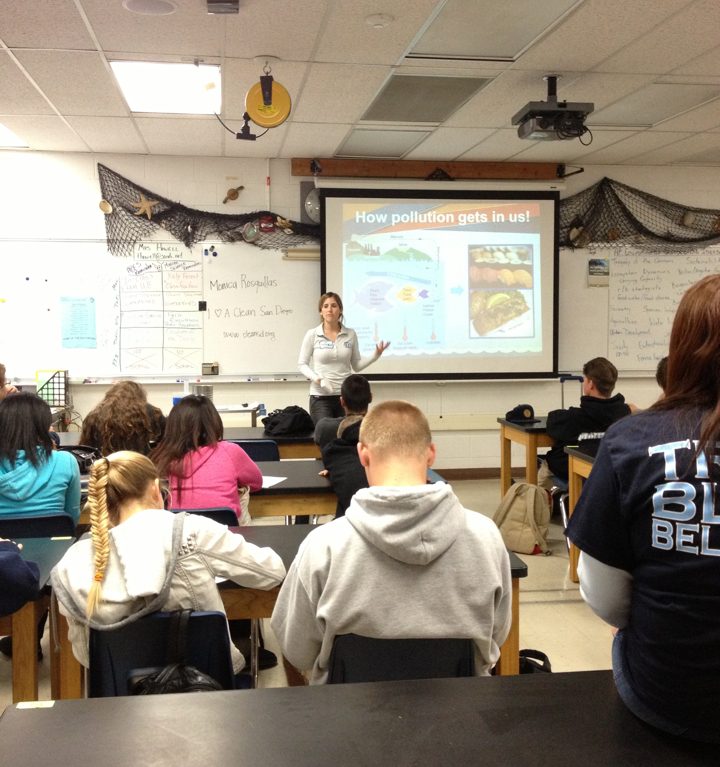
Hey there readers of this blog and fans of I Love A Clean San Diego! My name is Christina, I’m the new Marketing Intern here at ILACSD and I’m so excited to be joining the team and learning from the wonderful staff and volunteers. I am a fourth year Environmental Systems major at UC San Diego, originally from a small town outside of Portland, Oregon. Growing up I’ve always been surrounded by environmentally conscientious communities, so it was no surprise that learning about and protecting our environment has turned in to a passion of mine. Letting people know about what we’re up to at ILACSD is a part of my job description and my first assignment was to attend one of our education presentations at University City High School on Tuesday, Feb. 12th.

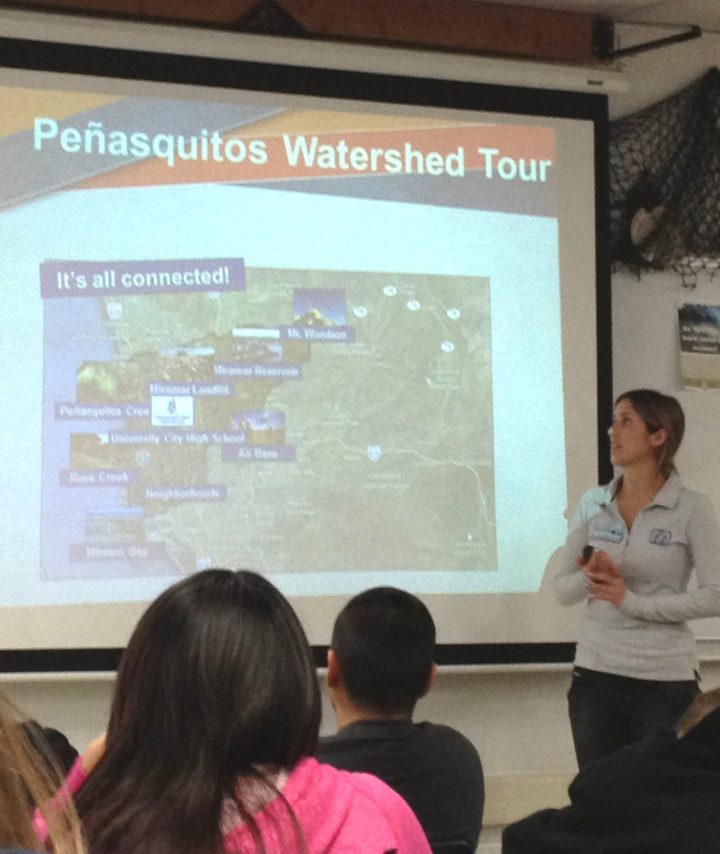
monica_educationArriving at the high school brought back a strange wave of nostalgia for my carefree, hormone charged, rebellious teenage days and I kind of felt like never leaving. I sat myself in the back row of a marine science classroom trying to blend in inconspicuously as the students noisily settled into their seats. Monica Rosquillas, who is one of our lovely educators, introduced herself and took control of the students attention with a quickness and ease that would impress the pants off of any HS teacher I’m sure; high schoolers can be some of the most difficult crowds to reign in and she did so with confidence that can only come from plenty of experience.

monica_watershedThe presentation began with a lesson on the importance of water, which may seem obvious but sometimes all of us need a reminder about just how vital clean water is to not only our health, but the health of every living thing around us. The rest of the lesson plan was focused on watersheds, water quality and marine ecosystem health. Talking about environmental issues can be an extremely difficult task because you don’t want to come across as threatening or pessimistic and you don’t want present the problem  as overwhelmingly large or beyond help, but you do want to make it seem important and urgent enough to motivate people to care and to take action. The presentation that I Love A Clean San Diego has put together walks the line quite gracefully, and I noticed that even from the back of the classroom, all of the students seemed to stay engaged throughout the entire duration of the talk.

albatrossjar
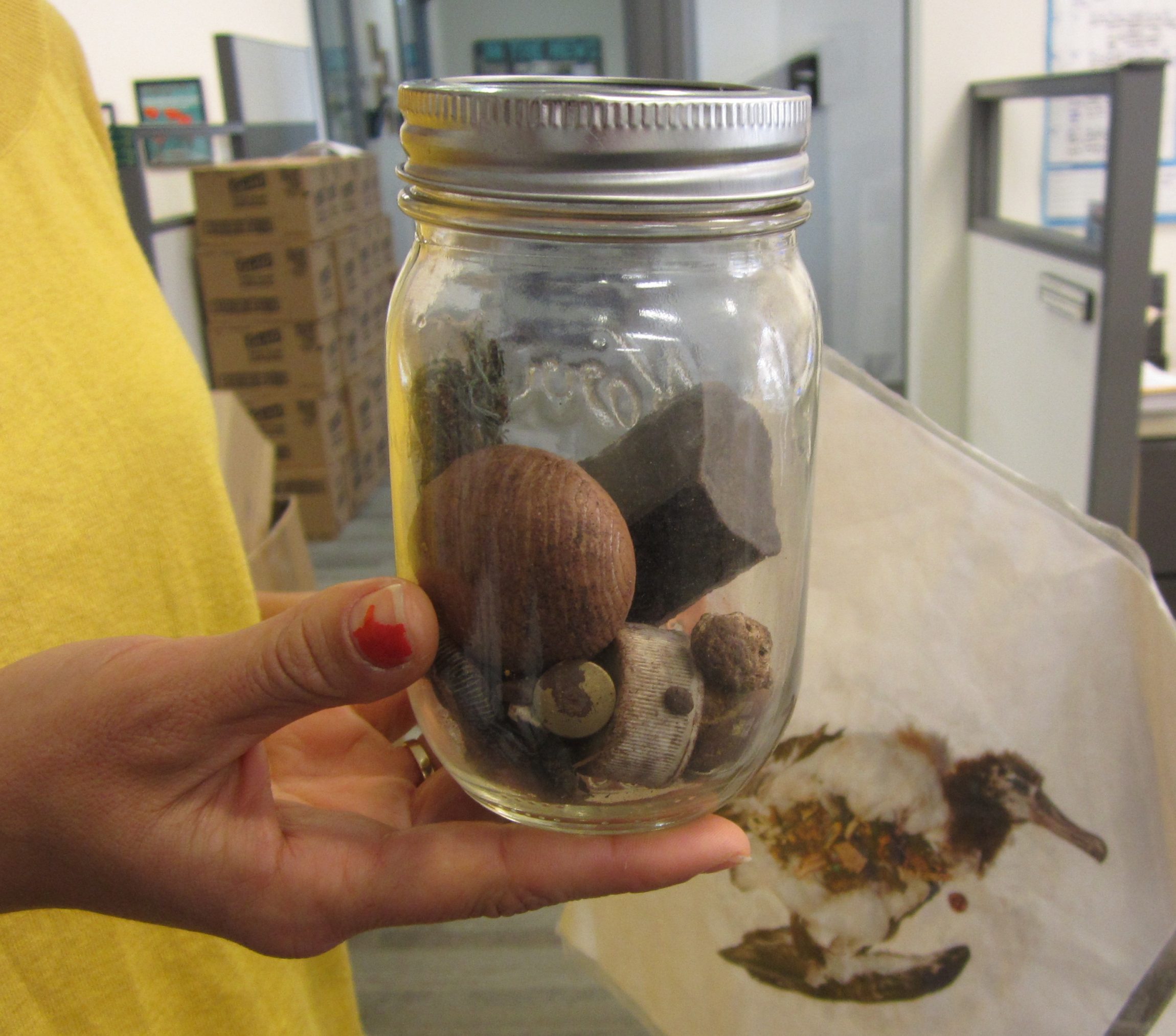
Stomach contents from an Albatross include plastic caps, fishing line, and even a small wooden door knob.

Monica hit the message home by passing around a jar filled with contents from an Albatross’ stomach which included a pen and several other pieces of colorful plastic, I heard murmurs of horror coming from the pupils as they passed the jar around with disgust.  To be honest, although I’ve gone through several years of environmental education throughout my time at UCSD, I learned a lot about watersheds and how important it is that we do our best to keep them clean.

All in all, I walked out of University City High School proud to be a part of such an amazing and inspiring organization and feeling hopeful for our future generations of environmental enthusiasts, and I look forward to the months ahead here at ILACSD.

You’ll hear from me soon, until next time.

Christina

Did volunteers find love at Cupid’s Cleanup?

LexiToday’s post comes from ILACSD’s Community Events Coordinator, Lexi Ambrogi!

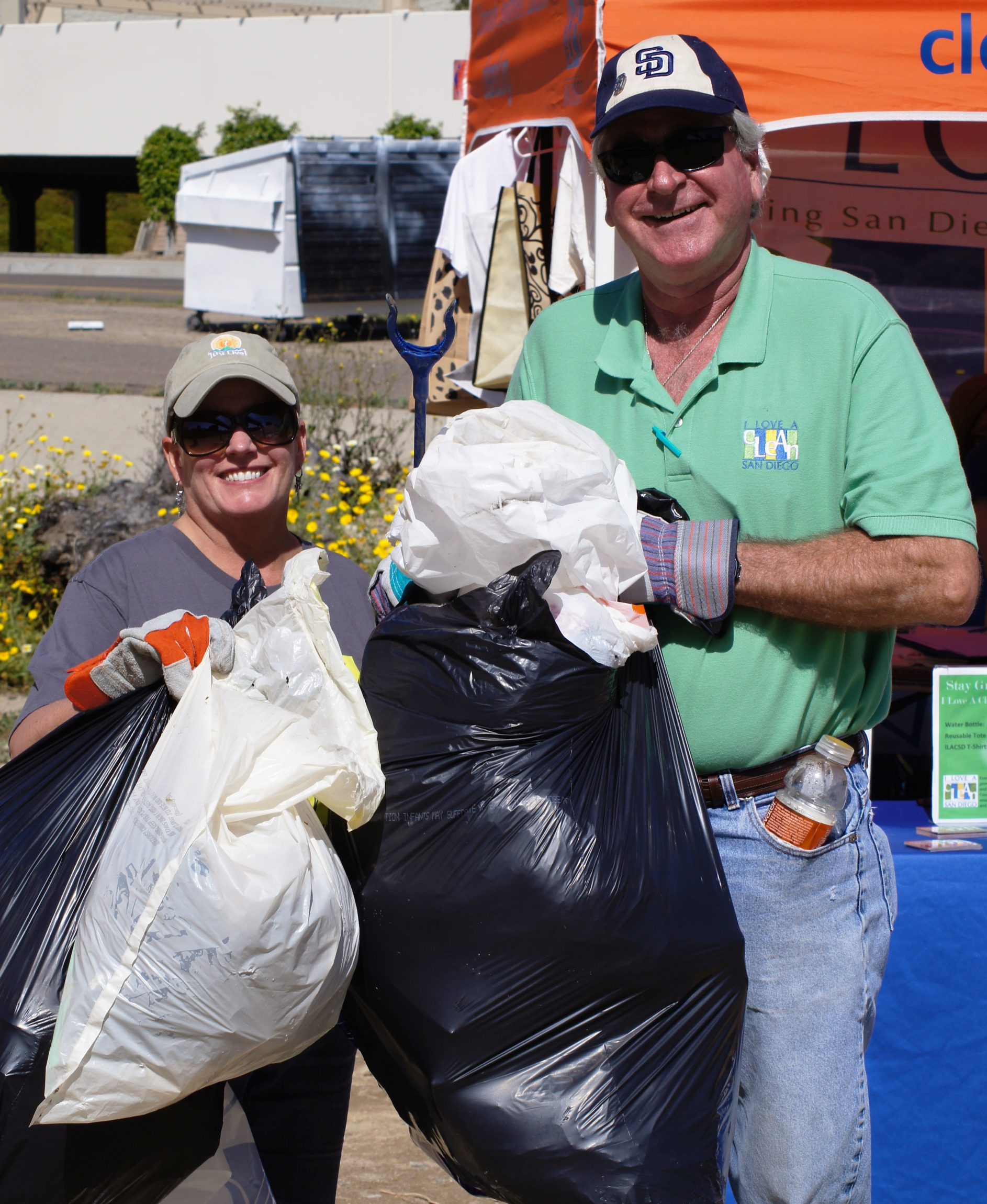
This past weekend, ILACSD hosted an event—my personal favorite—called Cupid’s Cleanup. The grand totals are pretty impressive: 231 volunteers joined us on the lawn outside of the PB Taylor Library to do a street-sweep cleanup of Pacific Beach’s streets and alleyways—an often neglected part of this coastal community—and removed nearly 500 lbs of debris (359 lbs trash, 128 lbs recyclables) in under 2 hours.

SONY DSCVolunteers were briefed on the importance of removing trash from our communities before it reaches the ocean and becomes a serious threat to the health of our marine ecosystems. They learned how trash can travel for miles through our storm drain system and be mistaken for food by sea creatures; armed with this knowledge, they took to the streets to fill up their trash bags.

SONY DSCAs this is our take on a “singles mingle” event, we decided to have a little fun with our volunteers: everyone wrote his or her name on a nametag either in green (single and ready to mingle!) or red (already spoken for). We can’t say for sure if sparks were flying between our volunteers, but it wouldn’t be the first time—two volunteers met at this cleanup in 2007 and eventually got married!

Our staff was taken aback by the overwhelming support and gratitude we received from people in the neighborhood. We had several walk-up volunteers who saw us on the lawn and decided to join us, and lots of people were asking how they could get involved with our future events (my answer: email me!)

SONY DSCAfter the cleanup, many volunteers walked over to Typhoon Saloon to join us for an after-party, where volunteers could win prizes for guessing our trash totals for the day. You can see photos from the event in our Facebook album.

Looks like fun, right? We’re jam-packing our 2013 schedule with cleanup events, so check back often to see where we’ll be next!

Think Blue Brigade tackles storm water pollution in Market Creek

monicaToday’s post comes from ILACSD’s Environmental Educator, Monica Rosquillas!

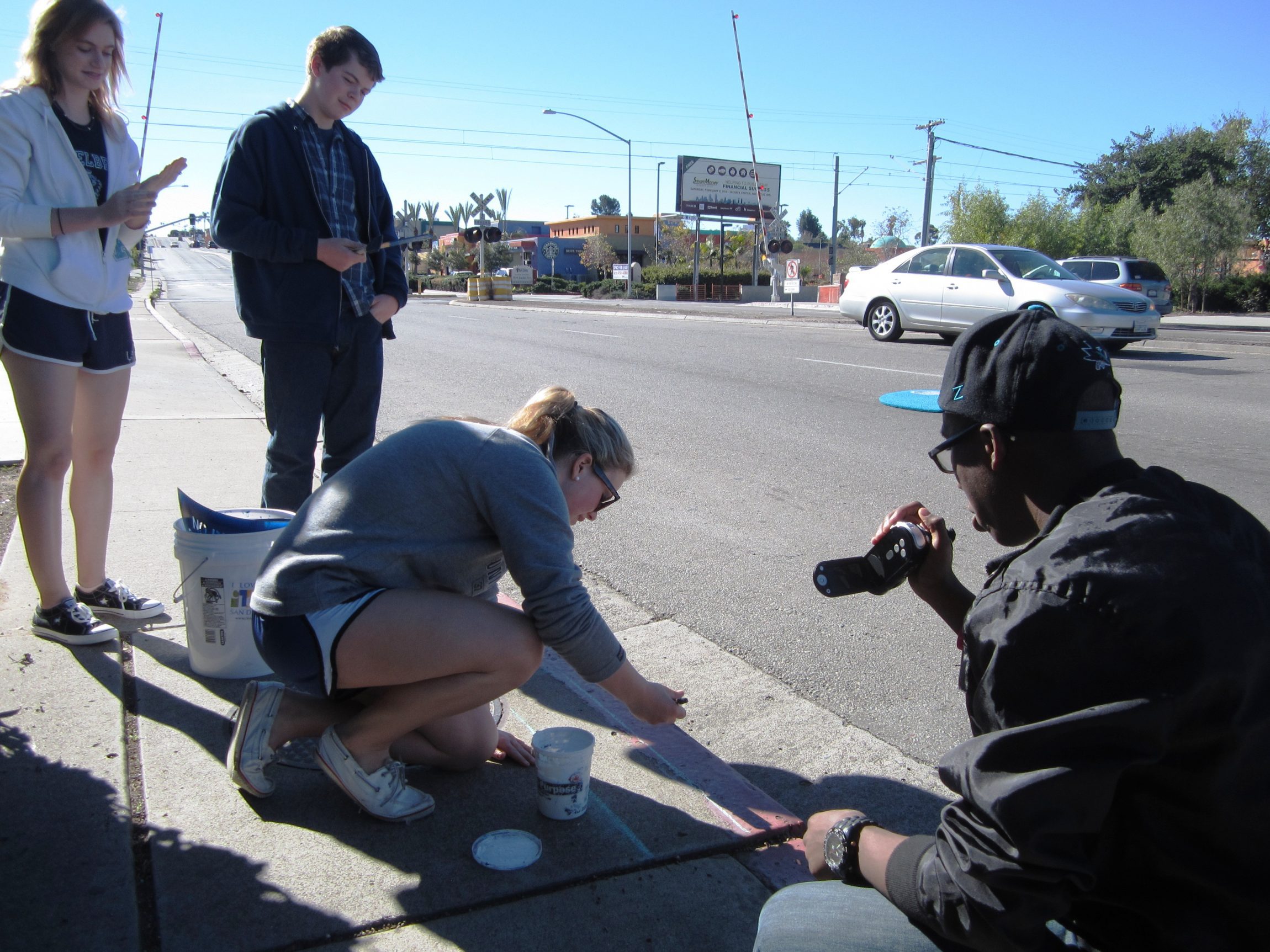
Last week, I gladly spent my Saturday with the high school students from the Elementary Institute of Science (EIS) stenciling storm drains in the neighborhood of Market Creek. The students at EIS are part of the Think Blue Brigade, a program by Think Blue San Diego that aims to connect high school students with storm water pollution prevention.

???????????????????????????????I arrived at EIS, stenciling kits in hand, and was met by a warm group of students and their enthusiastic advisor.  Soon after, we walked out into the sunny streets of Market and Euclid, where we split up into 3 groups, each group stenciling “Don’t Dump Goes to Ocean” on 3 storm drains. While some tackled storm drains, others documented their progress, recording video and taking pictures for their end-of-the-year project.

The footage collected will be used in a video that will be showcased at the end of the year. The storm drain stenciling activity and video project fulfill 2 out of the 3 requirements of being part of the Think Blue Brigade. Having already completed the storm drain stenciling, this group of students will also participate in ILACSD’s signature cleanup event, the Creek to Bay Cleanup, held on April 27th of this year.  Then, they will have until June to finish their video on storm water pollution and Green Transportation.

thinkblue1It’s very encouraging to work with a group of high school students, like these kids, who willingly give up their Saturday mornings to come out and do an event like this. As an educator at I Love A Clean San Diego, I go to high schools all over San Diego and teach kids about pollution. So when I see them do something about it, it feels great! Overall I had a great day spreading the message of storm water pollution prevention with this awesome group of students.

If you are a high school student interested in becoming involved with the Think Blue Brigade, please contact the education department by calling (619) 291-0103 or email me at mrosquillas@cleansd.org.

Celebrate Valentine’s Day a few days early at Cupid’s Cleanup

LexiToday’s post comes from ILACSD’s Community Events Coordinator, Lexi Ambrogi!

It’s that time of year again—time to stress out about making the perfect Valentine’s Day plans. Restaurant reservations, flower deliveries, boxes of heart-shaped chocolates…so much work! We’ll make it easy for you this year: show that you care by joining us for Cupid’s Cleanup on Saturday, February 9!

Volunteers will meet on the lawn outside of the Pacific Beach Taylor Library and clean up the streets of Pacific Beach from 10AM-12PM. If you’ve ever seen the side streets and alleyways around Pacific Beach, you’d agree that they are in need of some volunteer love.

cupids1
Volunteers combing the beach at last year’s Cupid’s Cleanup

Though a lot of our cleanups are along the beach, it’s important to pay attention to the trash on our streets before it turns into the trash in our ocean. This street-sweep cleanup will be a preventative measure: we’ll be the last line of defense before this trash travels out to sea where it can harm marine life.

As you may guess from the title of the event, we like to put a “singles mingle” spin on this event, because you never know who you will meet at one of our cleanups!

Don’t believe me? Just ask Julie and Kenny Potter. A few years ago, these two volunteers—strangers then—both volunteered with us for this event. Cupid, as he has been known to do, struck them with his arrow and they fell in love! They’re now happily married.

cupids2But don’t worry, married folks—this event is for everyone! We’re excited to spend our Saturday morning cleaning up the streets of Pacific Beach with families, couples, singles, and kids alike.

As always, community service forms will be available on site to all volunteers. And don’t forget about the post-event party at Typhoon Saloon: volunteers are invited to join us for some celebratory snacks, drinks and fun from 12PM-1PM at Typhoon Saloon, just around the corner.

If you’d like to sign up for this event, contact Lexi Ambrogi at lambrogi@cleansd.org or (619)-704-2778. Hope to see you all there!

New Year, New Laws: California’s Light Bulb Standards

BLopez_teamToday’s post comes from ILACSD’s Hotline Assistant, Barbara Lopez!

As the calendar turned to 2013, light bulb manufacturers are now required to meet new efficiency standards; light bulbs of traditional wattage of 60 and 40 watts will be replaced with bulbs that have maximum wattage of 43 and 29 watts, respectively. This is the latest phase of the light bulb standard; 100 watt bulbs were phased out starting in 2011 and 75 watt bulbs were phased out in 2012. New bulbs will provide the same amount of light while using less energy and costing less money to operate. Light bulbs already in use in your home are not affected and the standard does not affect all types of light bulbs; specialty bulbs, such as appliance bulbs, 3-way bulbs, and others, are exempt.

halogen
Energy-saving Halogen Bulb

So what light bulb options are available? One option is the energy-saving halogen light bulb. These bulbs are a type of incandescent that use gases to  improve energy efficiency and are widely available. Another option is the compact fluorescent light (CFL) bulb. CFLs are also widely available and are more energy efficient than traditional incandescent and halogen light bulbs. In fact, according to the California Energy Commission, a 23- to 27-watt CFL provides the same amount of light as a traditional incandescent but consumes 75% less energy. LED bulbs have been slowly gaining popularity in recent years and are said to be more energy efficient than both halogens and CFL bulbs. Although LED bulbs tend to be more expensive, their longer lives and energy savings usually offset the higher cost.

LEDbulb
LED bulb

Many online resources as well as the Light Bulb Finder app can help you make the switch to more energy efficient light bulbs.

Fluorescentblub
CFL bulb

Since incandescent and LED light bulbs do not contain mercury there is nothing that prohibits you from disposing of them in your regular trash. However, for those of you who enjoy arts and crafts, a quick internet search yields ideas for reusing those light bulbs. CFLs should not be disposed of in the trash and should instead be recycled because of the small amount of mercury found inside of each bulb. Home improvement stores, such as Home Depot and Lowe’s, will accept CFLs from residents to dispose of properly. You can also dispose of CFL bulbs at your local household hazardous waste collection facility.

To find a center near you, visit our new and improved one-stop recycling resource, WasteFreeSD.org.

Meet Alex, our new Community Events Intern!

We are excited to welcome our newest intern Alex to the ILACSD team!

internalexHey San Diego! I’m Alex and I’m absolutely thrilled to be joining I Love A Clean San Diego as their Community Events Intern! A little bit about me: I’m a senior at Point Loma Nazarene University majoring in International Studies. I was lucky enough to spend a semester in San Jose, Costa Rica my junior year. While there, I had the opportunity to watch (and help!) baby sea turtles hatch and waddle their way into the night waves one weekend. It’s an experience I’ll always remember, in part because the opportunity was given to me by the small community of Ostional, which comes together in very practical ways to protect the environment.

When it came time to choose an internship, I knew I wanted to intern somewhere that educated people about the importance of the environment and its stewardship. But more than that, I wanted an organization that provided useful, applicable ways for individuals to do their part. I had high hopes for ILACSD and they were all met at the first Tsunami Sweepers clean up at Torrey Pines on Saturday.

Tsunami Sweeper1The day was overcast and foggy when I pulled into the parking lot. I’d never been to a cleanup before, so I had no idea what to expect. I soon found out we were hoping for at least 25 volunteers and was so excited to know that we not only reached that minimum, but completely surpassed it! The volunteers each split off into groups of three or four and made their way through the shores picking up normal trash and looking for anything that could be washing ashore from Japan. As they returned, I weighed the trash and recyclables as Laura, another ILACSD intern I had the pleasure of meeting, recorded the weights. Overall, we weighed in 65lbs of trash and 30lbs of recycling that were picked up in a just a few hours!

IMG_2699Some people might think handling trash bags is icky. I’m usually in that boat. But the fact that this large group of folks came out on a cold, foggy Saturday morning to clean up a beach was inspiration enough for me to not even think twice about it until I got home. Parents volunteering with their kids, service members bringing their families, and witnessing the willingness to help on everyone’s faces just go to show me that even though I’m one person, my small act, when teamed with the small acts of others, can really make a difference in my community.

I look forward to the Tsunami Sweeper cleanups ILACSD has planned in the future, as well as next weekend’s Cupid’s Cleanup in Pacific Beach. As someone who before Saturday had never gone out to an unfamiliar location to work with unfamiliar faces, I can honestly say it’s worth it and I’m hooked!

New in 2013: Tsunami Sweepers

Today’s post comes from ILACSD’s Community Events Coordinator, Lexi Ambrogi!Lexi

Here at I Love A Clean San Diego, we love a good reason to get out and clean up our communities. Whether it’s a street-sweep cleanup to prevent trash from washing down our storm drains and out to sea, or a post-holiday beach cleanup to pick up after 4th of July beachgoers, we are always looking for practical and meaningful reasons to inspire our volunteers to keep San Diego beautiful.

This Saturday, January 26, we’ll be kicking off a new series of beach cleanups at Torrey Pines State Beach called Tsunami Sweepers. In addition to combing the shoreline for standard beach litter (cigarette butts, plastic bags, Styrofoam scraps), our volunteers will be searching for a very specific types of debris.

800_japan-tsunami-debris
Tsunami debris in Santa Cruz. Source.
tsunamidock
Tsunami debris in Oregon. Source.

Some coastal communities have already seen the beginnings of what will surely be an influx of trash washing ashore: a fridge and buoys in Hawaii, docks in Washington and Oregon, and more.

ILACSD has teamed up with the California Coastal Commission to host a series of cleanup events in 2013 that are designed to help us track and understand more about the debris from this tsunami.

Volunteers who join us for this series of events will be briefed on what to look for in identifying debris from Japan (Japanese writing, or large pieces of shipping or building materials, to name a few).

If you’re interested in attending this cleanup and joining in the effort to help scientists understand more about this natural disaster and how it will impact your community, email Lexi Ambrogi at lambrogi@cleansd.org to sign up.

If you can’t make it out this weekend, don’t worry—we’ll be hosting several more of these events throughout 2013. Hope to see you there!

With Your Help, ILACSD Cleaned Up in 2012!

Every year our goal here at ILACSD is to get more San Diegans involved in making our beautiful city cleaner and healthier and to protect the San Diego way of life we all know and love. 2012 was no exception, and more of you came out to volunteer in your community than ever before!

So how did we do in 2012?

SMore Education. We know that the only way we can make sure San Diego stays clean long into the future, is if we educate our kids today about how their everyday actions affect the world around them. In 2012, our Educators gave 531 presentations – over 10 a week! – to more than 37,000 youth and adults. That mean our donors and supporters (that’s you!) helped us reach out to 20% more San Diegans than we did in 2011!

OLYMPUS DIGITAL CAMERAMore Volunteers. Volunteering gives residents pride in their community and empowers them to take responsibility for keeping it clean. In 2012, more than 30,000 of you came out to lend a hand in keeping your neighborhoods, beaches, canyons and creeks clean! Cleanups are no walk in the park, picking up trash is dirty work and we couldn’t do it without dedicated volunteers like you.

SLess Trash. It might seem like with more volunteers, we should be picking up more trash right? Well less trash is actually great news. It means that the areas we’re cleaning up are staying cleaner year after year! It also means that our two pronged approach, cleanups and litter prevention through education and resources like WasteFreeSD.org, are making an impact on not only our local environment, but on the people who live, work, and play throughout San Diego. Still, 359,000 pounds of trash and debris were picked up by our volunteers this year, and that’s no small feat!

SONY DSC…but More Recycling. Even though volunteers picked up less trash in 2012, a higher percentage of that trash was recyclable to the tune of about 93,000 pounds. Recycling more debris keeps it out of our landfills and saves resources when it’s made into something new. If you want to know more about why recycling is important, check out the Recycle 101 section of WasteFreeSD.org!

Results like these don’t happen overnight. It takes a hard working staff, dedicated volunteers, and the financial support of donors, foundations, local businesses, and local government all working together for one purpose: a cleaner, healthier San Diego!

We’re looking forward to working with all of our partners and volunteers in 2013 as we lead up to celebrating ILACSD’s 60th birthday in 2014!

WasteFreeSD.org Gets a New Look for the New Year

WFSDAs you may know I Love A Clean San Diego, in partnership with the County of San Diego, operates San Diego’s official recycling website and call center which refers thousands of residents to where in San Diego they can recycle or dispose of just about anything. From broken surfboards to wine corks, cooking oil to bridesmaids dresses, WasteFreeSD.org makes recycling in San Diego quick and convenient.

WFSDscreenshot
New look, same great resource!

San Diego County can be a tricky place to navigate when trying to figure out where to recycle some things. All 18 jurisdictions in San Diego have different rules depending on where you live, which is why WasteFreeSD.org uses your zip code to find out exactly where you can take your items to be recycled or disposed of properly. By giving residents an easy way to get rid of things they don’t want, WasteFreeSD.org diverts tons of waste from local landfills, encourages people to be more eco-friendly, and prevents illegal dumping from damaging our local community.

What’s New?

New Look. It’s cleaner, it’s shinier, and it’s got a lot more useful recycling information for you all in one place.

Easier to Use. You can now start typing in the search field and it auto-fills the available options for you! On the results page, there is also a new map feature that shows you where the recycling centers are in your area.

Updated Resources. From why recycling is important for our local community, to what exactly you can put in your blue bin at home, the new WasteFreeSD.org is chock full of information and even short videos from our ILACSD staff.

En Español. The WasteFreeSD hotline has been bi-lingual for some time now, but that was the only option for Spanish speaking San Diegans to get the recycling information they need. WasteFreeSD.org En Español is a great new feature and even includes a video from our Educator, Monica, on what can and can’t be recycled in your blue bin!

WasteFreeSD.org is still your go-to resource for recycling and hazardous waste disposal information in San Diego County. The new look and feel just make it even easier to navigate! We want to get the word out about this great one stop recycling resource, which is an extremely important tool to help keep our local community clean and encourage recycling.

Why is WasteFreeSD.org Important?

The average person throws away 4.5 pounds of trash a day, adding up to more than 1,400 pounds per person a year. We million plus San Diegans are piling our waste high. In fact, it has been in the news recently that our current pace of trash accumulation will likely cause the local landfill to fill up within the decade.

Miramar Landfill

We hope that by telling people about WasteFreeSD.org, we will help them make better decisions about what they throw in the trash.

Go check out the all new WasteFreeSD.org today and help us get to word out by telling your friends and family too!