Hats off to another successful Kids’ Ocean Day – ILACSD’s 18th and the state’s 23rd annual event! Kids’ Ocean Day is a unique, annual event centered on engaging our youth as environmental stewards. After a school assembly about ocean conservation, 3rd-5th grade students from eight Title 1 schools around the county joined together at South Mission Beach to leave a lasting impact on their environment.
Take a look at how we spent the day!
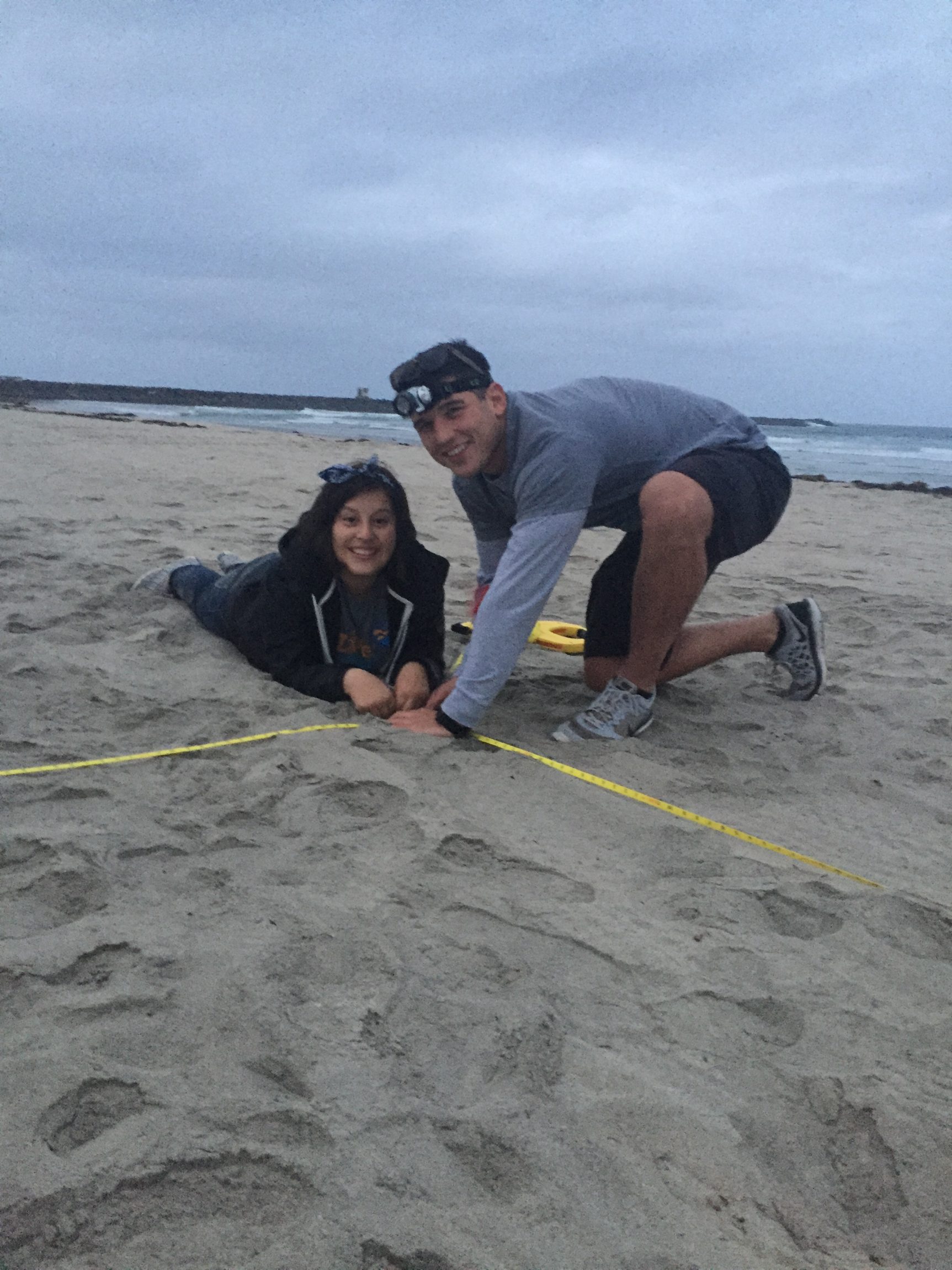
Staff arrived at 5:00 AM to lay the aerial art design in the sand.
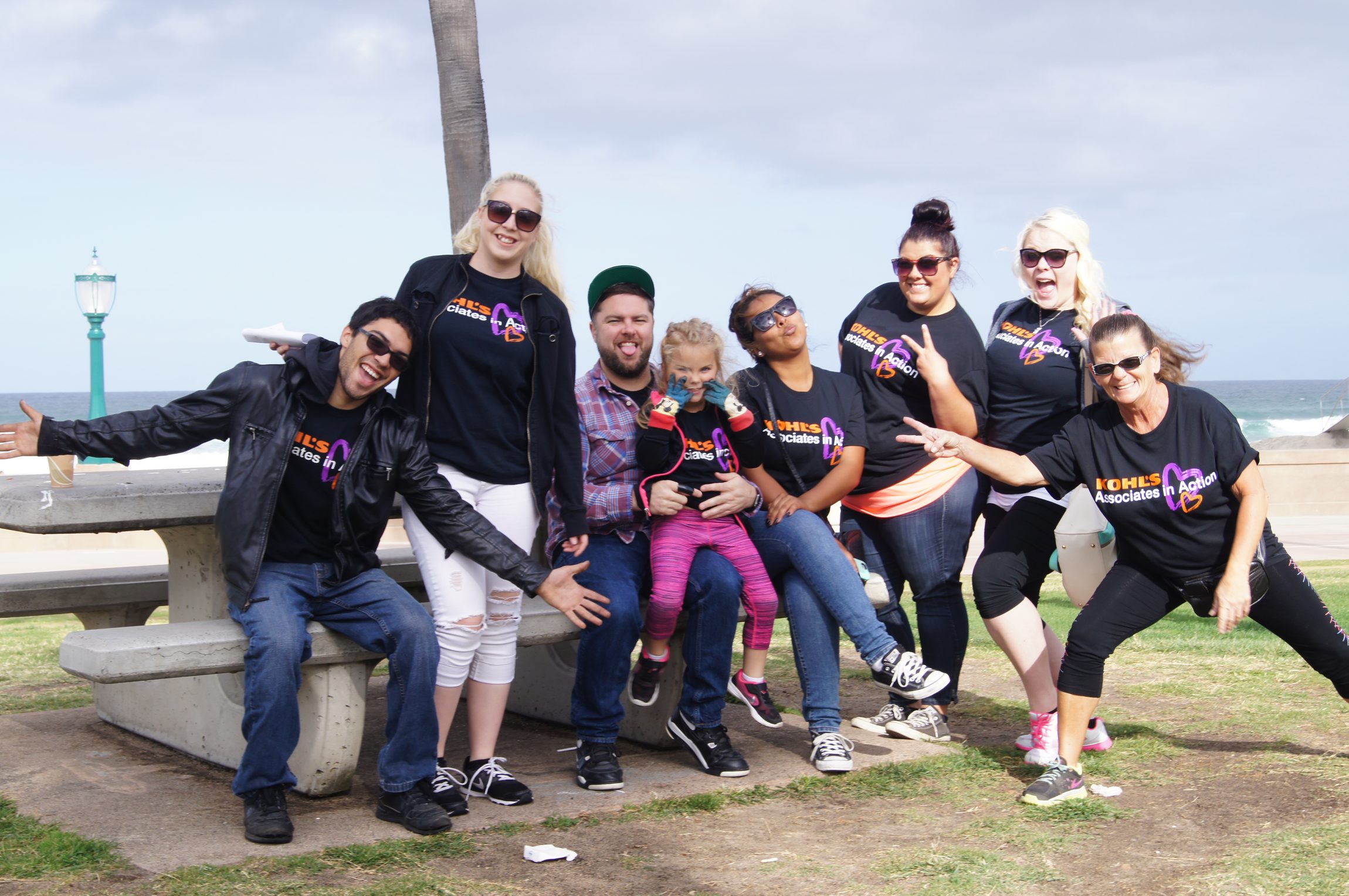
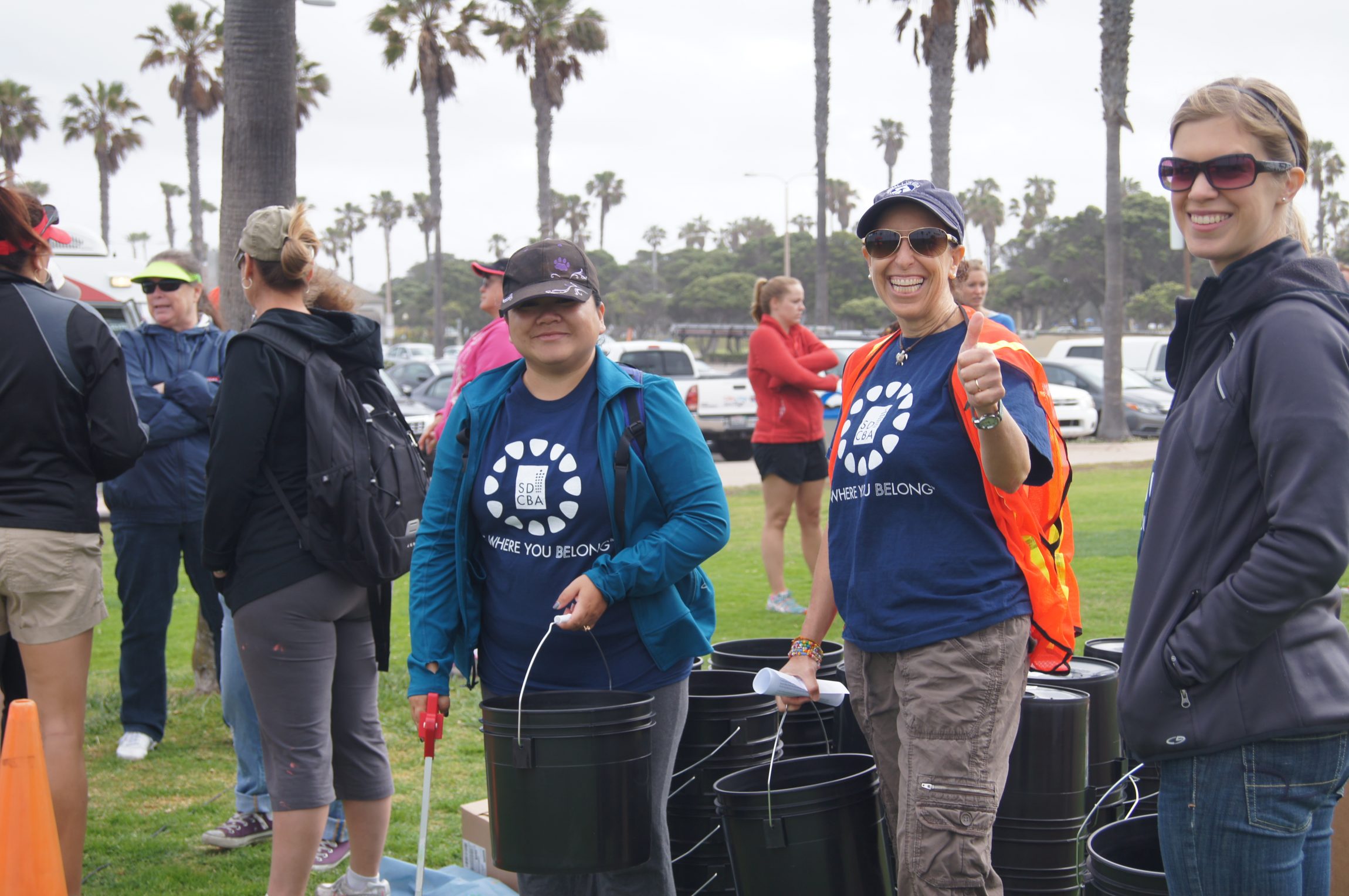
Volunteer groups, like Kohl’s Associates in Action, led students during the cleanup to ensure the day ran smoothly!
Thanks to additional sponsorship this year, ILACSD provided 50 reusable buckets for the cleanup, reducing the amount of disposable trash bags used at this event.
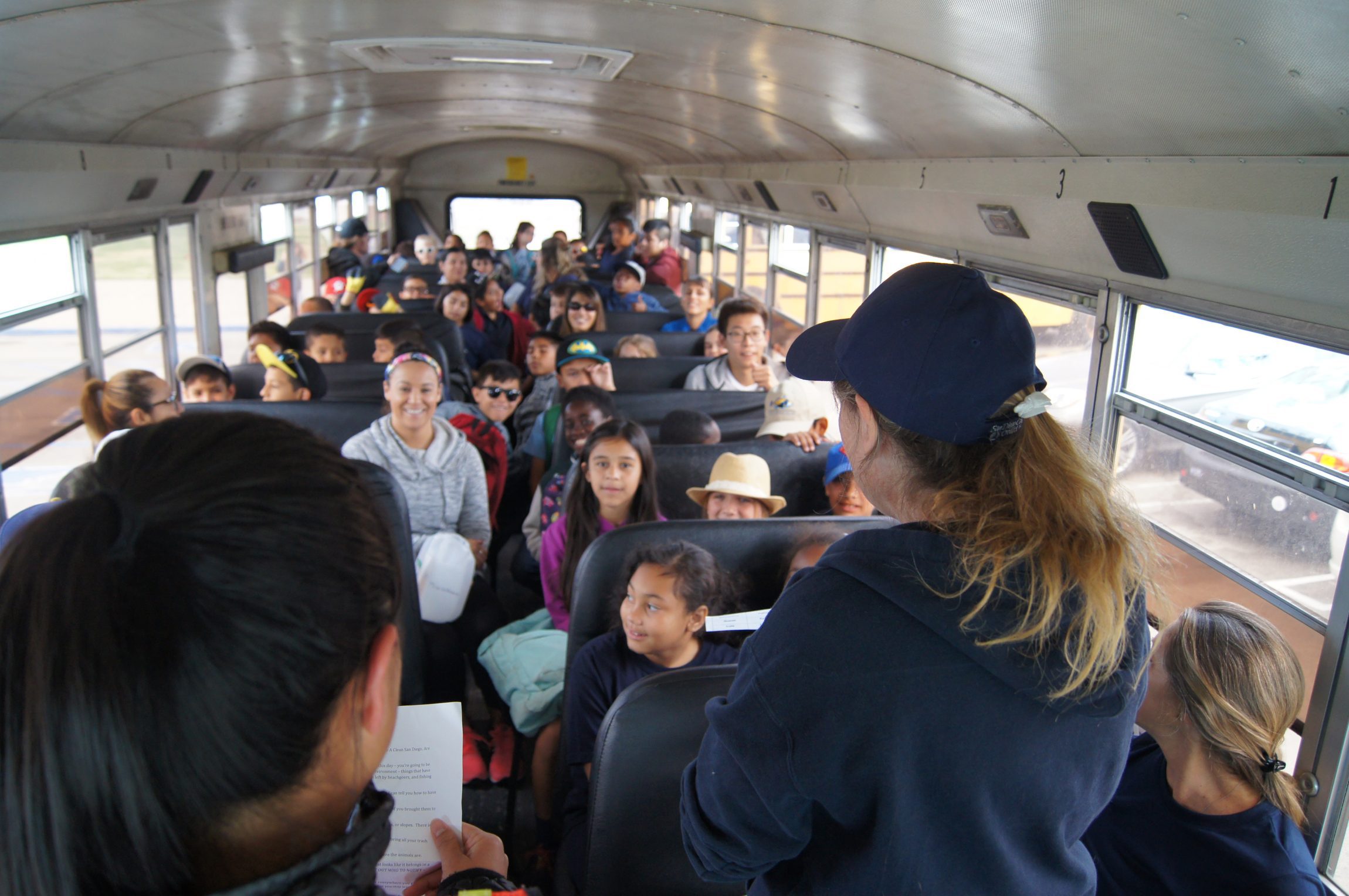
Volunteers reviewed safety tips for the cleanup and got students energized for the day!
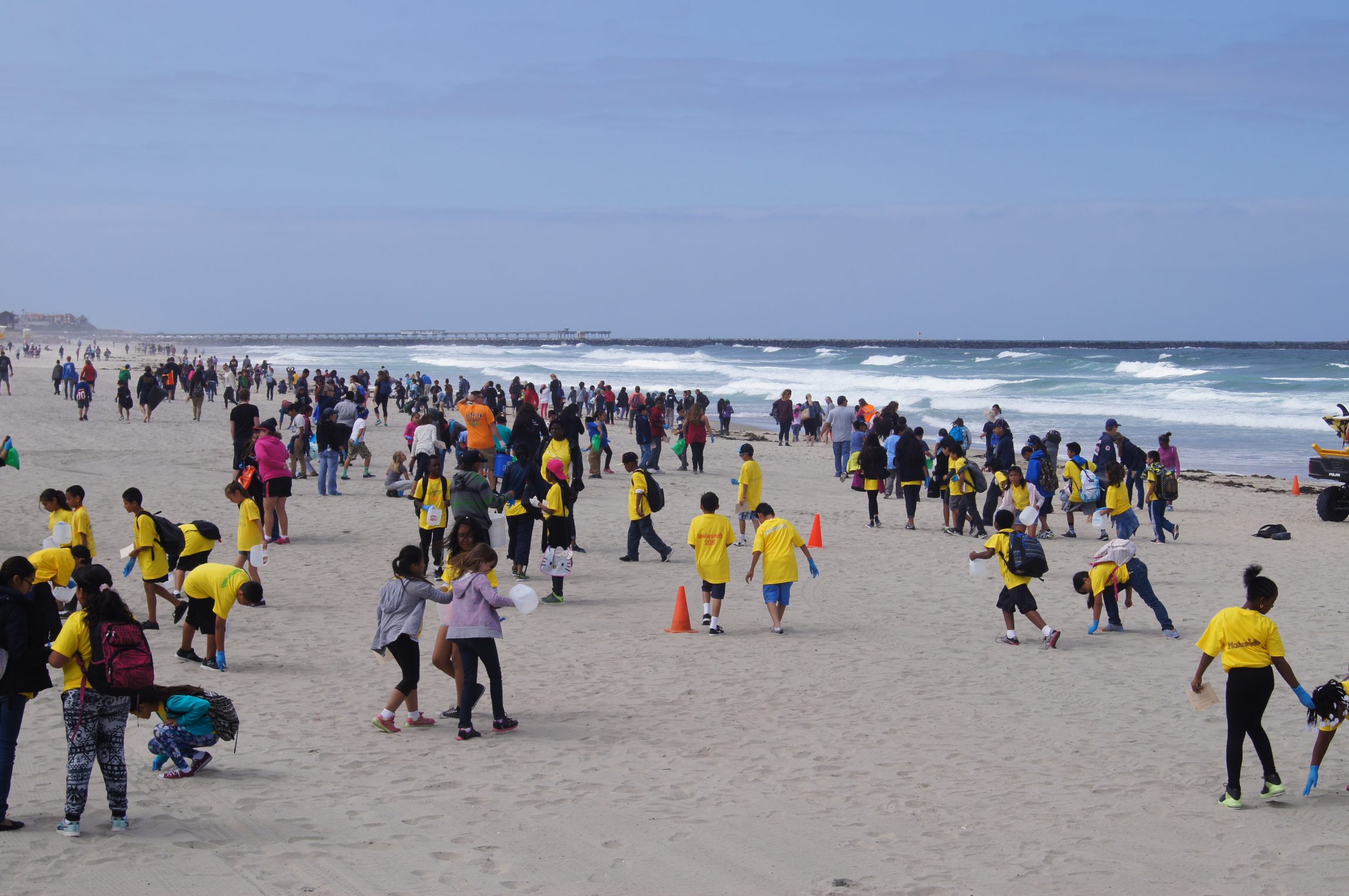
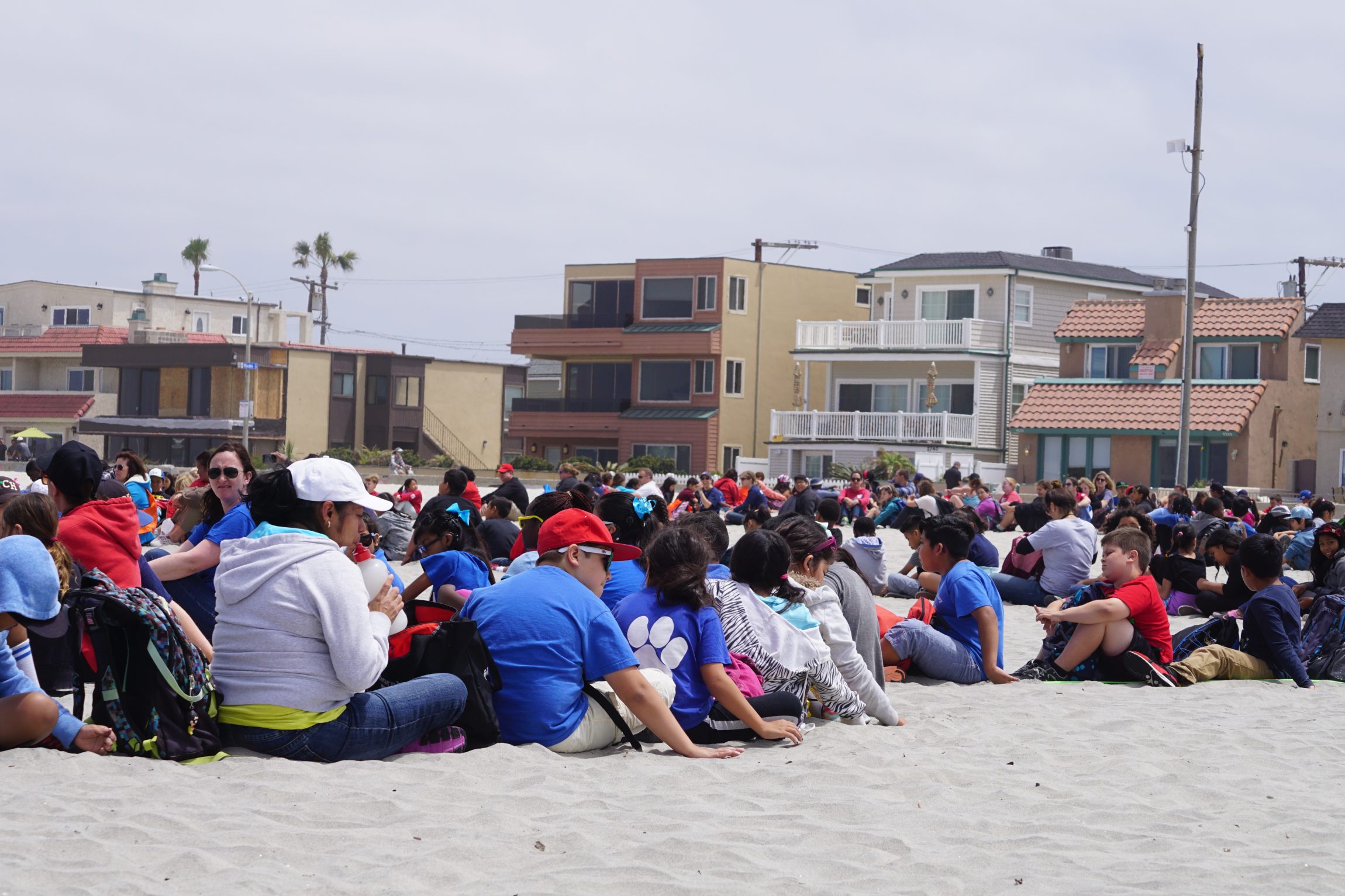
Over 950 students, teachers, and volunteers participated in a beach cleanup, ensuring fewer pieces of land litter become marine debris.
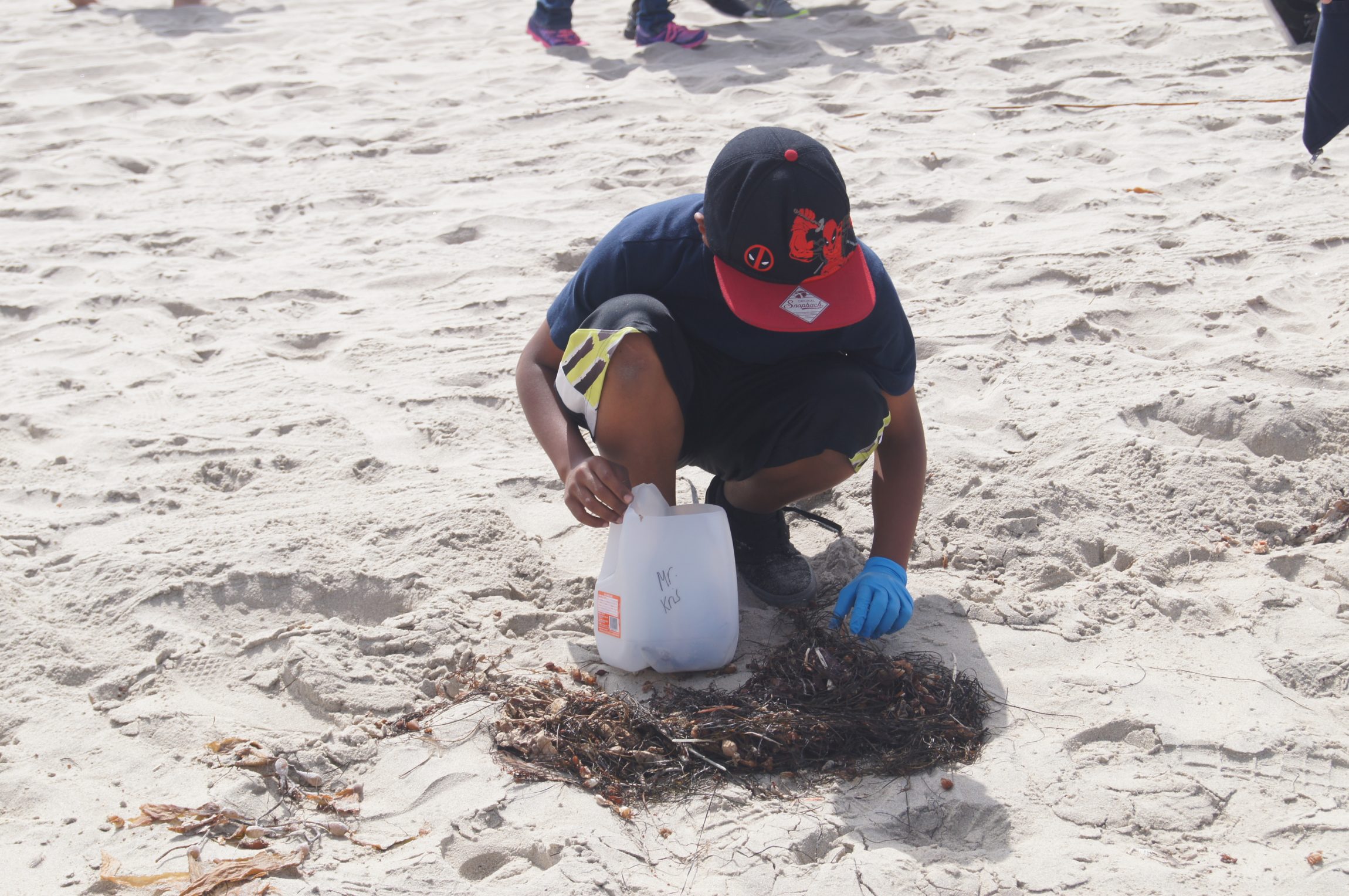
Zero Waste in action! Most students created temporary trash bins from repurposed milk jugs, which they later recycled.
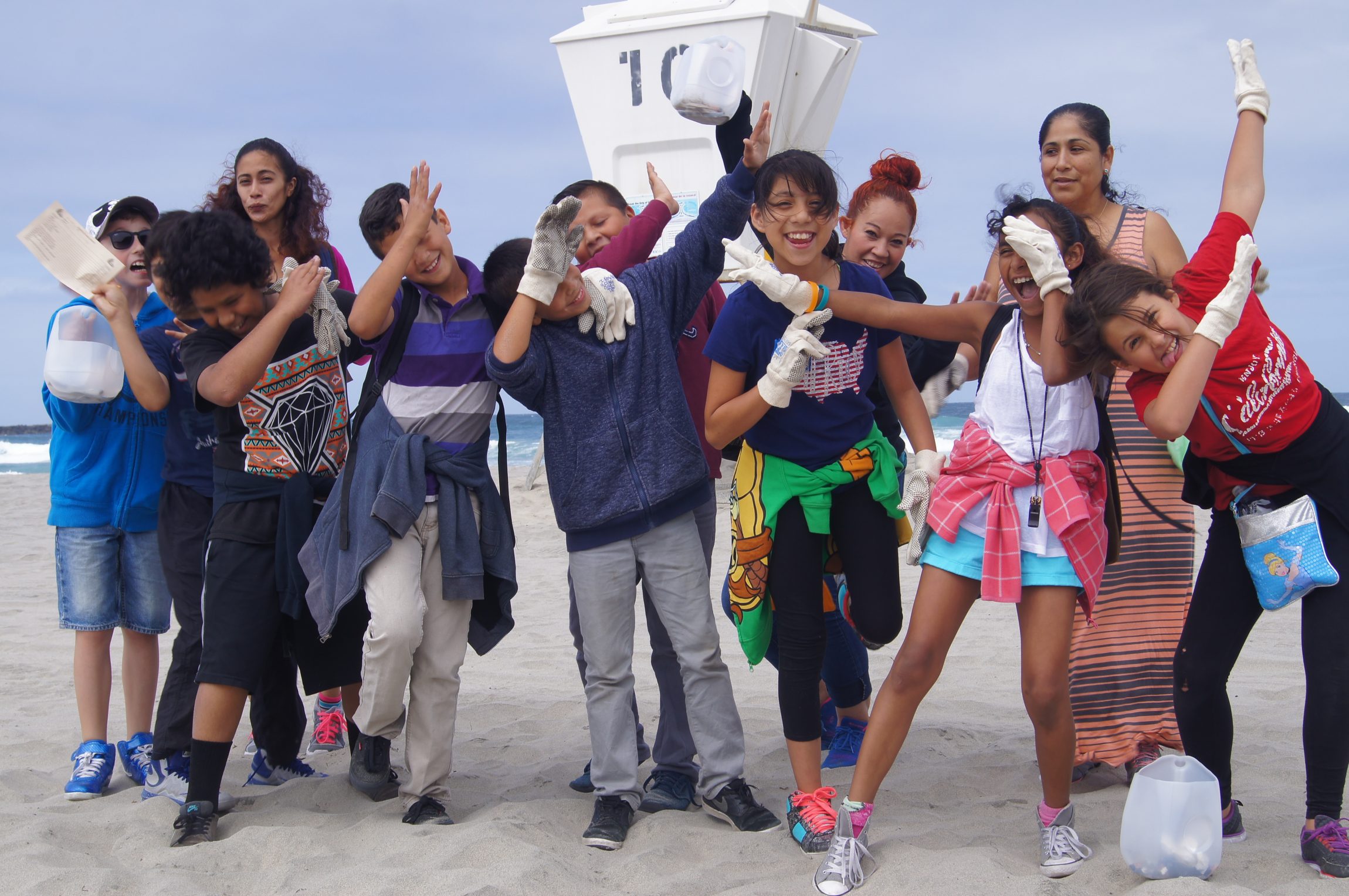
Fresh air + fresh dance moves + a freshly cleaned beach = a great day.
Students waiting patiently for the helicopter to circle overhead and capture the perfect shot of the aerial art.
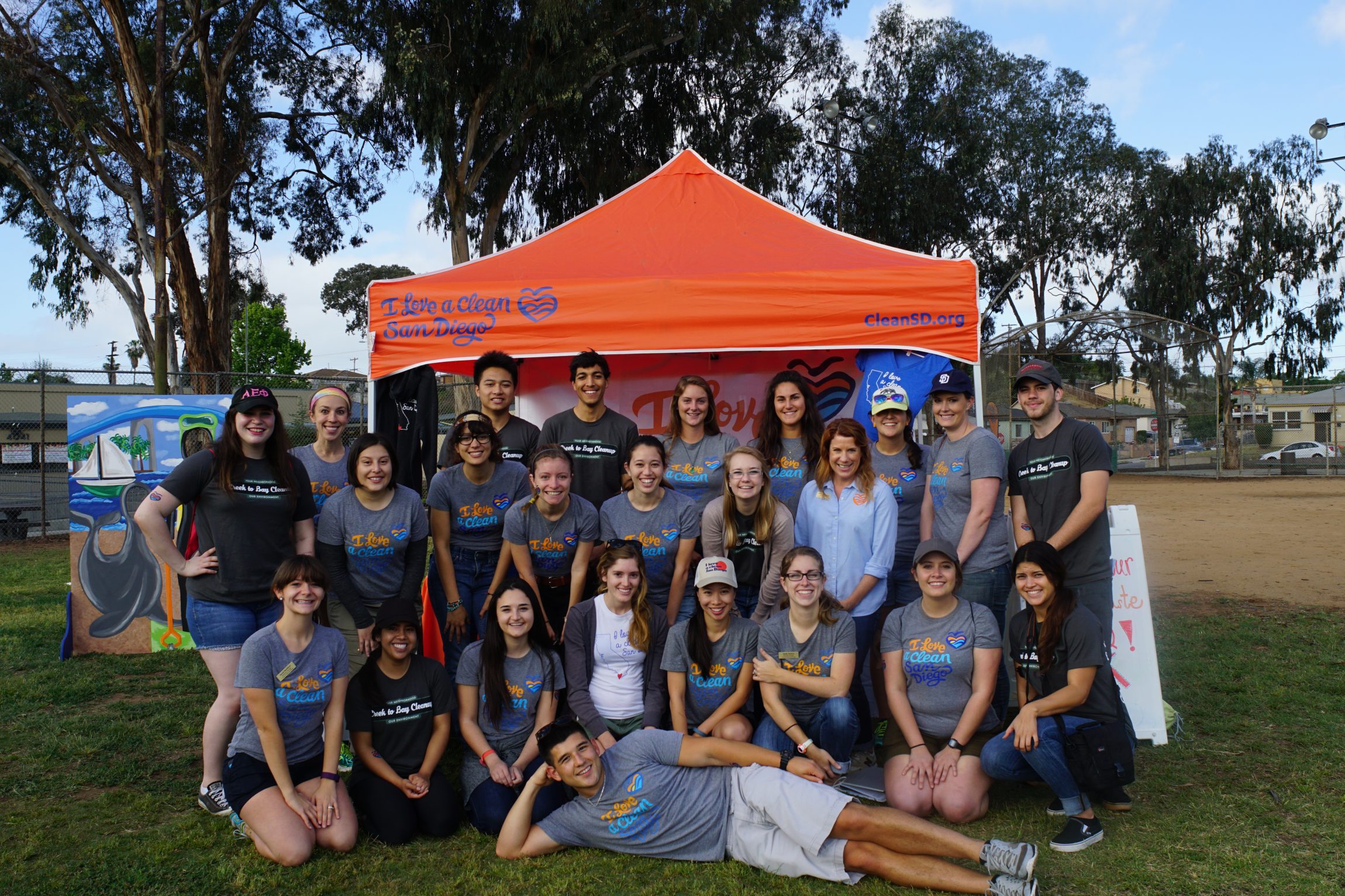
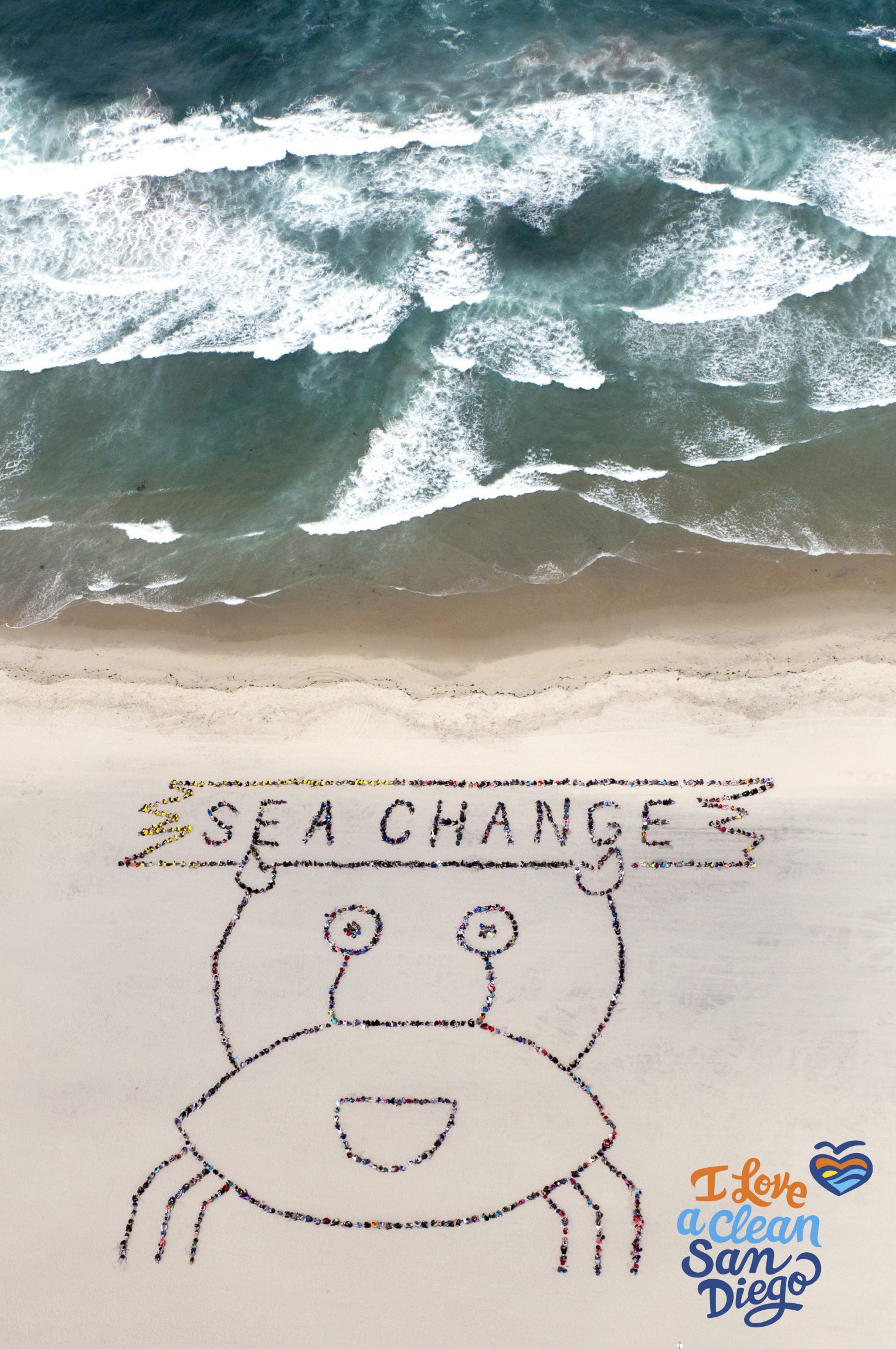
And lastly, the official image! Great job, team! To get involved with an upcoming event, please visit CleanSD.org!
Happy World Ocean’s Day! Today we celebrate the ocean for the joy it brings us, the food it provides us, and the oxygen it supplies us. The mysterious and vast ocean with its other-worldly creatures captivates young and old alike. From nudibranchs and sea hares to sharks and rays, the ocean holds amazingly unique creatures. Unfortunately, many are threatened by human actions that negatively impact their habitats. Therefore, today must also be a call to action to protect these organisms and preserve our ocean!
Ocean acidification threatens ocean ecosystems that include oysters, reefs, and the foundation of several food chains, plankton.
Ocean acidification is one way in which humans are driving drastic changes in the ocean. Ocean acidification is the alteration of ocean chemistry as a result of increased carbon absorption, which is a direct effect of increased carbon emissions. One serious consequence of ocean acidification is that it becomes very difficult for certain organisms, such as corals, oysters, and even plankton, to both build and maintain the calcium carbonate structure that they depend upon, such as shells and reefs. This can negatively impact the organism itself, as well as entire ocean ecosystems.
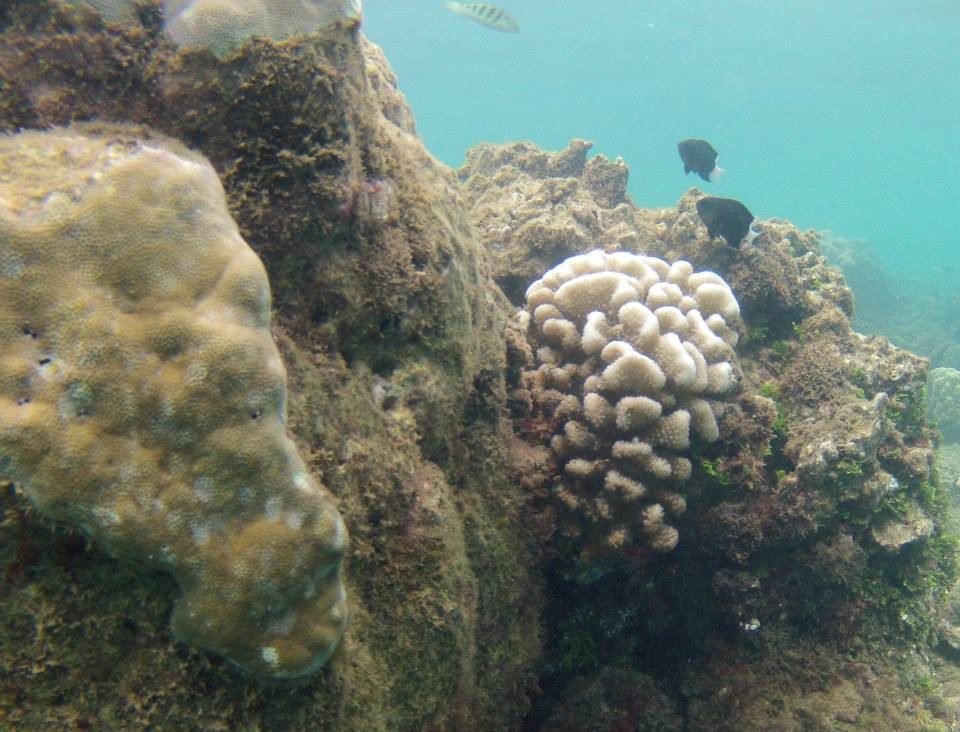
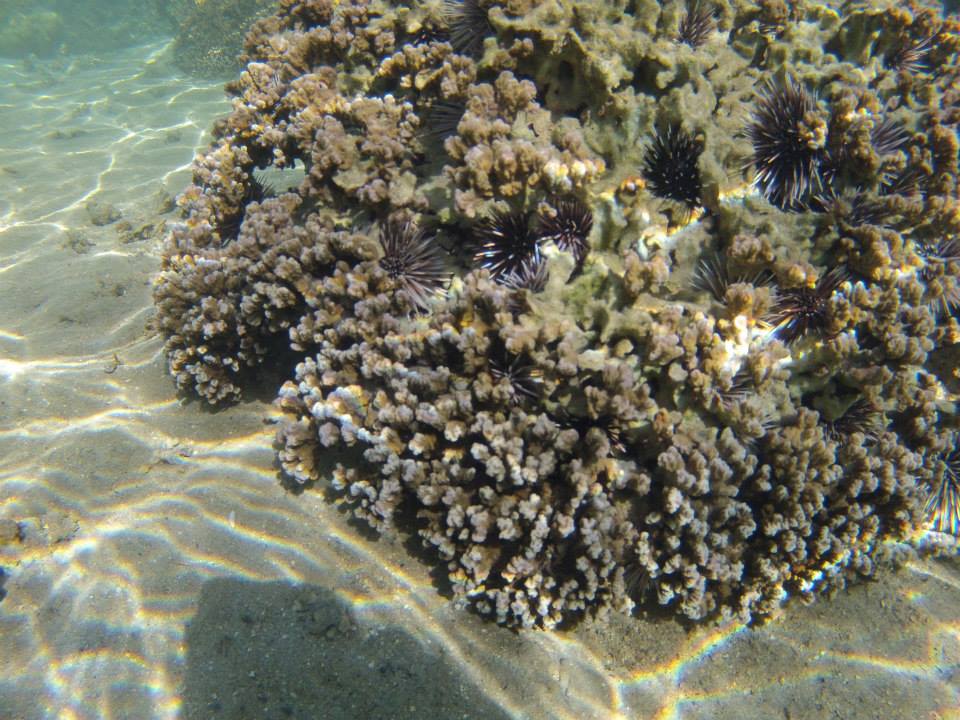
Coral and sea urchins are also affected by ocean acidification.
Thankfully, we can control how much carbon we each emit into the atmosphere. Follow these four easy steps to reduce your carbon emissions.
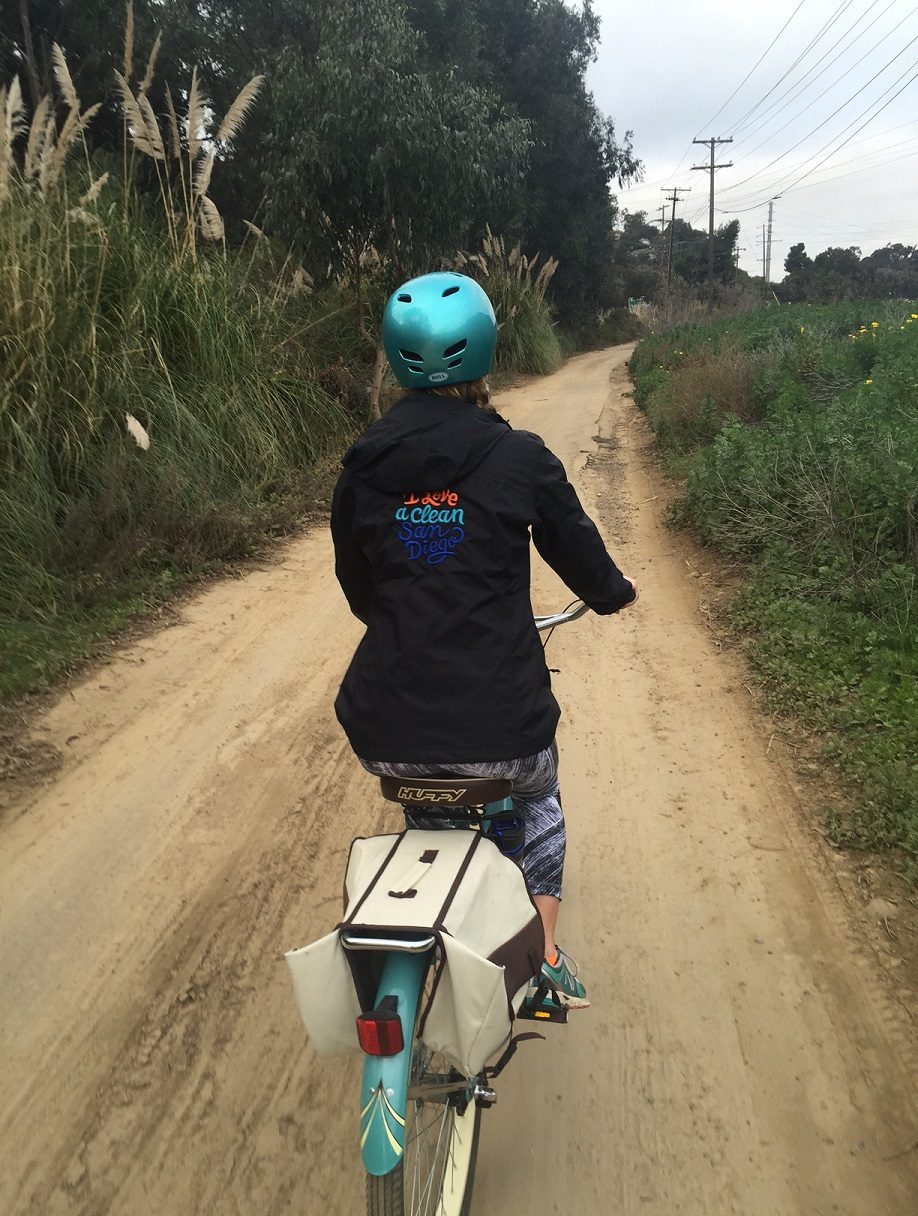
Travel by foot, bike or trolley more often to reduce your carbon footprint!
Environmental Education Specialist, Grace enjoying one of San Diego’s many bike trails.
Spend less time in your car. This could mean riding your bike, walking, taking public transportation, or carpooling. The average car produces about 19.6 pounds of carbon dioxide per gallon. Reducing your need to fuel up helps to lessen your impact on the environment and your wallet all at once.
Lower your electricity bill. This doesn’t just mean turning off lights, but can include simple and easy practices such as unplugging appliances when they aren’t in use, utilizing energy saving light bulbs, and enabling the sleep function on your computer.
Buy local. Products have less distance to travel when you choose to buy locally made and grown products, reducing the amount of energy used to transport the goods.
Practice the 3 R’s: Reduce, Reuse, and Recycle. Go even one step further and purchase items made out of recycled material. Less energy will go towards manufacturing new products and finding natural resources to make them. Don’t know where to recycle something? Check out WasteFreeSD.org.
Looking for more tips? Come to our Zero Waste Summit this Saturday, June 11th in Encinitas to build your zero waste toolkit with great giveaways! The whole family is welcome to come out, tour our interactive booths, and hear from a panel of zero waste experts. With your effort, we can keep our oceans healthy and accessible well into the future. Enjoy World Ocean Day!
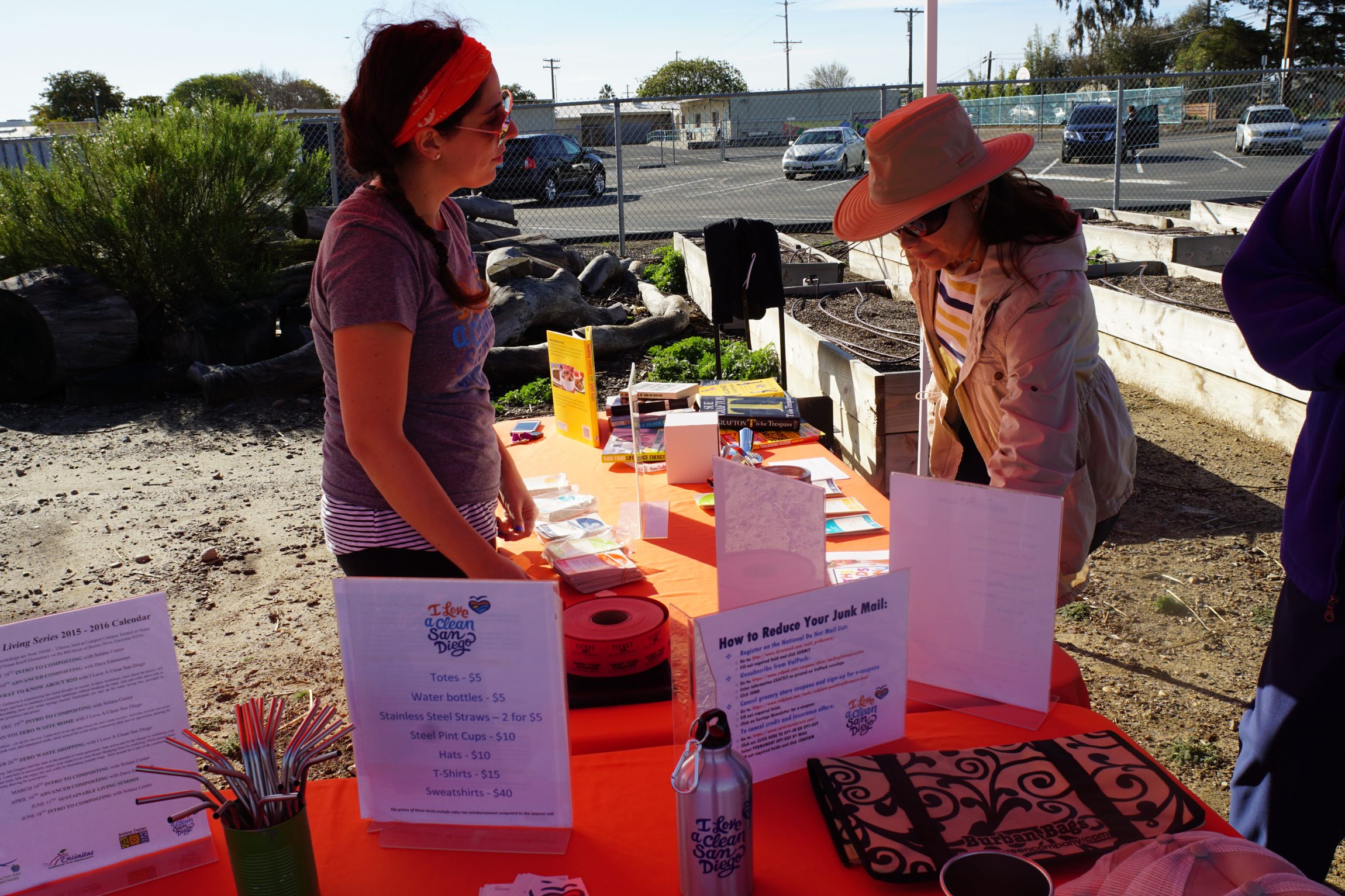
ILACSD, Solana Center and Jimbo’s will all have interactive booths this Saturday!
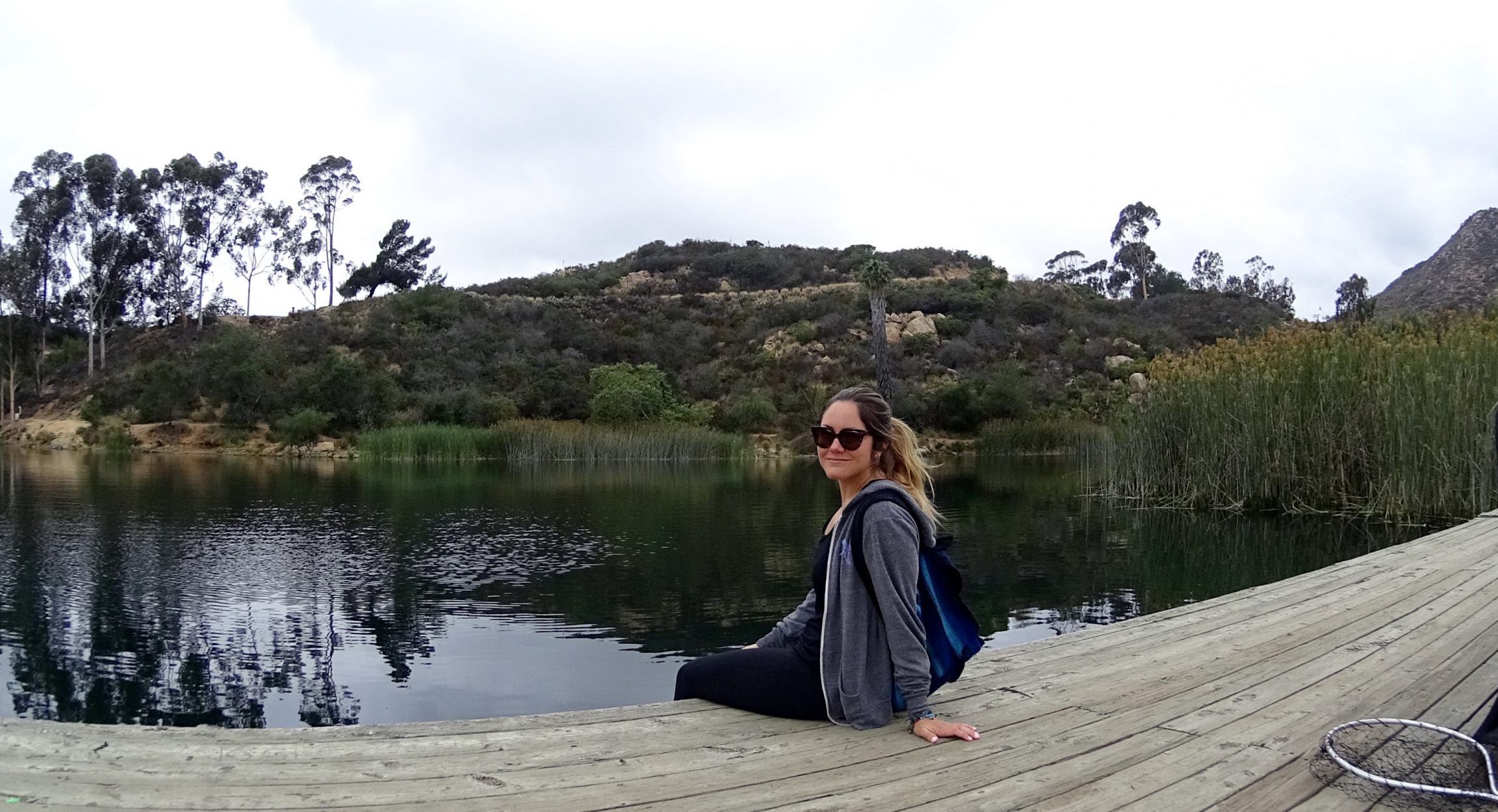
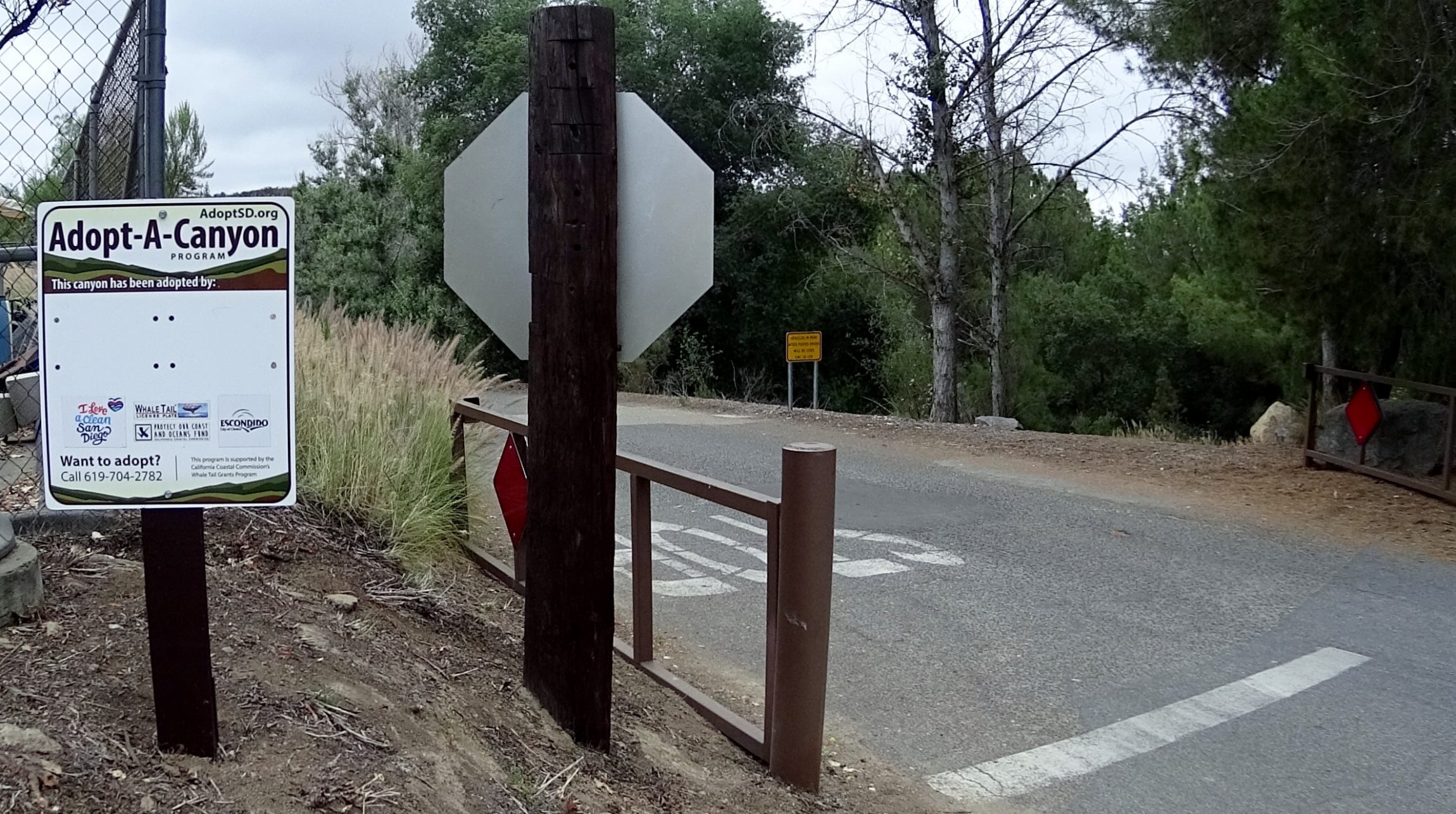
ILACSD’s Admin Assistant, Erika, took a weekend hike to explore one of our newest adoptable sites in Escondido.
This past Monday was Summer Solstice, which marks the longest day of the year and the official onset of summer! With the longer days, it’s the perfect time to get out and explore the endless hiking trails around San Diego County. This weekend I did just that and took a trip to Dixon Lake, one of I Love A Clean San Diego’s newest inland adoptable sites in North County.
The perfect spot for a picnic. For easy cleanup, choose reusable utensils and pack snacks in tupperware instead of sandwich bags that can get blown into the lake.
When I first walked through the ranger station, I was pleasantly surprised to see several covered and uncovered picnic areas. Below is one of the areas I found, which I will definitely be coming back to for a summer picnic! I spotted several trash cans in the area, but whenever there aren’t any, the most important thing to remember is the principal of pack it in, pack it out. By making sure that you carry out all the trash that you brought into the open space or park, you can easily help to reduce litter at the source.
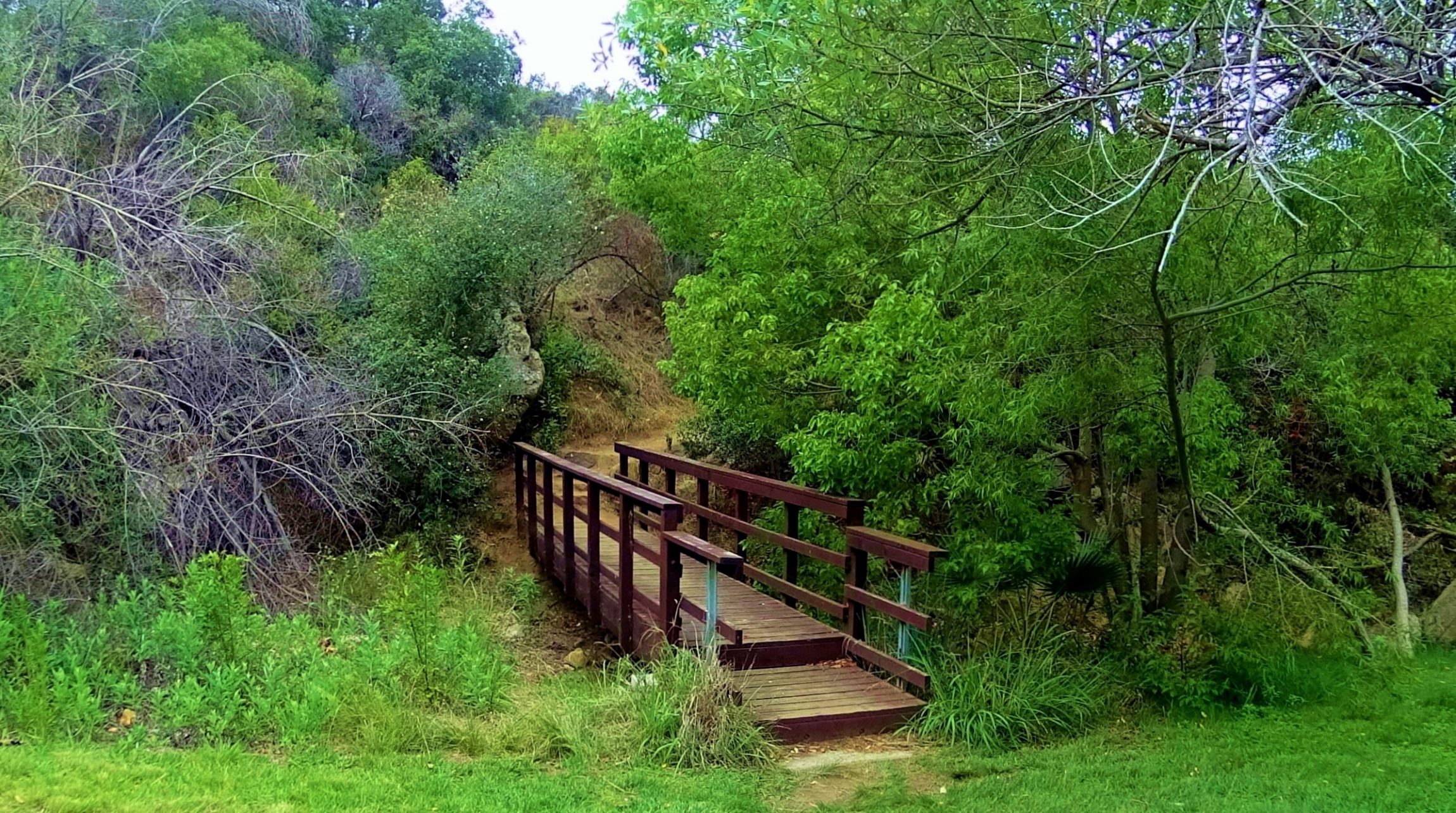
Walking past the picnic tables, I crossed a little bridge which led to the 2.1 mile trail that follows the edge of the lake. The trail was mostly flat and perfect for hikers of all ages.
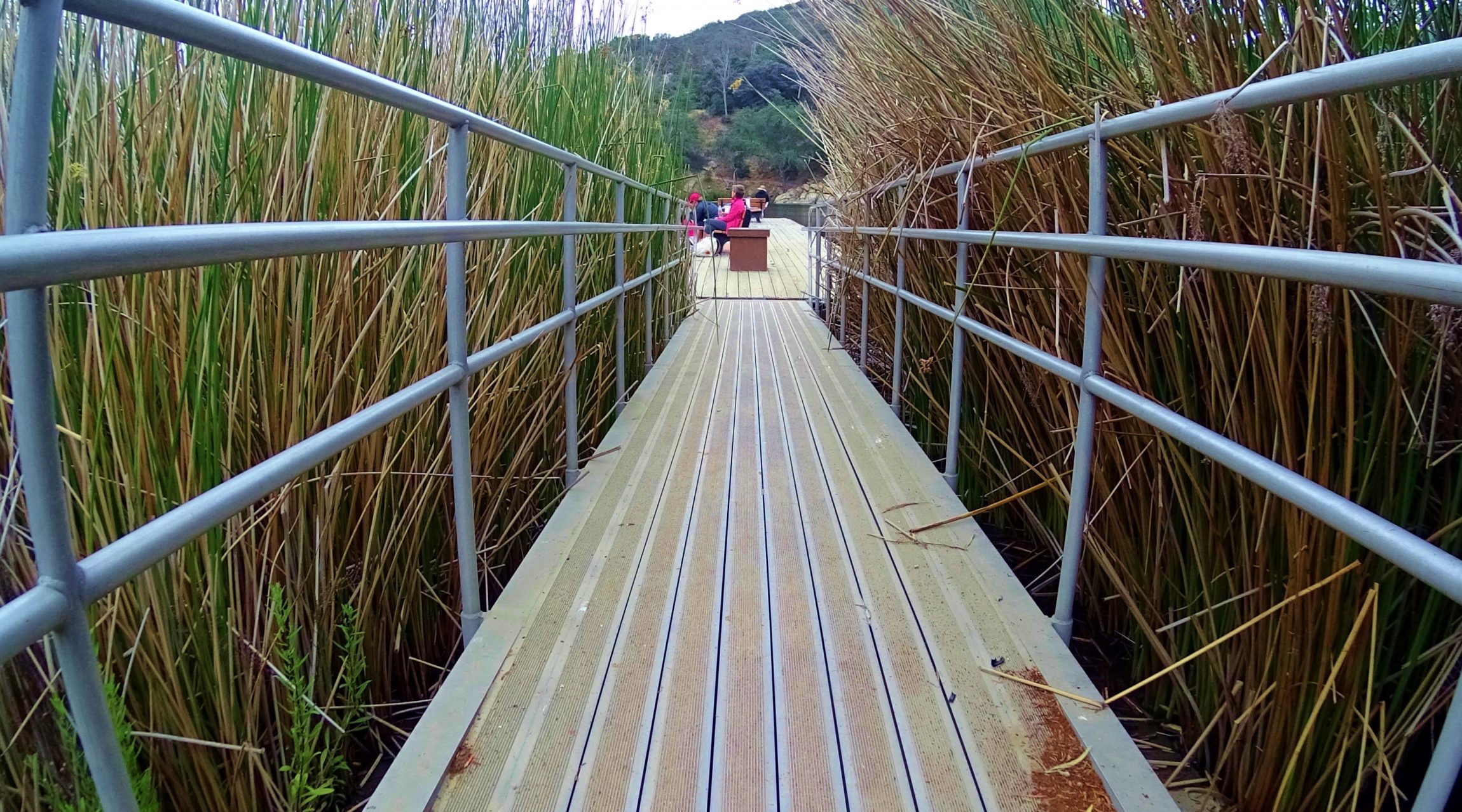
About half a mile into the trail there was the opportunity to turn onto a bridge covered in reed grass. My curiosity got the best of me, so I veered off the path and crossed the bridge, and I’m so glad I did!
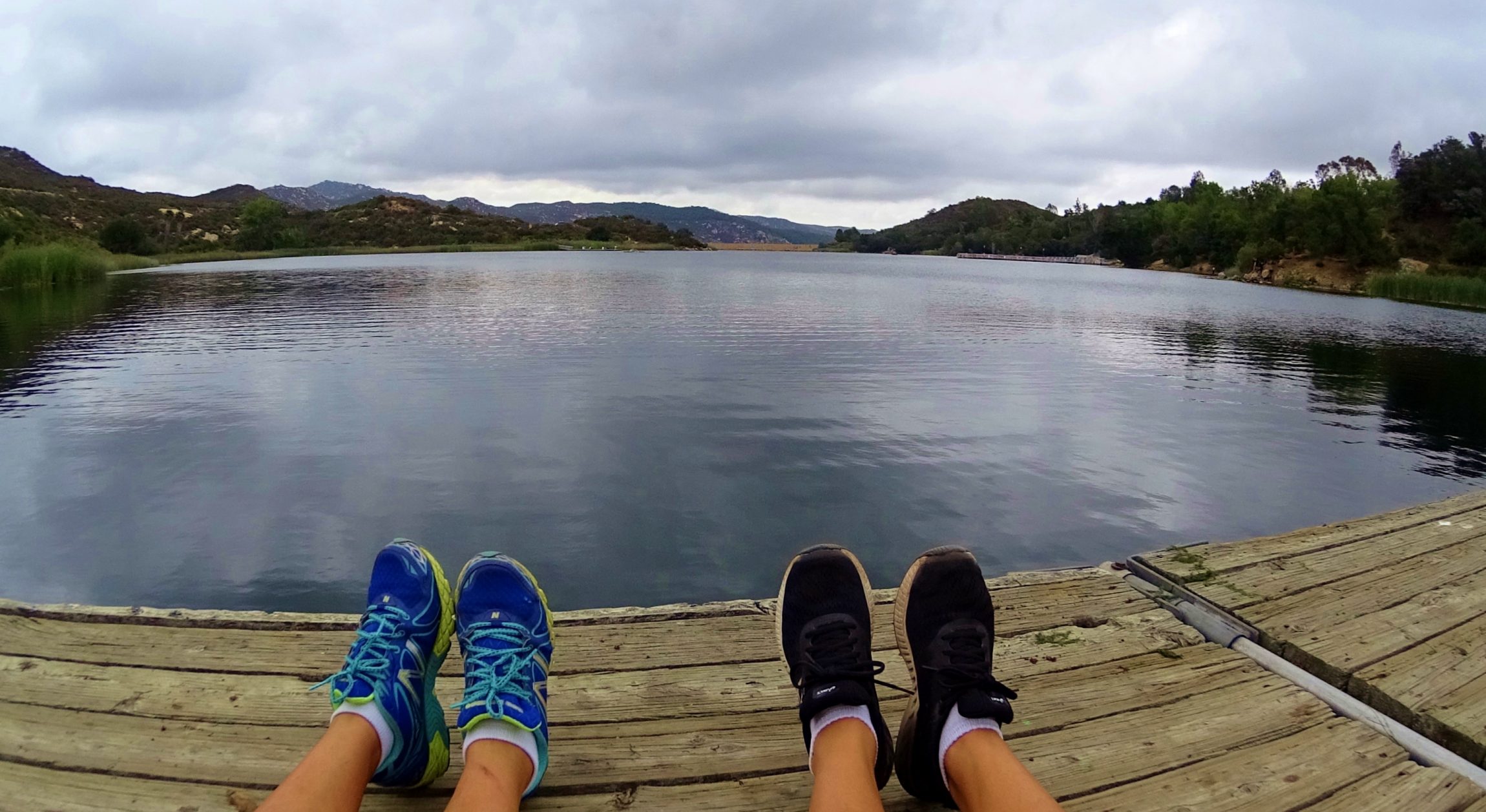
The bridge led to a dock right on the water, providing a beautiful view of the entire surrounding area. I took a few moments at this spot to enjoy the morning tranquility of the lake.
Behind me, there was a fisherman enjoying some early morning fishing off the end of the dock. One more of the activities you can take advantage of at the lake!
Dixon Lake is also a great fishing spot for locals!
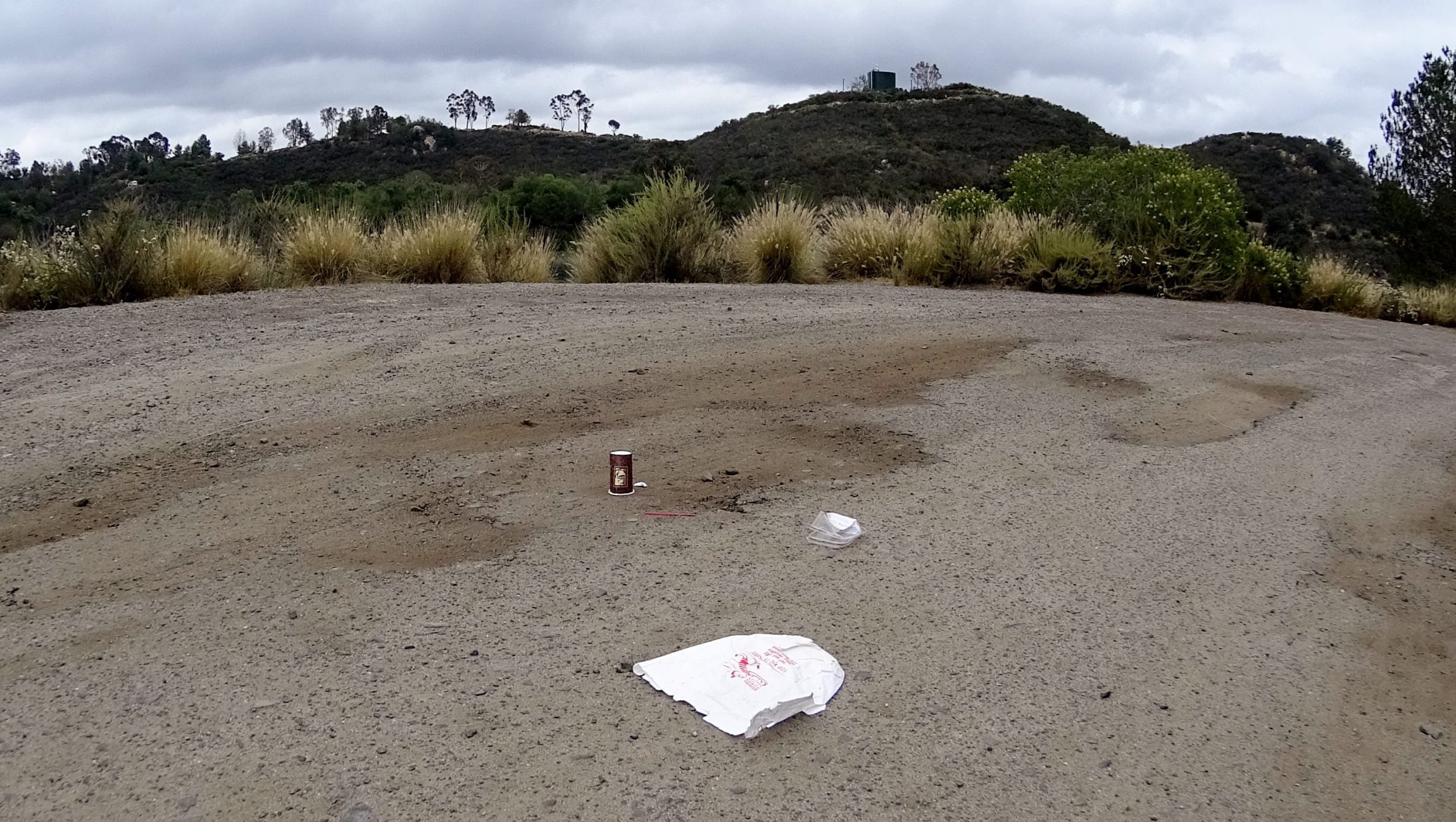
On the way back to the parking lot I decided to take the service road, which runs several feet above the trail. I was a little disappointed to stumble across some trash in the middle of the road. With just a few feet of separation between the road and the lake, the trash could easily end up in the water within a matter of seconds. Thinking back to the beautiful views from the dock, I know I would not want that view ruined by a fast food bag and coffee cup floating in the water.
Unfortunately, plastic bags, pet waste as well as food wrappers and bottles are commonly found along the trails.
Interested in keeping Dixon Lake clean? Visit AdoptSD.org to learn more and to schedule your own cleanups! We provide a free educational presentation to kick off your first cleanup, and if you complete three cleanups over the course of a year, you can apply to have your group’s name posted on a sign on site.
Whether it’s your favorite, beach, canyon or park, let’s keep San Diego clean, together. Find out how you can get involved in a program that fits your schedule at CleanSD.org!
“We generate enough trash to fill Qualcomm Stadium each year…”
The words spoken by my Conservation Science and Policy professor sent an unsettling feeling straight to the pit of my stomach. That is an insane amount of trash. Buried right here in the City? No way.Yet, there I was sitting in a desk learning about waste management policies and how they impact our environment. I learned that the Miramar Landfill is San Diego’s only active landfill. San Diego’s trash is buried in a site that opened in 1959 and is projected to close between 2020 – 2025! That got me thinking. Where will the trash go? How does that much even exist here in the City? Enough to fill Qualcomm? Is recycling not enough to reduce landfill input?
photo credit: KPBS; Katie Orr
All of these questions echoed in my head when I found myself sitting in a bus on a field trip, in the middle of the current open “pit” at the Miramar Landfill. There I was in a crater of trash, an eyesore of waste piled multiple feet high. The view unearthed the ugly truth that waste is a huge issue that is usually out of site, out of mind. Sitting in the middle of the trash I had the same unsettling feeling and I felt compelled to act.
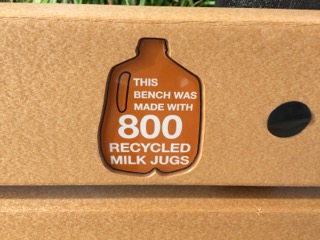
Toothbrushes made from recycled yogurt cups and benches constructed out of milk jugs serve as proof that we can do more with our resources.
From that day on I decided to embrace the zero waste lifestyle. I started by reflecting on the trash I produced and looking into organizations that were helping to combat the waste issues in San Diego. Research led me to stumble upon I Love A Clean San Diego. I was inspired by the cleanups and the passion for sustainability the organization embodied. I became more impressed when I found WasteFreeSD.org and how it is a resource for residents like me who want to divert their waste in an environmentally friendly manner.
Start with the basics!
I feel fortunate to now be a part of the team! Assisting the Call Center allows me to direct residents to proper disposal facilities, help keep hazardous waste out of the landfill, and provide repair and reuse options to those who are also waste conscious. My journey with zero waste all started with the pit, both literally and figuratively. Think back to a time that really impacted you, maybe you acted on it, maybe you didn’t but the impact it had is still just as important. Grasp that feeling; it can change your life and the planet’s.
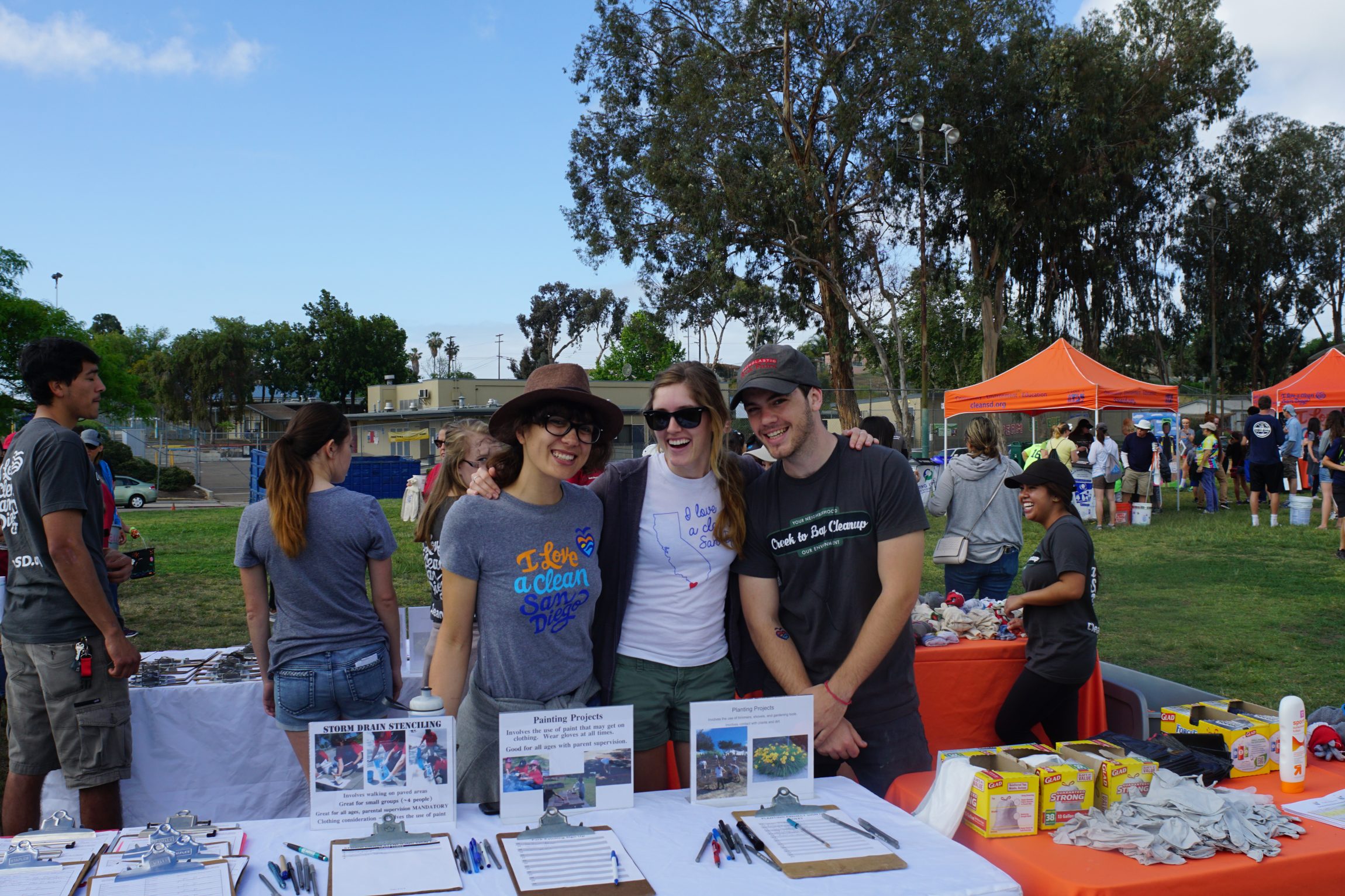
Leila (far left) and two of our interns checking out cleanup supplies at our annual Creek to Bay Cleanup!
Visit CleanSD.org to learn how you can get involved in making a lasting impact on our environment!
Happy World Ocean’s Day! Today we celebrate the ocean for the joy it brings us, the food it provides us, and the oxygen it supplies us. The mysterious and vast ocean with its other-worldly creatures captivates young and old alike. From nudibranchs and sea hares to sharks and rays, the ocean holds amazingly unique creatures. Unfortunately, many are threatened by human actions that negatively impact their habitats. Therefore, today must also be a call to action to protect these organisms and preserve our ocean!
Ocean acidification threatens ocean ecosystems that include oysters, reefs, and the foundation of several food chains, plankton.
Ocean acidification is one way in which humans are driving drastic changes in the ocean. Ocean acidification is the alteration of ocean chemistry as a result of increased carbon absorption, which is a direct effect of increased carbon emissions. One serious consequence of ocean acidification is that it becomes very difficult for certain organisms, such as corals, oysters, and even plankton, to both build and maintain the calcium carbonate structure that they depend upon, such as shells and reefs. This can negatively impact the organism itself, as well as entire ocean ecosystems.
Coral and sea urchins are also affected by ocean acidification.
Thankfully, we can control how much carbon we each emit into the atmosphere. Follow these four easy steps to reduce your carbon emissions.
Travel by foot, bike or trolley more often to reduce your carbon footprint!
Environmental Education Specialist, Grace enjoying one of San Diego’s many bike trails.
Spend less time in your car. This could mean riding your bike, walking, taking public transportation, or carpooling. The average car produces about 19.6 pounds of carbon dioxide per gallon. Reducing your need to fuel up helps to lessen your impact on the environment and your wallet all at once.
Lower your electricity bill. This doesn’t just mean turning off lights, but can include simple and easy practices such as unplugging appliances when they aren’t in use, utilizing energy saving light bulbs, and enabling the sleep function on your computer.
Buy local. Products have less distance to travel when you choose to buy locally made and grown products, reducing the amount of energy used to transport the goods.
Practice the 3 R’s: Reduce, Reuse, and Recycle. Go even one step further and purchase items made out of recycled material. Less energy will go towards manufacturing new products and finding natural resources to make them. Don’t know where to recycle something? Check out WasteFreeSD.org.
Looking for more tips? Come to our Zero Waste Summit this Saturday, June 11th in Encinitas to build your zero waste toolkit with great giveaways! The whole family is welcome to come out, tour our interactive booths, and hear from a panel of zero waste experts. With your effort, we can keep our oceans healthy and accessible well into the future. Enjoy World Ocean Day!
ILACSD, Solana Center and Jimbo’s will all have interactive booths this Saturday!
Hats off to another successful Kids’ Ocean Day – ILACSD’s 18th and the state’s 23rd annual event! Kids’ Ocean Day is a unique, annual event centered on engaging our youth as environmental stewards. After a school assembly about ocean conservation, 3rd-5th grade students from eight Title 1 schools around the county joined together at South Mission Beach to leave a lasting impact on their environment.
Take a look at how we spent the day!
Staff arrived at 5:00 AM to lay the aerial art design in the sand.
Volunteer groups, like Kohl’s Associates in Action, led students during the cleanup to ensure the day ran smoothly!
Thanks to additional sponsorship this year, ILACSD provided 50 reusable buckets for the cleanup, reducing the amount of disposable trash bags used at this event.
Volunteers reviewed safety tips for the cleanup and got students energized for the day!
Over 950 students, teachers, and volunteers participated in a beach cleanup, ensuring fewer pieces of land litter become marine debris.
Zero Waste in action! Most students created temporary trash bins from repurposed milk jugs, which they later recycled.
Fresh air + fresh dance moves + a freshly cleaned beach = a great day.Students waiting patiently for the helicopter to circle overhead and capture the perfect shot of the aerial art.
And lastly, the official image! Great job, team! To get involved with an upcoming event, please visit CleanSD.org!
Hi, I’m Shannon and as one of the marketing interns for ILACSD I am excited to have the opportunity to explore the effects of food waste. My interest in food deserts and the lack of healthy food options in America led me to investigate how food waste affects our community and ways we can prevent it all together.
When I think about wasted food I imagine feeling guilty about leaving those last pieces of broccoli on my plate after dinner, however, food waste is much more serious than wasting a few good veggies. Food waste refers to the massive quantity of quality food that is wasted annually instead of being given to those in need. According to the National Resources Defense Council, “Forty percent of the food produced in the United States never gets eaten.” So what does food waste really do?
Don’t worry there are ways to fight back against food waste!
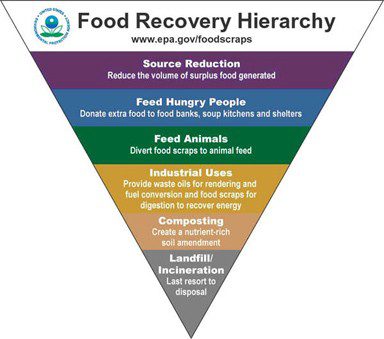
The San Diego Department of Public Works has some great solutions to help you minimize food waste in the future. They rely upon the Environmental Protection Agency’s food recovery strategyto most efficiently and cost-effectively reduce San Diego’s food waste. Based on this hierarchy, San Diego’s DPW established a food waste system based on 3 simple steps: Reduce, Donate and Compost.
Food Recovery Hierarchy
To best implement waste reduction in our personal lives, the DPW suggests re-considering portion sizes, limiting the number of menu items you order when you go out to eat and planning all the week’s meals so your grocery list only consists of what you need to make those meals. According to the DPW, it is important to be conscious of the volume of food you eat in comparison to the volume of food you waste.
Donating leftover food is another great way to reduce food waste! There are a lot of local organizations that lead San Diego’s effort to feed hungry San Diegans. Check out Feeding America and San Diego Food Bank for local options to donate your leftover quality food. Reducing food waste also means giving those without the means to feed themselves the food they need to survive.
Kids think composting is fun too!
The final step is using spoiled and leftover food for composting in your own backyard or neighborhood! Check out our previous blogs on composting to see how easy and fun it really is.
It’s important to remember that food waste is a serious national issue so let’s work together to help make San Diego even better than it already is and improve the lives of thousands in the process!
Today’s blog comes from our Contracts Manager, Sam, who has been attending several meetings related to San Diego’s Zero Waste Plan, including food recovery and organics recycling. The idea of zero waste can seem daunting or too far-fetched. Read on to learn about other cities that have successfully implemented zero waste practices IRL (in real life) and what San Diegans can do to help reach these waste diversion goals.
As we all know, “Zero Waste” is a hot button word around environmental circles these days. By its definition, Zero Waste is a commitment to diverting at least 90% of all waste away from landfills, and utilizing other means of proper disposal. But what does it look like in practice? How far along are we? What are the challenges? We will take a look at three California cities to see!
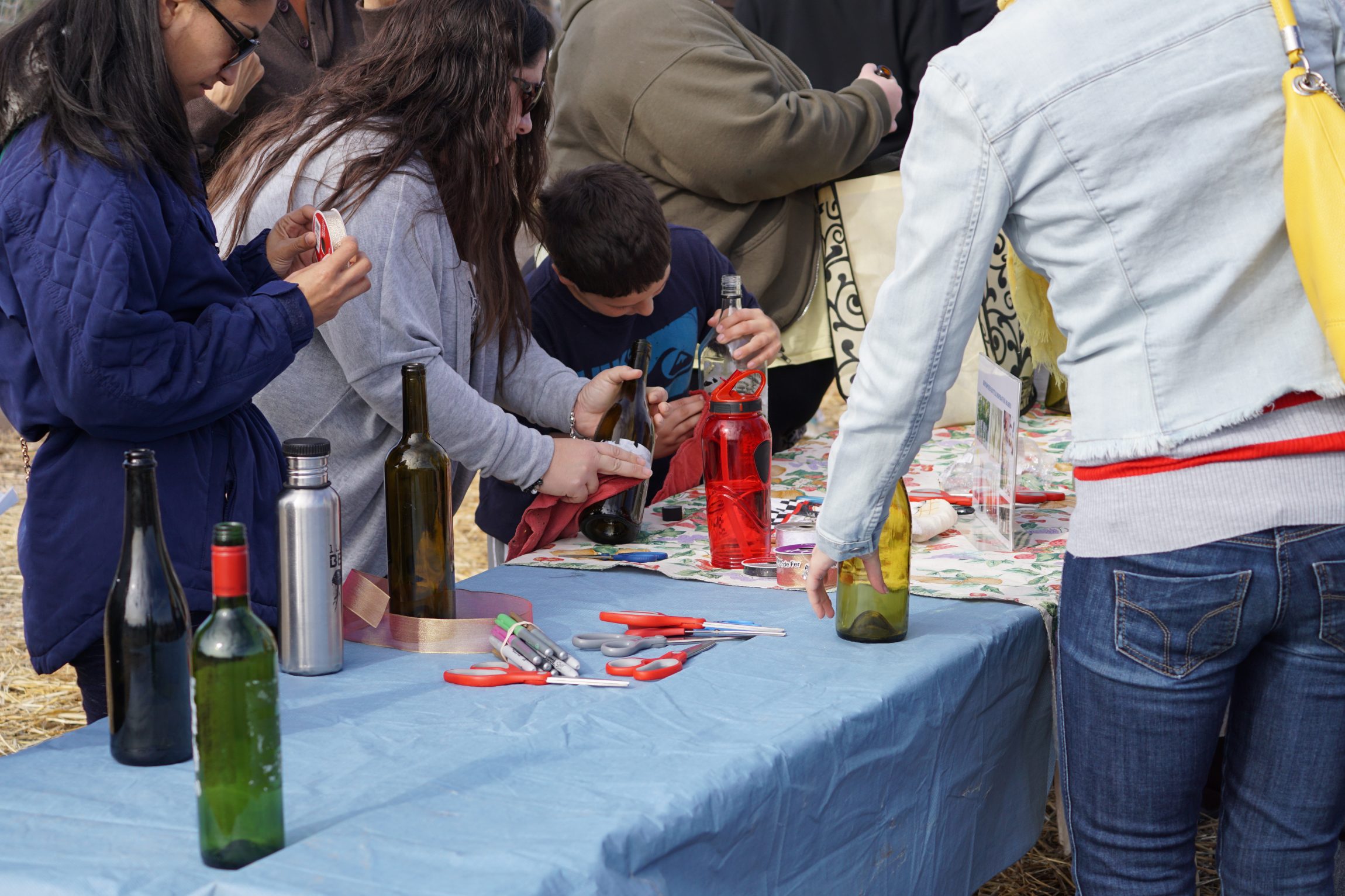
Repurpose tip: extend the life of common items like glass bottles and jars by transforming them into home decor!
Let’s start with the current big kid on the block in all environmental programs, San Francisco. San Francisco has been among the leading pioneers in the nation for environmental programs, and zero waste is no exception. As a part of their commitment to 90% waste diversion by 2020, San Francisco has implemented composting and green waste recycling pickups at businesses and residences. Along with convenient disposal, San Francisco has also invested in providing the public with educational resources about reducing food waste, consumer and producer responsibility, and the list goes on! When other cities in the U.S. look to a city to replicate good behaviors, San Francisco is a wonderful place to start.
Next, let’s look at Los Angeles. Currently hovering around 75% diversion of waste away from landfills, Los Angeles’s goal is to to achieve a lofty 97% waste diversion by 2030 through SWIRP, which is an acronym for Solid Waste Integrated Resources Plan. LA’s infrastructure will soon follow in the footsteps of San Francisco to ensure that greater tonnages of green waste (yard clippings, food scraps, etc.) and compost can be properly disposed of instead of winding up in a landfill. Along with San Francisco, LA believes educational outreach for both food waste reduction and proper recycling techniques are critical to their long term goals. Looking to achieve 87% diversion by 2020, Los Angeles has made a firm commitment to realizing their ultimate “zero waste” initiative by 2030.
Practice makes habits! Students practice sorting paper, cans, and food scraps into pretend trash, compost and recycling bins.
Last, but certainly not least, our wonderful home of San Diego. The macro-level goal is to achieve virtually 100% waste diversion by 2040, with yearly increments designed to test the progress. Along with LA, San Diego is playing catch up to San Francisco in regards to the infrastructure required to divert large quantities of green waste. Working with the State recycling agency, CalRecycle, as well as haulers and constituents to ensure the County meets its goals will be required if they hope to reach their goals:
75% by 2020,
90% by 2035
“zero” waste by 2040
In order to achieve this, the County will need to divert an additional 332,000 tons to offset the current 67% diversion rate. They hope to do this by encouraging haulers to divert more away from landfills, educate San Diegans, and of course divert more green waste away from landfills.Click here to learn more about San Diego’s Zero Waste plan.
It’s exciting times! Zero Waste is no longer just a dream, but it is now a successful process! And with the process, we can see the evolution towards greener, healthier, and more beautiful communities. I Love A Clean San Diego is doing its part by revamping our comprehensive recycling database, WasteFreeSD.org, to include zero waste tips and tricks to fit any lifestyle. You can always give us a call at 1-877-R1-EARTH to have any of your recycling questions answered as well.
If you’re looking for a more hands-on approach, our education team hosts community workshops designed to give you real life solutions like choosing reusables, how to shop in bulk, etc. Our next workshop, the Zero Waste Summit, will take place on Saturday, June 11th at Ocean Knoll Farms in Encinitas. Let us know you’re coming by registering ahead of time – Here’s to Zero Waste!
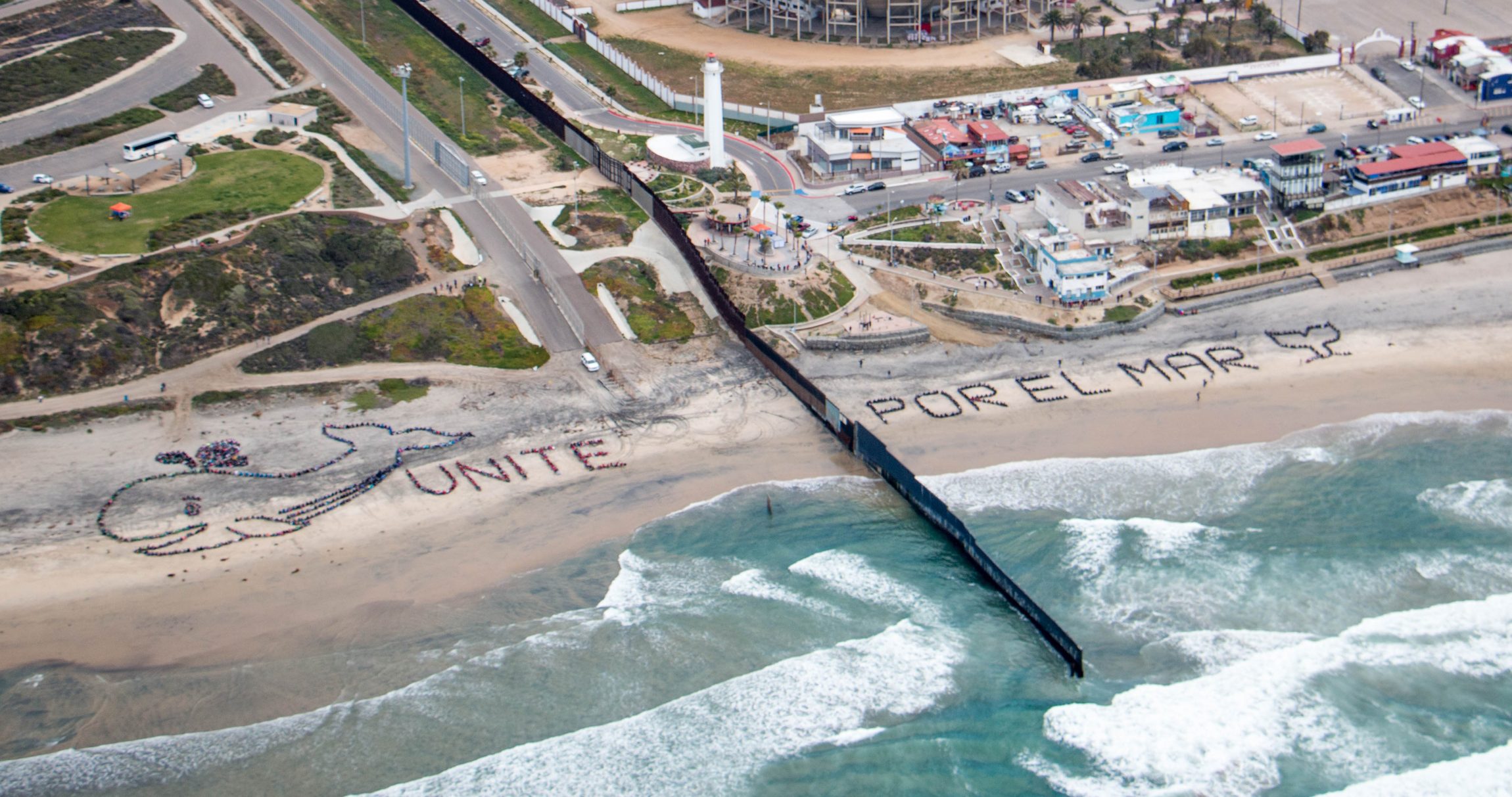
We’re getting ready for the 23rd annual Kids’ Ocean Day event happening this Friday, May 20! You may remember last year’s Kids’ Ocean Day where 1000 students, teachers, and volunteers from both sides of the US-Mexico border came together to create this historical bi-national image.
Hundreds of students from both sides of the US-Mexico border stood together to create this powerful message.
While this year’s event is not bi-national, we’re looking for adult volunteers to join us at South Mission Beach as we create one of our most power aerial art messages yet – we’re calling for a sea change, a dramatic shift in our current habits to protect the Pacific Ocean.
Students from local elementary schools – Chula Vista Learning Community Charter, Fay Elementary, Field Elementary, Florence Elementary, Foster Elementary, Joyner Elementary, Porter Elementary and Whitman Elementary – will step outside of the classroom and into their environment – feeling the sea breeze on their faces, perhaps for the first time.
Sand sifters are our favorite cleanup tools!
The students will start the day off with a beach cleanup to learn firsthand about how trash travels and how they can make a positive impact.
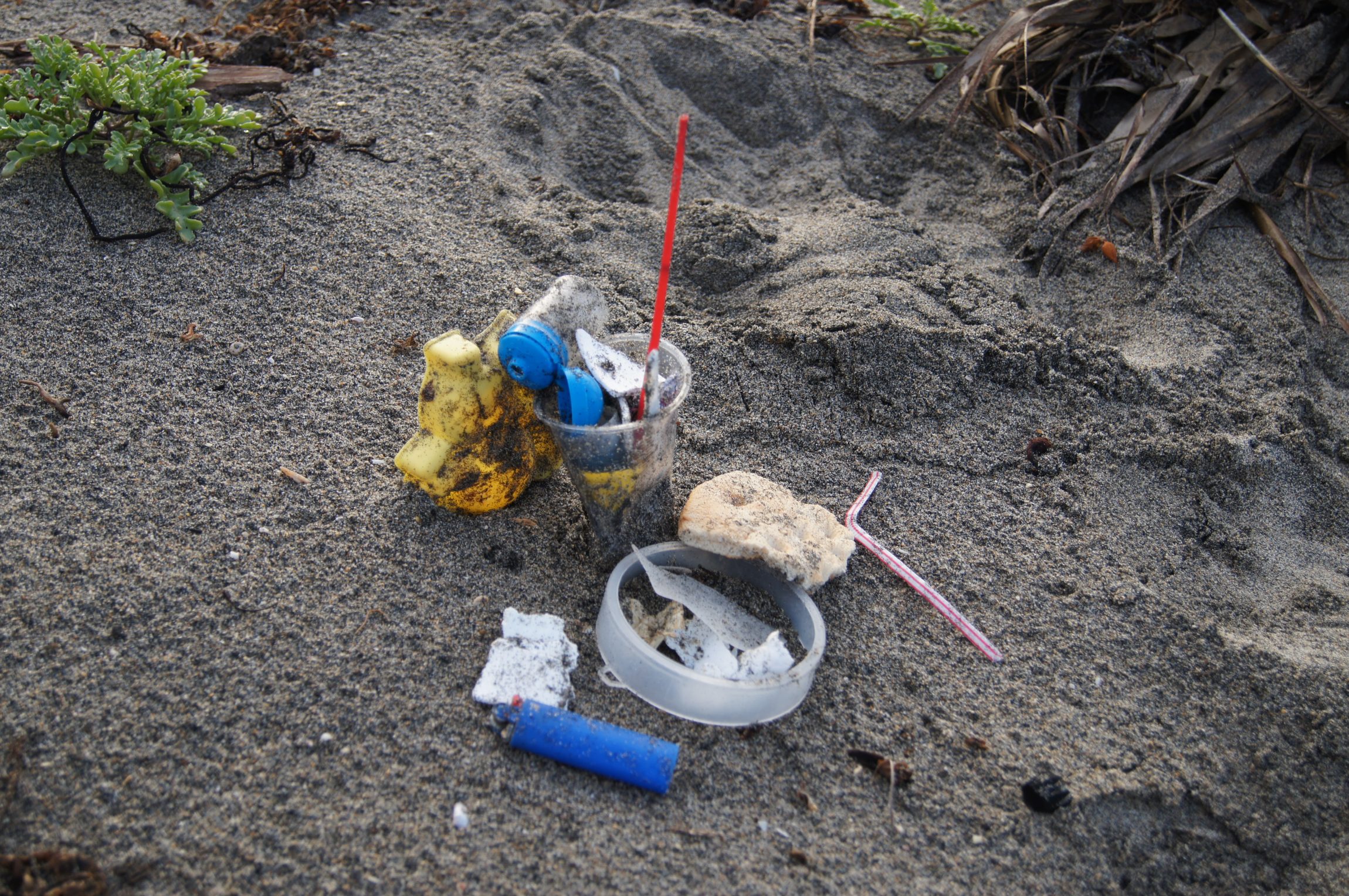
While small items may seem insignificant, they cause a lot of problems for our ecosystems and marine life.
Following the cleanup, over 900 students will stand side-by-side with their teachers, I Love A Clean San Diego staff and volunteers to create a piece of living art – an aerial art image that spells out “SEA CHANGE” along South Mission Beach. This powerful image seen from the sky signifies the unity needed to improve the health of the world’s oceans. Here’s is a sketch of the art to get you excited about this year’s message!
With over 5 trillion pieces of plastic floating in the world’s oceans, now is the time to make a difference. If we continue on our path as is, it is estimated that pieces of plastics will soon outnumber fish in the ocean. The good news is that everyone, including youth, can contribute to creating a cleaner future.
If you want to be a part of this message, we’re looking for adult volunteers to lead students during the cleanup and the art. If you’re interested, please register here. As a thank you, all volunteers will receive a photo of the complete aerial art image as a keepsake.
Thanks to our primary sponsor, The California Coastal Commission for providing financial support from proceeds of the Whale Tail License Plate and the Protect Our Coast and Oceans Fund. Additional event sponsors include Cox Communications, Qualcomm and the Charles and Gail Kendall Family Donor Advised Fund at the Rancho Santa Fe Foundation.
I Love A Clean San Diego’s Recycling and Household Hazardous Waste database, WasteFreeSD.org, helps hundreds of San Diego residents every month to find local solutions to their recycling questions. The online database serves as a resource for residents to seek their own solutions; unfortunately some questions do not have a simple answer and that’s where the I Love A Clean San Diego staff comes in.
From recycling questions to waste reduction tips, the ILACSD staff can help answer your questions!
As Recycling Call Center attendants, Ani and Leila know firsthand the types of items that are difficult for residents to recycle. Some inquiries require additional research on our part and we gladly take the responsibility of tackling the task to seek the proper locations for disposal. Here is a look at some hard to recycle items and how to properly repair, repurpose, donate or recycle them:
Fluorescent light bulbs and tubes
Countless individuals have “gone green” in their households by switching out traditional incandescent bulbs for energy-efficient compact fluorescent light bulbs (CFLs). Making the switch to CFL’s is a great energy conservation strategy that allows households to cut costs while embracing an environmentally friendly choice. However, with great energy savings comes the even greater responsibility of safe and proper disposal. CFLs contain small traces of mercury within the glass tubing, placing the bulbs under the classification of household hazardous waste. Retailers like Home Depot and Batteries Plus offer free, in-store recycling programs for unbroken CFL bulbs only (spirals, flood lights), however, recycling programs vary by retailer. When in doubt, visit our database or your local Household Hazardous Waste collection facility.
Household Hazardous Waste collection facilities accept a variety of items including paint, cleaners, etc.
Railroad Ties Railroad ties are pressure treated wood that contains creosote, a pesticide used to protect the integrity of the wood. This chemical leaches into the wood over the time, as well as the soil and ultimately the local watershed. Railroad ties are not approved by the EPA for residential use and should not be repurposed for landscape purposes. There are two locations in the County of San Diego that will accept railroad ties: Chula Vista and Ramona. To find out how to properly discard railroad ties, search the database for more information.
DVD’s, VHS Tapes, and CD’s
Perhaps during your spring cleaning you came across some dusty DVD’s, VHS tapes, or CD’s that remind you of a time when CD players still ruled the musical sphere. If it’s time to let go of certain ones, consider using the zero waste hierarchy to keep these materials from entering the landfill.
Reduce: Go virtual! Countless companies provide streaming of movies, TV series, and music. Movie rental kiosks are also a great way to reduce the accumulation of movies, albums, or even video games.
Repurpose: Save those broken CD’s and DVD’s to create beautiful mosaic tile pieces on a table, birdbath, or plant pot! Great DIY ideas can be found on our Pinterest.
Donate: DVD’s, VHS tapes, and CD’s that are in good condition can be donated to your local Goodwill or thrift store. Some lucky individual will stumble upon it and give it a new home!
Recycle: Be sure to recycle unwanted or damaged DVDs, VHS tapes and CDs at a local recycling center.
Mattresses Mattress recycling has come to San Diego! The Mattress Recycling Council has recently launched the Illegal Mattress Dumping Compensation Program in California as an approach to mitigate costs of collecting illegally dumped mattresses. The program will provide reimbursement to permitted solid waste facilities and local governments for the number of illegally dumped mattresses collected. Residents can also receive payment for mattresses through MRC’s Bye Bye Mattress Program for up to 5 mattresses at a time.
RV’s
Riddle: What is made up of a variety of materials like wood, metals, and fiberglass AND can be tricky to recycle? Sometimes referred to as the Relaxing Vacation or more commonly known as Recreational Vehicles, the recycling of an RV presents a challenge to many residents. If the vehicle still has miles to go before it retires, consider donating it! There are a handful of organizations like Wheels for Wishes, San Diego Armed Services and YMCA that will accept a working RV.
If the RV is damaged and no longer running, it can be disassembled for scrap metal and wood recycling. There are a couple of companies that will even tow your RV to recycle it for a fee.
More information about these items is available on WasteFreeSD.org! And if you need a refresher on what is recyclable in your blue bin take a moment to watch I Love A Clean San Diego’s new recycling video!













 Today’s blog comes from our Contracts Manager, Sam, who has been attending several meetings related to San Diego’s Zero Waste Plan, including food recovery and organics recycling. The idea of zero waste can seem daunting or too far-fetched. Read on to learn about other cities that have successfully implemented zero waste practices IRL (in real life) and what San Diegans can do to help reach these waste diversion goals.