Volunteer Spotlight: Bob and Jan Rogers

For many years, Bob and Jan Rogers saw a need for beach cleanups and public awareness about clean water in their local community. Since 2004, the couple have been site captains at Beacon’s Beach for ILACSD’s annual Creek to Bay Cleanup and have even involved their family in the fun. “When we first started with the beach cleanup program, our sons were part of the volunteers cleaning the beach. They are now married and our son, Jesse, and his wife work as our bilingual co-captains. Our son, Randy, and his wife, Virginia, also help out as volunteers – they now have a daughter, Sierra, and she is also part of the beach cleanup crew.”

Because the family spends so much time together at Beacon’s Beach (and it’s Bob’s favorite surfing location!), they realize the importance of keeping the water clean and safe and value being a part of this volunteer effort every year.

One of the main goals of the Creek to Bay Cleanup is for residents to gain a sense of ownership of the local environment, especially by teaching the next generation of San Diegans the importance of keeping our community clean. Bob and Jan say, “It’s a  great learning experience for the kids. A friend of ours brought her son to Beacon’s years ago and now wherever they go to the beach he picks up trash. They are the stewards of the environment.” The Rogers family also encourages all of the volunteers at their site to bring their own reusable supplies, like gloves and buckets, so that they aren’t producing more waste by using plastic bags and latex gloves at the cleanup.

All of us here want to thank Bob, Jan and the entire Rogers family for dedicating their time each year to cleaning their local beach and spreading awareness about the importance of keeping San Diego clean to their community!
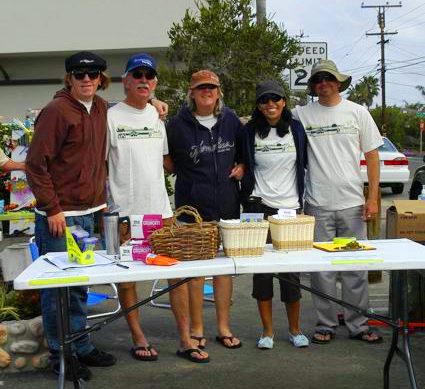
The Rogers Family!

What motivated you both to volunteer with ILACSD?

We moved to Leucadia in ’96 and saw the need for beach cleanups and public awareness about clean water.  We love the beach and feel we all have a responsibility to give back.

How long have you been volunteering with ILACSD?

In 1998 we organized our first beach cleanup at South Pontos.  Surfriders sent us to Coastkeepers and from there we made contact with ILACSD.  With each group we’ve met friends that share our interest in the environment.

How long have you been a site captains for Creek to Bay?

We have collected some of the posters from our beach cleanups.  After checking the posters we figured we began around 2004.

Have you always been a captain at one particular site?

We captain Beacon’s Beach for Creek to Bay, South Pontos for “Day After the Mess” and back to Beacon’s Beach for the Sept. Coastkeeper International Beach cleanup.

Why is that site important to you?

This is our neighborhood beach.  It attracts families so we get a lot of children at the cleanups.  Bob also surfs Beacon’s.

What is your favorite part of participating in the Creek to Bay cleanup?

The returning people that come back year after year and the kids.

Why do you think cleanups like Creek to Bay are important to keeping San Diego healthy and clean?

It’s a vehicle for getting the word out about keeping beaches and our waterways clean.  It’s a  great learning experience for the kids.  A friend of mine brought her son to Beacon’s years ago and now wherever they go to the beach he picks up trash.  They are the stewards of the environment.  It’s a great event.

What is the strangest piece of trash you’ve found at a Creek to Bay Cleanup?

Led Zepplin album and a jar of pickles (?).  In the future, it would be nice to see no balloons, cigarettes and plastic trash bags.  Also, volunteers bringing their own supplies to cut down on the debris we generate.

We love doing this.  It is so rewarding.

Registration for ILACSD’s annual Creek to Bay Cleanup is now open at www.creektobay.org. Out of the 86 cleanup sites around San Diego county, there’s bound to be one near you! Join us on Saturday morning, April 28th to be a steward of the environment and do more with your morning.

Trash Trackers Prove Cleanups Are Effective

In the winter of 2010, San Diego CoastKeeper and I Love A Clean San Diego partnered together to start a new project called Trash Trackers. One year later, the results are in!

Trash Trackers began as a program to document our impact on the environment, and see how cleanups help in the long run. During the study, volunteers counted each piece of trash within a one-hundred foot stretch next to a local stream or creek. They cleaned the entire area and documented how many pieces, and what types, of trash they found. One year later, volunteers combed the same one-hundred foot stretch in order to find out how much more trash had accumulated within that time period due to either upstream accumulation or littering directly on site.

Thousands of Styrofoam pieces along the Otay River

So what did we find?

Each of our four sites – Otay River, San Diego River, Buena Vista Creek, and Chollas Creek – showed drastic decreases in the number of items found at the second cleanup. Whereas Otay River showed a 14.5% decrease, the San Diego River showed 63% less, Buena Vista Creek showed 68% less and Chollas Creek documented an amazing 74% less!

One area of Chollas Creek before cleanup

Even the biohazardous material was down an average of 27% at all of the sites.

Thanks to 700 volunteers over the last two years, this program removed 18,400 pounds of debris that otherwise may have ended up in our oceans. By removing this trash every year, we have direct evidence that our cleanup events not only remove debris from the immediate site, but they also help to ensure that in the future, the creeks are cleaner for everyone’s enjoyment.

"The Pit" along the San Diego River by Fashion Valley Mall

Here at I Love A Clean San Diego, we are dedicated to keeping our community clean! The implementation of the Trash Trackers program allows us to collect hard data that reveal the problems that ensue from littering in waterways. We hope that our actions and the photos above inspire individuals to take responsibly for their local environment and get involved in in preventing litter around our community. After all, don’t we all love a clean San Diego?

Get a Little Dirty This Valentine’s Day

Sometimes cleaning up our environment means we have to get a little dirty in the process, but that doesn’t stop our volunteers!

Cupid's Cleanup 2011

Each year around Valentine’s Day, I Love A Clean San Diego organizes the Cupid’s Cleanup as a way for eco-minded singles, couples, and friends to show their love for a clean San Diego by cleaning up an area of our local community. We put on smaller cleanups like Cupid’s each month in communities across San Diego county who have well, gotten a little dirty. We announced last week that in 2011 we mobilized more than 29,000 volunteers who picked up 241 tons of trash from our community’s beaches, waterways, canyons, and parks.

Why get dirty at these cleanups?

Events like Cupid’s cleanup are vital to the health of our local environment and are an important part of preserving the San Diego way of life that we all love so much. Keeping trash out of our ocean not only helps the animals who live there, but also makes it safer for all San Diego residents to swim, surf and play in our coastal waters. If left where it was, that 241 tons of trash would have eventually made it’s way into our waterways and ultimately into the ocean. Who wants to hang out near a big batch of trash soup?

In addition to smaller monthly cleanups, ILACSD coordinates two of the largest countywide cleanup events each year, our signature event the Creek to Bay Cleanup coming up on April 28th, 2012, as well as Coastal Cleanup Day on September 15, 2012. This gives San Diego residents various volunteer options and they see first-hand how trash makes its way from inland communities all the way to the coast through San Diego County’s vast watershed system.

To sign up for Cupid’s Cleanup contact our Community Events Coordinator, Jemma at jdeleon@cleansd.org or at 619.704.2778 today!

Can’t make it to Cupid’s but want to find out about other upcoming events? Sign up for our monthly e-newsletter!

Why Should You Recycle Your Used Oil Filter?

Local resident recycling her used oil filter

Did you know that one used oil filter has an average of 10 fluid ounces of motor oil trapped inside it?

Many people know that they can and should recycle their used motor oil, but they may not know that your used oil filter also contains used motor oil, as well as steel, both of which can be recycled so that they don’t contaminate our local environment and take up space in local landfills.   CalRecycle reports that more than two million gallons of motor oil from these filters are being disposed of improperly each year in California. Recycled used motor oil can be re-refined and used again, ensuring that it doesn’t contaminate our local waterways.  It only takes one gallon of used oil to contaminate one million gallons of drinking water!

I Love A Clean San Diego has partnered with cities in the area to provide an incentive to residents to properly dispose of used oil filters by providing a replacement filter for free when they bring their old filters to one of the events below.

If you can’t attend one of these events, there are more than 300 locations in San Diego County that accept used oil filters year-round for recycling at no charge. These locations, most of them auto parts and repair stores known as Certified Collection Centers, will also accept up to five gallons of used motor oil at no charge. In addition, Certified Collection Centers will pay residents 40 cents per gallon of used motor oil, upon request. Motor oil can’t be contaminated with water or other liquids such as antifreeze, solvents, or gasoline. If you have contaminated motor oil or more than five gallons of non-contaminated motor oil, you must visit a household hazardous waste collection facility.

For more information on where to recycle used motor oil and oil filters, visit I Love A Clean San Diego’s one stop recycling resource, WasteFreeSD.org. We encourage all San Diegans to visit our recycling website to learn more about similar events held countywide!

Upcoming Oil Filter Exchange Events:

Bring your old filter and receive a new one for free! Limit one free filter per person.

Chula Vista
Saturday, January 28, 2012 from 9am – 1pm
Pep Boys at 454 Broadway Ave.

El Cajon
Saturday, February 4, 2012 from 9am – 1pm
Pep Boys at 201 Jamacha Rd.

Santee
Saturday, February 11, 2012 from 9am – 1pm
Pep Boys at 10041 Mission Gorge Rd.

Lemon Grove
Saturday February 18, 2012 from 9am – 1pm
O’Reilly Auto Parts at 6925 Federal Blvd.

La Mesa
Saturday February 25, 2012 from 9am – 1pm
O’Reilly Auto Parts at 5350 Jackson Dr.

National City
Saturday March 3, 2012 from 9am – 1pm
O’Reilly Auto Parts at 1202 E. Plaza Blvd.

Environmental Education and Our Nearby Nature Program

Education plays a large part in our mission to actively conserve and enhance the environment here in San Diego. Each year, we conduct a variety of outreach programs to educate youth in the San Diego region about properly conserving our local environment. This helps guide them in developing good habits at a young age, that then become part of daily life and ultimately result in a healthier, cleaner, and more vibrant San Diego for future generations.

We believe that the best way to educate today’s youth is to emerge them in hands-on activities. We want to instill a lifelong appreciation for the local environment by providing opportunities to cultivate a greater sense of responsibility for protecting it.

We provide environmental education and community outreach programs for elementary, middle, and high schools, as well as youth groups. Our Educators uses a variety of media, including presentations, storytelling, and hands-on demonstrations to teach topics such as: 

  • Reduce, Reuse, Recycle
  • Household Hazardous Waste
  • Litter Reduction
  • Used Oil Recycling
  • Ocean and Water Pollution Prevention
  • Watershed Education

We also offer an opportunity to expand their knowledge through place-based learning and nearby nature field trips, which have been proven more effective at instilling environmental knowledge among youth.

After the education in the classroom, we lead them in a service project in their local community, such as trash removal, habitat restoration, and storm drain stenciling to restore local waterways!  We also coordinate nearby nature field trips, where children can better understand and value the nature surrounding them every day. While many adults are able to give an account of a time when they experienced nature as a child, most of today’s children cannot (71% of adults vs. 26% youth according to a study by Manhattanville College conducted in 2004).

By educating our local youth about how they can help preserve our environment, the program will build a stronger sense of community pride and improve San Diego’s natural environment. A cleaner environment means a healthy community, which will improve the lives of all San Diego residents!

Are you a classroom teacher in a grade 3-6? Would you like a Nearby Nature experience for your grade level team? I Love A Clean San Diego is offering two lucky schools the opportunity to participate in Nearby Nature education programs!

What is Nearby Nature?

Educators will lead your entire grade level on walking field trips to your nearest “nature” area, providing guided hikes and standards based outdoor learning activities. This is an excellent opportunity for your students to experience nature firsthand! If you are interested or have questions, please send an email to education@cleansd.org today!

Nature education improves academic performance. When the environment is used as an integrating context for learning the school curriculum, students have shown better performance on standardized measures of academic achievement in reading, writing, math, social studies, and science. Additionally, teachers have seen reduced discipline and classroom management problems and increased engagement and enthusiasm for learning. Nature experiences help children develop a sense of place in their community and increase awareness of San Diego County habitats. Nature education programs can also increase environmentally responsible behavior, including students’ perceived knowledge of issues and action, environmental sensitivity, and intention to act. – Source: San Diego Children & Nature’s “Nearby Nature School Field Trips” Guidebook

Don’t Dump Your FOG Down the Sink!

With the holiday season approaching, many people will be cooking up delicious meals to feed their family and friends. What does yummy food have to do with FOG?  FOG stands for  fats, oils, and grease. Just like grease clogs your arteries, when you dump it down the sink it clogs the County’s arteries–the sewer system. 

This doesn’t just apply to large amounts of FOG, like the leftover oil from your deep fried turkey.

When any amount of cooking oil, butter, shortening or even heavy sauces  are dumped into your kitchen sink, it accumulates inside the sewer pipes making it difficult for wastewater to flow to the wastewater treatment plant. This includes wastewater draining from toilets and showers. When wastewater can’t make its way through the sewer pipes, it can overflow into your home, streets, lawns, and stormdrains, eventually making its way to the ocean. Not how you want your holidays to end!

Instead of dumping FOG down the sink, collect your used cooking oil for proper disposal at a local collection facility. To find the closest drop off location, check out our One-Stop Recycling Resource, www.wastefreesd.org.

A few common myths about FOG:

Myth: Wash grease with dish soap.
Fact: Even though soap breaks up grease, it loses its effectiveness downstream, allowing grease to solidify on the pipe walls.

Myth: Running hot tap water will help grease float in the sewer pipe.
Fact: Running hot tap water will NOT help grease float through the sewer pipe because the water will eventually cool as it flows through the pipe and the grease will become solid again.

Myth: Pour cooking oil at room temperature.
Fact: Cooking oil such as canola and olive float on water and adhere to the sewer pipes. It is best to  avoid pouring oil down the drain altogether to avoid sewage problems.

America Recycles Day 2011!

Every year on November 15th communities across the country come together to celebrate America Recycles Day, a day dedicated to educating and motivating our neighbors, friends and community leaders to recycle!  

America Recycles Day logoThis year, over 800 students at Los Coches Creek Middle School participated in an EnviroFair in celebration of America Recycles Day her in San Diego. I Love A Clean San Diego and The County of San Diego worked together to educate 6th, 7th, and 8th grade students about recycling and the importance of conserving the environment.

Activities included a lesson on recycling rules  and a fast and furious Recycle Relay by I Love A Clean San Diego educators, a composting discussion and demonstration by the Solana Center, watershed model presentations and water quality testing from the Splash Science Mobile Lab, and informational booths and recycled giveaways from Allied Waste, the County of San Diego, and I Love A Clean San Diego.

Greg Bledsoe of NBC San Diego caught some great action shots during the day, click here to view the video!

Los Coches Creek Middle School already has their own recycling program in place, with bins in classrooms and around campus. Shauna Stueve, a teacher at the school, gets help from students to ensure that the program runs effectively and that all recyclable items are placed in the correct bins. The EnviroFair showed students why their recycling efforts are so important. According to Robert Wade, a science teacher at Los Coches Creek Middle School, “Students were engaged and challenged by your staff and they all came away with global ideas they could implement in their daily lives.”

Immediately after school, many of the students and teachers joined I Love A Clean San Diego in a community cleanup in the area surrounding the school. Trash and recyclable materials were collected separately, and many students were surprised at how much litter they found in their community. Sonja Washer, a math and science teacher at Los Coches Creek middle school thanked I Love A Clean San Diego after the event, saying, “Thank you again for your concern for our environment and for educating our students so our futures are cleaner.”

One-Stop Recycling Resource

Have old paint cans, batteries, or electronics lying around the house? I Love A Clean San Diego provides San Diegans with an online recycling database, www.wastefreesd.org, plus a bilingual hotline (1-877-R-1-EARTH) that offer useful tips for safe disposal of paints and other household waste. This information about waste disposal and recycling helps to prevent illegal dumping, and prevents hazardous materials from entering our landfills, stopping serious environmental problems before they happen. In 2011, we provided referrals to keep 19,000 items out of local landfills!

Organics: what’s the big deal?

Written by ILACSD Director of Education, Connie Glenn

Personally, I love to buy organic food. It’s tastier, free of toxic chemicals, and more sustainable for the environment. However, whenever I talk with people about it, the overwhelming response is “it’s too expensive!” Even Time Magazine showed their cynicism of organics by running a cover article declaring that conventionally grown products are just as nutritional as organics, so what’s the big deal? Buying organic doesn’t have to mean spending more on groceries, and there certainly are undeniable health benefits for your body, and the environment as a whole, when you choose these over conventionally grown items.

First, let’s talk money. Everyone, from my doctor to Diane Sawyer, love to complain about how much organic food costs. In my personal experience, I have found that organic food can cost about the same, and sometimes less, than their conventional counterparts. Often at the grocery store I will see organic items on sale for less than the conventional option. When this happens, I wonder why people would choose to pay more for pesticide laden fruit with a flavor similar to polystyrene (aka Styrofoam)? But they may not even be checking price tags because, in their minds, “organics are too expensive”.

Now, when it comes to which choice is better for your body, consider this: organic foods are grown without chemical fertilizers, herbicides, and pesticides. That means that these chemicals, some of which are toxic, are not going to find their way onto your dinner plate and into your, or your children’s, bodies. Maybe that organic orange has the same amount of vitamin C as a conventional one, but it will also be free of nasty chemicals like pesticides which have been linked to brain damage and birth defects. Sounds like a healthier choice to me!

There is no question about which is better for choice for the environment. Fertilizers lead to eutrophication (too much nutrients in a water body) which can take out oxygen from the water. When you have no oxygen in a water body, you also have no fish because they can’t breathe. We call this a dead zone, and it doesn’t take a BioChem degree to realize that that is not a healthy water body! Pesticides that run off our properties into local water ways will continue to kill insects out in the environment, and can eliminate entire layers of food webs. Also, they add harmful chemicals into the food chain, which will affect animals throughout the food chain including birds, and of course our favorite species, humans!
Probably the best reason to buy organics is the flavor. If you’ve ever bitten into a strawberry and wondered where the strawberry taste went, you were probably eating a conventional one. When you grow food without adding a bunch of chemicals, and you let Mother Nature work her magic, you will be greatly rewarded with fantastic flavor. They may not be the prettiest sitting on the shelves, but foodies agree: nothing beats the taste of organic food!

Now that spring has sprung, check out some organic, and ideally local, foods at your local store or farmers market. You, your children, and Mama Nature will be glad you did!

ILACSD’s Back to Blogging

That’s right, after a significant hiatus from blogging, I Love A Clean San Diego is back! We have so much to say, and so many events to talk about, restarting the blog was pretty much a no-brainer. Many of our staff members will be contributing to the blog, and if you’d like to be featured as a guest blogger to give a first-hand account of your experiences with ILACSD please contact u.

We look forward to sharing with you and hearing from all of you who have helped shape the environmental movement in San Diego County!