Household Water Savings Guide

Household Water Savings Guide

In the San Diego region, water conservation has great benefits all year long. Drought or no drought, the entire region is an arid environment, which needs water from a variety expensive sources to sustain our quality of life. When practiced year-round, water conservation reduces pollution in our oceans, saves our most precious natural resource and helps you save money all year long. Here are some tips to help save water and a link for water saving rebates available for residents in the city of San Diego.

In the House

  • Turn off the bathroom sink while shaving or brushing your teeth. Some bathroom faucets can use up to two gallons of water per minute. Install an aerator to help restrict water flow to the faucet, this can decrease usage and use as little as .5 gallons of water per minute.
  • Scrape dirty dishes instead of rinsing before placing them in the dishwasher. Some dishwashers don’t require any pre-rinsing, check your user’s manual to find out.
  • Run the dishwasher on full loads of dishes only. Inefficient dishwashers can use up to 15 gallons per load, make sure the dishwasher is used only when fully loaded with dishes and invest in an efficient model that can save money, energy and water.
  • Run full loads of laundry. Even if your washing machine has an adjustable load setting, the washing machine will be the most efficient when run on a full load.
  • Place a bucket in the shower to capture the water that is run while warming under shower. Tub faucets can use a minimum of four gallons of water per minute. That clean water running down the drain can be useful! Try using collected water to water your garden and trees.
    • Also, learn how to take a Navy Shower and reduce water use by 90 percent!

In the Yard

  • Turn off irrigation systems before rainstorms. When significant rainfall occurs, make sure you don’t run your sprinklers. Some irrigation systems even allow you to set seasonal irrigation programs.
  • Install a pool cover to reduce evaporation. Evaporation causes pools to lose over hundreds of gallons a year. Simply by covering a pool can cut evaporation by 95 percent lowering the demand to refill the pool more often.
  • Wash your car with a bucket and sponge instead of a hose. Washing your car with an open hose can use up to 100 gallons per wash. Choose to go to a car wash center that recycles the water.
  • Install rain gutters and rain barrels to capture water from your roof. By installing a rain barrel for your home, you reduce the demand on the potable water system to irrigate your garden. Plus, unchlorinated rain water is better for plant health.  

Learn More

  • Attend Water Conservation Workshops. Attend a workshop like an I Love a Clean San Diego workshop to learn more about local programs that can help you save money and learn more tips and tricks! 
  • Utilize Local Water Savings Rebates. There are many local rebate programs that can help you save money when purchasing and installing rain gutters, rain barrels, or downspout redirects.

Check out Think Blue San Diego for more tips and information about water conservation rebates and visit WasteFreeSD.org for more local resources.

Zero Waste Pets

Zero Waste Pets

Zero Waste Pets

Working on being sustainable with a furry friend at home? Maintaining a low waste lifestyle with a pet can be a challenge, but I Love A Clean San Diego has some tips, tricks, and resources for you! It’s fun to spoil our pets when we can, but a zero waste mindset allows us to think about what our pets truly need. There are ways to reduce, reuse, and recycle, even when taking care of a dog, cat, or other pet at home.

Pet Food

A great area to work on reducing waste is your pet’s food. There are so many options to cutting down on packaging. Try your best to buy in bulk. Most pet stores have a treat bar, so bring your own reusable bags and fill them up with treats for your pet! If you have a reptile, bring your own container next time you pick up crickets or other insects. You can also buy food in large quantities, especially if your pet requires something specific in their diet. This way, you are only tossing one piece of trash when you finish the container, rather than multiple small bags.

There are many resources online for making your own pet food! You can find recipes that do not need many ingredients, or that require ingredients you can pick up in minimal packaging.

You can also always look for pet food that comes in recyclable packaging. Remember, metal, paper and cardboard, glass, and plastic containers can all be recycled. Keep an eye out for food in stainless steel cans, or treats in hard plastic containers! This packaging can go into the recycling bin once you’re finished with it.

There are many pet supply brands out there with sustainability efforts. Check out the Pet Sustainability Coalition for more information!

Pet Toys

We all know that our pets can go through their favorite toys rather quickly. Do your best to choose good quality toys with minimal packaging to avoid purchasing more toys and sending cheap material from broken toys to landfill. If you know your pet will destroy any stuffed animal, choose those made of sustainable products or compostable fabric, like hemp.

Many of our household materials can be repurposed into DIY toys for pets as well.

  • Braid strips of old fabric from t-shirts or blankets to make a pull toy or a feather toy
  • Stuff socks with catnip for your cat to play with
  • Use scrap wood and carpet to create a scratching post
  • Wrap a water bottle in a t-shirt for a fun crinkle toy

Check out this resource for even more DIY ideas!

Donating Used Pet Supplies

Once we’ve cut down on how much waste we’re bringing home, we can think about how to properly dispose of the things that our pets don’t use anymore, or what can be donated. There are a lot of great local animal organizations that accept in-kind donations, or have wish lists of items they need. Check their websites – many of these facilities also accept items that we wouldn’t normally associate strictly with animals, like towels and sheets! If you’re cleaning out your linen closet and wondering what to do with those textiles, these can be great places to donate gently used items

Use WasteFreeSD to find more near you!

Pet Waste

Pet waste itself is somewhat challenging to dispose of in an eco-friendly way. It is crucial that we pick up after our pets because of bacteria that exists in their waste. We don’t want that washing into our storm drains and out to our waterways. What works for some in terms of picking up after their pet may not work for others. Try using a reusable scoop, scrap paper, grocery bags, or pick up after your pet using eco-friendly bags. Bags made from cornstarch claim to biodegrade – there are many brands out there, but you can read reviews to compare on things like price and effectiveness.

If you are interested in composting your pet waste, it needs to be completely separate from your food composting system. You should not use pet waste compost on anything you are growing to eat. You should not compost pet waste from animals that are sick or taking medication. For dog waste, you can develop a system that involves burying your composting bin or can in the ground, and layering waste and sawdust. Cat litter is a little more challenging. You will need to find a litter that is compostable, made from pine or paper. Remember, cat litter should not be flushed down the toilet, even if the brand says it can be flushed. Cat waste can contain a parasite called toxoplasma gondii, and many treatment plants are not designed to remove this from wastewater.

Water from a fish tank can often be used on your plants. Aquarium water contains potassium, nitrogen, and other nutrients that are in many chemical fertilizers, so it’s okay to use on house plants. If you use other chemicals in your tanks to treat algae or pH, or if you have a saltwater tank, we don’t recommend using this on plants.

As always, do your research! Make sure it’s safe to compost with your pet’s current diet. Always investigate what kind of plants it’s safe to use that compost on.

Small Changes Make a Big Difference

We know it can be challenging to reduce waste with a pet. Take it one step at a time! Start small and see how it goes – the best part is you might inspire friends and family to think differently about their waste habits as well! Let us know how you take care of your pet in a low waste way by tagging us on Facebook, Instagram or Twitter @ILoveACleanSD!

Pick up more zero waste tips and knowledge by attending our Celebrate Sustainably: Summer Fun webinar on July 28th! Register here. For more information on how to adopt a waste-free lifestyle visit WasteFreeSD.org. For more information about our educational programs, contact education@cleansd.org.

Makeup Recycling

Makeup Recycling

How to Recycle Makeup / Cómo Reciclar Maquillaje

Don’t know what to do with your half-empty lipstick containers or your clumpy, expired mascara tubes? Look no further!

Rinse It Out

Dirty containers lower the value of recycled products so remember to rinse out the residue and take off the labels before recycling! Mascaras can be tricky but you can pour warm water and makeup remover into the tube, let it sit 10 minutes, then shake! This should get rid of most of the residue.

Non Recyclables

Unfortunately, not all makeup is recyclable. Makeup brushes and products with a pump or a mirror are not recyclable (alternative solutions below). But you don’t have to throw away the makeup brushes just yet – you can reuse them in arts and crafts, or use them for dusting small furniture or plants!

Reuse Products

With a little bit of DIY, old makeup can be turned into new products. Expired or leftover eye shadow can be crushed into fine powder and added into clear nail polish to create your own perfect, custom color. This is a fun and creative way to be more sustainable!

Call Local Recycling Center

If your container cannot be reused, you should always call your local recycling center first to make sure your product will be accepted before putting it in the recycling bin.

Drop Off Program

Nordstrom, together with global recycling leader Terracycle, have created BEAUTYCYCLE, a national program to accept beauty product packaging for recycling at Nordstrom stores.  All brands of beauty product and skincare packaging are accepted. Click here to find more information.

Mail In Program

Terracycle has operations in over 20 countries and has specifically partnered with Garnier in the US to collect most skincare and cosmetic packaging. The process is extremely simple: all you need to do is print out a label and ship them your products! Click here to find out more!

Alternative Recycling Programs

FREEBIES! By contributing to these makeup brands’ takeback program, you can get new free makeup. It’s a win-win situation!

MAC Cosmetics

MAC offers a Back to MAC program where people can get a free lipstick if they bring in 6 old MAC containers! Click here to find out more!

LUSH

You can return five clean black pots to any Lush store in exchange for a free fresh face mask! They chip them down and remold them into new black pots in a closed recycling loop. Click here to find out more!

Kiehl’s

For each empty, full-size container (Kiehl’s brand) you bring in for recycling to a Kiehl’s store, you’ll receive one stamp. Once you’ve collected 10 stamps, you’ll receive a free travel-size Kiehl’s product! Each customer can redeem one reward per month (one reward = ten empty full-sized containers) for a 2.5oz travel-size product worth up to $11 in value. Click here to find out more!

L’OCCITANE

Bring your used beauty and skin care products and packaging to one of their participating boutiques to be recycled, and you can get 10% off a new item. They accept beauty products such as lip balm tubes, pumps, deodorant sticks, fragrances bottles and pumps; skincare products like dispensers and tubes for soaps and lotions, facemask packaging; hair packaging products like pumps and caps from shampoo bottles and trigger heads. Click here to find out more!

Origins

The Return to Origins was the first recycling program for cosmetic packaging within the beauty industry. They don’t discriminate and accept a wide range of packaging from any brand, including any glass or plastic jars, bottles, tubes, lipstick covers and caps. Just drop off your empty cosmetic packaging to any of the company’s retail or department store counters. Click here to find out more!

Reciclaje de maquillaje

¿No sabe qué hacer con sus envases de lápiz labial medio vacíos o sus grumos y tubos de rímel caducados? ¡No busque más!

Enjuague

Los contenedores sucios reducen el valor de los productos reciclados, así que recuerde enjuagar los residuos y quitar las etiquetas antes de reciclar. Las mascaras pueden ser complicadas, pero puede verter agua tibia y desmaquillante en el tubo, dejar reposar 10 minutos y luego agitar. Esto debería eliminar la mayoría de los residuos.

No Reciclable

Desafortunadamente, no todo el maquillaje es reciclable. Los pinceles de maquillaje y los productos con bomba o espejo no son reciclables. Pero todavía no tiene que tirar los pinceles de maquillaje: ¡puede reutilizarlos en artes y manualidades, o usarlos para desempolvar pequeños muebles o plantas!

Reutilizar Productos

Con un poco de bricolaje, el maquillaje antiguo se puede convertir en nuevos productos. La sombra de ojos vencida o sobrante se puede triturar en polvo fino y agregarse en esmalte de uñas transparente para crear su propio color perfecto y personalizado. ¡Esta es una forma divertida y creativa de ser más sostenible!

Llame a Reciclaje Local

Si su contenedor no se puede reutilizar, siempre debe llamar primero a su centro de reciclaje local para asegurarse de que su producto sea aceptado antes de colocarlo en la papelera de reciclaje.

Programa de Entrega

Nordstrom, junto con Terracycle, el líder global de reciclaje, han creado BEAUTYCYCLE, un programa nacional para aceptar envases de los productos de belleza para reciclar en las tiendas Nordstrom.  Todas las marcas de productos de belleza y el cuidado de la piel están aceptadas. Haga clic aquí para obtener más información.

Programa de Correo

Terracycle tiene operaciones en más de 20 países y se ha asociado específicamente con Garnier en los EE. UU. Para recolectar la mayoría de los envases cosméticos y para el cuidado de la piel. El proceso es extremadamente simple: ¡todo lo que necesita hacer es imprimir una etiqueta y enviarles sus productos! Haga clic aquí para obtener más información!

Programas Alternativos de Reciclaje

¡REGALOS! Al contribuir al programa de devolución de estas marcas de maquillaje, puede obtener nuevo maquillaje gratis. ¡Es una situación de ganar-ganar!

Cosmeticos MAC

¡MAC ofrece un programa Back to MAC donde las personas pueden obtener un lápiz labial gratis si traen 6 contenedores MAC viejos! Haga clic aquí para obtener más información!

LUSH

¡Puedes devolver cinco macetas negras limpias a cualquier tienda Lush a cambio de una mascarilla fresca gratis! Los trituran y los vuelven a moldear en nuevas macetas negras en un circuito cerrado de reciclaje. Haga clic aquí para obtener más información!

Kiehl’s

Por cada contenedor vacío de tamaño completo (marca Kiehl’s) que traiga para reciclar a una tienda Kiehl’s, recibirá un sello. Una vez que haya recogido 10 sellos, ¡recibirá un producto Kiehl’s de tamaño de viaje gratis! Cada cliente puede canjear una recompensa por mes (una recompensa = diez contenedores vacíos de tamaño completo) por un producto de 2.5 oz de viaje con un valor de hasta $ 11. Haga clic aquí para obtener más información!

L’OCCITANE

Lleve sus productos y embalajes usados ​​de belleza y cuidado de la piel a una de sus boutiques participantes para que sean reciclados, y puede obtener un 10% de descuento en un artículo nuevo. Aceptan productos de belleza como tubos de bálsamo labial, bombas, barras de desodorante, botellas y bombas de fragancias; productos para el cuidado de la piel, como dispensadores y tubos para jabones y lociones, envases para mascarillas; productos para el cabello como bombas y tapas de botellas de champú y cabezales de gatillo. Haga clic aquí para obtener más información!

Origins

The Return to Origins fue el primer programa de reciclaje para envases cosméticos dentro de la industria de la belleza. No discriminan y aceptan una amplia gama de envases de cualquier marca, incluidos frascos de vidrio o plástico, botellas, tubos, tapas y tapas de lápiz labial. Simplemente deje su envase cosmético vacío en cualquiera de los mostradores minoristas o de grandes almacenes de la compañía. Haga clic aquí para obtener más información!

Spring Cleaning: Clothing Donations

Recycle Clothing

Spring Cleaning: Clothing Donations

With Spring just around the corner, there is no better time than now for Spring cleaning!! De-cluttering your home of unwanted items, thoroughly cleaning room to room, wiping the dirt off every nook and cranny you can find – these are all a part of the exciting (and sometimes tedious) Spring cleaning routine. At the end of it all, you might end up with a box or two of clothes that you always see in your closet but never reach for, or have forgotten about so it’s now out of style. Keep reading for tips on where to donate or recycle them!

Donating your clothes to non-profit organizations will ensure you’re donating to a good cause and helping those in need.

San Diego Rescue Mission 

San Diego Rescue Mission accepts clothing/shoes that are fairly new or gently used. They take into account the wishes of the donor and your requests on how the items you donate will be used. Most of their donations are given to students and guests at the San Diego Rescue Mission according to their needs.

Father Joe’s

Father Joe’s accepts clothing/shoes that are clean and gently used, and resells them at their thrift stores. The money collected from reselling the donations go directly towards helping the homeless population in San Diego.

Many mail-in programs exist for clothing/shoes donation, where most items are sent to developing countries for people who are poverty stricken and are in desperate need of clothes. 

Soles4Souls

Soles4Souls is a free mail in program which aims to turn unwanted shoes and clothing into opportunity, creating jobs and empowering people to break the cycle of poverty. Shoes are distributed to people in need and are also used to help people launce and sustain their own small businesses selling donated shoes and clothing.

The Bra Recyclers

The Bra Recyclers is a free mail in program that accepts bras, sports bras, mastectomy bras, nursing bras and new panties. The bras are then donated to women in developing countries, escaping domestic violence, human trafficking or battling breast cancer.

Retold Recycling

Retold Recycling is a mail in program that accepts damaged or very worn out clothes and textiles (blankets, towels, bed linen) to be recycled. Whether it’s just one sock or a full bag of clothing, Retold makes sure none of it ends up in the landfill. The items are sorted by type and quality, and are then sent to thrift stores, charities, upcyclers, recycling companies, and developing countries to support micro-economies.

USAgain Drop Off Bins

USAgain accepts clothing/shoes that are in reusable condition. Items in fairly good condition are given to people who don’t have the option to buy new clothes, allowing them to conserve funds for other basic necessities such as food, shelter and education. Some are sold to small shop owners or second hand stores who are in need of products to make ends meet. Items that are battered such as fabric scraps are either reused as wiping rags or shredded to insulation material for appliances and vehicles.

Many clothing brands have a take back program in place where if you bring back a used item you could get a discount to purchase a new item.

Madewell

Madewell has a Do-Well recycling program in place where they offer free repairs in stores for patching, mending and other fixes. Used jeans are also available for purchase at their stores. Once you have fallen out of love with your jeans you can turn them in at Madewell, which then turns old bootcuts into housing insulation for communities in need.

Patagonia 

Patagonia has a Worn Wear program where you are able to trade in or mail in used Patagonia garments that are still in good condition in exchange for store credit. They also offer a used clothing section as well as repair services in order to expand the lifespan of clothing and keep them out the landfill.

North Face

North Face accepts used apparel and footwear in any condition and brand at their stores and rewards $10 towards your next purchase of $100 or more. Items are then sent to Soles4Souls to be repurposed to provide small entrepreneurs with business opportunities.

Levi’s 

Levi’s has a denim recycling program where you are able to drop off any denim from any brand, and be rewarded with a 20% discount off a single item. The recycled denim will be used as materials for building insulation for schools, hospitals and libraries.

H&M 

H&M accepts textiles of any brand and condition at their stores, which are then sorted into the categories of rewear, reuse and recycle.

How and Where to Recycle Real Christmas Trees in San Diego County

Christmas Tree Recycling Guide: How and Where to Recycle Real Christmas Trees in San Diego County

Among other benefits over fake trees, real Christmas trees can be composted or turned into mulch and returned to the earth. Trees sprayed with fake snow (flocked) trees cannot be composted.

SAN DIEGO COUNTY (Dec. 15, 2021) – Cut or living Christmas trees are more environmentally friendly than plastic trees. Selecting the real deal reduces the use of toxic materials and fossil fuels to produce their lifelike counterparts. Moreover, real trees can be returned to the earth as mulch or through composting, which returns valuable nutrients to the earth, reduces landfill space and greenhouse gas emissions.

For this year’s Christmas tree collection, the County of San Diego and I Love A Clean San Diego make it easy for residents to recycle their real Christmas trees. The countywide Christmas Tree Recycling Guide at WasteFreeSD.org, has a 2021 listing for curbside and drop-off locations in the region.

According to the EPA, organic materials like Christmas trees, food, and yard clippings are the number one material sent to landfills, composing two-thirds of the solid waste stream. In California, state law (SB 1383) is here to change that. It will require the recycling of Christmas trees as well as other organic waste-food scraps, food-soiled paper, yard trimmings and non-hazardous wood waste (i.e. lumber, pallets, etc.). To learn more, contact your local city or county and/or waste and recycling hauler about organic waste recycling in your area.

Before a tree is turned into mulch or composted, follow some simple tips to ensure they can be fully recycled.

Christmas Tree Recycling Tips

  • Do not flock or buy flocked trees. Fake snow (flock) contains chemicals that interfere with the composting process
  • If you choose to use tinsel it must be completely removed (and placed in the trash) from your tree before it can be recycled. Best option, don’t buy tinsel. It is a wasteful single-use plastic.
  • Make sure to remove all ornaments, garland, lights, nails, tree bags, and tree stands (metal or plastic) before recycling.
  • For areas where curbside tree recycling is available, trees taller than four feet should be cut in half. It is recommended that pieces be under four feet.
  • Reuse or donate artificial trees that are in good condition. Purchasing new plastic trees create more waste and greenhouse gasses.
  • Don’t let real trees sit around too long after the holidays. They can dry out and become fire hazards.
  • Organic wreaths and similar decorations can be recycled with trees.

About I Love A Clean San Diego

Founded in 1954, I Love A Clean San Diego is an environmental nonprofit supporting residents and businesses of San Diego County through youth and adult education, and local action through impactful volunteer events and workshops. As San Diego’s most influential advocate for sustainability, I Love A Clean San Diego’s programs are an environmental catalyst, awakening passion and inspiring action to empower everyone to be leaders in conservation and waste-free living. Our community is passion in action to maintain and improve the health of the home we love. For more information, to volunteer or donate, visit CleanSD.org or call (619) 291-0103. Connect with us on FacebookTwitterInstagram and LinkedIn.

Recycle Right for the Holidays: A Guide for Eco-Friendly Practices and Recycling This Gifting Season

Celebrate-Sustainably

Recycle Right for the Holidays: A Guide for Eco-Friendly Practices and Recycling This Gifting Season

Join the upcoming holiday webinar Celebrate Sustainably: Gifts and Glitz on December 8, 2021.

Getting back together with family and friends is cause for celebration. As we enjoy a season full of holiday traditions I Love A Clean San Diego offers some ideas to reduce holiday waste that occurs during this joyous time.

From shopping bags to increased packaging from online shopping, and giftwrap to food, Americans generate 25 percent more waste between Thanksgiving and New Year’s Day. This equates to an extra one million tons of waste generated per week nationwide during the holidays. However, much of this waste can be recycled or reused.

If every American family wrapped just three presents in reused materials, it would save enough paper to cover 45,000 football fields.

Gifting and festivities can still be special and memorable while reducing waste and recycling right.

Join Us for the Gifts and Glitz Webinar

Join I Love A Clean San Diego for tips and inspiration at the “Celebrate Sustainably: Gifts and Glitz” webinar on Wednesday, December 8 from 5 p.m. to 6 p.m. Online registration is open now to attend the fun and informative event. I Love A Clean San Diego’s education team will bring creative ideas to reducing waste and recycling, while keeping the spirit of the season alive.

Batteries, Bah Humbug

Americans use more than three billion batteries each year and about 40 percent of all battery sales in the U.S. occur during the holiday season. Batteries are considered Household Hazardous Waste. When not properly handled or recycled, batteries corrode and leach toxic chemicals like lithium, cadmium, sulfuric acid and lead. These chemicals can contaminate soil and groundwater. Some of these elements, like lithium, are limited in supply and need to be recaptured.

Here are suggestions to help reduce battery waste
1. Skip the single-use alkaline batteries. If you do, please collect and recycle them properly.
2. Buy rechargeable batteries. Rechargeable batteries pay for themselves many times over and can easily be recycled for free after they reach the end of their useful life.
3. For both single-use and rechargeable batteries, use the free search tool at WasteFreeSD.org to find a drop off location near you.

Low Waste Gift Giving

When thinking about holiday gift shopping, consider the entire life cycle of your purchases. How long will the person receiving this gift actually use it? Will it be memorable and useful, or will they forget about it by next year? Gift giving can be a wonderful opportunity to express love and appreciation, but it can also slip into feeling like a mandatory practice – “I don’t know what to get them, but I have to get them something” mentality. Here are some ideas for low waste, mindful gift giving.

Take the Love Languages Quiz with your friends and family to determine how meaningful gifts actually are to each of you. Does a friend prefer serving others rather than being on the receiving end? Would your family member value quality time more than an item? Knowing this may change what you gift them.

Try shifting the focus away from “stuff.” Check out this graphic on WasteFreeSD.org and this Zero Waste Guide to Holiday Gifts.

Here are some low-waste gift ideas and technologies to consider.
• Give away items you do not need anymore. The new Good Use App, designed right here in San Diego, allows you to give your gently used items a second life. Sign up for the Good Use App here.
• Experiences: Memberships or subscriptions, tickets, classes, or pre-planned adventures and excursions
• Time: Making a home-cooked meal, helping with car or yard maintenance, “get out of a chore” or “design your perfect day” passes for kids
• Donations on their behalf to a cause or organization they’re passionate about
• Second-hand items: The most sustainable item you can buy is the one that already exists. Used items can still be high quality and in practically new condition. Aside from thrift stores, the Good Use App, Facebook Marketplace, Offerup, and Buy Nothing can be good online sources to check regularly.
• Zero waste tools: Help your loved one live more sustainably with items such as cotton produce bags, handkerchiefs, reusable makeup wipes, dryer balls, or a refillable growler.
• Items: If buying a new item, opt for locally made products and items made from reclaimed materials, such as upcycled skateboard sunglasses, dog leashes from retired climbing rope, and reclaimed wood picture frames

Gift Wrapping

Many traditional gift-wrapping materials, such as ribbon, bows, and cellophane, are not recyclable in your blue bins. To help sort out what is recyclable during the holidays, check out the Don’t Take a Holiday from Recycling flyer from the County of San Diego.

Stick to these recyclable items when wrapping presents
• Paper wrap without metallic and glitter designs
• Paper gift bags
• Cardboard boxes
• Paper cards and envelopes
• Glass jars are great for DIY gifts

These materials cannot be recycled in your curbside bin so please avoid or reuse them
• Metallic, glossy and glitter-covered wrapping paper
• Ribbons, bows, and twine
• Polystyrene packing peanuts
• Cards on glossy photo paper
• Plastic bags and film (return to participating stores for recycling)
• Tissue paper

Reuse supplies you have on hand, such as cardboard shipping boxes, tissue paper from a new pair of shoes, and paper bags from the store. There is no shame in reusing a gift bag; the person on the receiving end will not know the difference.

There are so many ways to get creative with repurposing materials, so have fun with it! See this as an opportunity to customize the gift to the person. For example, check out this tutorial to learn how to make bows out of magazine pages. If you are feeling extra adventurous, give the Furoshiki cloth-wrapping method a try.

Recycling and Proper Disposal

Keep these recycling tips and resources in mind.

• Recycling Right – When sorting through and putting away decorations and gifts, remember to dispose of items properly. Recycle only accepted materials in your curbside blue bin. In general, this includes paper, cardboard and cartons, plastic bottles and containers, glass bottles and jars, and metal and aluminum cans and foil. For more information on what is recyclable, visit the County of San Diego’s recycling page.

Common holiday items that can be recycled include cardboard gift boxes, plastic bottles and containers, glass jars, and brown paper wrap. Remember to keep these items empty, dry, and loose.

• Batteries and other household hazardous waste – Separate out hazardous items such as batteries and lights. These CANNOT go into the trash or recycling bins. Check WasteFreeSD.org for a comprehensive list of hazardous items and find drop-off locations in your area.

• Christmas tree recycling – After the holidays, remember to recycle your fresh-cut tree and help close the loop, returning the tree to the earth as mulch. County of San Diego residents are encouraged to recycle their Christmas trees as soon as possible to reduce fire danger and minimize the amount of holiday waste sent to the landfill. In addition to dozens of community drop-off sites, many local waste and recycling haulers offer curbside tree and wreath pick-up. These trees and wreaths are ground into mulch, which is then used to improve soil health, reduce evaporation and erosion. Visit WasteFreeSD.org or call 1-811-R-1-EARTH for more information and a complete list of drop-off locations.

Incorporating zero waste into your holiday planning may take some time and thought at first, but once these habits are implemented, they can reduce stress, save money, and allow you to focus on what is most important about the holiday season-spending time with those we love.

What Is Giving Tuesday: Need-to-Know Facts to Give Back This Holiday Season

Giving Tuesday I Love A Clean San Diego

What Is Giving Tuesday:

Need-to-Know Facts to Give Back This Holiday Season

Donate to I Love A Clean San Diego to support our service to the residents and environment of San Diego County and join over 30 million people coming together in the 24 hours of Giving Tuesday. 

Need-to-Know Facts for Giving Tuesday Donors. Click here to see our Giving Tuesday donation page. Live now through December 1.

Not sure what Giving Tuesday is or how you can participate as a donor? We’ve got you covered.

When you think about Thanksgiving weekend traditions, it’s hard not to immediately land on Black Friday and Cyber Monday. The shopping (and hopefully saving) is part of the long-standing transition into the year-end holiday season. While many people are already spending more to check off all of the names on their shopping lists, Giving Tuesday rounds out the long weekend as a critical day to give back to charitable causes.

Picture this: Holiday sales during November and December are forecasted to exceed $843 billion in 2021. Now imagine how many people or places in need could see relief from ongoing challenges if just one billion of those dollars were donated.

#GivingTuesday is only becoming more popular and impactful each year as social media spreads the word. If it’s your first time participating, you’re in good hands. We’re walking you through the easiest way to find causes, show your support, and complete donations this year.

When Is Giving Tuesday?

Tuesday, November 30, 2021 – All Day! Mark your calendar! Giving Tuesday is always the Tuesday following Thanksgiving and the day directly after Cyber Monday.

What Is Giving Tuesday?

GivingTuesday started as a day for anyone, anywhere to give, and it’s grown into the biggest giving movement in the world.

Giving Tuesday sets new donation records each year to help nonprofits such as environmental organizations like I Love A Clean San Diego, food banks, healthcare organizations, natural disaster relief, and many more gather the support they need to make a true impact on the communities they serve before the year is over.

Giving Tuesday is more significant than ever in its ninth year and shows no signs of slowing down. In fact, it’s now the second-largest giving day of the year for nonprofit organizations to fundraise, only surpassed by December 31.

If organizations see enough momentum on Giving Tuesday, they may be able to turn that success into a year-end campaign as well. The beauty of this day for nonprofits is that people are excited and passionate to help ignite change, allowing nonprofits of all sizes and sectors to drive their missions forward with bolstered support.

What Is the History of Giving Tuesday?

Giving Tuesday was created in 2012 to counteract the spending of Black Friday and Cyber Monday with philanthropic giving to charities in need of support. It started in the U.S. and has quickly made its way across more than 70 countries. You’ll likely see the day branded as “#GivingTuesday” to emphasize the collaborative power of social media to spread the word.

As we move forward into a new year that will continue to reflect the impact of COVID-19, 84% of donors intend to give the same amount or more than they did in 2020.

How to Become a Giving Tuesday Donor

Feeling inspired? Let’s dive into how you can make a difference on Giving Tuesday.

Organizations of various cause sectors, sizes, locations, and goals come together on Giving Tuesday, giving you endless ways to show support.

Here are a few ways you can plan to show support for I Love A Clean San Diego

  • Advocate for a cause by sharing our Giving Tuesday campaign on your social media channels or by setting up your own fundraising page on our behalf.
  • Give a recurring gift that automatically deducts a small amount of your choice from your bank account on a regular cadence, adding up to a larger impact over time for I Love A Clean San Diego.
  • Upgrade your recurring gift if you already give on a monthly or quarterly basis. By adding just few dollars more makes a big difference.
  • Give on behalf of a loved one and use the donation confirmation as a thoughtful holiday gift they’ll never forget. Our donation page makes this simple.

What Is Giving Tuesday Bringing to the Holiday Season? 

The end of the year is a time for reflection and getting ready for fresh starts. If you’ve ever thought about giving back around this time but weren’t sure where to begin, we hope you now know why Giving Tuesday is an excellent opportunity to do so.

If this is your first time participating in Giving Tuesday, you may be on your way to an entirely new tradition to share with your friends and family ahead of the holidays. Regardless of how you choose to support nonprofits, you’ll be joining a global movement for good.

Share this post with anyone asking “what is Giving Tuesday” and get your inner circles involved in a day to remember for the best kick-off to the holiday season.

We also encourage you to share how you’re getting involved on Giving Tuesday on your social media channels.

Content contributed Classy.org, I Love A Clean San Diego’s online giving solution.

Reduce Holiday Food Waste and Prepare for Organic Waste Recycling in 2022

Reduce Food Waste Holidays

Reduce Holiday Food Waste and Prepare for Organic Waste Recycling in 2022

Residents of San Diego County will soon be able to recycle food scraps and other organic waste curbside. Holiday meal planning is an excellent time think about reducing food waste while enjoying deliciousness of the season.

Did you know food is the single largest material disposed in U.S. landfills today, costing the average family of four approximately $1,500 per year? Discarded food also wastes the money, time, labor, transportation, water and land used to grow the food. When organic materials like food scraps decompose in landfills, methane is released, a driver of global climate change that’s up to 86 times more potent at trapping heat than carbon dioxide.

In California, there is a solution on the horizon to curb methane generated by discarded food waste in landfills. A state law (SB 1383) will require the recycling organic waste, including food scraps, food-soiled paper, yard trimmings and non-hazardous wood waste (ie. lumber, pallets, etc) beginning in 2022. Contact your local municipality and/or waste and recycling hauler for additional information about organic waste recycling in your area.

The organic waste recycling process will greatly reduce greenhouse gas generation and yield beneficial compost, fertilizer and/or renewable energy depending on the process used.  However, the ability to recycle our food scraps and other organic waste should not be a reason to stop reducing food waste, considering 40 percent of all food produced in the U.S. is discarded and around 1 in 8 people in the US are food insecure.

“While recycling organic waste into beneficial products like compost, fertilizers and renewable natural gas is a positive step forward, we still want to emphasize the tremendous benefits of reducing food waste in the first place,” said Ian Monahan, director of communications at I Love A Clean San Diego.

Resources like the Natural Resource Defense Council’s Save The Food campaign as well as some simple tips from the County of San Diego and I Love A Clean San Diego, can help save money and positively impact the environment all while enjoying delicious holidays meals.

  1. Tune in to the Celebrate Sustainably: Food & Festivities Webinar on November 17

I Love A Clean San Diego is hosting a free webinar on Wednesday, November 17 from 5 p.m. – 6p.m., titled Celebrate Sustainably: Food & Festivities Webinar. Please register online to attend.

We will focus on ways to reduce the amount of waste produced in our kitchens around big holiday meals. Come hungry for strategies to begin practicing in the kitchen right away, and leave feeling satisfied that you can live a low-waste lifestyle at all times of the year.

  1. Cook and serve with a plan

The easiest way to reduce food waste during the holidays is to buy and prepare the right amount of food. The Save the Food Guest-mator helps create a menu based on how many guests are attending your holiday feast. Try it out here.

Once you know how much food is needed, create a detailed shopping list and stick to it. This will prevent excessive purchases that may not be needed.

When shopping for ingredients, opt for items in recyclable packaging to further minimize unnecessary waste. Learn how to Recycle Right on this County of San Diego website.

  1. Shop at local farmers’ markets

Visit one of the 36 certified farmers’ markets in San Diego County (farmers’ markets) and buy local, unpackaged produce directly from regional farmers. Doing so cuts down on packaging, transportation and benefits the farmer directly while providing you with the freshest ingredients.

  1. Embrace all foods

When shopping, most people search for the perfect looking produce, meaning the “ugly” fruits and vegetables are often left on the shelves. If these items are not sold in time, they may end up as wasted food.  This “ugly” produce has the same vitamins and nutrients as their “prettier” counterparts. Give all produce a chance when at the grocery store or farmers’ markets, especially if the chosen produce will be cut up and used as part of a larger dish (the “ugly” part won’t be noticeable).

  1. Go for plant-based meals

Did you know most vegetables use nearly eight times less water per calorie than meat?  Incorporating more plant-based foods into holiday celebrations, such as green bean casserole, lentil shepherd’s pie, and stuffed peppers, can cut the environmental footprint of meals significantly. Find more plant-based holiday recipes here.

  1. Shrink serving sizes

Reducing portion size by using smaller dishes and smaller serving spoons, can significantly reduce food waste– seriously, it works!  Your guests can always come back for seconds.

  1. Anticipate yummy leftovers

Having a plan for leftovers is another way to ensure food is eaten. After all, half the goodness of holiday food is in the delicious leftovers.  Ask guests to bring containers or provide them to take remaining food home, freeze leftovers for a later date, or use in creative ways. Some recipe ideas can be found here.

  1. Check out WasteFreeSD.org

Visit WasteFreeSD.org for more tips on how to reduce food waste, learn more about organics recycling and find recycling options for just about anything.

Coastal Cleanup Day Returns to San Diego County September 18, 2021

Coastal Cleanup Day

International Coastal Cleanup Day 2021:
San Diego County’s Largest Environmental Cleanup Returns on September 18

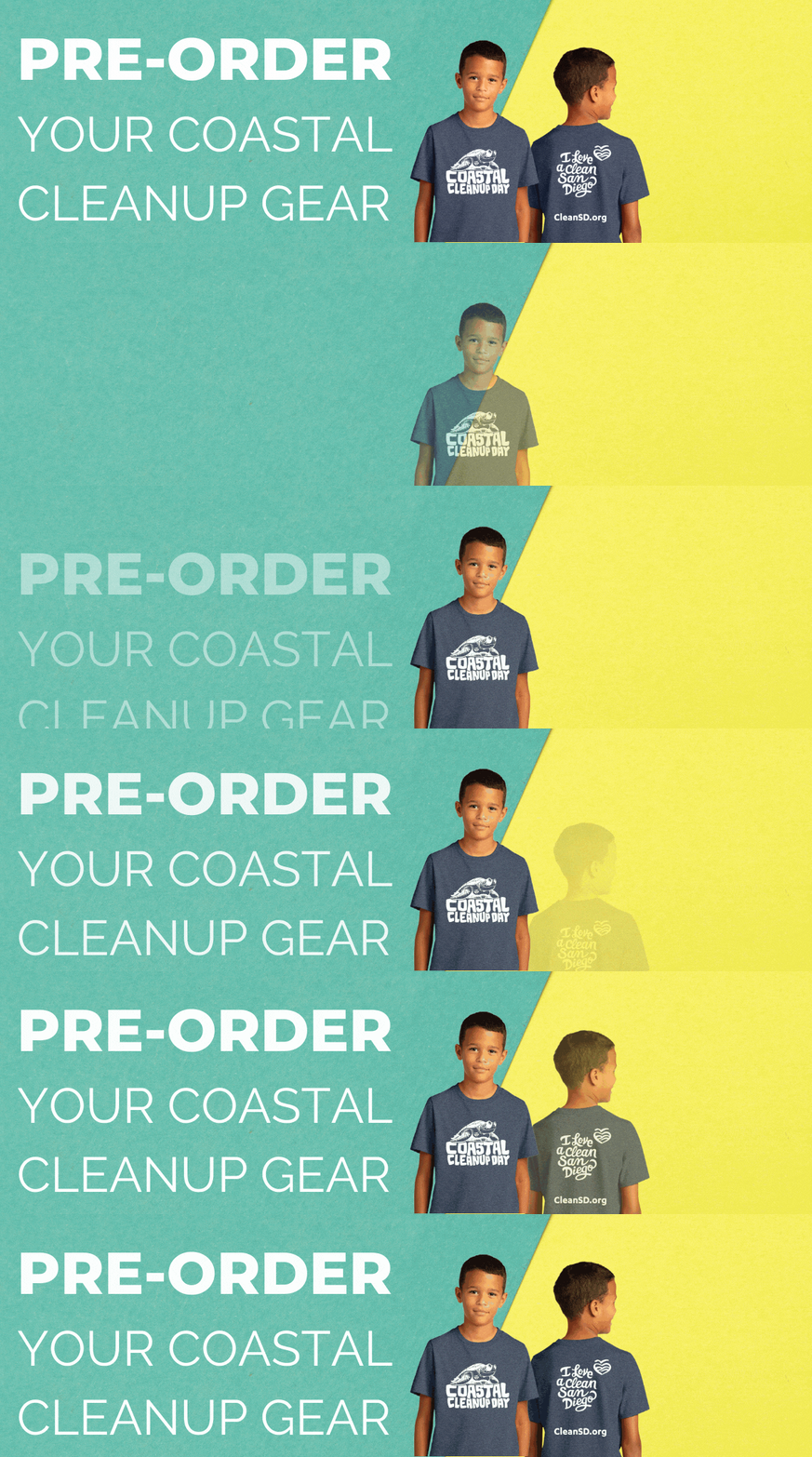
Free online volunteer registration opens September 1, 2021 at CleanupDay.org. Volunteer groups expected to grow significantly from 2020. New Coastal Cleanup Day T-Shirt is available on event website.

International Coastal Cleanup Day returns to San Diego County for its 37th edition on Saturday, September 18, 2021. About 80 percent of all marine debris originates inland, so people of all ages and from all points in the region are encouraged to participate in one of the world’s largest environmental preservation efforts. Volunteers can cleanup at any point during the day. Learn more at the official Coastal Cleanup Day San Diego website CleanupDay.org.

Coastal Cleanup Day T-Shirt

Order your Coastal Cleanup Day Tshirt Today! All proceeds benefit I Love A Clean San Diego. Thank you!

The countywide event is a major part of International Coastal Cleanup, which includes many U.S. states, territories, and over 90 countries. San Diego County volunteers are joining nearly one million volunteers all over the world in the removal of pollution from our connected ecosystems.

“Each year, at least 8 million tonnes of plastics leak into the ocean – which is equivalent to dumping the contents of one garbage truck into the ocean every minute. If no action is taken, this is expected to increase to two per minute by 2030 and four per minute by 2050. Estimates suggest that plastic packaging represents the major share of this leakage. The best research currently available estimates that there are over 150 million tonnes of plastics in the ocean today. In a business-as-usual scenario, the ocean is expected to contain 1 tonne of plastic for every 3 tonnes of fish by 2025, and by 2050, more plastics than fish (by weight).” World Economic Forum Report

Produced by I Love A Clean San Diego for the region, and in cooperation with the California Coastal Commission and Ocean Conservancy, over 269,000 volunteers countywide have removed over 5.4 million pounds of litter and debris from local communities since Coastal Cleanup Day’s inception in 1985. Despite the effects of the pandemic in 2020, San Diego County stood out. The region’s effort accounted for 1 percent of international litter totals, nearly six percent of the national totals and 20 percent of California’s results.

This year, Coastal Cleanup Day is making a return to group volunteering and data collection at litter hot spots across the county. If volunteers would like to find a litter hotspot in the county to do their cleanup, they can check the hotspot map on CleanupDay.org when registration opens Sept. 1.

Keeping with the theme protecting the coast starts at your front door, organizers are still offering a close to home option to allow more volunteers the opportunity to cleanup streets, parks, canyons and beaches within their own communities.

“No matter where you live in San Diego County, we all live in one of the region’s 11 watersheds, which need our help to protect the inland environment, creeks, bays and ultimately the ocean,” said Len Hering, executive director at I Love A Clean San Diego. “We’re happy to be making a significant step toward getting back together in groups to show our love for the region we call home.”

San Diego Gas & Electric (SDG&E) will be celebrating its 20th year participating in Coastal Cleanup Day, making it the longest serving corporate team in the San Diego region, according to I Love A Clean San Diego. SDG&E encourages all volunteers to be community scientists and record their data during and after their cleanup so the results of local efforts are included in the global totals.

“Coastal Cleanup Day is an event our employees look forward to each year, and we will be out at four locations this year,” said Scott Crider, senior vice president of customer services and external affairs at SDG&E. “Heading into our 20th year of volunteering for the event, we are proud to have stopped over 110,000 pounds of trash from going into our waterways.”

Be a community scientist and report cleanup data online.

This year we are recording the Thank Yous volunteers receive from passersby while working on their project.

All volunteers must register at CleanupDay.org to officially participate and have their cleanup totals officially counted in the international effort.

Prior to event day, registered volunteers will receive a link to a simple cleanup report form to record their cleanup data, which can be accessed on mobile device or computer.

I Love A Clean San Diego has created a Volunteer Impact Map. This map visualizes all locations and cleanup totals around San Diego County in real time as volunteers submit data.

Adding an appreciation metric, volunteers will report the number of “thank yous” they receive from passersby while working on their cleanup project.

“It is critical volunteers register first and then review and submit their totals on our easy online cleanup report form,” said Lauren Short, the event’s program manager. “This data gives us a snapshot of the weights and types of pollution collected so we can share those accomplishments internationally.”

To help expand the countywide experience, volunteers are encouraged to contribute to the virtual cleanup’s story through Facebook and Instagram with images and video to show themselves in action as they beautify their community. #ILoveACleanSD @ILoveACleanSD #ProtectYourHappyPlace #CCD2021

Top 10 Items Collected Around the World in 2020

Plastic is the problem: All items listed below are example of single-use plastic.
1. Food Wrappers (candy, chips, etc.) 4,771,602
2. Cigarette Butts 4,211,962
3. Plastic Beverage Bottles 1,885,833
4. Plastic Bottle Caps 1,500,523
5. Straws, Stirrers 942,992
6. Plastic Cups, Plates 754,969
7. Plastic Grocery Bags 740,290
8. Plastic Take Out/Away Containers 678,312
9. Other Plastic Bags 611,100
10. Plastic Lids 605,778
Source: OceanConservancy.org

Supporting partners of Coastal Cleanup Day San Diego County

Think Blue, County of San Diego and its Watershed Protection Program, Project Clean Water, COX Communications, SDG&E, Wells Fargo, Coca-Cola Foundation, News 8, Bank of America, Northrop Grumman, Illumina, Sony, City of Imperial Beach, City of Carlsbad, City of La Mesa, City of Poway, City of Chula Vista and San Diego Regional Airport Authority.

About Coastal Cleanup Day San Diego County

I Love A Clean San Diego has been the official organizer of Coastal Cleanup Day in San Diego County since it was founded in 1985. The event is a major part of International Coastal Cleanup Day and includes many U.S. states and territories, and over 90 countries. Each year the event attracts nearly one million volunteers globally and about 6,000 throughout San Diego County who prevent ocean pollution from our connected ecosystems. International Coastal Cleanup was founded by the Ocean Conservancy and is coordinated in California by the California Coastal Commission.

About I Love A Clean San Diego

Founded in 1954, I Love A Clean San Diego is an environmental nonprofit supporting residents and businesses of San Diego County through youth and adult education, and local action through impactful volunteer events and workshops. As San Diego’s most influential advocate for sustainability, I Love A Clean San Diego’s programs are an environmental catalyst, awakening passion and inspiring action to empower everyone to be leaders in conservation and waste-free living. Our community is passion in action to maintain and improve the health of the home we love.

Zero Waste BBQ

Zero Waste BBQ

Zero Waste BBQ

Summer means longer days, warmer weather, and spending more time outside. For San Diegans, this leads to beach days, barbecues and other outdoor events! It can also lead to a lot of waste – every summer, I Love A Clean San Diego collects thousands of pounds of litter from our local beaches. For your gatherings this this season, consider going zero waste! I Love A Clean San Diego wants to help you host a low waste barbecue so you can spend less time worrying about trash, and more time focused on fun!

Ditch the Disposables

When there are large groups involved, it can be easy to reach for paper plates and plastic cutlery. However, one plastic water bottle requires 1.85 gallons of water to make. When we throw single use items away, we’re throwing away our natural resources as well. It’s best for the environment to use reusable tableware instead. If you’re concerned about being left with a ton of dishes at the end of the night, ask your guests to BYOP – bring your own plate! Let everyone know you are going for a plastic-free event, and people will be excited to help out. Try cloth napkins instead of paper, or glasses and mugs instead of paper cups. You can even find metal skewers for roasting marshmallows, rather than disposable ones.

Here in San Diego, we are lucky to have so many breweries and wineries close by. Try filling a few growlers instead of opting for bottles and cans, and look for wineries that will refill or reuse their wine bottles.

Forgo Food Waste

In the United States, the average person throws about 3.5 pounds of wasted food per week. In planning your menu for your summer BBQ, look for recipes that have ingredients you can buy in bulk. Reducing packaging during your grocery trip can cut down on your overall waste from the event. You can also do your best to use every part of the ingredient – instead of throwing away your potato peels, bake them into chips!

Try out the recipes below for your next event.

For each, you can use up what you have, or easily find ingredients in bulk or recyclable packaging.

Other ideas include…

  • Making sangria or flavored water with leftover fruit
  • Roasting any wilting veggies on the grill
  • Using the last of that loaf of bread in bread pudding

Set it Up for Success

A key component to any zero waste event is making sure your guests know where and how to dispose of things at the end of the night. Make sure it’s clear which bin is for recycling, where they can put compost, and what they should do with anything that might need to go in the trash. Clearly labelling your bins ensures your guests feel confident enough to sort their waste on their own.

Some quick disposal tips…

  • Glass, metal, paper, and plastic containers can all be recycled
  • Food soiled paper and food scraps from produce can be composted
  • Bottle caps are too small to go into the recycling on their own. Collect these throughout the night and place them in an empty metal can to be recycled.

We know it can be hard to make these adjustments in the whirlwind of party planning but try a few small adjustments and see how easily habits can change. The best part is you might inspire friends and family to think differently about their waste habits as well! Let us know how your zero waste barbecue goes by tagging us on Facebook, Instagram or Twitter @ILoveACleanSD!

Pick up more tips and knowledge by attending our Celebrate Sustainably: Summer Fun webinar on July 28th! Register here. For more information on how to adopt a waste-free lifestyle visit WasteFreeSD.org. For more information about our educational programs, contact education@cleansd.org.