Pumpkin Composting 101: If It Grows, It Goes

Recycle Your Organic Waste This Fall Season!

Keeping Halloween pumpkins out of the trash is easy: Compost them, use them as animal feed or simply place them in your curbside green bin.

This fall season, consider recycling or composting organic waste, including Halloween pumpkins.

According to the County’s Department of Public Works ,40% of what we discard in landfills is organic waste. When organic waste decomposes in a landfill, methane is produced, a potent greenhouse gas and climate pollutant.  

Alternatively, when we compost pumpkins and other organic waste, the material is transformed into a valuable soil amendment. Composting recycles nutrients back into the soil, improves water retention, lessening the need for irrigation, and helps to grow healthier food. It also saves valuable space in our local landfills.

To help unincorporated residents properly recycle organic waste and identify what belongs in the green bin, the County reminds you: If it grows, it goes!

For Halloween, remember all parts of a pumpkin can be composted or placed in your curbside organic waste bin including the seeds, guts, stem, and the pumpkin itself. It’s important that all candles, lights, and decorations are removed first. 

Painted pumpkins or those decorated with glitter should not be composted or placed in the green bin. Soiled Halloween party napkins as well as yard trimmings and nonhazardous wood waste can also be composted or placed in your curbside organic waste bin. 
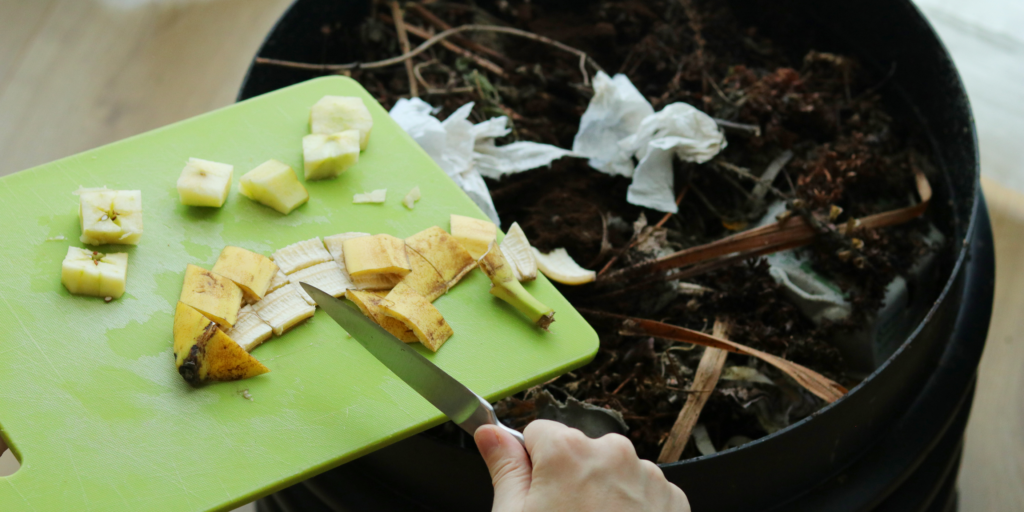
There are five best practice steps for proper organic waste recycling in your home:

  1. Choose a container with a closeable lid. This prevents flies and insects from entering the container and keeps your home clean.
  2. Know what to throw. Residents can learn more about organic waste on the County’s website. Remember, if it grows, it goes! Items that do not belong in the green organic waste bin include plastic bags, dirt, soil, rocks, concrete, pet waste or kitty litter, diapers, clothing, liquids, glass, metal, and plastics.
  3. Collect your scraps and food-soiled paper.
  4. Wrapping your scraps in paper will help with any potential odors or pest issues (DO NOT place them in plastic or compostable plastic bags).
  5. Store your container in a convenient location. Having a convenient location for your container makes recycling organic waste easier. 
  6. Try storing your container under the sink, on the counter, or in the refrigerator or freezer. Tip: Add a dash of baking soda to your bin to help soak up extra moisture and combat odors.
  7. Transport your food scraps container to the curbside organics bin.
  8. Adding food scraps to your organic waste bin the night before collection is preferable. Tip: Use shredded paper to help absorb any moisture in the cart.

Residents can find recycling guides on the County’s website and learn more about sustainable tips at WasteFreeSD.org

How to Properly Dispose of Batteries in San Diego: HHW 101

Batteries Do Not Belong in Curbside Bins

Batteries and products that contain batteries cannot be disposed of in trash or recycling bins. Batteries that enter the waste stream pose a significant safety threat because they are responsible for rising occurrences of fires and environmental contamination. 

Batteries are considered as hazardous waste and/or household hazardous waste under the category of universal wastes in California because of the materials they are made from. Acids, lead, nickel, lithium and mercury found in batteries are dangerous and toxic. When batteries are subjected to the heat, pressure, and machinery of a garbage or recycling truck or become punctured or pierced by waste sorting machinery, they can spark and ignite a fire. 

Additionally, the dangerous and toxic components of batteries flow into the environment when not disposed of properly. This not only contaminates the soil and water systems, but have the potential to affect our health and well-being through accumulation in wildlife and the food we eat.


Types of Batteries

AAA, AA, C, D, button cell, 9-volt, rechargeable batteries, single batteries, car batteries, motorcycle batteries, scooter batteries, e-cigarette and vape batteries.


Recycling Batteries

Battery Recycling is becoming increasingly more safe, convenient and accessible. 

Here’s where you can recycle batteries in San Diego: 

  • Libraries: 14 libraries in San Diego County accept standard alkaline batteries, rechargeable batteries, and lithium batteries in separate bags
  • O’Reilly’s Auto Parts Store: Select stores from O’Reilly’s will recycle household batteries as well as lead acid automotive batteries. Remember to call before you go to make sure your local O’Reilly’s are accepting batteries for recycling.
  • Household Hazardous Waste Facilities: Hazardous waste facilities accept all types of batteries. Always bring damaged batteries to HHW facilities. Visit WasteFreeSD.org to find out which facility you can go to
  • Cirba Solutions: An easy and convenient way to dispose of all types of batteries (excluding automotive batteries) – purchase a box, fill the box, ship the box. The company then uses a diverse array of technologies to ensure each battery component is recovered in the most environmentally sound way possible.
  • Staples Stores: Most Staples stores accept electronic waste and household batteries to be dropped off in store and recycled.
  • Call2Recycle: This is the country’s largest battery recycling program. Batteries can either be dropped off at select locations found on their website or shipped. Call2Recycle will accept rechargeable batteries for free, however charges a fee for single-use batteries. Check out their website to learn more.

Visit WasteFreeSD.org to check out more locations for battery disposal and recycling.


Battery Storage

  • Store household batteries in their original packaging so they are out of contact with other batteries. 
  • Make sure the batteries are stored with all the positive ends facing the same direction. 
  • Avoid storing batteries with metal objects because contact can cause batteries to short circuit and lead to leakage. 
  • Do not mix damaged batteries with other batteries. This again could result in short circuiting and cause fires or explosions. 
  • If batteries are leaking, handle them with care by wearing gloves, then place them in a clear plastic bag to be transported to your local hazardous waste collection facility. 
  • For extra safety, place the bag in non-flammable material such as sand or cat litter.

The Ultimate Sustainable Back to School Guide

Thousands of San Diego students are getting ready to go back to school. Here are a few tips to do it the sustainable way!

Reduce your daily footprint by following these tips:

Reusable water bottle. If you don’t yet own a reusable water bottle it’s a great idea to get one! You can significantly reduce the amount of disposable water bottles you toss out just by drinking from your reusable water bottle every day, plus it saves you money. It’s best to write your name or initials on the bottle to avoid losing it and creating more waste.

Finding alternatives to plastic bottles and bags. Opt for reusable baggies to pack sandwiches, cookies, veggies, and other snacks. Disposable plastic baggies can  not be disposed of in the recycling blue bins and are  likely to end up in the landfill.. If you throw out 2 bags a school day, that’s 10 bags every week. In a month, that’s 40 bags, and in a year that’s a whopping 480 bags, they add up quickly! Reusable bags are widely available and washable.

Don’t bag your fruit. Fruits come in their own compostable packaging, it’s not necessary to put your banana, orange, or apple in a plastic bag, when the skin of the fruit naturally protects it.. If you want to pre-peel or pre-slice your fruit, it’s another great opportunity to use your reusable snack bags.


Be cool and carpool. If you live close to your school, consider walking, skating, riding your bike, or using public transportation to school if able.

Shop smart. The new school year can be exciting and it’s always tempting to buy brand new, cool materials. But most times, you end up buying supplies you don’t need. It’s always a good idea to do a waste audit and look through what you may already have such as markers, pens, colored pencils, rulers, notepads etc. that accumulate year to year. It’s a good idea before going out to buy new school supplies, to make a list of what you really need. This way, you can avoid buying what you don’t. If you have any supplies at home that you won’t use, consider donating them to your school or an after school program. Also, Don’t forget your reusable bags when back-to-school shopping. 

Already do all the above and want to do more? Here are some tips for the A+ Environmentalists:

  • Start an organic gardening and composting program at your school.
  • How well does your school recycle? If you think more can be done, talk with your teachers and principal about improving recycling at your school.
  • Start an environmental club at your school. You can participate in clean-ups and organize recycling events to fundraise for your club or school.
  • Help spread the word. For more information on how and where items can be recycled and disposed of properly, visit WasteFreeSD.org or call our hotline. Incorporated residents call: 1-800-237-BLUE (1-800-237-2583) and for Unincorporated residents call: 1-877-R-1-EARTH (1-877-713-2784).

Registrations are Open for I Love A Clean San Diego’s 22nd Annual Creek to Bay Cleanup

Registrations are Open for I Love A Clean San Diego’s 22nd Annual Creek to Bay Cleanup

San Diego‘s largest one-day environmental volunteer effort during Earth Month returns on Saturday, April 20, from 9 a.m. to noon, with thousands of volunteers expected at nearly 100 cleanup sites.

SAN DIEGO COUNTY (April 2, 2024) – I Love A Clean San Diego (ILACSD) is set to host the 22nd annual Creek to Bay Cleanup on Saturday, April 20, from 9 a.m. to 12 p.m. The event is the region’s largest one-day environmental volunteer effort in celebration of Earth Month, with nearly 100 cleanup sites around the county. I Love A Clean San Diego expects thousands of volunteers of all ages to participate. Residents can register to volunteer now at cleansd.org/creektobay.

“Creek to Bay provides an opportunity for all San Diegans to actively participate in keeping our green spaces beautiful and healthy!” said Kristin Banks, Volunteer Program Manager at ILACSD.

The Ocean Conservancy estimates that about 80 percent of all litter and debris found along the coast begins inland. When litter enters our local watersheds, it flows downstream and into the Pacific Ocean, negatively impacting infrastructure and becoming a harmful threat to the health of both marine wildlife and humans.

“With cleanup sites all over the region, there’s an opportunity for every San Diegan to get involved no matter where they live and help keep pollution from reaching our local waterways and the ocean,” said Craig Gustafson, Program Manager for Think Blue San Diego.

Think Blue, the public education and outreach program for the City of San Diego’s Stormwater Department, has long been a longtime sponsor of the Creek to Bay Cleanup and partners year-round with ILACSD on cleanups and educational activities.

All San Diegans are encouraged to participate since all residents live in one of the region’s 11 watersheds that lead to our bays, beaches, and oceans. Residents in inland areas are especially encouraged to participate and be the first line of defense in diverting litter from entering our waterways.

In 2023, Creek to Bay volunteers diverted nearly 50 tons of litter and debris from communities across the county. Volunteers can visit cleansd.org/creektobay to find the list of the nearly 100 sites throughout San Diego and locate a site near them.

Thank You to Our 2024 Creek to Bay Partners

Think Blue San Diego, Bank of America, County of San Diego and its Watershed Protection Program, Cox Communications, Project Clean Water, Wells Fargo, San Diego Port Authority, Airport Authority, Illumina, Sempra Infrastructure, Sony Electronics, and Jack in the Box Foundation, City of Chula Vista, City of San Marcos, City of Imperial Beach, Mitch’s Seafood, Sycuan, Great American Cleanup Grant through Keep America Beautiful, City of El Cajon, City of La Mesa Stormwater Department.

About I Love A Clean San Diego

Celebrating 70 years in 2024, I Love A Clean San Diego (ILACSD) is an environmental nonprofit supporting residents and businesses of San Diego County. ILACSD was founded in 1954 as the San Diego War Against Litter Committee (WALC), in the 1970s, “I Love A Clean San Diego” became the slogan for the organization’s anti-litter campaign, and in 1980, it became the organization’s name. Over the last seven decades, ILACSD has since evolved into the nonprofit it is today, providing programs that go far beyond litter cleanups and serve as environmental catalysts. Our programs inspire and empower San Diegans to be environmental and waste-free living leaders in their communities. For more information, to volunteer, or to make a gift, visit CleanSD.org or call (619) 291-0103. Connect with us on Facebook, Twitter, Instagram and LinkedIn.

###


Spring Cleaning: Tips To Declutter & Refresh Your Home This Season

Spring is here! There is no better time for some spring cleaning! Decluttering your home of unwanted items, thoroughly cleaning room to room, wiping the dirt off every nook and cranny you can find – these are all a part of the exciting (and sometimes tedious) spring cleaning routine. To help you get started, we’ve compiled a list of tips on where to donate or recycle items you no longer need and DIY recipes for your home cleaning needs.

Cleaning Out Your Closet

Donating your clothes to non-profit organizations will ensure you’re donating to a good cause and helping those in need.

San Diego Rescue Mission 

San Diego Rescue Mission accepts clothing and shoes that are fairly new or gently used. They take into account the wishes of the donor and your requests on how the items you donate will be used. Most of their donations are given to students and guests at the San Diego Rescue Mission according to their needs.

Father Joe’s

Father Joe’s accepts clothing and shoes that are clean and gently used and resells them at their thrift stores. The money collected from reselling the donations goes directly towards helping the homeless population in San Diego.

Many mail-in programs exist for clothing and shoe donations, where most items are sent to developing countries for people who are poverty stricken and are in need of clothes. 

Soles4Souls

Soles4Souls is a free mail-in program which aims to turn unwanted shoes and clothing into opportunity, creating jobs and empowering people to break the cycle of poverty. Shoes are distributed to people in need and are also used to help people launch and sustain their own small businesses selling donated shoes and clothing.

Retold Recycling

Retold Recycling is a mail-in program that accepts damaged or very worn-out clothes and textiles (blankets, towels, bed linens, etc.) for recycling. Whether it’s just one sock or a full bag of clothing, Retold makes sure none of it ends up in the landfill. The items are sorted by type and quality and are then sent to thrift stores, charities, upcyclers, recycling companies, and developing countries to support micro-economies.

USAgain Drop Off Bins

USAgain accepts clothing and shoes that are in reusable condition. Items in fairly good condition are given to people who don’t have the option to buy new clothes, allowing them to conserve funds for other basic necessities such as food, shelter, and education. Some are sold to small shop owners or second-hand stores who are in need of products to make ends meet. Items that are battered, such as fabric scraps, are either reused as wiping rags or shredded to insulation material for appliances and vehicles.

Many clothing brands have a take-back program. If you bring back a used item, you could get a discount to purchase a new item.

Madewell

Madewell has a Do-Well recycling program in place where they offer free repairs in stores for patching, mending, and other fixes. Used jeans are also available for purchase at their stores. If you have fallen out of love with your jeans, you can turn them in at Madewell, which then turns those old bootcuts into housing insulation for communities in need.

Patagonia 

Patagonia has a Worn Wear program where you are able to trade in or mail in used Patagonia garments that are still in good condition in exchange for store credit. They also offer a used clothing section as well as repair services in order to expand the lifespan of clothing and keep them out of the landfills.

North Face

North Face accepts used apparel and footwear in any condition and brand at their stores and rewards $10 towards your next purchase when you sign up for their XPLR Pass. Approved items are then washed, prepped and sold through the North Face Renewed program, donated, or recycled. First time users get a 10% discount on purchases too!

To Clean Everything Else: Sustainable Cleaning Recipes
All-Purpose Cleaner 
  • 2 cups hot water 
  • 1 tsp. biodegradable liquid soap or borax 
  • 1 tsp white vinegar or lemon juice (cuts grease) 

Directions: Fill a spray bottle with hot water. Add soap and vinegar or lemon juice. Shake the bottle gently to dissolve the ingredients.  

Floor Cleaner 
  • 2 cups warm water 1/4 cup biodegradable liquid soap or detergent 
  • 1/2 cup white vinegar or lemon juice 

Directions: Combine the ingredients in a large plastic bucket. Use it with a mop or sponge. 

Glass Cleaner 
  • 1 cup water 
  • 1/8 cup vinegar 

Directions: Fill bottle with both ingredients and shake for 30 seconds. Use on all types of glass surfaces, including mirrors. 

Tub and Tile Cleaner
  • 1/2 cup baking soda Enough liquid soap to make a frosting-like consistency 
  • 5-10 drops of essential oil of your choice. (Pro tip: Try using eucalyptus, tea tree or Peppermint oil!) 

Directions: Place baking soda in a bowl and slowly pour in liquid soap, stirring constantly, until the mixture reaches the consistency of frosting. Add drops of essential oil (optional). Scrub surface with sponge and mixture, and rinse.

Toilet Cleaner 
  • 1/4 cup baking soda 
  • 1 cup vinegar 

Directions: Place baking soda in a bowl and slowly pour in liquid soap, stirring constantly until the mixture reaches the consistency of frosting. Add drops of essential oil (optional). Scrub surface with sponge and mixture, and rinse.