Eco Holiday Tips: 5 Easy Ways to Reduce Food Waste

Today’s blog is brought to you by Emily, one of our environmental educators. Emily loves holiday treats (especially her grandma’s jell-o salad), but hates seeing good food go to waste. Keep reading to see how you can reduce the amount of food you throw away.

‘Tis the season for friends, fun, and food.  With all the festivities this time of year, it’s easy for us to be up to our eyeballs in pumpkin spice lattes, turkey sandwich leftovers, and sugar cookies from the grandkids. And with food comes food waste. This holiday season, give a gift to the environment by putting your trash can on a diet.

According to the United States Department of Agriculture, Americans throw away up to 40% of the food supply each year, valued at almost $390 per consumer in 2008. That means every year we’re throwing away enough food to constitute at least a month’s worth of groceries. Since food has become so convenient and readily available, many people wonder what the big deal is. What’s wrong with this picture? We are wasting resources – land and water to grow the food, money to purchase it, and time and energy to prepare the finished product. After unwanted food enters our trash cans, it makes a long, diesel-powered journey to the landfill (soon to be the landfull), where it rots, releasing harmful greenhouse gases. About 14.5% of our municipal solid waste is food waste. Fortunately, the solution is within our reach.

Now, before you go all Dr. Brown on us, let’s look at some simple steps you can take today.

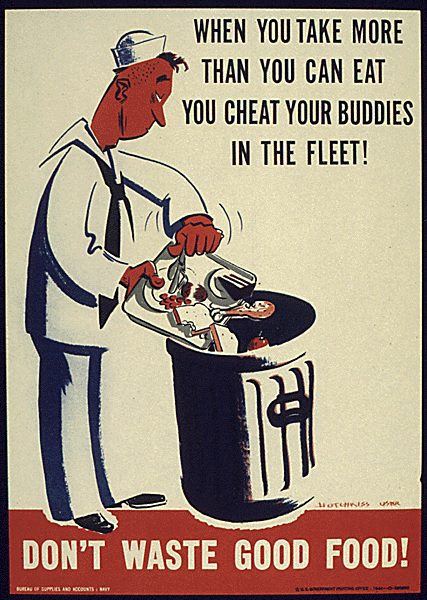
  1. Serving size – As this World War II poster reminds us, taking more than we can eat is one of the most common reasons we dispose of food. It’s better to return for seconds than to throw usable food away. When eating out, asking for a take-out container (or bring your own) when your food arrives to help remind you to take home the leftovers. As you teach your children, friends, and family to be mindful of the helping they put on their plate, you are instilling healthy habits for them and the earth.Don't Waste Good Food


  1. Make a list and check it twice – Despite our best intentions, sometimes our food spoils. Planning ahead before you even get to the grocery store can help prevent that. For example, if you know you want to make a recipe using chicken stock, plan to cook another dish using chicken stock later that same week.
  1. Embrace the ugly – Picking through the produce piles is like a quest for the perfect fruit or vegetable. However, if a potato has an odd knob, or an onion has a conjoined twin, chances are it will taste exactly the same as its normative cousins, especially if you’re chopping it up. Now, we’re not condoning purchasing bruised or unfit for consumption. Rather, you’ll be giving a home to an otherwise discarded piece of perfectly good produce. Besides, it makes for a wonderful game of Rorschach Vegetables.

Ugly Fruit

  1. Love those leftovers – For some, leftovers are the gift that keeps on giving. Others, however, tire of the same meal for weeks. For inspiration on how to jazz up your leftovers, turn to the wonderful world of Pinterest. Maxed out on turkey sandwiches? Freeze your cooked turkey for up to 6 months and keep that tryptophan train runnin’ well into the spring.

Waste Free SD Tip: Choose reusable containers to store your leftovers instead of non-recyclable plastic resealable bags.

  1. Compost – You don’t have to have a lot of space to compost! Contrary to popular belief, apartment dwellers as well as homes with yard space can significantly reduce the amount of food waste that makes it to our landfills and in return, you’ll have a nutrient rich compost for your garden by spring! Click here to learn more and stay tuned for our blog series on composting, coming soon to a computer screen near you.
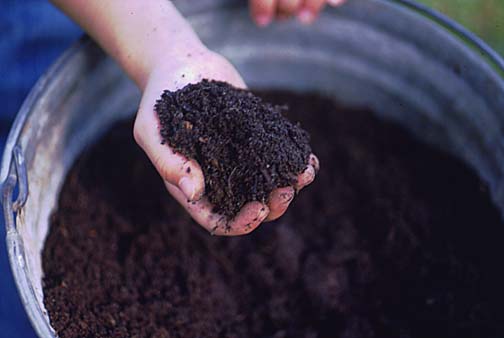
 

Turn your winter leftovers into nutrient-rich soil by Spring!

As with other eco-friendly actions, reducing food waste is all about our choices. Start today with a small commitment to take a step to decrease your food waste. It may take time to build these habits, but when we’re able to stretch the life of our landfill to accommodate our children and grandchildren, it will certainly be worth it.


To learn more, check out this video:

ILACSD Staff Share Their Favorite DIY Projects

Today’s blog comes from our Hotline Manager, Amanda! On our hotline, Amanda answers many questions about recycling, but what about the other two Rs, reduce and reuse? Here at ILACSD, we’re not only a community resource, we practice what we preach. Read on to check out some of our favorite staff DIY projects!


Do it yourself (DIY) seems more popular than ever thanks to Pinterest, Instagram and home improvement blogs. DIY can be a great way to not only save money, but help the planet, too! Here are some DIY projects that have been done by our staff members and their families. Be sure to follow us on Pinterest to keep with all the latest earth-friendly DIY trends!

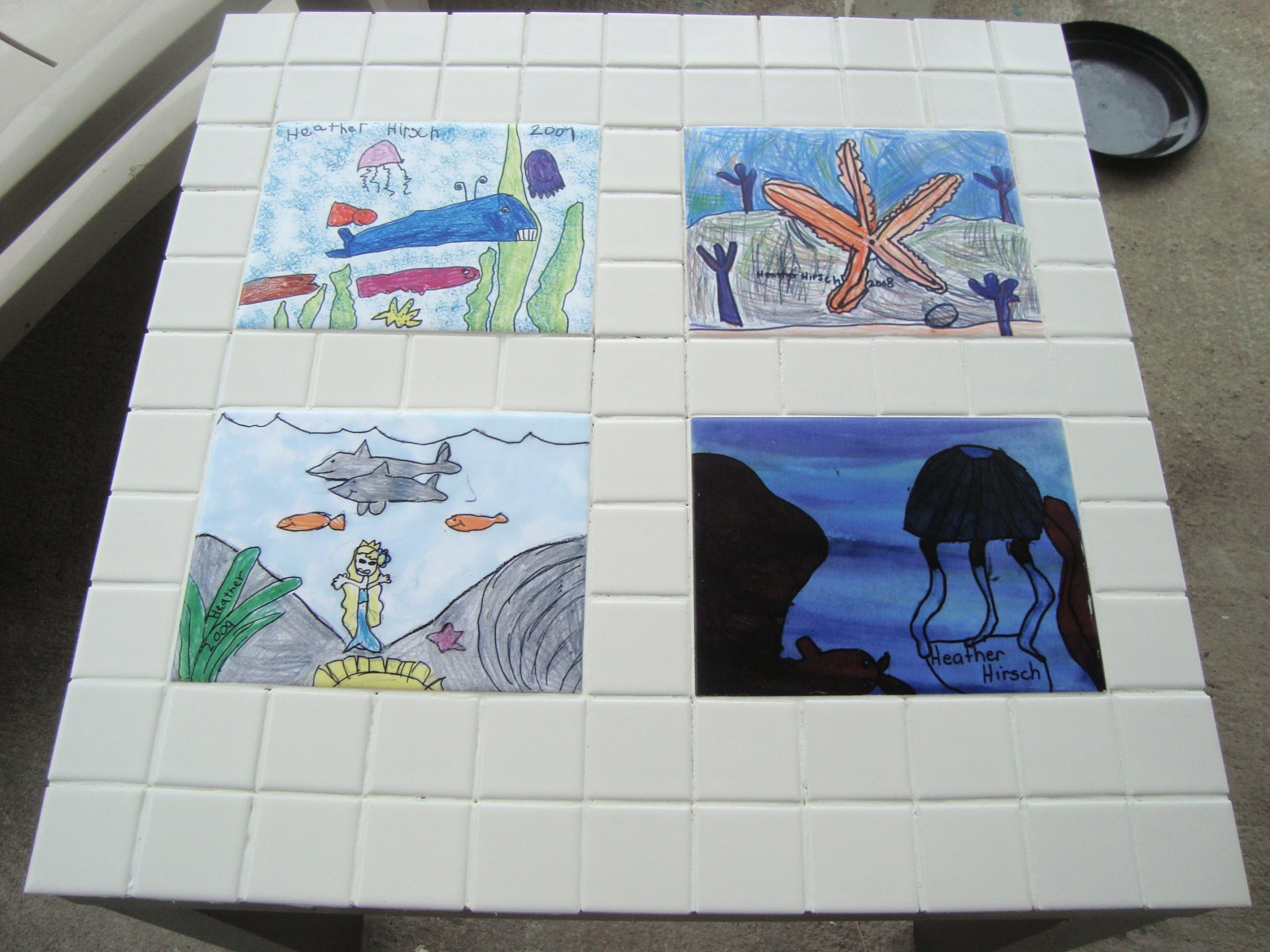
Ann's tableDirector of Finance, Ann, had an old table from Ikea that needed a little extra attention. Almost everyone ends up with at least one piece of Ikea furniture in their lifetime, why not give it a facelift instead of trashing it? Ann decorated her table with some leftover tiles from a kitchen remodel as well as some tiles decorated by her daughter. Ann took a very common item and transformed it into something unique by adding her own personal flare!

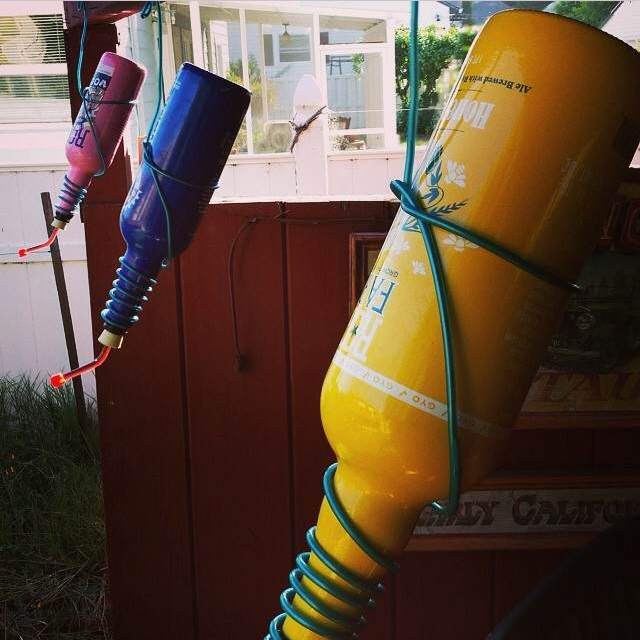
Hummingbird feedersCraft beer is popular in San Diego, and often they have bottles that just seem too pretty to recycle. Hotline Manager, Amanda, has a creative brother who made hummingbird feeders from old beer bottles. Just wrap some wire around an old bottle, fill it with some hummingbird nectar and add a hummingbird feeder tube. Feeder tubes can be found online or at your local hardware store. Click here to recreate this project!

Morgan's jewlery hangerDirector of Development and Marketing, Morgan, keeps herself busy these days with projects around her newly purchased home! The cost of home décor & accessories can quickly add up but Morgan decided to save a little cash and still add that homey feel!  With an old drawer front, some spare knobs from around the house, and a screwdriver, Morgan easily attached the knobs to the drawer front and bingo! Now she has a pretty and handy place to hang her necklaces. You can find a similar project here on our Pinterest board!

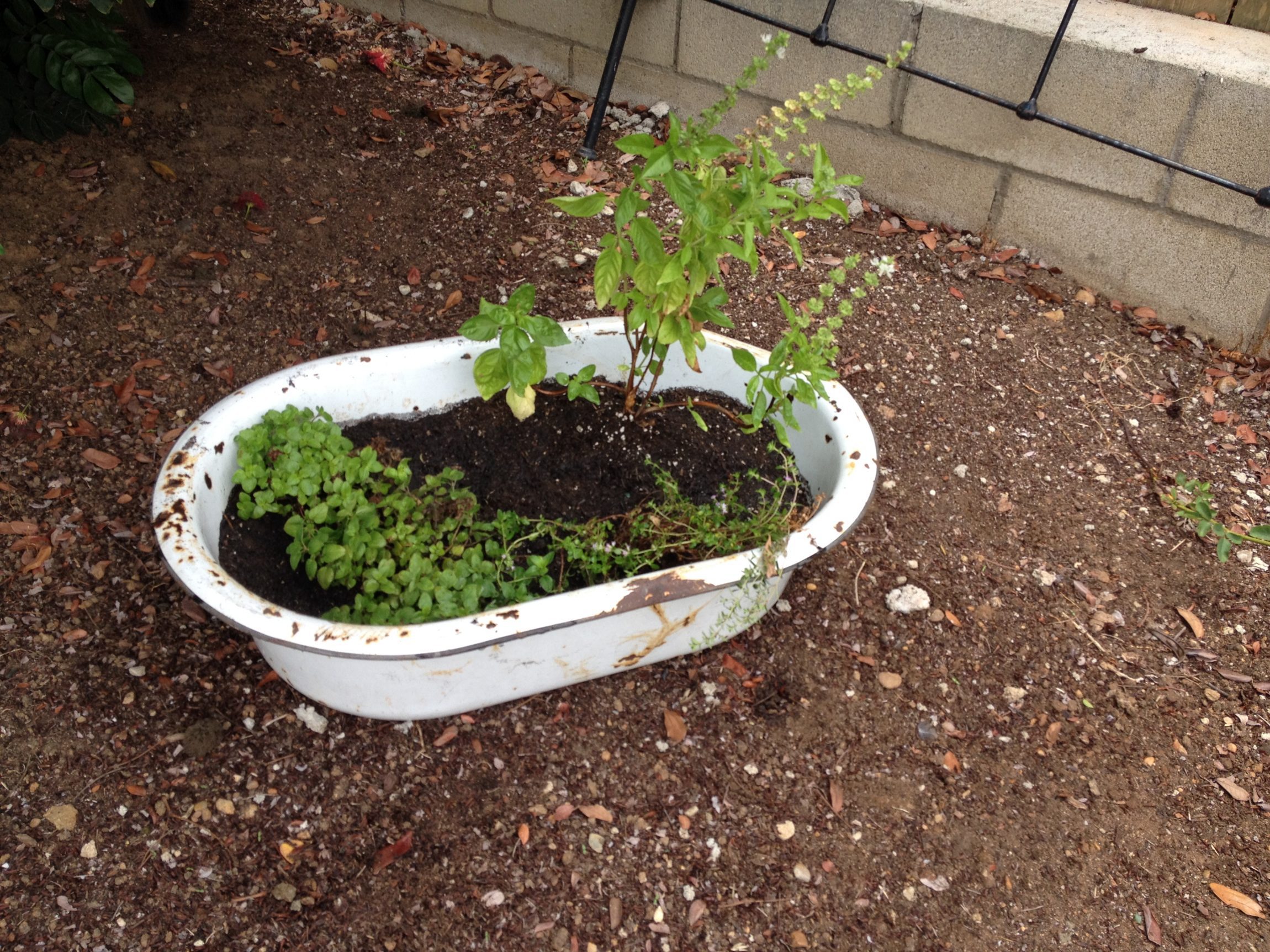
Morgan's herb gardenHere’s another project Morgan did, she found a small children’s bathtub at a swap meet in LA and turned it into an herb garden in her back yard. Don’t worry you don’t have to go all the way to LA for a swap meet! We have them right here in San Diego. There is even a new San Diego Vintage Market on the last Saturday of each month at Mission Bay High School!


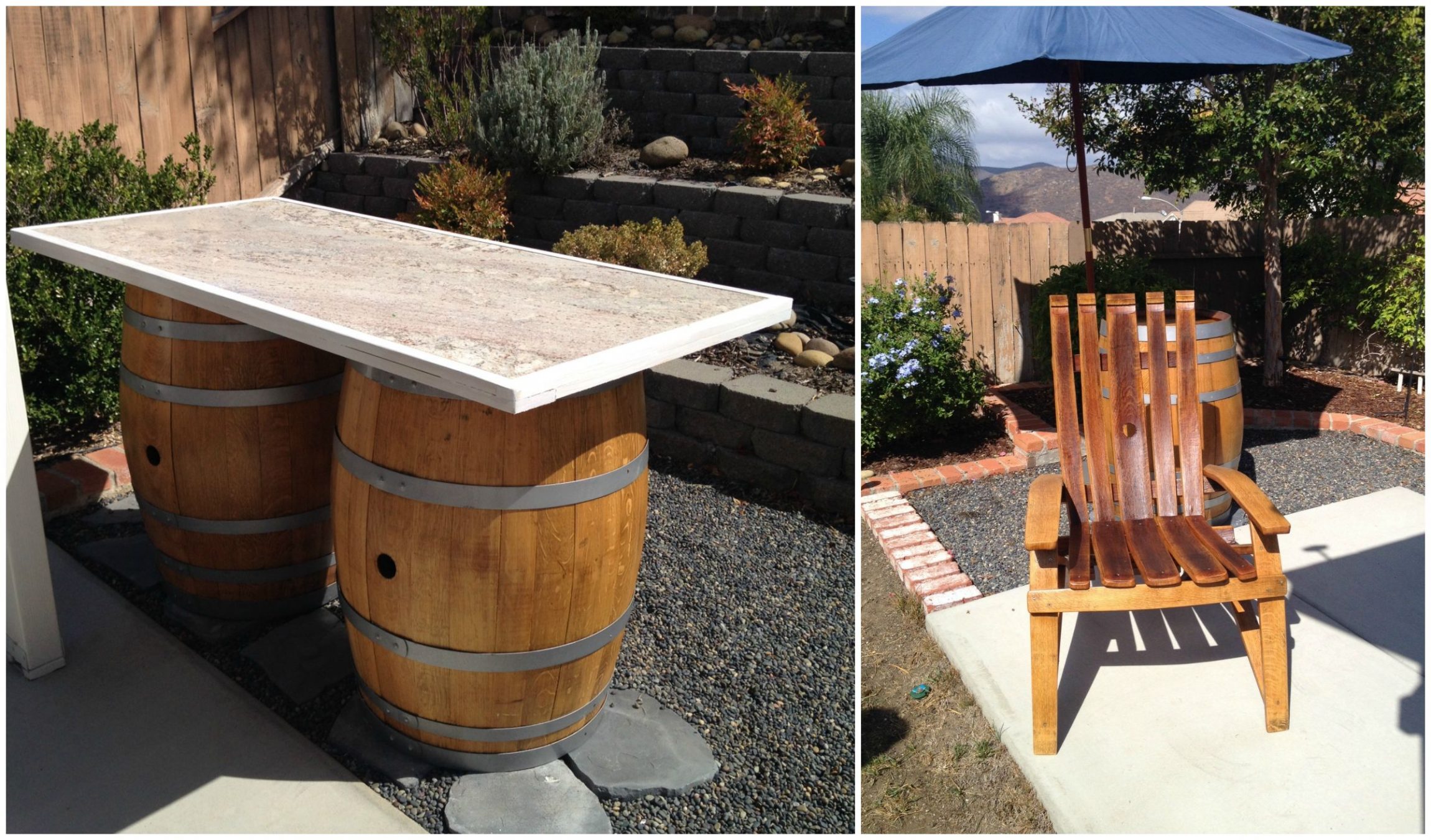
Director of Community Events, Natalie, has a very talented and creative Dad. Below is a table and chairs he crafted from wine barrels leftover from a local winery, and a slab of granite left from a kitchen remodel.

BeFunky_Natalie's chair.jpg

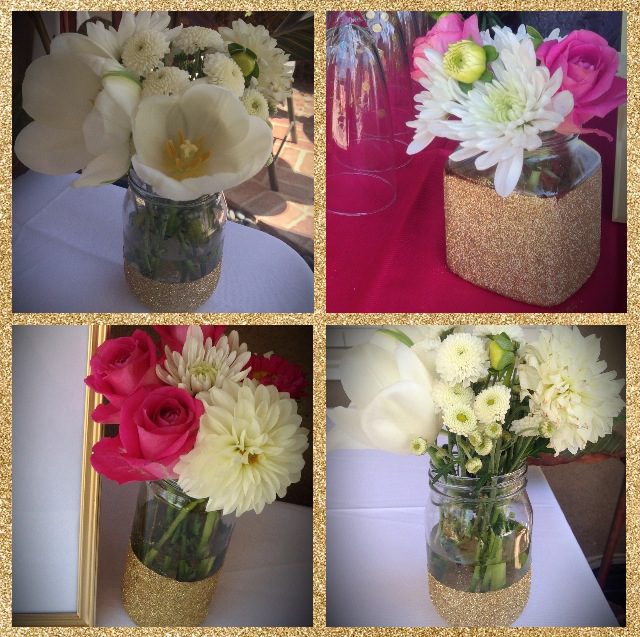
Director of Education, Samantha, recently hosted a bridal shower for a friend. Rather than going out to purchase new vases, she saved up jars from pickles, olives, etc. and added some glitter to create some beautiful and unique vases.

Add a little sparkle to your home!

You don’t have to be an artist to get a little creative at home and re-purpose items that could use a little T.L.C. Check out our Pinterest and RepairSD.org for more great DIY and reuse ideas. We invite you to post your favorite DIY projects you’ve done to our Facebook page!

Making reusables fun! ILACSD teams up with Kill The Cup

KTC - Drew #1It is no secret that I Love a Clean San Diego loves reusables. We provide everyday reusable tips, sell stainless steel straws at our events, and encourage volunteers to B.Y.O reusable supplies to clean ups, all in an effort to reduce waste. Now, we’re proud to partner with other organizations that are doing great environmental work! Today’s blog comes from Drew Beal, Chief Environmental Optimist at Kill the Cup — a waste reduction program that encourages consumers to bring a reusable cup when they get coffee. Kill the Cup is now turning into a nationwide environmental initiative on college campuses, and Drew is here to share some tips on making it FUN to go green!


Did you know that 50 billion paper cups get discarded in America each year? This creates a lot of landfill waste… but it’s not just the end of the lifecycle that matters. The manufacturing process of those 50 billion cups results in the same amount of co2 emissions as adding 1.1 million passenger vehicles to the roads. Clearly, we have a cup problem!

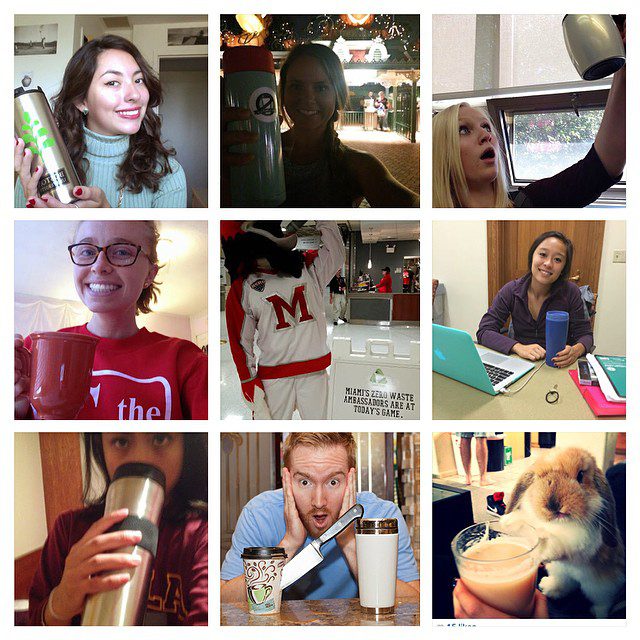
KTC - Selfie #2Paper cups represent just one piece of a much larger problem: consumer waste. But what incentives are in place to encourage us to change our behavior? Many coffee shops offer a 10-cent discount when you bring your own cup, but that’s not going to move the needle. And most people get tired of environmental messaging. If we’re serious about changing behavior, we have to make it FUN!


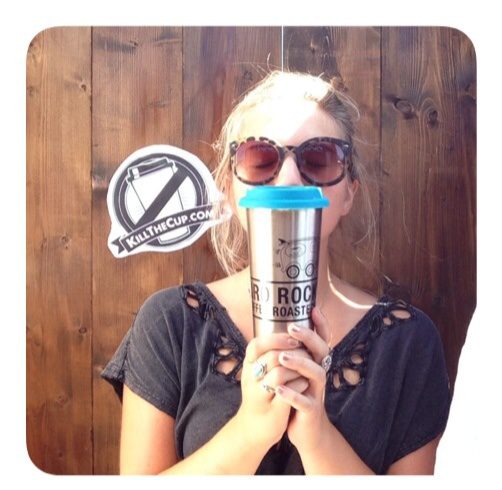
So that’s what we did when we created Kill the Cup — a social-media inspired game that offers prizes and rewards to coffee drinkers who share photos posing with their reusable coffee cups. We’ve implemented our waste reduction campaigns on college campuses across the country, including a few right here in our backyard: UC San Diego, University of San Diego, and Cal State San Marcos.

After learning a few things about encouraging environmentally responsible consumer behavior on college campuses, we’re confident that many of these tactics can work just as well in office or community settings. Whether you’re seeking to increase reusable behavior at your home, school, office, or community, here are 5 tips to make it FUN to go green!


KTC - #31) One step at a time. Establish a specific goal for your reusable campaign. It can be tempting to launch an all-encompassing “go green” initiative that targets cups, bags, bottles, and everything under the sun. But you run the risk of alienating people by asking them to do too much. Target a single reusable action, and keep the length of the campaign at about four weeks. (They say it takes about 30 days to form a new habit.)


2) But first… let me take a Selfie. Recent studies report that 93 million selfies are taken each and every day. How about doing something productive with that self-portrait? Sharing a photo of environmentally friendly behavior can make a difference. When you see pictures of a colleague or classmate engaged in eco-friendly behavior, you become more likely to also engage in a green activity.


3) Keep score. Photos are fun, and so are leaderboards. Whether people are getting rewarded for taking alternative transportation, or for bringing reusable cutlery to the office — they love getting points! Create a scoring system for your campaign, and make sure it’s easy to understand. In our recent University Challenge, for example, students received 5 points per photo, with a maximum of 1 photo per day.


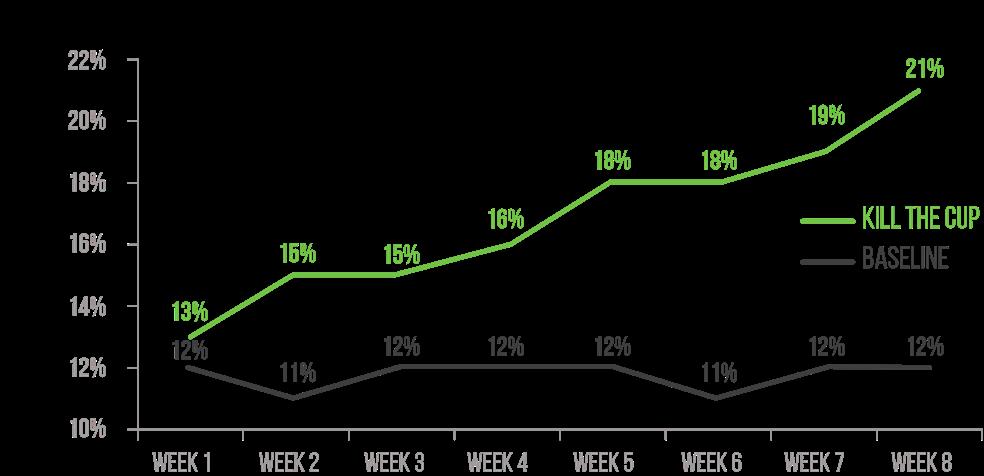
KTC - Sales Data across 5 UCSD campus coffee shops.
Reusable rate & sales data across 5 UCSD campus coffee shops.

4) Create teams. What do people love more than getting points? Winning! Many reusable activities are viewed as actions taken by individuals. By forming teams, you can help establish social norms around the desired behavior change. Instead of “Hey Jim, bring a reusable bag to help the environment,” it becomes, “Hey Jim, bring a reusable bag to help us win the Office Challenge!” Completely different perspective.


5) Measure, measure, measure. Photo-sharing campaigns are a lot of fun, but let’s not lose our focus on the overall objective: waste reduction. Identify metrics that will capture the desired behavior change. At Kill the Cup, we partner with coffee shops to measure the reusable rate — the percentage of drinks served in reusable cups. When we see an increase in the reusable rate, we know the campaign is working. And when that happens, everybody wins.

Kill The CupAnd that’s it. I hope you found these tips to be helpful, and I wish you the best of luck with your reusable initiatives. It’s an uphill battle we’re fighting to encourage environmentally responsible behavior, and it’s people like you that will help us get there. Visit the ILACSD website for more information about our pollution prevention programs and feel free to contact KTC with any questions, comments, or feedback. We look forward to hearing from you!