Protecting the CA coast is now as easy as checking a box!
What if I told you that by simply checking a box, you could provide a meaningful donation to protecting the California Coast? That’s right, this year as you file your state income tax returns, you can show your love for California’s coast at the same time. Just enter a donation of any amount next to the Protect Our Coast and Oceans Fund – listed in the “Voluntary Contributions” section on the last page of your California tax return. Your contribution will go back into our communities, providing grants to clean up shorelines, restore habitat, bring kids to the coast (some for the first time), and promote beach access.
Just check the box!!
The donation goes to to the California Coastal Commission’s Whale Tail Grant Program, which provides a ton of funding for some local San Diego programs, including a couple of I Love A Clean San Diego programs. Since its creation, the Whale Tail Grant Program has brought almost a million dollars, $902,231 to be exact, to San Diego County coastal and marine education programs!
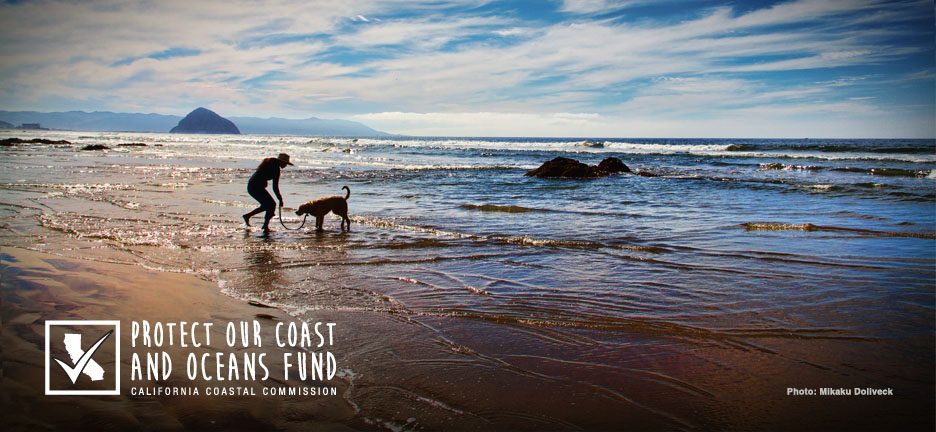
Protect our coast and oceans for all of us, including our furry friends who love to enjoy some time at the beach.
Some of the programs that benefit from this funding are I Love A Clean San Diego’s “Adopt-A-Beach” Program, UC San Diego’s Birch Aquarium “School to Shoreline” Program, and the American Lung Association’s 1-800-NO SMOKE Campaign. All of the programs that receive funding from the Whale Tail Grant program are dedicated in some way to either keeping our beaches and coastal areas clean and accessible, educating people about pollution prevention, or getting kids that maybe have never been to the beach educated about the environment and into the water.
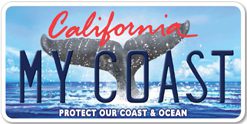
For more information about the Whale Tail Grant Program or how to donate, check out www.checkthecoast.org. You can double your impact by getting a Whale Tail license plate next time you are renewing your car registration. Those funds also go right back into the community to support marine conservation.
Funds from the Whale Tail license plate program support ILACSD’s Adopt-A-Beach program!
Today’s blog post comes from our amazing program assistant, Nicole!
Being a Program Assistant for I Love A Clean San Diego is truly a wonderful experience. I’m filled with enormous gratitude to have the opportunity to visit schools throughout San Diego County and share information with students. Everywhere I visit, kids share curiosity for information about our environment and have a passion for the future of our planet and nature.
Our High School Watershed Presentation raises environmental awareness in students by teaching the harms of storm water pollution in local watersheds. The presentation teaches that there are many types of pollution that are easily contained before they become a problem. Students are empowered to learn that they can be part of the solution by recycling oil, scooping poop, and utilizing hazardous waste collection services. However, to many students it seems only logical that something more must be done to resolve this problem.
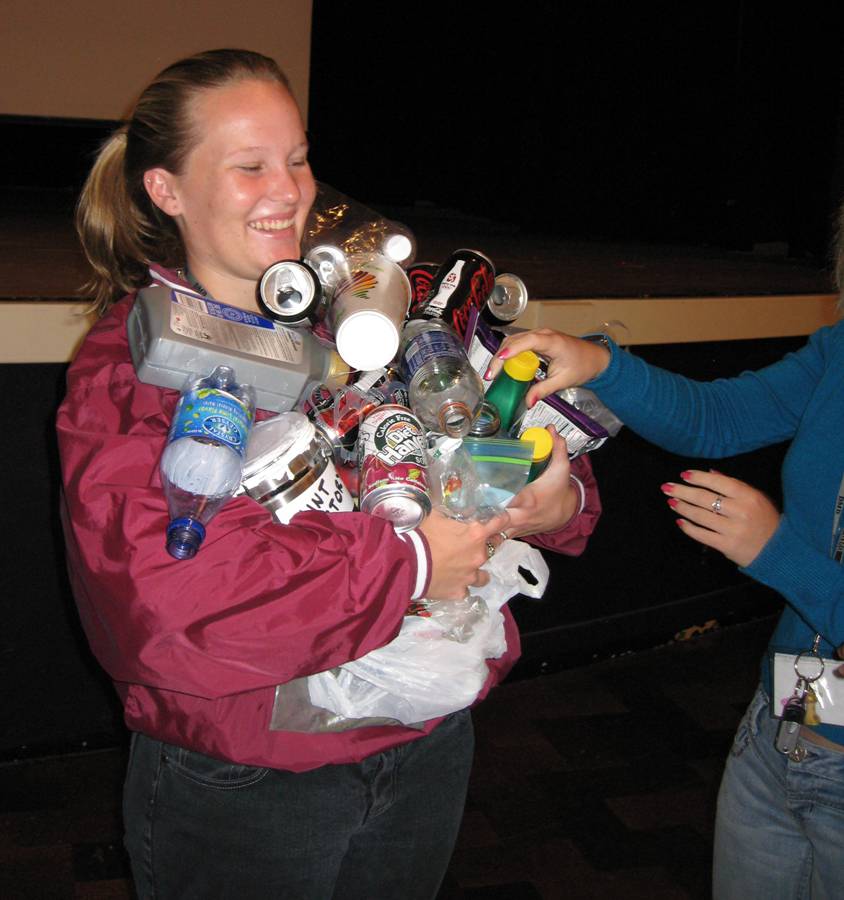
A High School Watershed Presentation student learning the hard way about litter!
One of the most common questions I have from the kids following the watershed presentation is, “Why are there no filters or screens on the storm drain inlets?”
Before addressing the question from the kids it is important to explain what is a “Storm Drain?” When there are heavy rains, parking lots streets and flat areas in a town can flood and create hazardous conditions. Storm Drains are drainage systems which are specifically designed to handle an excess of water as a result of flooding or heavy rainfall. Thier sole purpose is to quickly and efficiently move excess storm water into rivers and streams and eventually to the ocean. It is important to note that everything that goes down the storm drain goes directly to the ocean. Currently there are no filters on storm drain inlets which poses a major pollution risk, because trash, sediment, organic debris, and spills in the streets are carried through the unfiltered storm drain system. For this reason, Storm Drains have signs above them which say “No dumping, drains to ocean” to remind people to protect their waterways by disposing of pollutants responsibly.
So back to the question from the kids “Why are there no filters or screens on the storm drain inlets?” A drain inlet filter or screen sounds like a feasible and logical solution. However, during a rainstorm, trash, sediment, organic matter, and other debris can quickly be swept into drain inlets. Heavy accumulation of trash, sediment, and organic debris can clog grates, thus preventing proper drainage and potentially creating a flooding. Currently, local universities and the state of California are in the process of evaluating new technologies in the form of filtration or screening devices to be installed to help manage and control storm drain pollution and enhance water quality control. They have conducted comparative studies to analyze how various filters hold up as being effective mechanisms for collecting unwanted pollution that goes down storm drain inlets. Most of the storm drain inlet filters currently being tested would require regular maintenance to ensure effectiveness. The solutions are in progress and it is going to require a collective effort to make sure they are carried out. There is no shortage of great ideas for how to address and solve this pollution problem. The City of San Diego is taking action to reduce storm water runoff by incorporating Low Impact Development techniques into constructed surfaces such as rooftops, streetscapes, parking lots, sidewalks, and medians. These design elements work with nature to filter polluted storm water. For example, parking lots and streetscapes can be constructed to funnel storm water into landscaped elements called bio-swales that capture and filter rainwater before reaching local waterways.
Rain flows into storm drains and then oceans, bringing with it any debris
Enrichment education programs offered by I Love A Clean San Diego are focused on spreading up-to-date information. Great questions from kids demonstrate that the message about how to protect and preserve our environment is being heard. It is inspiring to hear the passion they have and it gives me confidence that as a society we can and will take action for a healthy planet.
We can’t promise you’ll find love, but we do guarantee you’ll have a great time and show your passion for the environment at our annual Cupid’s Cleanup! Join us on Saturday, February 15 for a neighborhood and canyon cleanup in North Park and South Park, and stick around for a fun Valentine’s Day-themed mixer hosted by Thorn St. Brewery.
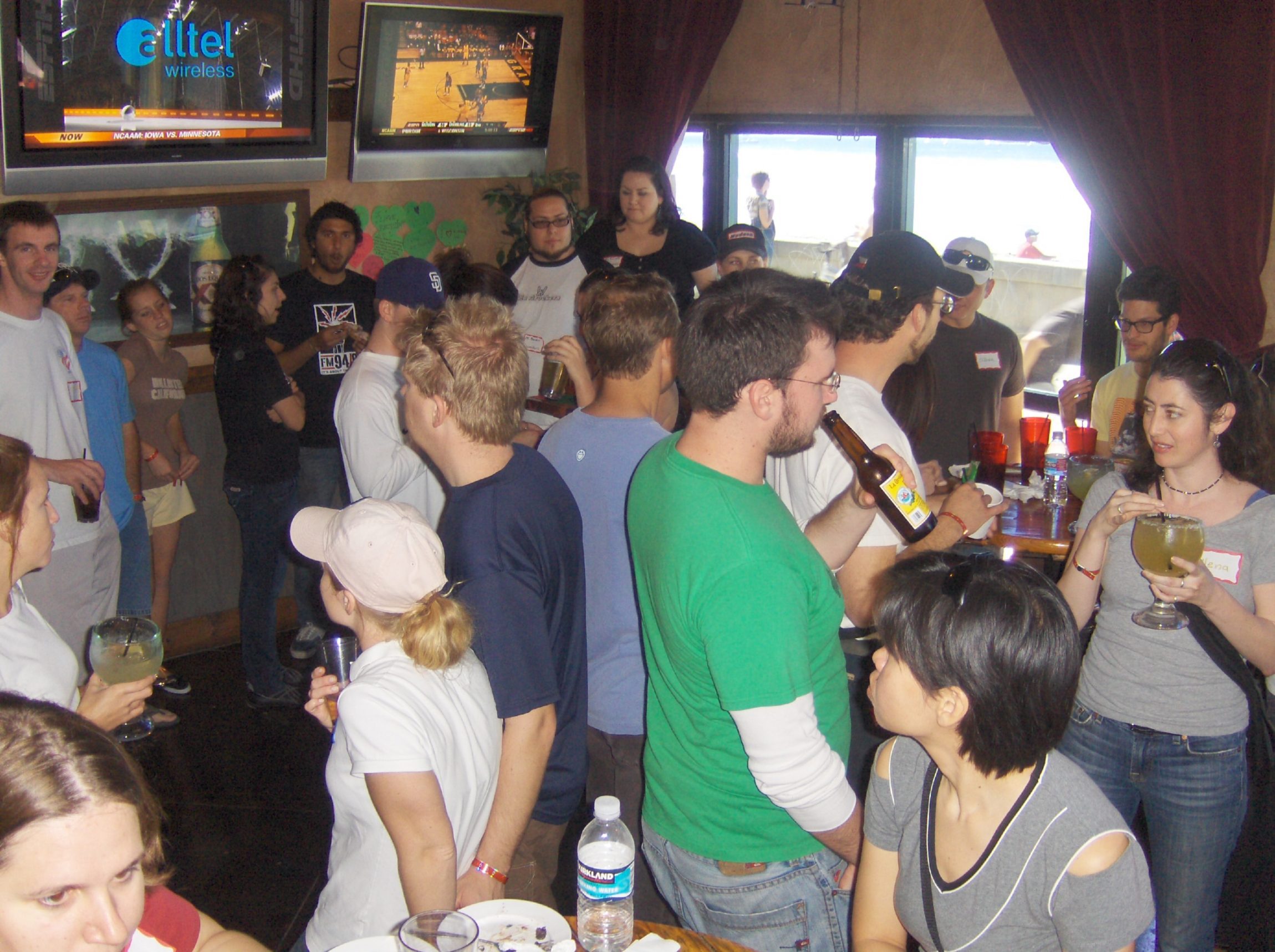
Volunteers toasting their hard work at a past Cupid’s Cleanup
This Valentine’s-themed event isn’t just about picking up litter; it can also be about picking up your future spouse. Yup, this has happened. Not too long ago, at a past Cupid’s Cleanup, Julie and Kenny Potter met and fell in love. Now married, the Potters are pretty solid evidence that our cleanups work both for the environment and for your love life. Check out a cool interview below with these lovebirds. [youtube=http://www.youtube.com/watch?v=n1WQcKG-g-M&feature=c4-overview&list=UUBOVQBmYOgCNDCZNkQ-RAyw]
And for those of you who have already found your other half, we welcome all volunteers- single, married, kids, and families!
Be sure to join us for the post-event party at North Park’s Thorn Street Brewery: volunteers are invited to stop by for some free beer tasters as a thank you for their hard work.
If you’d like to sign up for this event, contact Lexi Ambrogi at lambrogi@cleansd.org or (619)-704-2778. Hope to see you all there!
The Keep America Beautiful Clean Community Systems was introduced in San Diego in 1977. The City Council and current Mayor Pete Wilson gave the green light for the organization to officially become an affiliate of Keep America Beautiful, and the name I Love A Clean San Diego was born. First as the program slogan, then eventually as our organization’s name! We are proud of our work with Keep America Beautiful (KAB). This week, some of our staff are at the KAB conference to learn more. Here’s how ILACSD has been keeping San Diego clean (and beautiful) and, we have to brag a bit, a few cool programs of ours that have been nationally recognized by KAB:
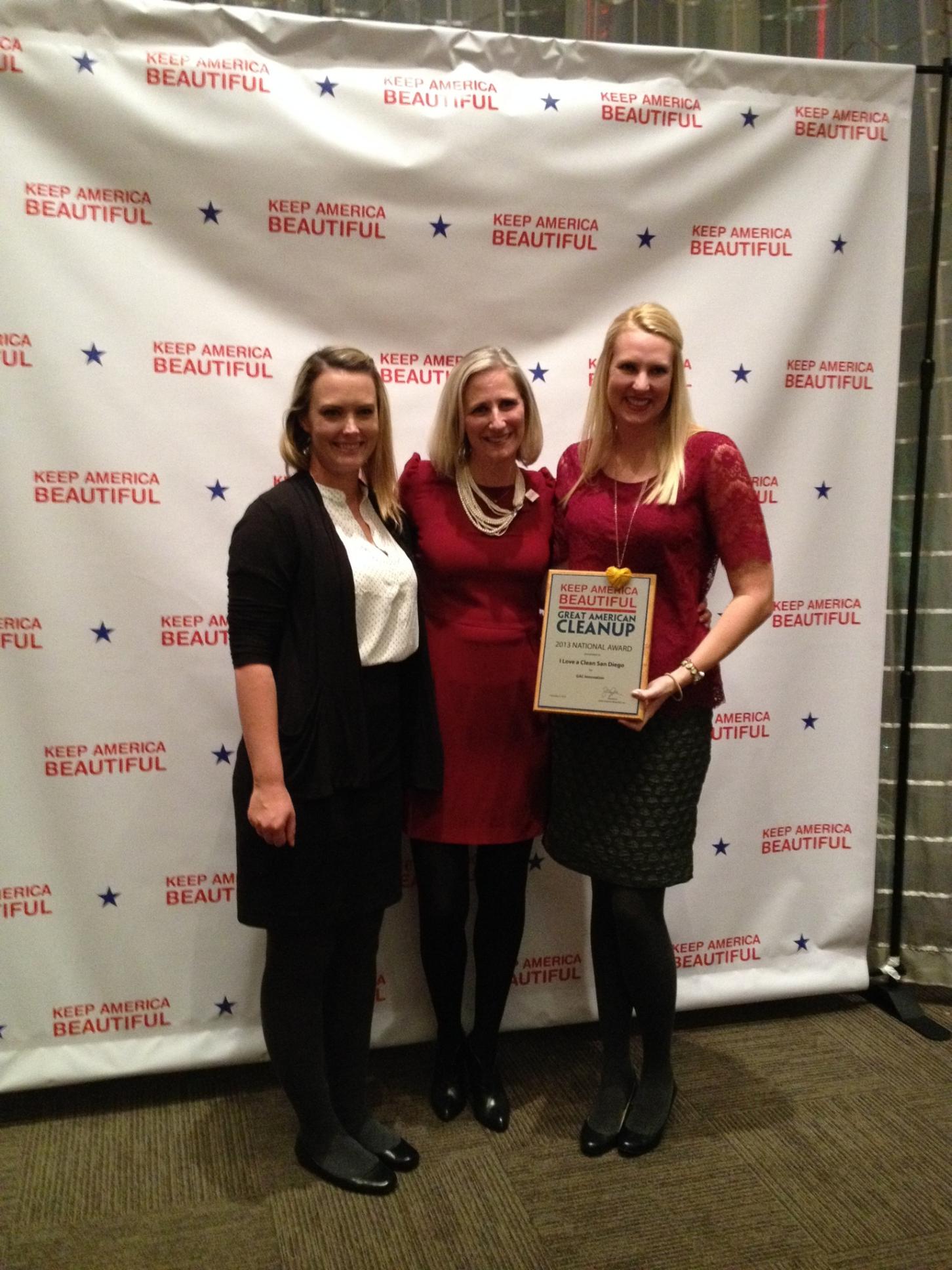
-For 2013, we won the KAB Innovation Award! To further educate San Diegans about the importance of waste reduction and pollution prevention,we launched a Bring Your Own Reusables campaign, encouraging volunteers to switch from disposable plastic bags and gloves, and single-use water bottles to a more sustainable alternative when volunteering. Approximately 70% of volunteers (5,000+ out of over 7,000 participants) brought at least one reusable item to our largest volunteer event of the year, Coastal Cleanup Day.
Here we are accepting the award!
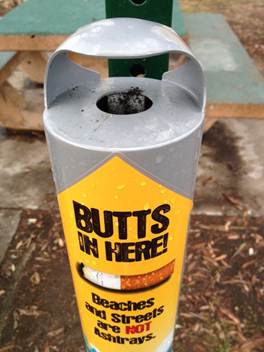
-Cigarette Litter Prevention Program: I Love A Clean San Diego receives grant funding each year from Keep America Beautiful to combat the large cigarette butt litter issue facing local beaches, neighborhoods, and outdoor areas. ILACSD partners with the Surfrider Foundation San Diego Chapter to install permanent ashcans throughout San Diego County, and has launched programs in beach area communities including La Jolla, Oceanside, and Point Loma, and recently expanded the program inland in 2012 to include North Park, Mission Hills, and La Mesa. The successful program has an average 55% decrease in cigarette butt litter, proving that smokers can make the right disposal choice when proper infrastructure is available.
Butts in here!
–Creek to Bay: This cleanup is part of what KAB calls the “Great American Cleanup”. ILACSD’s signature event, the Creek to Bay Cleanup, represents one of the largest environmental events of the year. Since the inception of this event in 2003, 44,528 volunteers have participated in this effort – resulting in the removal of 1.65 million pounds of debris from San Diego County locations. The mission of the event is to engage the community in removing debris from San Diego’s beaches, canyons, waterways, and parks. The 12th Annual Creek to Bay Cleanup is coming soon on April 26, hope to see you there!
-Last year, ILACSD was awarded 1st place for our Cigarette Litter Prevention Program
We’re looking forward to many great years ahead working with KAB! Got ideas for other innovative ways we can encourage conservation and protection of resources? Let us know in the comments!